

This honey vanilla bean lemon curd is smooth, tart, and spoonable. Fresh lemon gives it a clean citrus bite, raw honey rounds the sharp edges, and vanilla seeds leave tiny dark flecks through the pale gold curd.
In our family, lemon is already part of the go-to tired-night chicken in meat stock with cilantro. Here, that bright citrus flavor moves from dinner into a simple Full GAPS dessert. You can serve the curd by itself or spoon it over a batch of Full GAPS nut butter pancakes or waffles.
Lemon curd lets fresh lemons do double duty, carrying their bright flavor from a savory dinner into a simple dessert. Its flavor is direct: first the clean tartness of lemon, then honey, then a warm vanilla finish. A small spoonful gives pancakes a bright topping without making another syrup, and a chilled ramekin can be served alongside an ordinary family dessert spread. The texture is soft enough to spoon and firm enough to hold a short trail from the spoon after it has chilled.
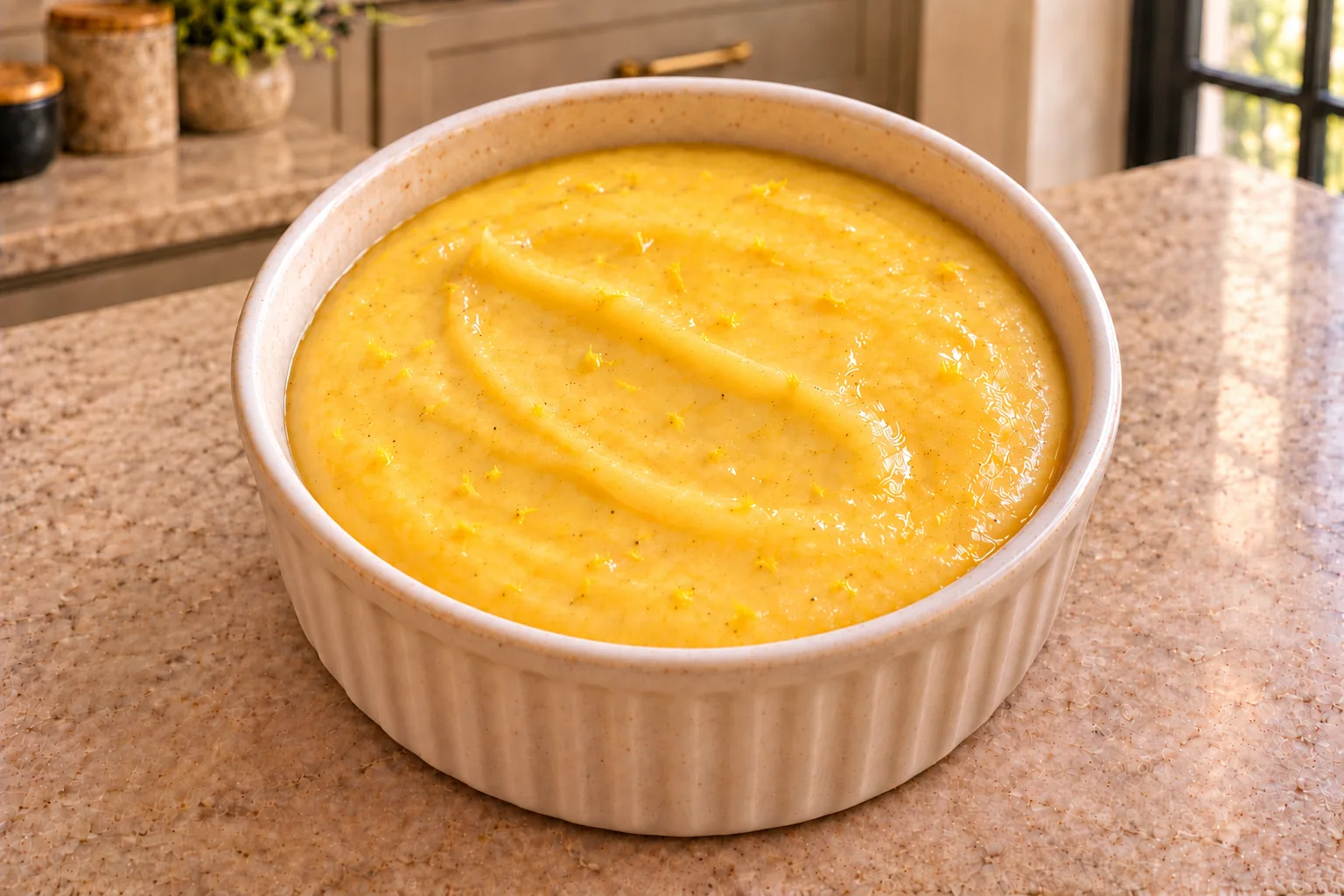
Why This Is a Full GAPS Recipe
This recipe uses eggs and raw honey, so it belongs on Full GAPS. It is not an Introduction Diet recipe. The lemon is freshly squeezed, the zest comes from the same fruit, and the vanilla is a real bean. For this Full GAPS version, I use four tablespoons of homemade stovetop ghee. The linked stovetop method makes the ingredient easy to prepare at home.
Use one vanilla bean for a clear vanilla note alongside lemon. Choose two if you want the vanilla aroma to stand out more. The tiny seeds leave dark flecks through the curd, and the pod gives each spoonful a warm vanilla finish. If you also make vanilla extract for your pantry, see my Double-Fold Homemade Vanilla Extract for Full GAPS; this curd uses the whole bean.
Prepare the Lemon and Vanilla
Wash and dry the lemons before grating. Use a fine zester to remove one tablespoon of the yellow outer peel. Turn the fruit as you work and stop before reaching the white pith. The zest should be fine and fragrant, with no thick white strips.
After zesting, squeeze fresh lemons and measure two-thirds cup of juice. Strain out any seeds. Split one vanilla bean lengthwise and scrape the seeds from the inside of the pod. The tiny seeds should come away as a moist, dark paste.
Measuring the juice after you squeeze it matters because lemon size and juiciness vary. If you are short, squeeze another lemon rather than diluting the measured juice with water. Keep the zest separate for now. Adding it after cooking preserves its fine texture and fresh aroma instead of letting it disappear into the hot mixture.
Whisk the Eggs, Honey, and Vanilla
Put five egg yolks and one whole egg in a heavy-bottomed saucepan. Add the measured lemon juice, raw honey, sea salt, and scraped vanilla seeds. Whisk until the honey has dissolved and the mixture looks evenly pale yellow. The vanilla flecks should be spread throughout rather than clumped in one spot.
Before the pan goes on the burner, look across the bottom and sides for any honey clinging in a streak. Continue whisking until the sweetener is dispersed and the eggs are no longer sitting in separate yellow and clear ribbons. The mixture should still pour easily at this point. This early even mixing makes it easier to keep the egg thickening gradually once heat is added.
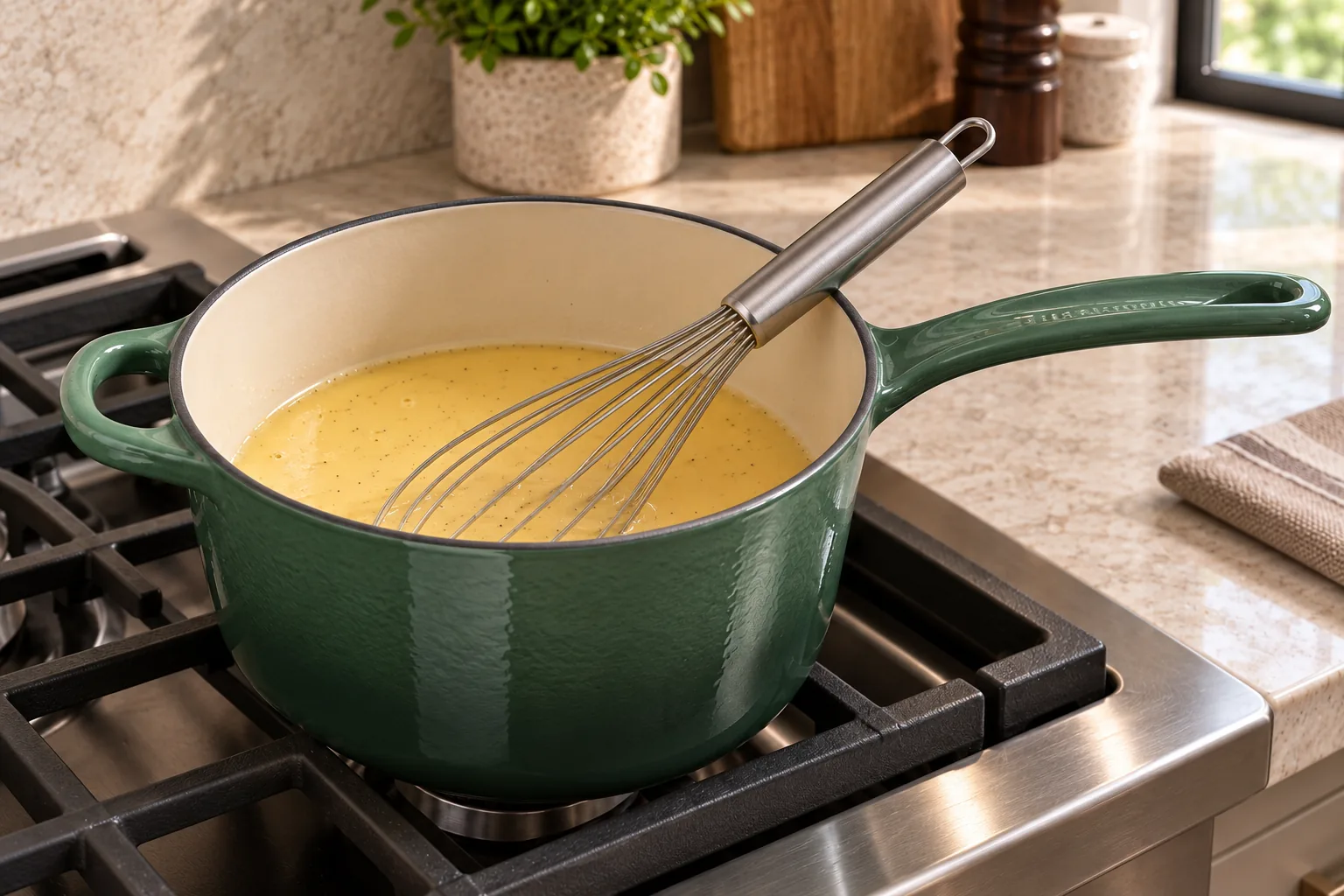
Cook the Curd to 170°F
Set the saucepan over medium heat and whisk constantly. Sweep the whisk across the base and around the curved sides so the eggs do not sit against one hot spot. The mixture starts thin and fluid. As it warms, it becomes more opaque and begins to cling to the whisk.
Check the temperature in the center of the mixture with an instant-read thermometer. Bring it to 170°F while continuing to whisk. The curd should coat the back of a spoon. Draw a clean line through that coating. The line should remain visible instead of immediately filling back in. Take the pan off the heat at that point. Do not wait for an active boil.
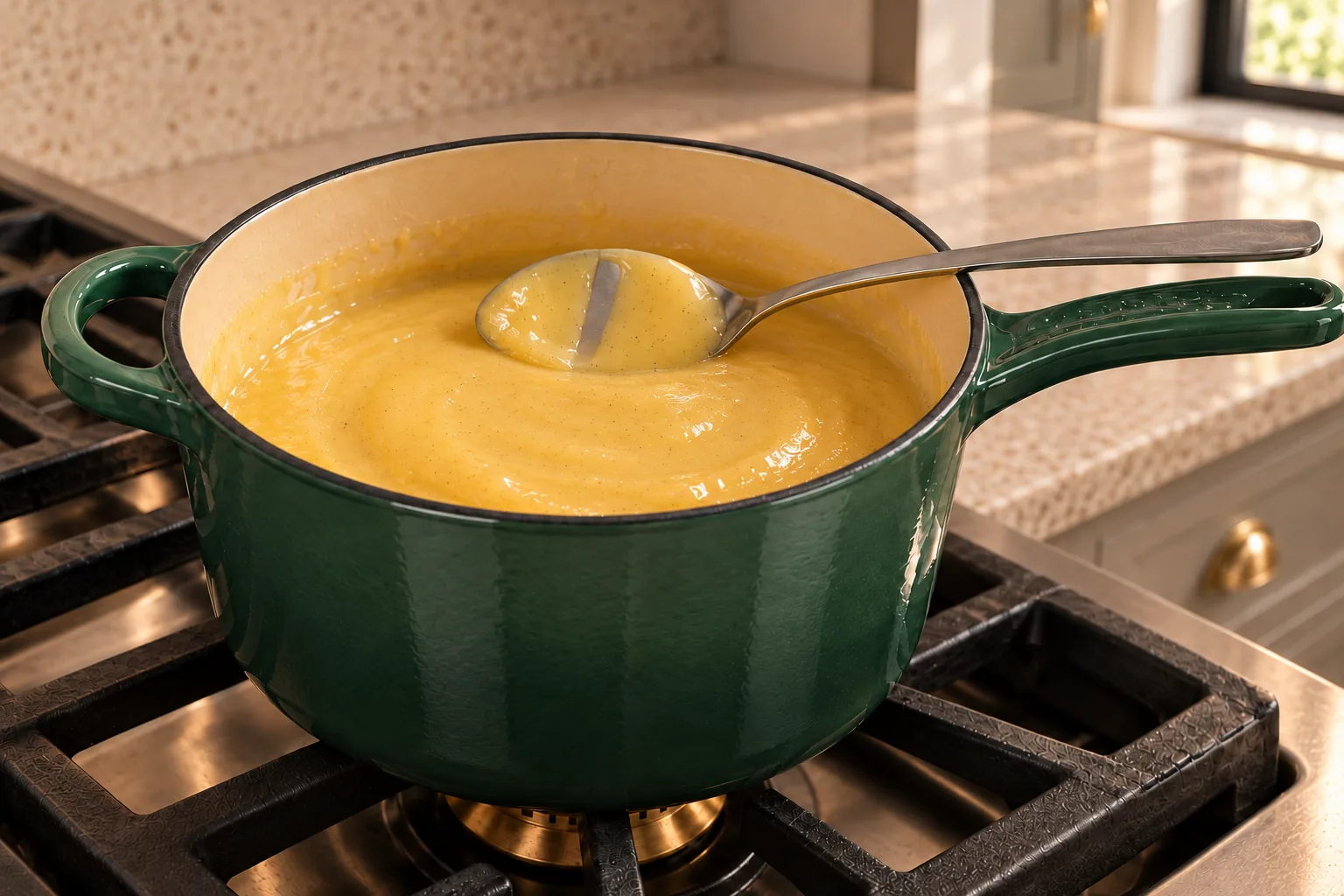
If the temperature climbs quickly, slide the pan off the burner and keep whisking while the mixture settles. Return it to lower heat only if it still needs to thicken. The measured temperature and spoon coating are clearer cues than waiting for bubbles.
Keep the whisk moving across the very center of the base, then sweep around the inside edge where the bottom curves into the side wall. Those spots can heat faster than the middle. If the whisk starts to leave trails that close immediately, the curd is still thin. As it thickens, the trails last a little longer and the coating on the spoon becomes more opaque. The goal is a smooth sauce that clings to the spoon, not a stiff set in the saucepan.
Finish with Ghee and Zest
Remove the pan from the heat. Whisk in four tablespoons of homemade ghee until it has melted into the curd and the surface looks glossy. Stir in the lemon zest. The flecks should remain visible throughout the smooth curd.
At this stage, the curd should fall from the whisk in a thick ribbon. It should not look foamy, grainy, or like scrambled egg. The small black vanilla seeds and fine zest give the finished curd a speckled appearance.
The ghee should disappear into the warm curd rather than sit as a separate oily layer. Whisk just until the surface is uniform and glossy. Fold in the zest last so it is distributed through the batch without turning the texture coarse. The curd will still be softer while warm; the refrigerator does the rest of the setting.
Cool, Chill, and Store
Transfer the curd to a clean, shallow glass container. Let the steam subside, then cover and refrigerate it within two hours. Chill until the curd is cold and spoonable. The surface will firm as it cools, while the center stays creamy.
Keep the curd refrigerated and use it within three to four days. Serve a small bowl by itself, or spoon it over the linked Full GAPS pancakes or waffles. The lemon is sharp at first, then the raw honey and vanilla soften it as you eat.
Use a clean spoon when serving and return the container to the refrigerator afterward. If the curd is very firm straight from the cold, stir a spoonful gently in a small bowl before serving; it softens as you work it and stays cool. A thin layer spread on a pancake lets the lemon come through, while a deeper spoonful makes a more pronounced tart-sweet topping.
If lemon curd on pancakes or waffles sounds good, the upcoming Nut Flour Baking Recipe Card Deck will bring together those nut-flour favorites with breads and other everyday bakes. Visit the WFLI shop for availability.
Frequently Asked Questions
How Do I Know When the Curd Is Done?
Use both cues. The mixture should reach 170°F, then coat the back of a spoon. A line drawn through the coating stays clear for a moment. Keep whisking as you check because the curd continues to cook against the hot pan.
Can I Use One Vanilla Bean or Two?
The recipe uses one bean for a clear vanilla note alongside the lemon. A second bean makes the vanilla more pronounced.
Can I Use Maple Syrup Instead of Honey?
No. Maple syrup is not part of this Full GAPS formula. Use the measured raw honey.
Can I Use Bottled Lemon Juice?
Use fresh lemon juice and fresh zest for this measured recipe. The zest is part of the formula, and freshly squeezed juice gives the curd its clean, bright citrus flavor. Bottled juice also cannot supply the fresh lemon zest used in the card.
Why Use Ghee Instead of Butter?
This Full GAPS version uses four tablespoons of homemade ghee, linked above. It melts into the hot curd and keeps the ingredient list simple.
Recommended Equipment
A heavy-bottomed Le Creuset Signature Round Saucepan in Artichaut, 1.75 quart gives this small batch room for whisking. The curved base and sides keep the whisk moving around the mixture. Use a stainless balloon whisk, instant-read thermometer, fine zester, fine-mesh strainer for the lemon seeds, and a shallow glass container with a lid.
A thermometer helps you stop the cooking at 170°F. Keep its tip in the curd without touching the pan bottom, where the metal heats faster than the mixture. A 10-inch stainless whisk, TempPro instant-read thermometer, Microplane grater, and Cuisinart stainless mesh strainer set are current equipment options. A shallow, lidded glass container is the best shape for cooling this small batch; Ball wide-mouth quart jars are another glass storage option if that is what you keep on hand.
Honey Vanilla Bean Lemon Curd Recipe
Honey Vanilla Bean Lemon Curd for Full GAPS
Ingredients
Equipment
Method
- Finely grate 1 tablespoon of lemon zest, then squeeze fresh lemons and measure 2/3 cup juice. Strain out the seeds.
- Split 1 vanilla bean lengthwise and scrape the seeds from the pod.
- Whisk the egg yolks, whole egg, lemon juice, raw honey, sea salt, and vanilla seeds in the saucepan until the mixture is smooth and thin.
- Set the pan over medium heat and whisk constantly, sweeping the base and curved sides. Cook to 170°F. The curd should coat the back of a spoon; a line drawn through the coating should remain clear. If the temperature climbs quickly, turn the burner down so the mixture thickens without boiling.
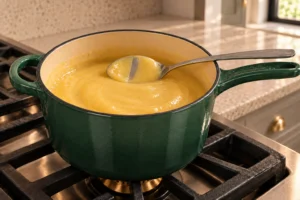
- Remove the pan from the heat. Whisk in 4 tablespoons of homemade ghee until it is fully melted and the curd looks glossy. Stir in the lemon zest.
- Transfer the curd to a clean shallow glass container. Cool briefly, then cover and refrigerate within 2 hours. Chill until thick and spoonable.
Notes
Tried this recipe?
Let us know how it was!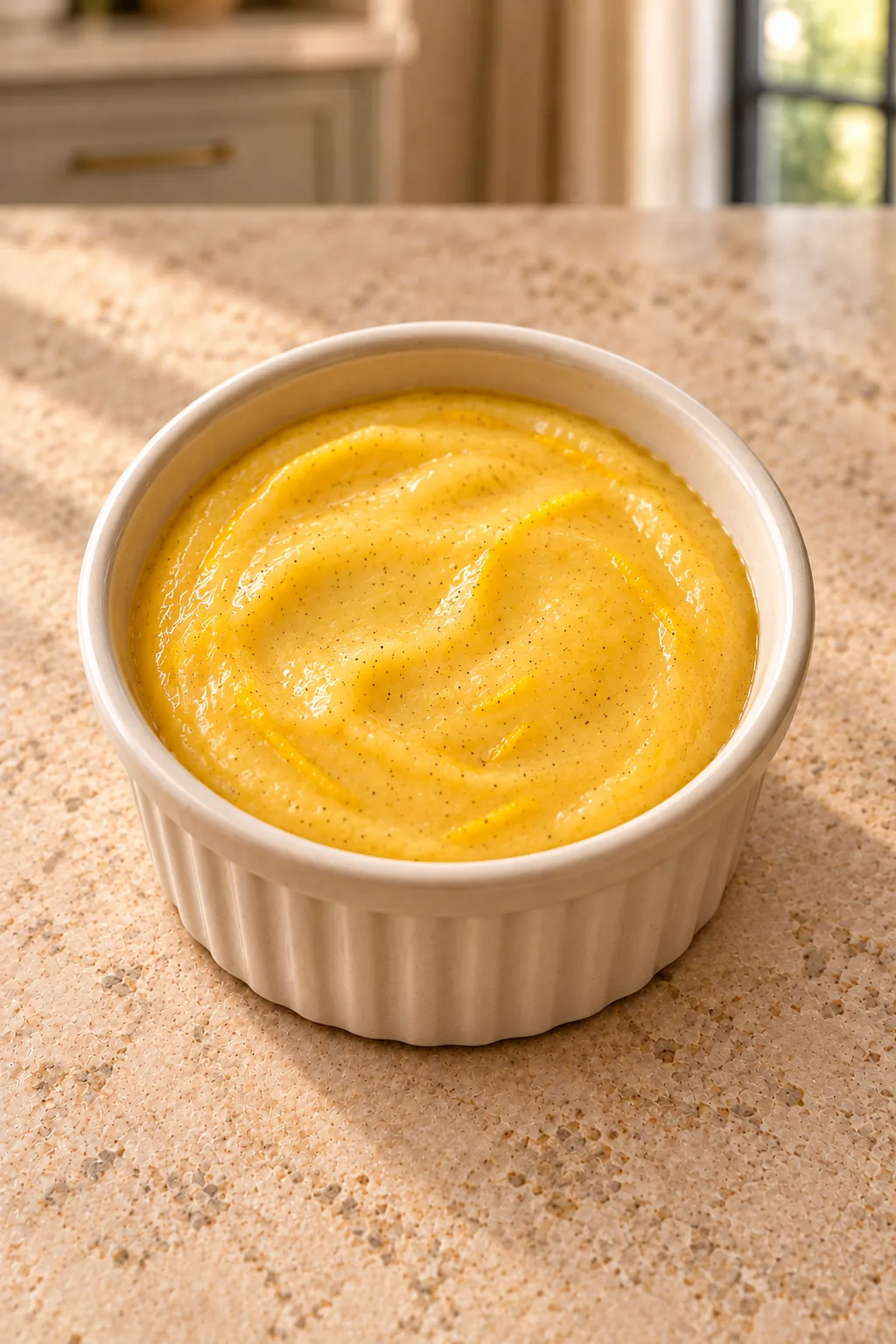

Leave a comment