

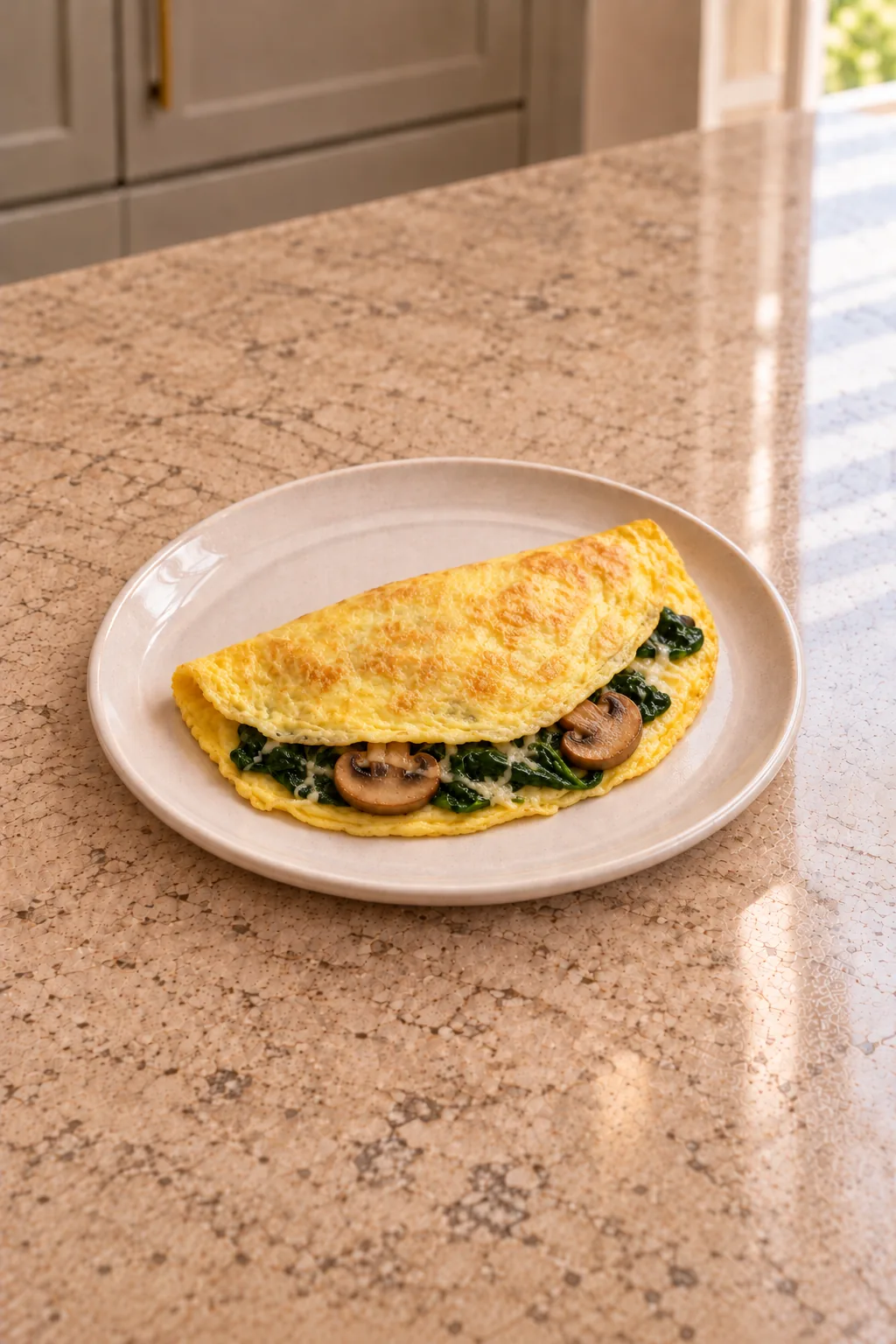
This spinach mushroom Parmesan omelette is a two-egg breakfast with a soft folded middle and a thin layer of melted cheese. The spinach and mushrooms are cooked before they go inside, so you can concentrate on the eggs once the skillet is ready. A properly heated stainless steel pan and a full coating of butter help the omelette release without cooking spray.
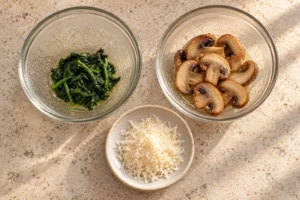
Working second shift and homeschooling before work makes preparation part of breakfast for me, not an extra job after it. Having the filling ready before the eggs hit the pan is the useful part of this method. You are not trying to grate cheese with one hand while the bottom of the omelette keeps cooking. Put the little bowls beside the stove, have a plate ready, and then start.
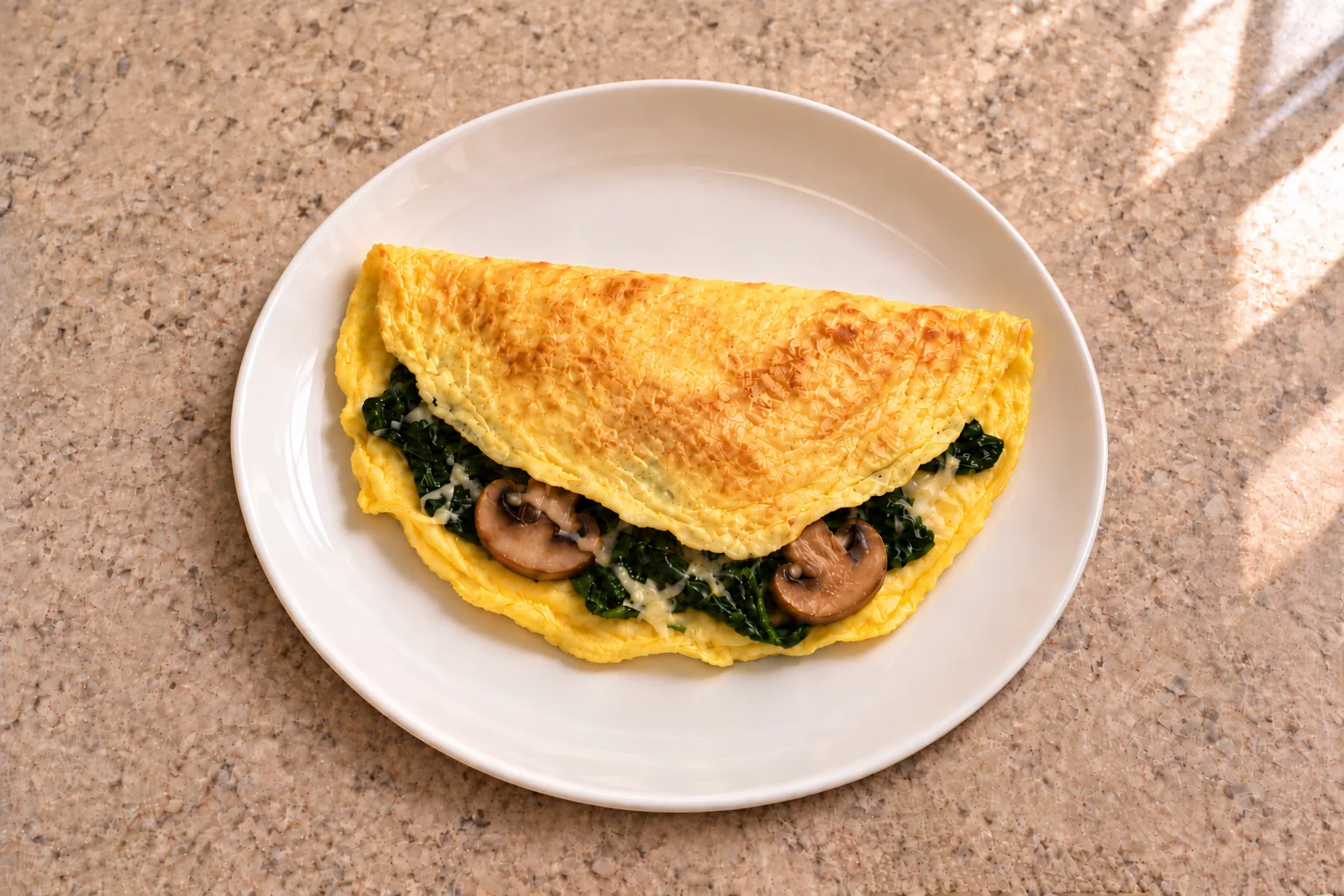
A Soft Omelette With A Savory Filling
Two eggs make a thin layer in a ten-inch skillet. The outside should be set and flexible enough to fold, with a little light golden color rather than a dark, crisp crust. Inside, wilted spinach and tender mushrooms sit against the melted Parmesan. The cheese brings a salty, savory flavor without needing a separate sauce.
Cook the filling first. Raw mushrooms release moisture as they cook, and a handful of spinach shrinks considerably. Putting either into the omelette raw would leave you waiting for the vegetables while the eggs become firmer. Prepared filling also lets you spread a modest amount through the middle instead of overloading one side.
Where It Fits On GAPS
This complete omelette fits Full GAPS once butter and natural aged cheese have been introduced and are tolerated. Parmesan appears on the GAPS recommended list, but dairy still follows its own introduction sequence. Use plain natural Parmesan without added starch or other fillers, and homemade unsalted butter for the pan.
This is not a dairy-free recipe: both the butter and Parmesan are part of it. Changing only the cooking fat would leave the cheese in the filling. Likewise, taking the cheese out would make a different, simpler egg dish rather than moving this whole recipe automatically into an earlier Intro stage. The preparation and the ingredients together determine where a meal fits.
Ingredients
- 1 tablespoon homemade unsalted butter for the omelette
- 2 eggs, lightly beaten
- 1 handful spinach, sautéed in water until wilted
- 2 mushrooms, sliced and sautéed in a little butter until tender
- 1 ounce plain natural Parmesan cheese, grated
- Homemade tomato salsa, optional for serving
- A small glass of water for checking the skillet
The tablespoon of butter is for cooking the eggs. The mushrooms use a small additional amount; no exact measure is specified for that preparation. The water beside the stove is for the pan test. It does not go into the beaten eggs. This omelette does not need milk, cream, or added water in its egg mixture.
Use the full ounce of Parmesan and spread it across the eggs rather than dropping it in a mound. Finely grated cheese distributes more evenly than a few thick chunks. If you are using the salsa, spoon it over at the table. It adds a fresh tomato flavor, but the omelette is complete without it.
Recommended Equipment
- A 10-inch uncoated stainless steel skillet
- A lid that fits the skillet
- A small glass bowl and fork for the eggs
- Small bowls for the prepared filling
- A thin spatula or turner
- A cheese grater and kitchen scale
- A serving plate
A ten-inch skillet gives the two eggs room to spread into a thin sheet. A much larger pan makes that sheet more delicate and harder to turn in one piece. A smaller one makes it thicker. Keep the lid close by because it is used briefly after the cheese goes on, rather than throughout the whole cooking process.
How To Make The Omelette
Beat The Eggs
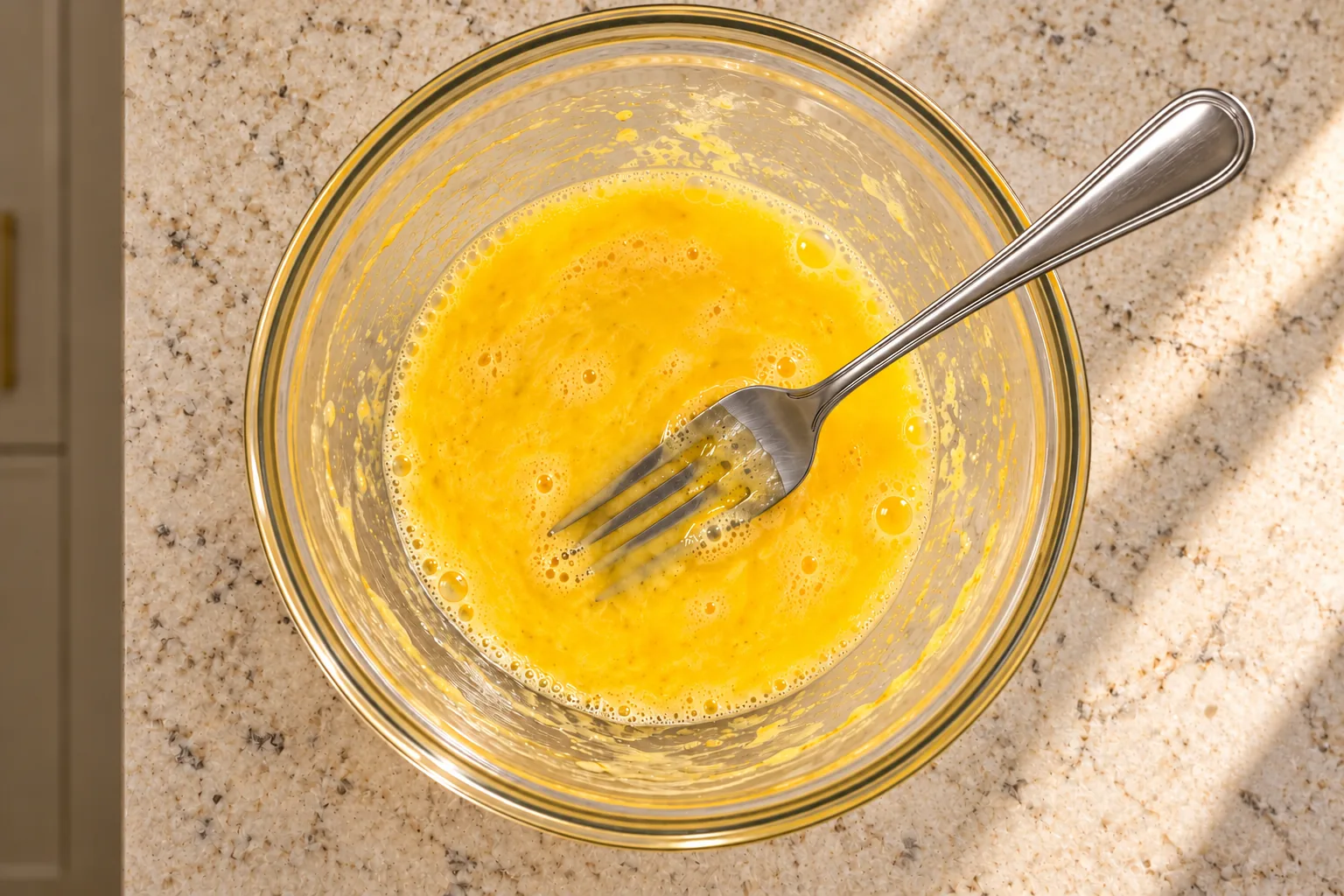
Crack the two eggs into a small bowl and beat them lightly with a fork until the yolks and whites are combined. A few bubbles are fine. You want a fairly even yellow mixture without long, separate ropes of white. There is no need to whip it into a foam.
Prepare The Filling
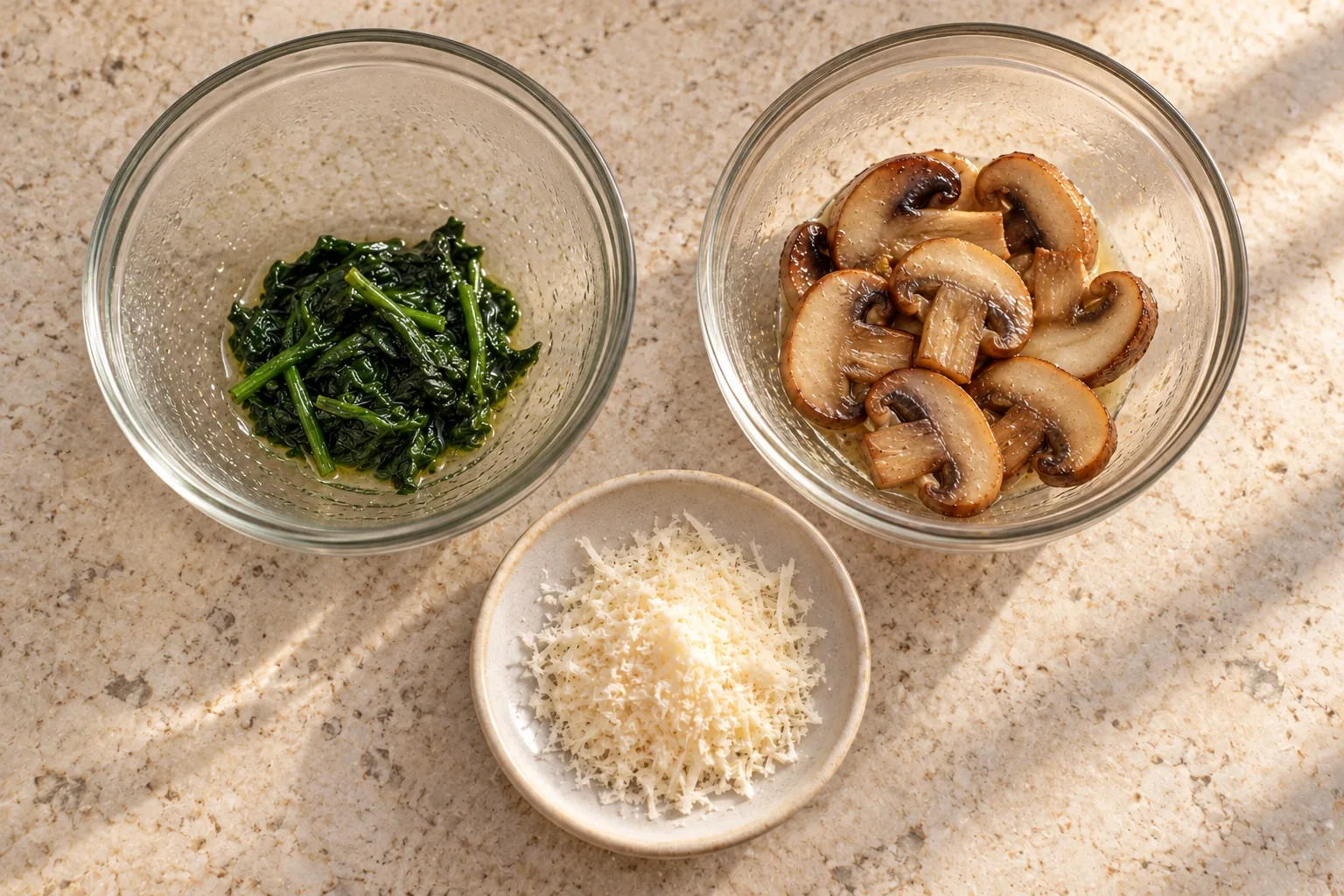
Wilt the handful of spinach in water, then drain away loose liquid. Cook the sliced mushrooms in a little butter until tender. Keep both ready near the stove, along with the grated Parmesan. The spinach should be soft and collapsed, and the mushroom slices should bend rather than feel firm and raw.
Heat The Stainless Steel Skillet
Place the empty skillet over medium heat. Check it with a few small drops of water about every fifteen seconds. When the drops gather and move around on the surface, lower the heat slightly. Let the test water leave the pan before adding the tablespoon of butter.
Move the butter around to coat the entire cooking surface, including the area near the sides. It should bubble quickly. Add the eggs promptly once the pan is coated; do not leave the butter sitting there until it turns dark and smells burnt. Your stove’s medium setting may behave differently from someone else’s, so watch the butter as well as the dial.
Let The Uncooked Egg Run Underneath
Pour in the eggs and tilt the skillet so they cover the bottom. As the edge begins to set, slip the spatula under it and lift gently. Let the still-liquid egg run into the space underneath. Work around the omelette this way instead of stirring everything into scrambled eggs.
The edge will change from shiny liquid to a soft, set sheet. Give the eggs another thirty to sixty seconds, then carefully turn the omelette over. It needs enough structure to lift together, but it should still look supple. If an edge tears, keep cooking gently and use that area on the inside when you fold.
Melt The Cheese And Fold
Scatter the Parmesan over the turned omelette and cover the skillet for about one minute. Remove the lid and arrange the prepared mushrooms and spinach over one half. Fold the other half over the filling, then slide the omelette onto the waiting plate.
Serve it while the eggs are soft and the cheese is warm. If you want salsa, add it now rather than cooking it inside the folded eggs. That keeps the fresh topping distinct from the warm mushroom and spinach filling.
Spinach Mushroom Parmesan Omelette for Full GAPS
Ingredients
Equipment
Method
- Lightly beat the eggs in a glass bowl until the yolks and whites are combined. A few bubbles are fine; do not add milk or water.
- Wilt the spinach in water and drain. Sauté the sliced mushrooms in a little butter until tender. Have the cooked vegetables, grated Parmesan and serving plate ready before heating the omelette skillet.
- Preheat the 10-inch stainless steel skillet over medium heat. Check with a few small water drops about every 15 seconds. When drops gather and move across the surface, lower the heat slightly and let the test water leave the pan. Add the tablespoon of butter and coat the whole surface.
- Promptly add the eggs and tilt to cover the pan. As edges set, lift them gently with a spatula so liquid egg runs underneath. Work around the edge. Cook another 30–60 seconds, then carefully turn the omelette.
- Spread Parmesan over the eggs and cover for about 1 minute. Add the prepared mushrooms and spinach over one half, fold the other half over, and slide onto a plate. Serve with optional homemade salsa.
Notes
Tried this recipe?
Let us know how it was!If The Eggs Catch On The Pan
Do not force a spatula through an egg layer that has barely begun to set. Give it a little time, then ease a thin turner under the cooked edge. A properly warmed pan and enough butter help, but a stainless steel surface is not a permanent nonstick coating. Heat, fat coverage, and when you lift all matter.
If the butter scorches before the eggs go in, the pan is too hot for that step. Lower the heat and start that butter coating again rather than pouring the eggs into burnt fat. If the eggs set so quickly that you cannot spread them, begin the next omelette with a slightly lower setting.
Serving And Preparing Ahead
This recipe makes one omelette. For more people, prepare several portions of filling first and cook each two-egg omelette separately. Putting twice as many eggs into the same skillet changes the thickness and the way it sets, so the serving control should help you measure ingredients rather than turn one pan into a crowded family-size omelette.
The spinach, mushrooms, and grated cheese can be prepared ahead and kept refrigerated in separate covered containers. Warm the cooked vegetables before adding them so they do not chill the center of the omelette. Beat the eggs when you are ready to cook. The actual egg-cooking stage moves quickly once everything is beside you.
Storage And Reheating
The texture is nicest straight from the skillet. If you have leftovers, refrigerate them promptly in a covered container. Reheat gently in a covered pan until hot through. Expect the eggs to become firmer on reheating; the brief first cook is part of what keeps a fresh omelette soft.
Frequently Asked Questions
Does The Test Water Go Into The Eggs?
No. The small glass of water is only for checking the temperature of the empty skillet. Beat the two eggs on their own. Adding water or milk would change this particular egg mixture.
Can I Skip Cooking The Vegetables First?
Cook them first for this method. The omelette only spends a short time on the heat after the cheese is added. That is enough to warm a prepared filling, but it is not the same as cooking raw mushrooms and spinach inside it.
Do I Need Cooking Spray?
No. This method uses the tablespoon of butter to coat the warmed stainless steel surface. Swirl it across the whole bottom before adding the eggs, then reduce the heat if the eggs are setting too aggressively.
Do I Have To Add Salsa?
It is optional. The Parmesan gives the omelette plenty of savory flavor on its own. If you like a fresh contrast, the linked Mild Fresh Tomato Salsa works as a separate topping, so everyone can choose their own amount.
More GAPS Breakfast Ideas
For a baked egg dish that serves more people at once, try the Zucchini, Kale, and Garlic Crustless Quiche. It is a separate recipe with its own proportions, useful when cooking individual omelettes does not fit the morning.
The planned free 10 GAPS Breakfasts guide and the Breakfast Cookbook will offer more ways to plan breakfast around the stage your family is following. Find current and upcoming resources in the WFLI shop. For this omelette, have the filling and plate ready before you heat the skillet.

Leave a comment