

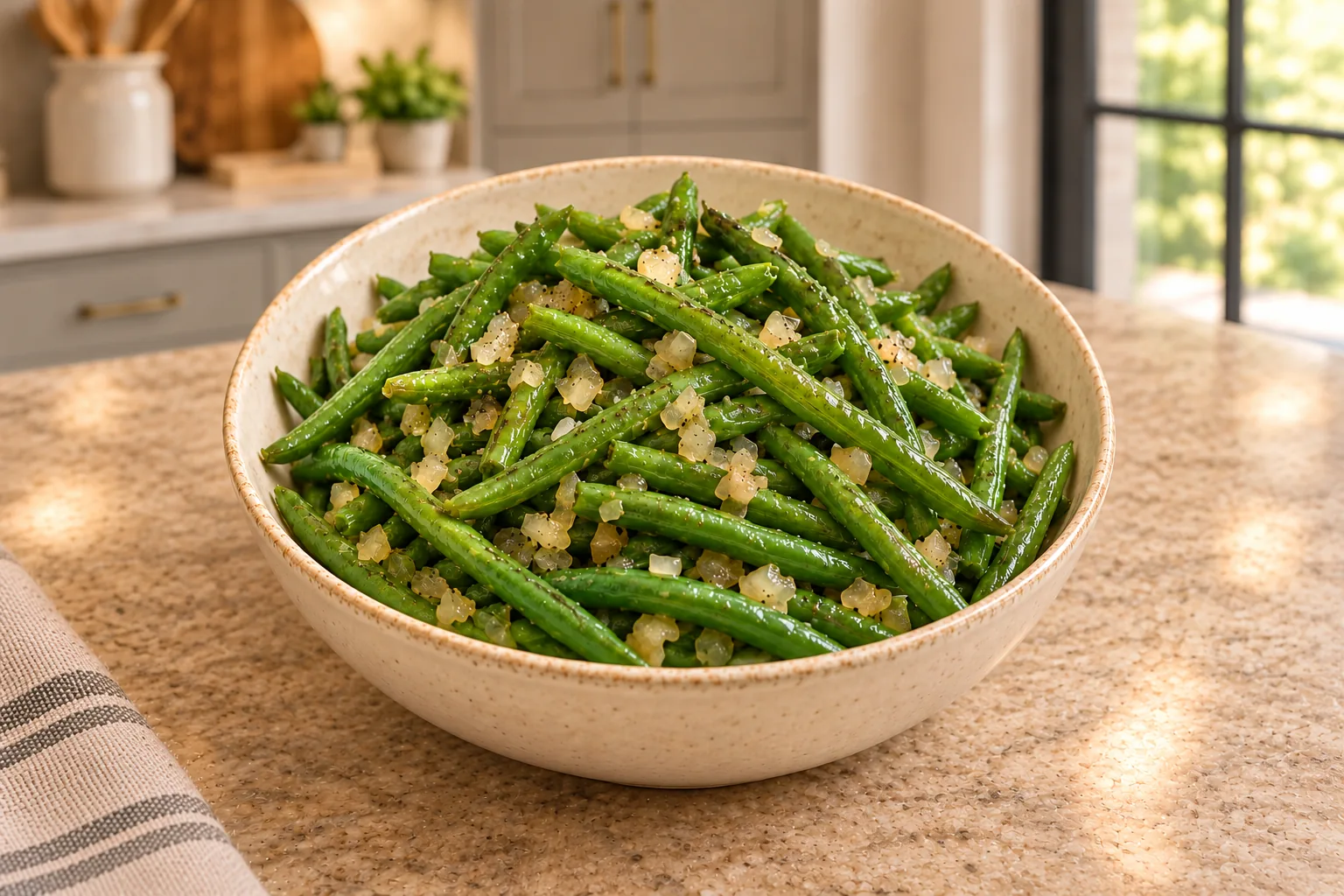
Glazed green beans with onions and meat stock are a simple Full GAPS side dish with more depth than plain steamed beans. The onions soften in butter first, then one pound of green beans cooks uncovered in a cup of homemade meat stock until the liquid is nearly gone. A final tablespoon of butter gives the beans their glossy finish.
In a busy family kitchen, this is a useful way to bring a vegetable and meat stock together without making another soup. The important cue is in the pan: the stock reduces from a bubbling pool to a thin coating, while the beans stay recognizable and the small onion pieces cling to them.
Where These Green Beans Fit on GAPS
Green beans, onions, natural cooking fat, and homemade meat stock fit Full GAPS once each is part of your diet. Make this after the vegetables and the butter or ghee you choose are tolerated. This is a fast-boiled, stock-reduced side dish rather than an Introduction Diet soup.
Use GAPS Chicken Meat Stock or GAPS Beef Meat Stock made with raw meaty bones and joints. Both work with the measured one-cup amount. Stock cubes, granules, and flavored boxed broth do not give this recipe the same GAPS ingredient.
Butter gives the glaze a sweet, rounded finish. If you use ghee instead, keep the same two-tablespoon measure and divide it in the same way: one tablespoon for the onion and one at the end. Do not replace the fat with a sauce or seasoning blend.
Gather the Measured Ingredients
Have one pound fresh green beans or plain frozen green beans, one-quarter cup finely diced onion, one cup homemade chicken or beef meat stock, and two tablespoons butter or ghee ready. Keep unrefined sea salt and pure black pepper nearby to season at the end.
Fresh beans should be trimmed and rinsed. If using frozen beans, run them under hot water in a supported strainer until partially thawed, then drain them. They do not need to be fully warm. This short rinse separates frozen clumps so they can cook evenly in the stock instead of cooling one spot of the pan.
Dice the onion finely. Small pieces soften during the five-minute sauté and become part of the glaze. Large onion wedges would remain a separate vegetable in a recipe built around green beans.
Soften the Onion in the First Tablespoon of Butter
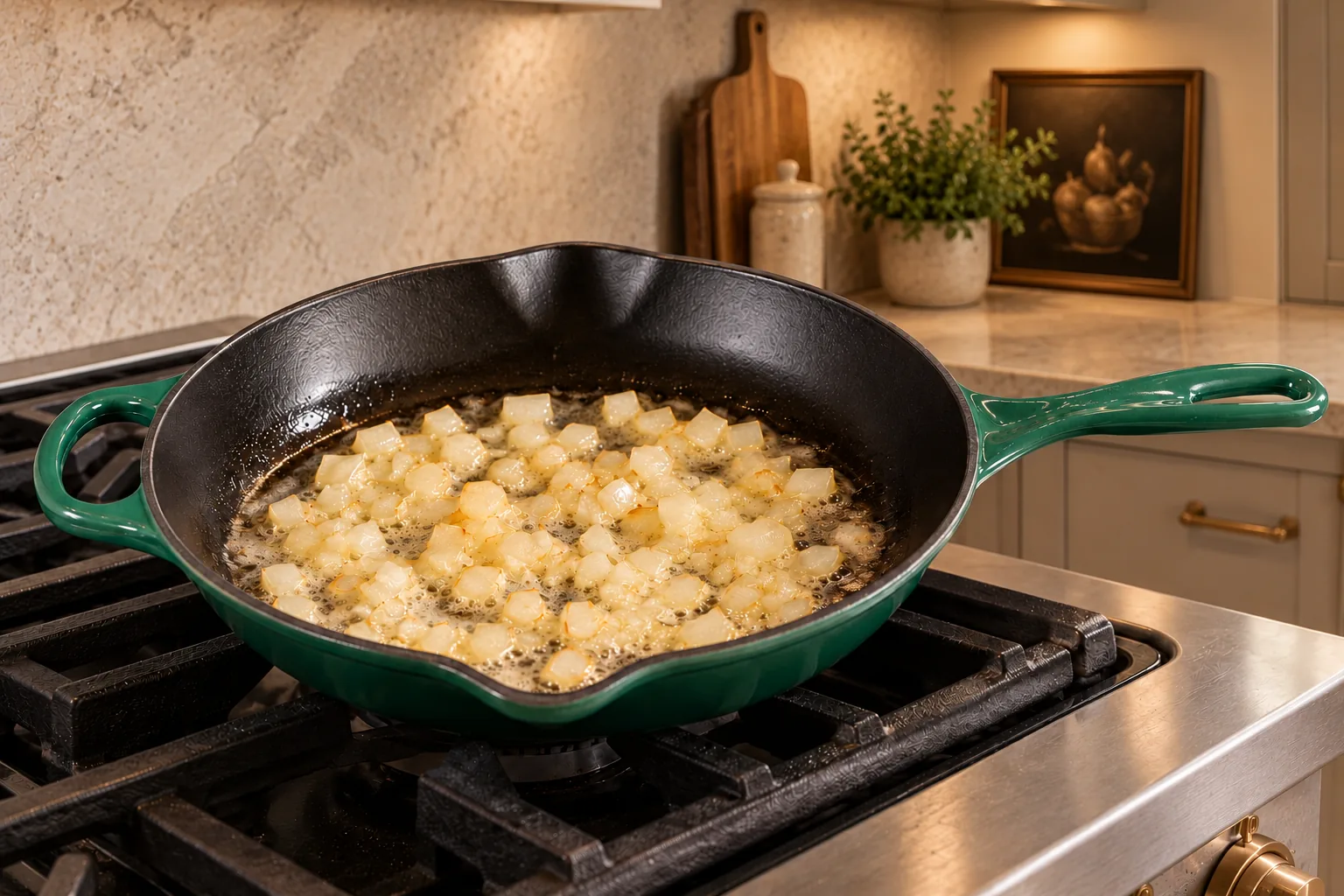
Set a heavy-bottom skillet or saucepan over medium heat and add one tablespoon butter or ghee. Wait until the butter is bubbling, then add the finely diced onion. Cook for about five minutes, stirring so the pieces do not stick.
The onion should turn softer and translucent, with a mild, sweet smell replacing its sharp raw scent. It may pick up a little pale gold at the edges. Keep the heat moderate enough that the butter does not darken or burn before the beans go in.
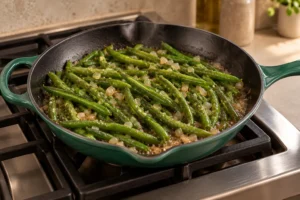
A Le Creuset Signature skillet in Artichaut gives the beans room to sit in the stock while it reduces. A heavy-bottom stainless saucepan also works; watch it a little more closely because a narrower pan can retain liquid longer.
Boil the Beans and Stock Uncovered
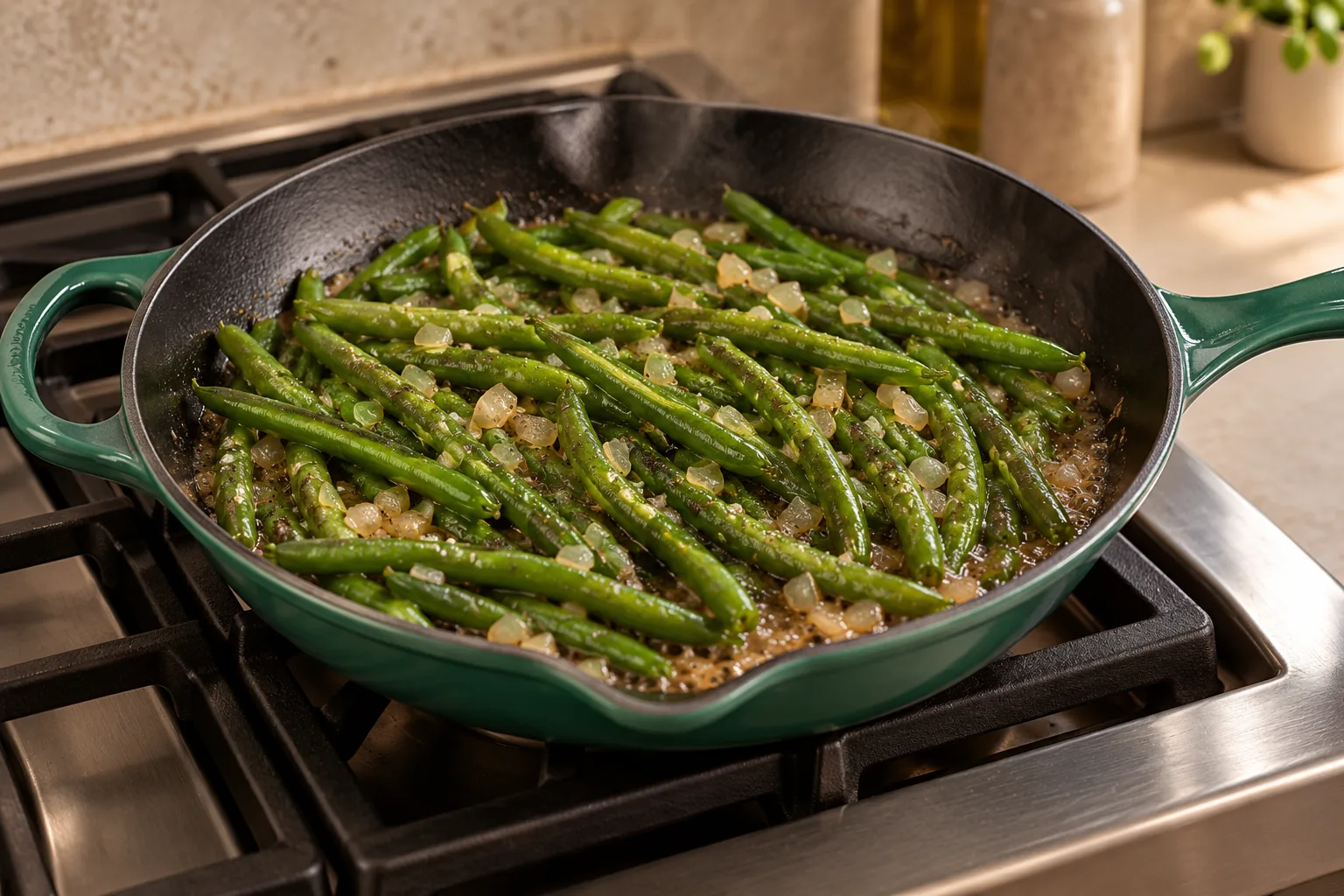
Add the one pound green beans to the softened onion, then pour in one cup homemade meat stock. Bring the stock to a fast boil without a lid. Stir frequently, lifting the beans from the bottom and moving them through the bubbling liquid.
At first there will be a visible pool of stock around the beans. As it boils, the pool gets shallower, the onion pieces move with the beans, and the smell becomes more concentrated. The beans should soften while still holding their long shape.
Keep watching the bottom of the pan rather than waiting for a fixed minute count. The next step begins when the stock is almost gone: a spoon or spatula pulled across the bottom should reveal the pan briefly, with only a thin layer of liquid returning around the beans. There should be no deep puddle left to dilute the finish.
Stir more often as the liquid gets low. The last bit of stock can reduce quickly, especially in a wide skillet. If a spot begins to catch, lower the heat and move the beans through the remaining liquid instead of letting the onion scorch.
Finish With the Second Tablespoon of Butter
Add the remaining tablespoon butter or ghee when the stock has nearly reduced. Stir until the fat melts and coats the beans and onion. Season with sea salt and black pepper to taste.
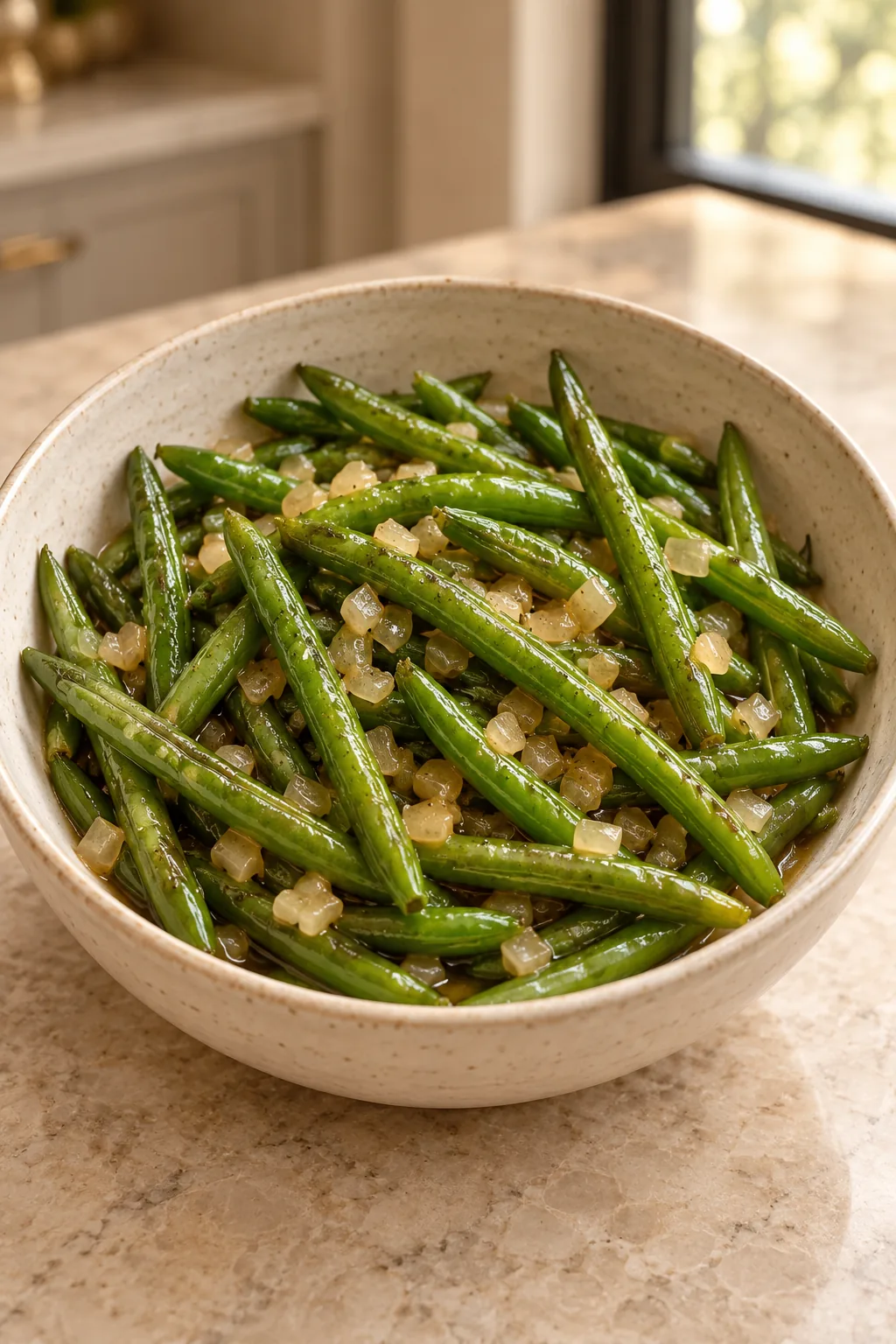
Continue cooking briefly, stirring, until the little bit of water left in the pan reduces and the beans look shiny. Butter itself does not need to evaporate. The goal is a light glaze that clings to the bean surfaces, not a greasy puddle or a dry pan with browned onion stuck to it.
Lift a few beans with a spoon. They should bend easily, look glossy, and carry bits of softened onion. The flavor should be savory and buttery, with the meat stock concentrated into the coating rather than tasting like a separate broth.
How to Serve the Finished Beans
Serve the beans while warm so the glaze stays fluid and the onion clings to each forkful. They work beside roast chicken, a braised beef dish, or another Full GAPS main course already on your table.
This is a separate measured formula from Green Beans With Brown Butter and Pepitas, Green Beans With Dates, Orange, and Hazelnuts, and Green Beans With Crisp Bacon and Pecorino. Choose the version that fits the ingredients you have, and keep each recipe card distinct.
Storage and Reheating
The beans are nicest when the glaze is freshly made. Let any leftovers cool and place them in a covered glass container, then reheat gently when you use them.
Reheat the beans gently in a skillet. A spoonful of homemade meat stock can loosen a glaze that has tightened in the refrigerator; warm just until the beans are hot and glossy again. Repeated hard boiling after the first cook can make them soft and dull.
Frequently Asked Questions
Can I Use Frozen Green Beans?
Yes. Use one pound plain frozen green beans. Run them under hot water in a supported strainer until partially thawed, drain, and add them to the pan with the measured cup of stock.
Should the Pan Be Covered?
No. This version cooks uncovered so the one cup of stock can reduce around the beans. A lid would trap much of the steam and leave a brothier pan rather than a glaze.
Which Meat Stock Works Best?
Homemade chicken or beef meat stock both work. Chicken gives a lighter savory finish; beef makes the glaze deeper. Use the same one-cup measure either way and choose a stock already compatible with your Full GAPS routine.
How Do I Know the Stock Has Reduced Enough?
Watch for the visible pool around the beans to shrink to a thin layer. When you draw a spoon across the pan bottom, you should see the surface briefly before the remaining liquid moves back. Add the last tablespoon of fat at that point.
Can I Use Ghee Instead of Butter?
Yes. Use two tablespoons ghee in the same divided sequence if that is the fat you tolerate. The first tablespoon softens the onion; the second coats the beans at the end.
Is There a Roasted Version?
For a different texture, make the separate Lemon-Roasted Green Beans. Those beans develop oven-roasted edges; this recipe relies on reduced homemade meat stock for its glaze.
Recommended Equipment
- Le Creuset Signature 10.25-inch skillet in Artichaut or a heavy-bottom stainless saucepan
- Fine-mesh stainless-steel strainer for frozen beans
- Wooden or silicone spoon for frequent stirring
- Knife and wooden cutting board for the onion
- Measuring cup and tablespoons
Glazed Green Beans With Onions Recipe
Glazed Green Beans With Onions and Meat Stock for Full GAPS
Ingredients
Equipment
Method
- Trim and rinse fresh green beans. If using frozen beans, run them under hot water in a supported strainer until partially thawed, then drain.
- Heat 1 tablespoon butter or ghee in a heavy-bottom skillet over medium heat until bubbling. Add the finely diced onion and sauté for about 5 minutes, stirring, until translucent and mild-smelling.
- Add the green beans and 1 cup homemade meat stock. Boil uncovered at a fast boil, stirring frequently, until the liquid is almost gone and only a thin bubbling film remains around tender beans.
- Add the remaining 1 tablespoon butter or ghee and season with sea salt and black pepper to taste. Stir briefly until the remaining water reduces and the beans are glossy, with no deep liquid pool.
- Serve warm while the light stock-and-butter glaze coats the beans and softened onion.
Notes
Tried this recipe?
Let us know how it was!More Full GAPS Dinner Sides
The planned Dinner Cookbook will connect family-size mains with sides like this one and show the physical cues that make each recipe repeatable. Find current resources and upcoming releases in the WFLI shop.

Leave a comment