

This large-batch chicken vegetable stir fry turns two pounds of chicken and a full counter of vegetables into one practical Full GAPS dinner. The chicken cooks first, then the vegetables move through the same pan in separate batches so each one can soften without steaming under a crowded pile.
Large skillet meals matter in our house because feeding eight people changes what “quick dinner” means. I still need the meal to be filling, but I also need the method to stay simple enough to manage while everyone is hungry. This version uses one pan, one holding bowl, and a clear cooking order instead of a separate sauce.
Where This Chicken Stir Fry Fits on GAPS
This recipe fits Full GAPS. It uses fresh chicken, cabbage, zucchini, cauliflower, mushrooms, carrots, celery, virgin coconut oil, mineral salt, and black pepper. The formula contains no soy sauce, packaged stir-fry sauce, starch, grain, or added sweetener.
This is not an Introduction Diet recipe. The vegetables are cooked in a hot skillet and finished with some structure, while Intro vegetables are prepared much more softly in soups and stews. If your household needs a gentler Full GAPS texture, keep cooking each batch until fully tender instead of stopping at tender-crisp.
Why the Vegetables Cook in Separate Batches
A small head of cabbage, a large zucchini, one-third of a cauliflower, eight mushrooms, two carrots, and two celery ribs will not brown evenly when they all enter one skillet together. The pile traps moisture. The bottom vegetables overcook while the top ones stay raw, and the pan begins steaming instead of stir-frying.
The source method solves that problem by using a holding bowl. Chicken cooks first. Carrots and celery cook together. The remaining vegetables move through the skillet as four separate batches: cabbage, zucchini, cauliflower, and mushrooms. Everything comes back together only after each ingredient reaches its own endpoint.
Measure the Coconut Oil Before You Begin
The source directions use two to three tablespoons virgin coconut oil for the chicken, two tablespoons for the carrots and celery, and at least one tablespoon for each of the four remaining vegetable batches. That adds up to eight to nine tablespoons before any extra oil is needed.
Measure that amount into a small bowl before cooking. Keep additional coconut oil nearby. The pan should have a thin glossy coating before each fresh batch goes in. If the surface turns dry or the food begins dragging, add another spoonful before the edges scorch.
Cut the Ingredients for Even Cooking
Cut the chicken into similar bite-size cubes so the centers finish together. Slice the carrots, celery, mushrooms, cabbage, and zucchini thinly. Chop the cauliflower into small pieces rather than leaving large florets. The goal is not perfect knife work. The goal is pieces with similar thickness inside each batch.
Use a separate board and knife for the raw chicken, or wash both thoroughly before cutting the vegetables. Set a large stainless-steel, glass, or ceramic holding bowl beside the stove before the pan heats. Once cooking begins, each finished batch needs somewhere to go immediately.
How to Make Large-Batch Chicken Vegetable Stir Fry
1. Trim and Cube the Chicken
Trim two pounds chicken breast and cut it into bite-size cubes. Pat away excess surface moisture so the chicken hits the oil instead of releasing a puddle immediately. Season with mineral salt and black pepper to taste.
2. Cook the Chicken First
Heat a large uncoated stainless-steel or well-seasoned cast-iron skillet over medium heat. Add two to three tablespoons virgin coconut oil. When the oil is fully melted and moves easily across the pan, add the chicken.
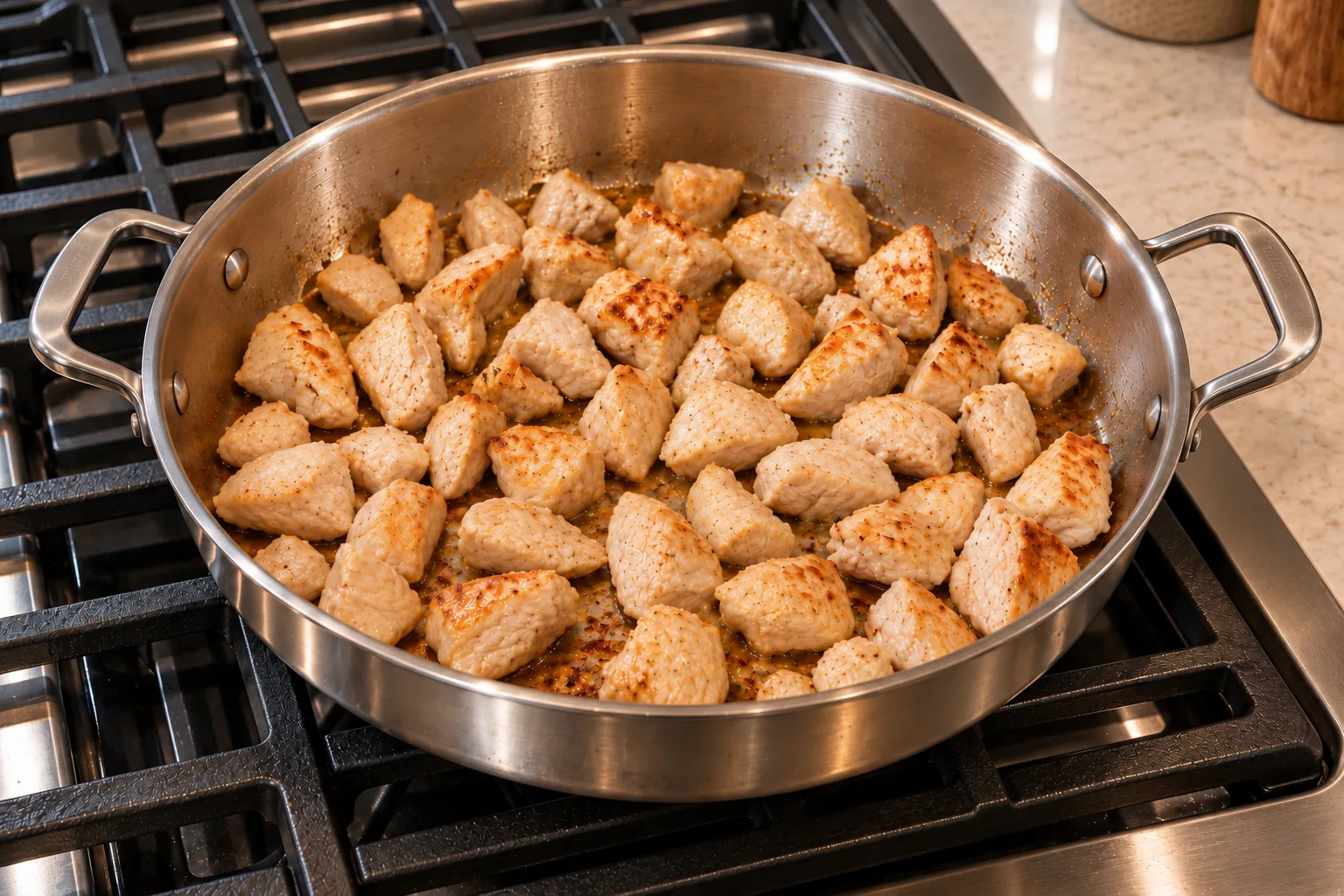
Stir often so the cubes do not stick or burn. The raw pink surfaces will turn opaque, then the pieces will firm and release clear juices. Cut into the largest cube before removing the batch; the center should be opaque with no translucent pink. Transfer the cooked chicken to a clean plate or bowl.
3. Cook the Carrots and Celery
Add two tablespoons coconut oil to the skillet and let it melt. Add two thinly sliced carrots and two thinly sliced celery ribs. Stir every couple of minutes.
The carrots should become brighter orange and lose their raw snap while remaining firm enough to hold their shape. The celery changes from chalky pale green to brighter, slightly translucent green. Transfer both to the holding bowl.
4. Cook the Cabbage
Add at least one tablespoon coconut oil, melt it, and add the thinly sliced cabbage. Keep the cabbage moving so the bottom ribbons do not brown while the top remains raw.
Stop when the cabbage has relaxed and reduced in volume but still has a little structure. It should smell lightly sweet and cooked, not harsh or scorched. Transfer it to the holding bowl.
5. Cook the Zucchini and Cauliflower Separately
Repeat the same process with the zucchini, then again with the cauliflower, adding at least one tablespoon coconut oil before each batch. Zucchini is ready when the pale center looks moist and the green edge bends without collapsing. Cauliflower is ready when the small pieces are hot through and a fork enters with light resistance.
Move each finished batch to the holding bowl. Do not leave the zucchini in the skillet while the cauliflower cooks; the extra time will turn it watery and soft.
6. Cook the Mushrooms With a Little Water
Add at least one tablespoon coconut oil and the thinly sliced mushrooms. Mushrooms absorb fat quickly. If the pan turns dry after they take up the oil, add a small splash of filtered water rather than pouring in more and more fat.
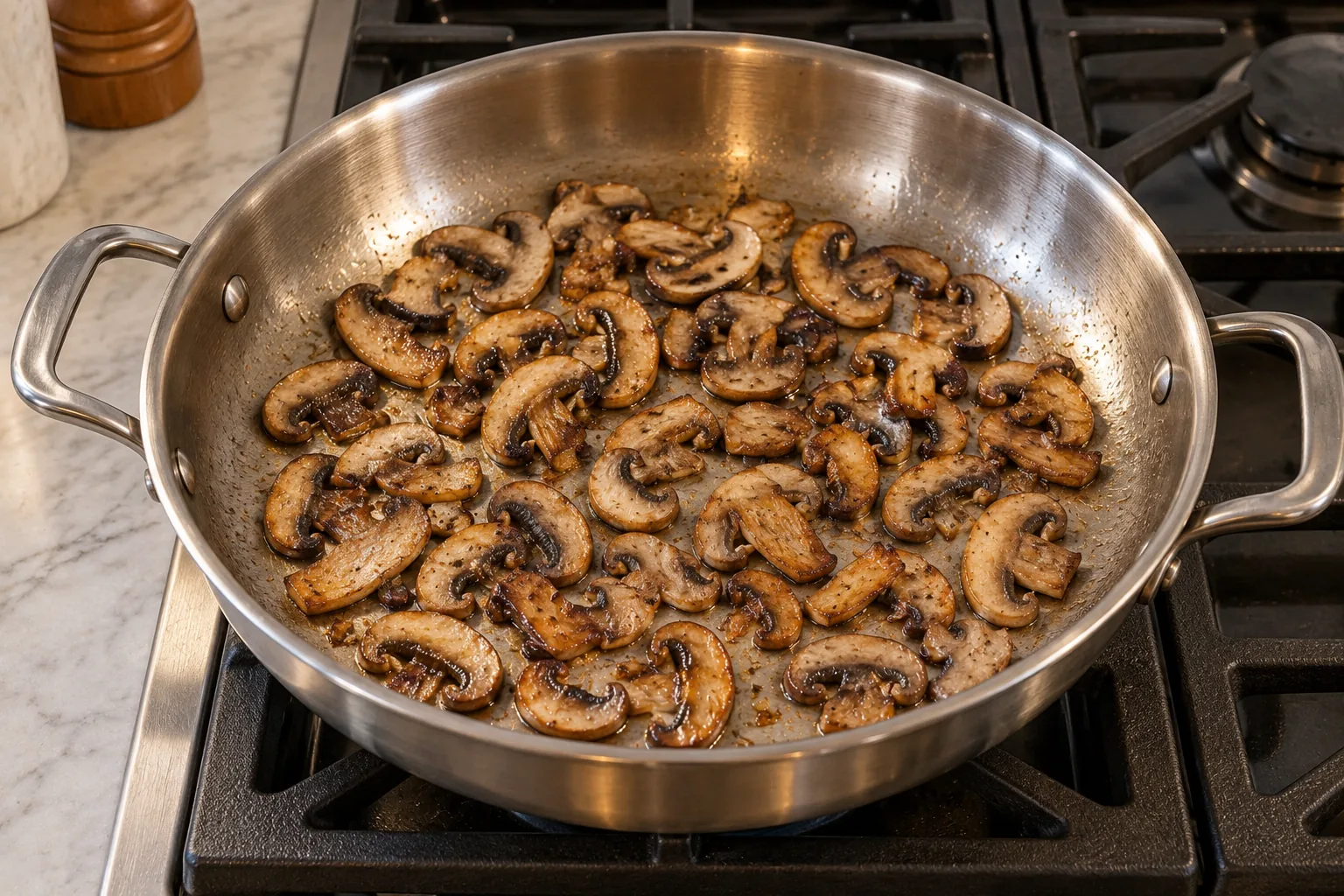
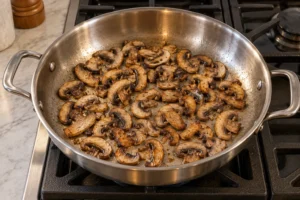
Keep stirring until the mushroom slices darken, soften, and look glossy. The water should cook away rather than pool in the bottom of the pan. Transfer the mushrooms to the holding bowl.
7. Combine and Serve
Add the cooked chicken to the vegetables and toss everything together, or divide the vegetables among plates and put each person’s portion of chicken on top. Taste and adjust mineral salt and black pepper.
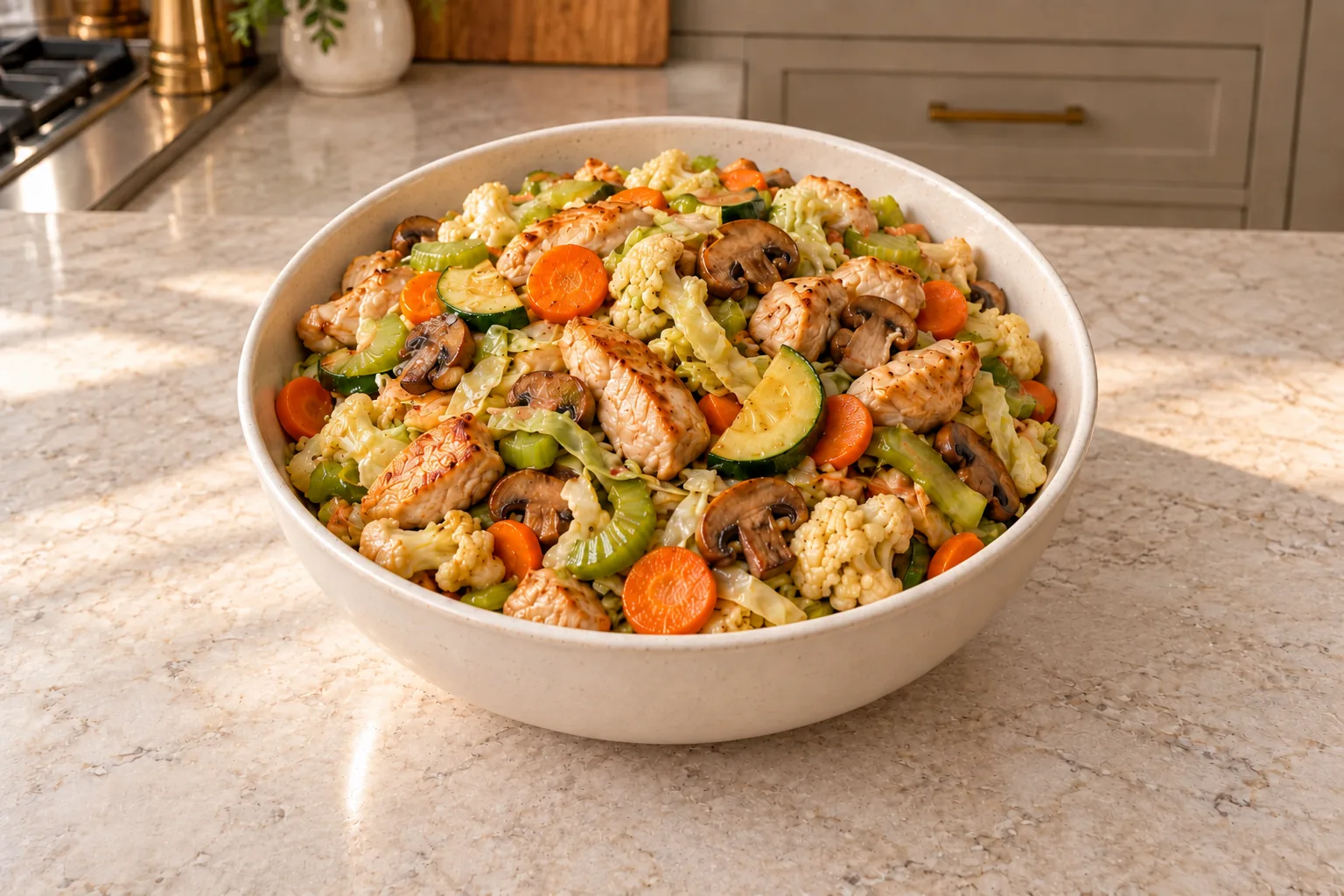
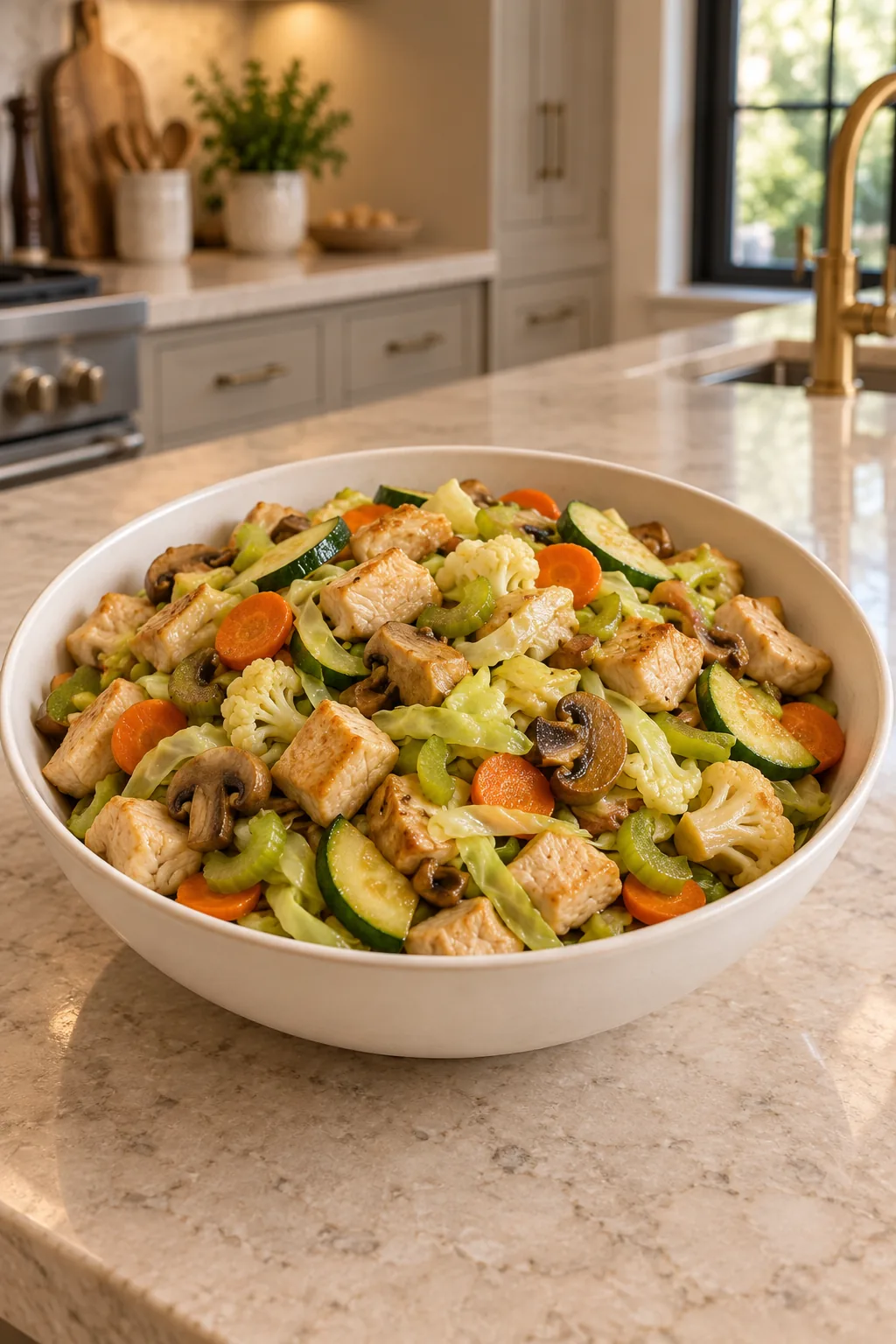
Serve immediately while the vegetables are hot and distinct. The finished dish should look glossy from coconut oil without a puddle at the bottom. You should be able to identify cabbage ribbons, zucchini half-moons, mushrooms, orange carrots, celery, cauliflower, and chicken in every serving.
What the Finished Stir Fry Should Taste Like
This is a simple coconut-oil stir fry rather than a sauce-heavy takeout copy. The chicken stays savory and mild. Cabbage and carrots bring sweetness, mushrooms bring a deeper earthy flavor, and zucchini and cauliflower keep the bowl light.
The coconut aroma is most noticeable while the oil warms. In the finished dish it should sit behind the vegetables instead of covering them. Salt and black pepper sharpen the separate flavors. If everything tastes flat, check the salt before adding anything else.
How to Keep the Chicken and Vegetables From Sticking
Use medium heat and give the pan time to warm before adding oil. Keep the food moving, especially during the chicken batch. A dry pan is the warning sign: the glossy surface disappears, food drags under the spatula, and small edges begin catching.
Add coconut oil between batches rather than waiting for food to burn. For the mushrooms, use the source’s filtered-water adjustment after they absorb the oil. Water belongs only in that mushroom step and should evaporate before the batch leaves the skillet.
Serving Ideas for a Full GAPS Meal
This stir fry already combines protein, cooked vegetables, and cooking fat. Serve it as the main dish, or pair smaller portions with a mug of homemade meat stock. If you want another skillet-based chicken dinner, try Chicken and Cauliflower Fried Rice for Full GAPS.
For a creamier meal built from many of the same pantry ingredients, Thai-Inspired Chicken Curry With Coconut Milk uses a different measured formula and stays in its own post.
Storage and Reheating
Cool leftovers promptly and refrigerate them in a covered glass or stainless-steel container for up to three days. A shallow container helps the large batch cool more evenly than one deep, tightly packed bowl.
Reheat only the portion you plan to serve. Warm it in a skillet over medium-low heat with a spoonful of coconut oil or a small splash of filtered water. Stir just until the chicken is hot and the vegetables are warmed through. Repeated cooking will soften the zucchini and cabbage.
Frequently Asked Questions
Can I Cook Everything at Once?
No. This exact formula is too large for one crowded skillet batch. Separate cooking is what lets two pounds of chicken and six different vegetables cook evenly.
What Are the Four Vegetable Batches?
After the carrots and celery cook together, cook cabbage, zucchini, cauliflower, and mushrooms as four separate batches. The source’s next sentence gives the special mushroom adjustment, which confirms mushrooms are one of those batches.
Can I Use Chicken Thighs?
The source notes that another chicken cut can work, but this exact card keeps the measured two pounds of chicken breast. A thigh version should be treated as a variation and cooked to its own physical endpoint.
Why Add Water Only to the Mushrooms?
Mushrooms absorb the coconut oil quickly. A small splash of filtered water keeps them moving in the pan while they soften. Let that water evaporate before transferring the mushrooms to the holding bowl.
Can I Cook the Vegetables Until Fully Soft?
Yes. The source stops when the vegetables are barely cooked with a little crunch. For a gentler Full GAPS texture, continue each separate batch until fully tender while keeping the same ingredients and cooking order.
Is This an Introduction Diet Recipe?
No. This is a Full GAPS skillet preparation. Intro vegetables use a different, much softer soup or stew method.
Can I Double the Recipe?
Yes, but the doubled card represents two large family batches. Keep every chicken and vegetable batch separate instead of putting twice as much food into the skillet at once.
Recommended Equipment
- Large uncoated stainless-steel or well-seasoned cast-iron skillet
- Heat-safe stainless-steel spatula or wooden turner
- Separate cutting board and knife for raw chicken
- Vegetable cutting board and chef’s knife
- Large stainless-steel, glass, or ceramic holding bowl
- Measuring spoons and small bowl for coconut oil
- Covered glass or stainless-steel storage container
Large-Batch Chicken Vegetable Stir Fry for Full GAPS
Ingredients
Equipment
Method
- Trim the chicken breast and cut it into similar bite-size cubes. Pat away excess surface moisture, then season with mineral salt and black pepper to taste.
- Heat a large uncoated stainless-steel or well-seasoned cast-iron skillet over medium heat. Add 2 to 3 tablespoons coconut oil. When the oil is melted and moves easily across the pan, add the chicken. Stir often until every piece is opaque and the largest cube has no translucent pink in the center. Transfer the cooked chicken to a clean plate or bowl.
- Add 2 tablespoons coconut oil to the skillet. Add the carrots and celery. Cook, stirring every couple of minutes, until the carrots are brighter orange and the celery is glossy and slightly flexible. Transfer them to the holding bowl.
- Add at least 1 tablespoon coconut oil and cook the cabbage as its own batch. Turn the ribbons from the bottom toward the center until they shrink, become glossy, and are tender while retaining a little structure. Transfer to the holding bowl.
- Cook the zucchini and cauliflower as two separate batches, adding at least 1 tablespoon coconut oil before each. Remove the zucchini when the centers turn slightly translucent but the slices still hold their shape. Remove the cauliflower when the smallest cut sides show light color and a fork enters with slight resistance.
- Add at least 1 tablespoon coconut oil and the mushrooms. Stir as they darken and release moisture. If they absorb the oil and the pan looks dry, add filtered water a spoonful at a time. Stop when the slices are glossy, flexible, and browned at the edges without sitting in liquid.
- Return the chicken and all cooked vegetables to the skillet, or combine them in the large holding bowl. Toss until evenly distributed and hot throughout. Taste and adjust mineral salt and black pepper. Serve immediately.
Notes
Tried this recipe?
Let us know how it was!More Practical Full GAPS Dinners
The planned One-Pot & Sheet Pan Cookbook will collect practical Full GAPS dinners organized by pan, cooking order, and family-size prep. Find current resources and upcoming releases in the WFLI shop.

Leave a comment