

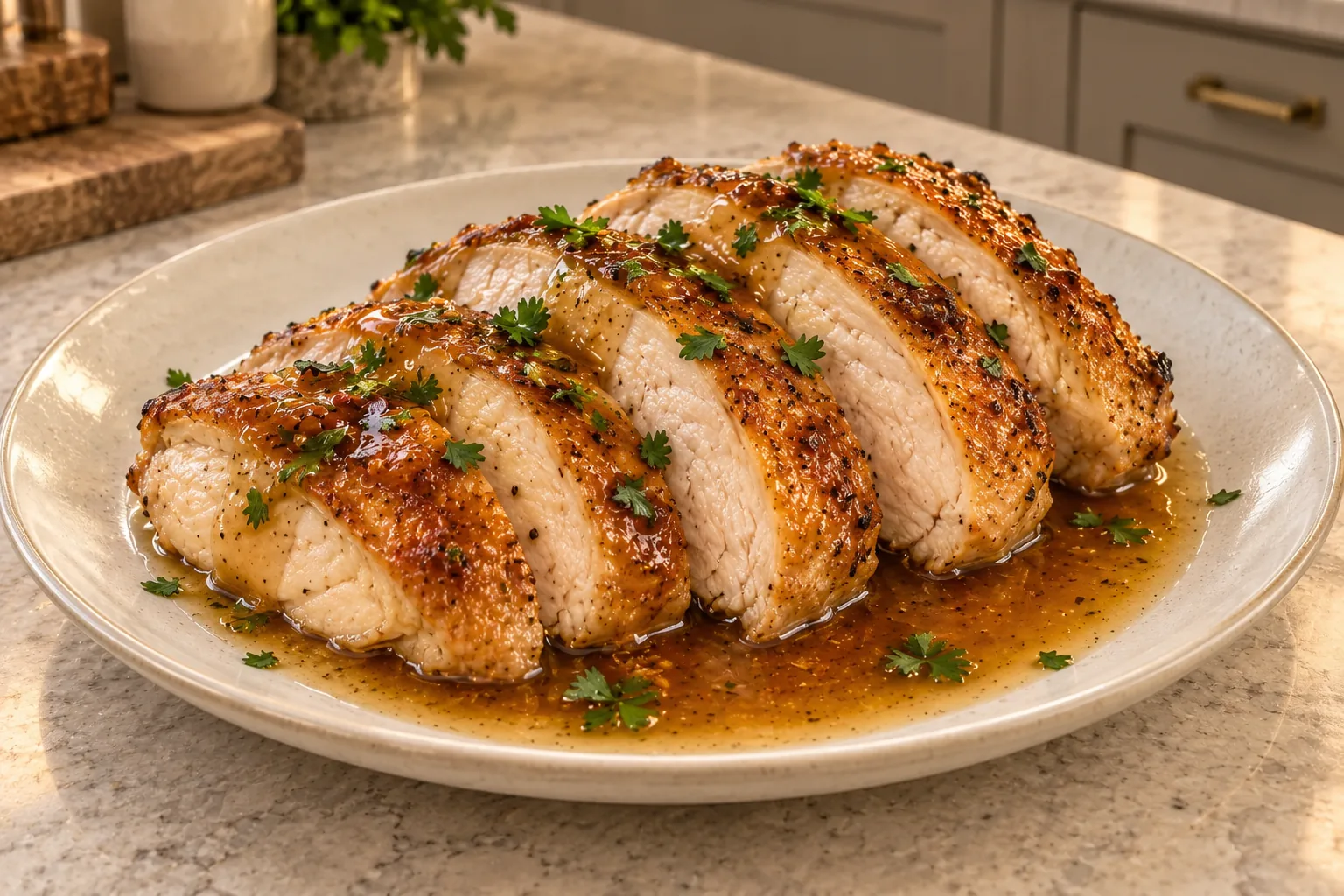
Roast chicken jus is the glossy, deeply savory sauce that turns a simple plate of chicken into something you want to spoon up after the meat is gone. This Full GAPS version starts with fresh meaty chicken wings or necks and homemade chicken meat stock. The bones and vegetables give the sauce body, and reduction concentrates everything into about one cup.
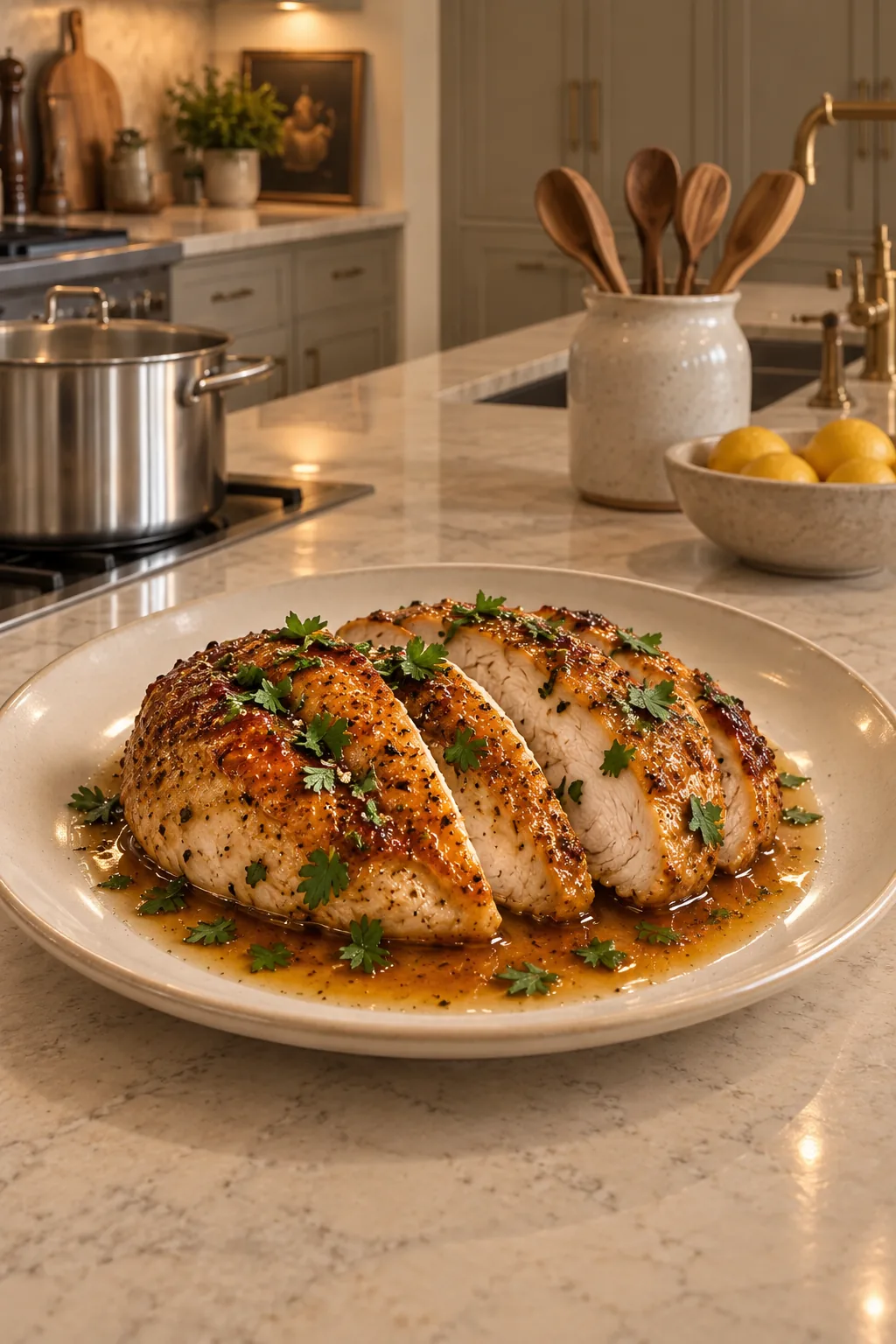
The finished jus should be translucent deep amber, not cloudy or creamy. It moves easily when hot but lightly coats a spoon. On roast chicken, it pools around the slices with a clean chicken flavor, soft herbs, and a little natural sheen.
Meat stock was the daily routine that made GAPS doable for our family. I started a pot first thing so we could drink it or turn it into soup. This jus has a different job. It is a concentrated serving sauce made from that stock, and it does not replace the warm cups of meat stock that remain part of the day.
Where Roast Chicken Jus Fits On GAPS
This recipe fits Full GAPS. Begin with homemade chicken meat stock made from raw meaty bones and joints. Use fresh meaty chicken wings or necks for the jus, with their meat, skin, cartilage, and joints still attached.
A bare leftover cooked carcass belongs to the later bone-broth route. This Full GAPS sauce keeps the fresh meaty pieces and short cooking window. The jus is reduced hard for flavor and served by the spoonful over meat.
The source’s store-bought stock, seed oil, and optional vinegar are left out. Ghee or rendered chicken fat coats the wings for roasting. Homemade meat stock supplies the measured quart.
Because the sauce is reduced to one quarter of its starting volume, every flavor becomes stronger. Begin with meat stock that tastes balanced rather than salty. If the starting stock is heavily seasoned, the finished jus can become too salty before it reaches the correct texture.
Keep The One-Quart-To-Eight-Ounce Ratio
The source ratio is one quart liquid to eight ounces chicken bones. This card keeps that ratio but uses fresh meaty wings or necks. Weigh the chicken pieces before roasting so the reduction starts from the same formula every time.
One quart is four cups. The finished target is about one cup, or one quarter of the starting volume. That gives four servings of roughly two fluid ounces each.
If you double the card, use two quarts meat stock and one pound meaty wings or necks. Choose a wide enough pot for steady evaporation and allow more time for the larger volume to reach the same one-quarter endpoint.
Choose Fresh Meaty Wings Or Necks
Fresh chicken wings are easy to recognize and roast evenly. Necks also work well because they contain meat, skin, cartilage, and small joints. Keep the pieces meaty rather than stripping them down to bare bones.
Pat the pieces dry before adding fat. Moisture slows browning. Toss them with just enough melted ghee or rendered chicken fat to leave a light sheen, then spread them in one layer on an uncoated stainless-steel sheet pan.
The roasted pieces are part of the sauce-making process, not waste. After straining, pick off the tender meat and soft skin and eat them while warm or fold them into another meal.
Roast Until Deep Golden Brown
Heat the oven to 450°F. Roast the meaty wings or necks for about forty minutes. Turn the pieces if one side colors much faster than the other.
The endpoint is deep golden brown with caramelized edges and rendered fat on the pan. The pieces should not be black or smell burned. Dark brown brings savoriness; burned bits make the finished jus bitter.
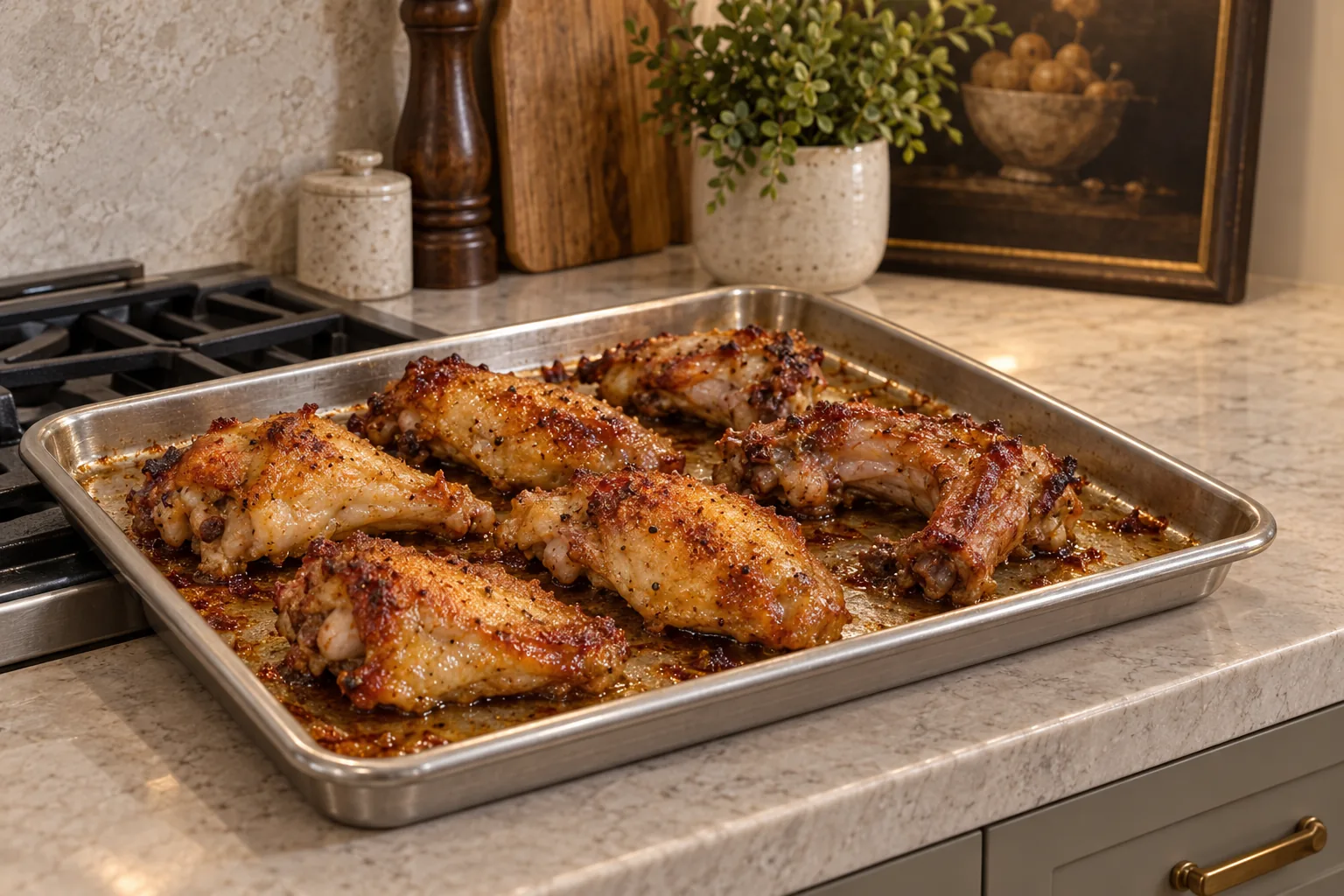
Save the browned drippings. They carry flavor and useful chicken fat. Scrape them into the stockpot with the roasted pieces rather than washing the sheet pan clean.
Prepare The Aromatic Vegetables
While the wings roast, roughly chop half a yellow onion, two celery stalks, and two peeled carrots into pieces close to one inch. Smash three to four garlic cloves and leave their skins on.
Cut the stems from half a bunch of flat-leaf parsley. The stems go into the simmering pot. Chop the leaves and hold them for the finished jus. Measure five thyme sprigs, two bay leaves, and one tablespoon whole peppercorns.
The vegetables are there to support the chicken flavor. Keep the pieces large enough to strain cleanly. Tiny dice break down into the liquid and make a clear sauce harder to achieve.
Start With Homemade Chicken Meat Stock
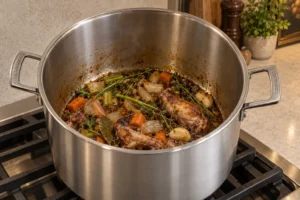
Put the roasted wings or necks in the Le Creuset stainless stockpot. Add the browned pan drippings and one quart homemade chicken meat stock. Bring the liquid to a strong simmer, then lower the heat to medium.
Once bubbles break the surface steadily, add the onion, celery, carrots, garlic, parsley stems, thyme, bay leaves, and peppercorns. Keep the pot uncovered so the liquid can reduce.
A steady simmer gives you movement without a violent rolling boil. The ingredients should circulate gently. If the liquid spits or the vegetables pound against the pot, lower the heat.
Reduce From Four Cups To One Cup
Simmer for about one hour, watching the level more closely near the end. The vegetables become very soft, the chicken pieces give up their gelatin, and the liquid deepens from gold to amber.
The target is about one cup. In a large pot that will look surprisingly shallow. Most of the pot wall and bottom area will be exposed above the reduced liquid. Do not stop with a stockpot full of broth.
Mark the starting level on a wooden spoon if judging volume by sight feels uncertain. Dip the spoon into the full pot and note where the liquid reaches. As it reduces, compare that line with the current level. Near the end, pour the strained liquid into a measuring cup if you need an exact check, then return it to the pan for a few more minutes.
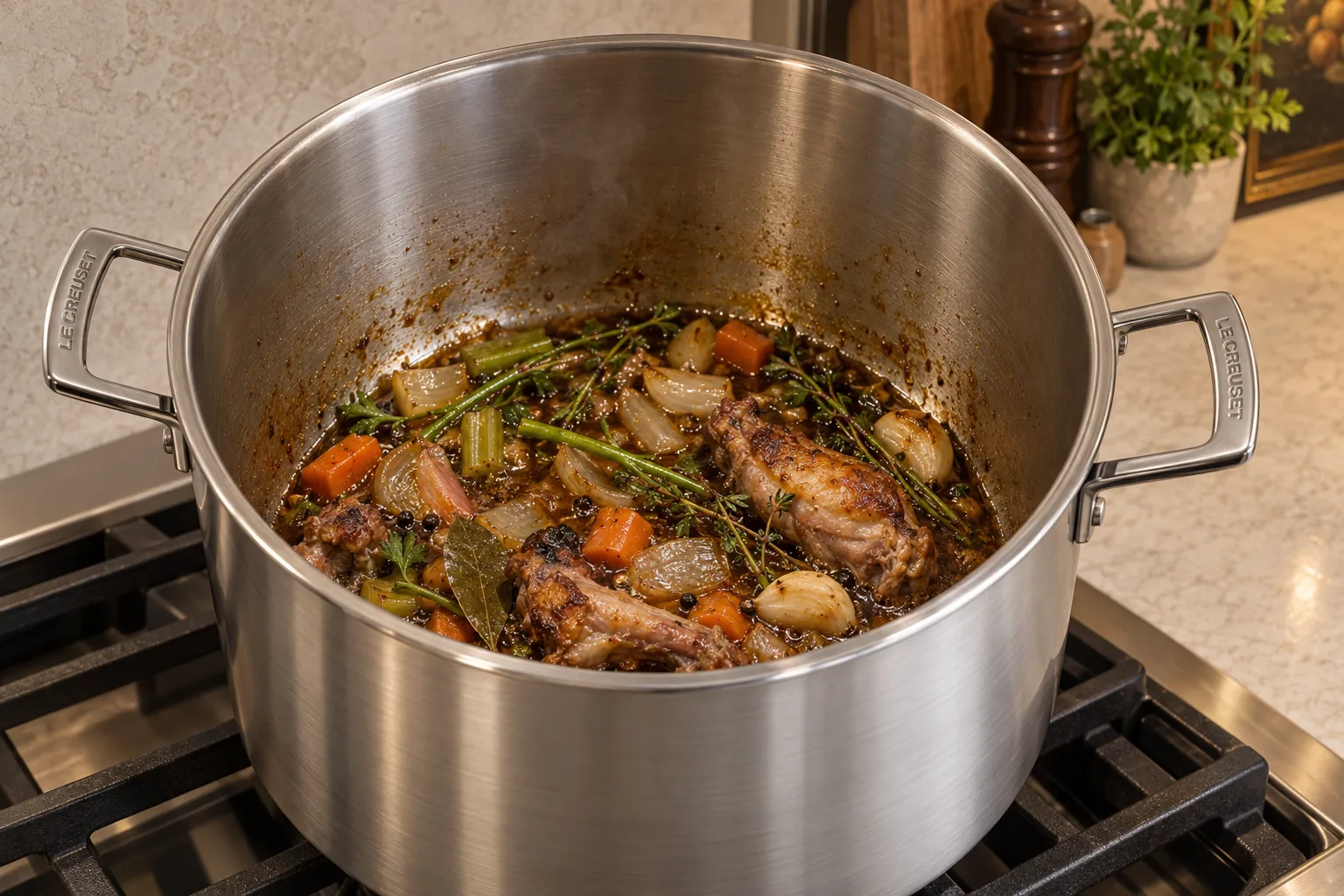
Dip a clean spoon into the liquid. The jus should leave a thin shiny film rather than sliding off like plain water. It should still pour easily. Continue reducing a few minutes at a time if it is pale and watery.
Strain For A Clear Sauce
Set a fine stainless-steel sieve over a heatproof glass bowl or a smaller saucepan. Pour the contents through the sieve. Let the liquid drain, but do not mash the vegetables through the mesh.
For an especially clear finish, line the sieve with clean cotton cheesecloth. The cloth catches small particles that would make the jus murky. Work carefully with the hot pot and support the sieve securely.
Return the strained jus to low heat if it needs to stay warm. Stir in the chopped parsley leaves. Taste before adding salt because the starting meat stock may already be seasoned. Add sea salt a few grains at a time.
Serve The Jus As A Sauce
Spoon about two fluid ounces over slow-roasted garlic and lemon chicken, roast chicken, or pork. A little goes a long way because the flavor is concentrated.
The sauce should sit around the meat in a thin glossy pool. It is not flour-thickened gravy. If chilled jus sets softly from its natural gelatin, it will melt back to a fluid sauce as it warms.
Cool And Store It Safely
Cool the strained jus promptly in a shallow covered container. Refrigerate it for up to two days. The chilled sauce may become gelled; that is expected and shows the natural gelatin is doing its work.
Freeze portions in straight-sided freezer-safe glass jars with room for expansion. Small portions thaw quickly and let you warm only what you need. Reheat gently on the stove until the jus is steaming.
Do not microwave a jar of gelled jus. Set the jar in the refrigerator to thaw, then spoon the contents into a small saucepan. Low heat melts the gelatin evenly and keeps the sauce from reducing past its intended one-cup concentration.
Recommended Equipment
- Uncoated stainless-steel rimmed sheet pan
- Le Creuset Classic Stainless Steel Stockpot, 10 quart
- Fine stainless-steel mesh sieve
- Clean cotton cheesecloth, optional
- Heatproof glass bowl or small saucepan
- Chef’s knife and cutting board
- Kitchen scale and liquid measuring cup
- Tongs and wooden spoon
Frequently Asked Questions
Can I Use A Leftover Roast Chicken Carcass?
Use fresh meaty wings or necks for this Full GAPS route. A bare cooked carcass belongs to the later bone-broth route after the required waiting period.
Can I Use Store-Bought Chicken Stock?
Use homemade chicken meat stock. The jus begins with a full quart, so the quality and seasoning of that stock shape the finished sauce.
Why Is My Jus Still Thin?
Check the volume. One quart must reduce to about one cup. A pale sauce with more than a cup remaining needs more uncovered simmering time.
Should I Add Apple Cider Vinegar?
The source lists vinegar as optional. This Full GAPS meat-stock sauce does not need it. Fresh meaty joints, homemade stock, and reduction provide the body.
Can I Add Gelatin?
The wings or necks and homemade meat stock should supply natural gelatin. Reduce to the measured one-cup endpoint before deciding the sauce needs anything else.
Can I Make It Ahead?
Yes. Make the jus up to two days ahead, chill it, and warm it gently on the stove before serving. Add the chopped parsley after reheating for the freshest flavor.
Roast Chicken Jus Recipe
Roast Chicken Jus With Homemade Meat Stock for Full GAPS
Ingredients
Equipment
Method
- Preheat the oven to 450°F. Pat the fresh meaty wings or necks dry and lightly coat them with melted ghee or rendered chicken fat.
- Spread the pieces in one layer on an uncoated stainless-steel sheet pan and roast for about 40 minutes, until deep golden brown with caramelized edges but no blackened meat.
- While the chicken roasts, chop the onion, celery, and carrots into roughly 1-inch pieces. Smash the garlic. Reserve the parsley stems for the pot and chop the leaves for finishing.
- Transfer the roasted chicken pieces and browned pan drippings to the stockpot. Add the homemade chicken meat stock, bring to a strong simmer, then lower the heat to medium.
- Add the onion, celery, carrots, garlic, parsley stems, thyme, bay leaves, and peppercorns. Simmer uncovered for about 1 hour, until the starting stock reduces to one quarter of its volume and the jus leaves a thin shiny film on a spoon.
- Strain through a fine stainless-steel sieve into a heatproof bowl or small saucepan. Line the sieve with cotton cheesecloth for an especially clear jus, and do not mash the solids through.
- Stir in the chopped parsley leaves. Taste before adding sea salt, then serve the measured jus over roast chicken or pork.
Notes
Boundary: Do not use a bare leftover cooked carcass for this route; that belongs to later bone broth.
Reduction: Reduce to one quarter of the starting volume; 1× equals 1 cup finished jus.
Storage: Refrigerate for up to 2 days or freeze in small portions with expansion room.
Tried this recipe?
Let us know how it was!Keep Meat Stock And Bone Broth Straight
The Meat Stock vs Bone Broth Chart gives you a quick kitchen reference for ingredients, timing, GAPS placement, and which pot you are actually making. Find current releases and upcoming additions in the WFLI shop.

Leave a comment