

This roasted root vegetable salad turns rutabaga, celery root, and black radish into a warm Full GAPS side with crisp browned edges and tender centers. The three roots are peeled, cut into one-inch cubes, coated in GAPS cooking fat and sea salt, and roasted in one layer until the undersides caramelize.
In our family of eight, a side dish that can leave the oven before the last part of dinner is finished is genuinely useful. These roots can go on the table hot, warm, or at room temperature, so the salmon or other main dish does not have to land at the exact same minute.
The vegetables are intentionally plain. There is no potato, bottled seasoning, sweetener, or hidden dressing in the pan. That makes the component easy to recognize on a mixed plate and easy to pair with fish, eggs, roasted meat, green vegetables, or a separately made vinaigrette.
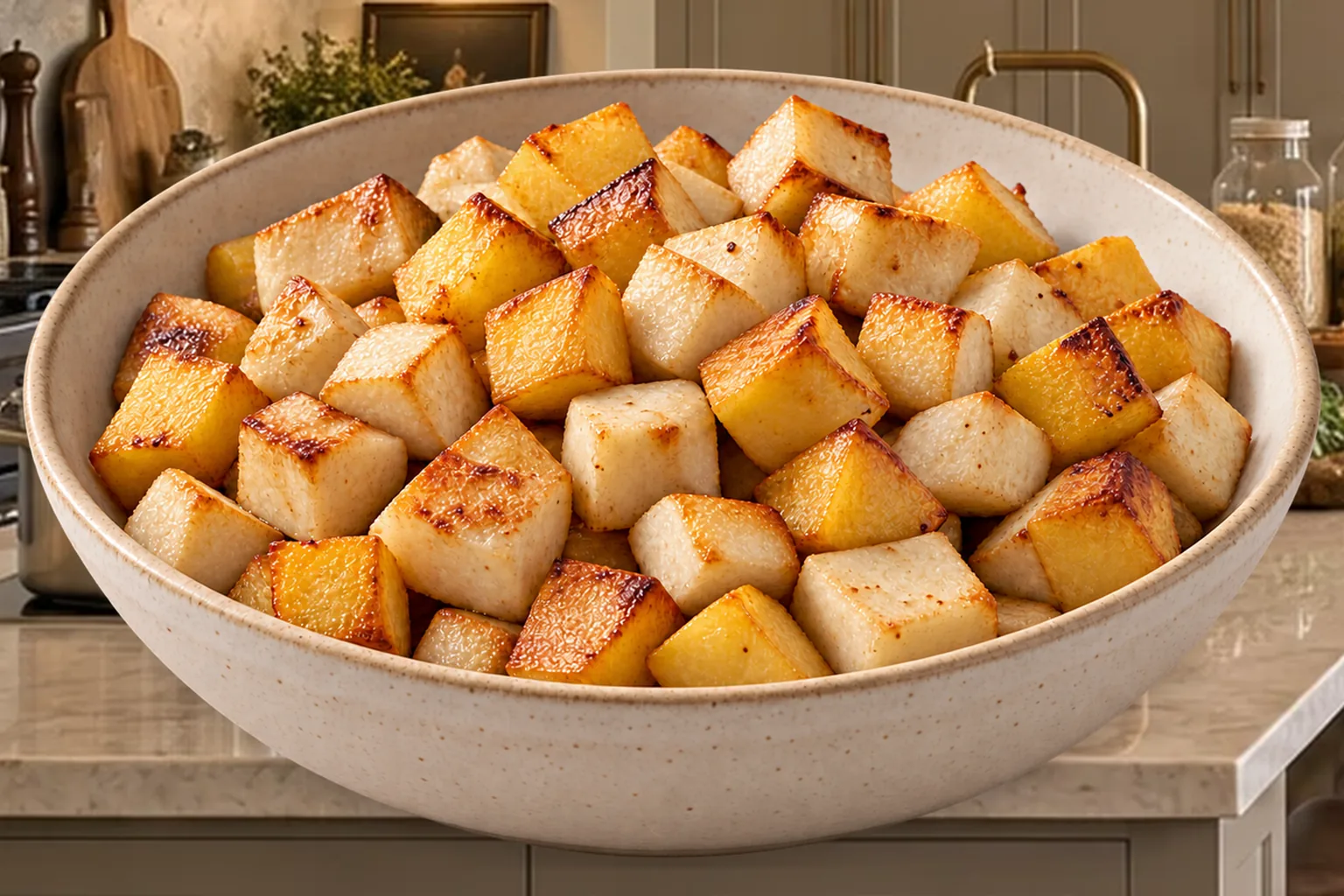
Where Roasted Root Vegetable Salad Fits On GAPS
This complete recipe fits Full GAPS. Black radish and celeriac, another name for celery root, appear in current GAPS food material, and rutabaga appears in the GAPS practitioner cookbook. The combination is a later, mixed vegetable preparation rather than an Introduction Diet recipe.
The cooking fat matters. The original version uses avocado oil in a hot oven, but the 2020 GAPS text keeps cold-pressed avocado oil and other delicate plant oils raw. For roasting, use the same one-quarter-cup measure of melted ghee or rendered animal fat.
Ghee gives the roots a gentle buttery flavor without the milk solids that darken quickly. Beef tallow, duck fat, goose fat, pork dripping, lamb fat, or chicken fat also follow the GAPS cooking-fat rule. Use one that tastes good with the rest of your meal.
Know The Three Root Vegetables
Rutabaga has pale yellow flesh and a mellow, slightly sweet flavor after roasting. Choose one that feels heavy and firm, without wet soft spots. The outside may be waxed, so remove the full outer layer rather than trying to keep the skin.
Celery root, or celeriac, looks knobby and rough. Under that exterior is dense ivory flesh with a mild earthy, celery-like aroma. Slice away the tangled root end and every deeply grooved patch so no dirt remains trapped in the finished cubes.
Black radish has a dark skin and white interior. Once peeled and roasted, its sharp raw bite softens. The finished cubes still bring a little more character than the rutabaga and celery root, which keeps the mixture from tasting flat.
Use one large vegetable of each kind. Their shapes will not match, so aim for similar cube size rather than trying to make the three roots look identical before cutting.
Peel And Cut One-Inch Cubes
Wash and dry the vegetables before peeling. Set a stable cutting board on the counter and use a sharp chef’s knife. These roots are dense, and a dull blade makes the job harder and less controlled.
Cut a thin slice from the top and bottom of each root to make flat surfaces. Stand the vegetable on one flat end, then cut downward to remove the skin. For the celery root, follow the contours and take off enough flesh to remove the fibrous brown crevices.
Cut the peeled roots into thick slabs, then strips, then cubes about one inch across. A one-inch cube is large enough to hold a creamy center through the 40-minute maximum roast while still exposing enough surface to brown.
Keep very small scraps out of the roasting pan. They will darken before the full-size cubes are tender. If a few pieces are slightly larger, place them near the hotter outer area of the pan and check them with the others at the turn.
Use Ghee Or Rendered Animal Fat
Measure one-quarter cup melted ghee or rendered animal fat. If your ghee is solid, warm it just until fluid. You can make Homemade Ghee for Full GAPS ahead of time and measure it from the finished jar.
The fat should coat the cubes in a thin glossy film. It should not collect as a deep puddle around them. The measured amount helps the dry outer surfaces brown and keeps the dense roots from tasting chalky.
Add one-half teaspoon sea salt. Toss in a large bowl until the sheen and salt look evenly distributed, especially around the irregular celery-root pieces.
Spread The Roots In One Layer
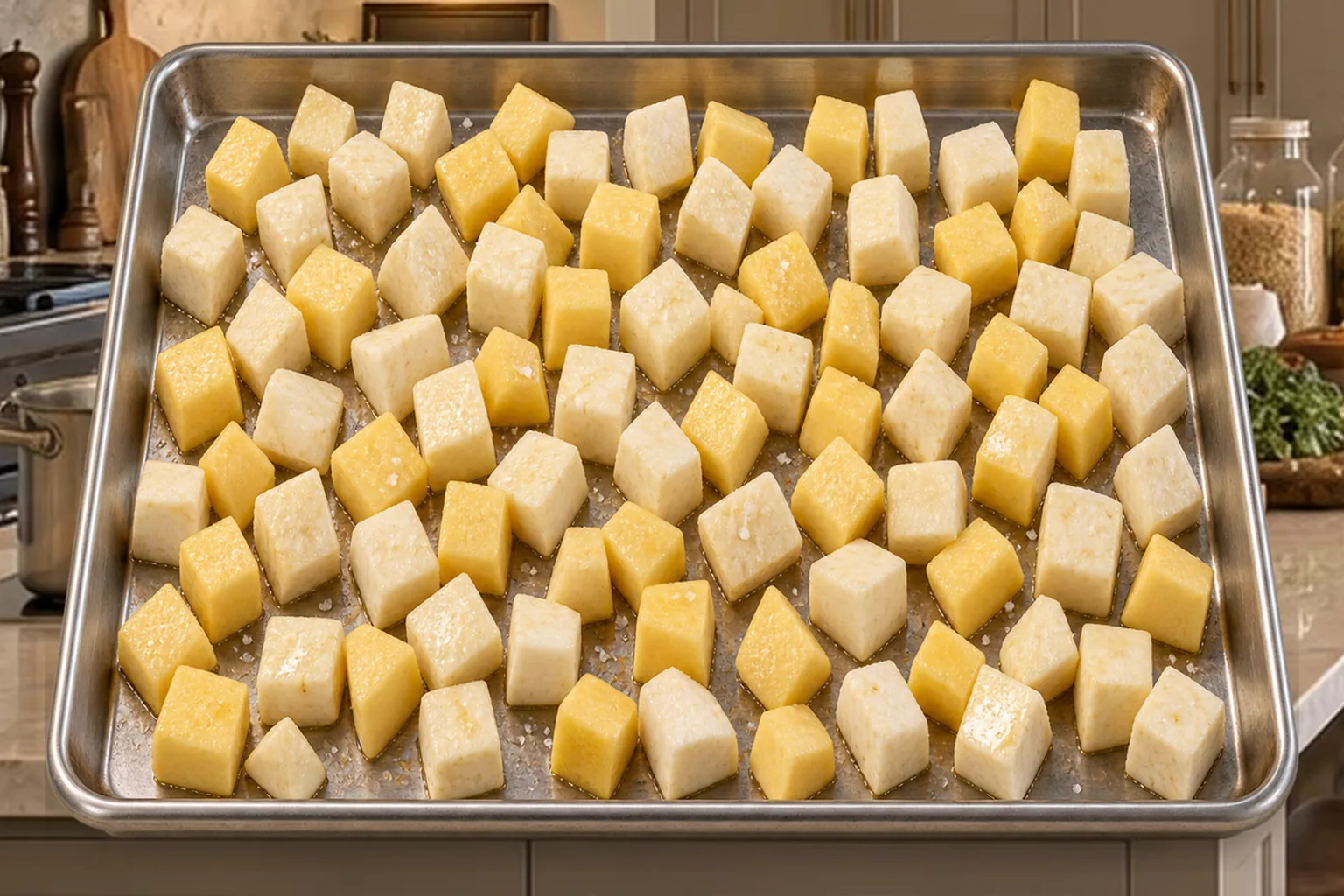
Heat the oven to 400°F. Use a large rimmed stainless-steel sheet pan that gives the cubes room to sit in one layer. A crowded pan traps steam and leaves the vegetables pale and soft instead of browned.
Tip the coated roots onto the sheet pan and spread them apart with a stainless or silicone spatula. No cube should sit on top of another. Turn a few flat faces downward so they have full contact with the hot metal.
Look across the pan before it goes into the oven. The three roots should be mixed throughout, with small channels of bare metal between them. Any melted fat left in the bowl can be scraped over the driest-looking pieces.
Roast For Twenty-Five Minutes
Place the sheet pan on the center oven rack and roast for 25 minutes without repeatedly opening the door. The fat will become fragrant, the raw radish smell will soften, and the edges will begin to turn golden.
At 25 minutes, pull the rack out far enough to check the underside of several cubes safely. Use the spatula to lift rather than crush them. A ready-to-turn face has distinct golden or light brown patches; a completely pale, wet-looking face needs the second roasting period.
Turn the cubes so a paler face meets the pan. Redistribute pieces from the hotter outer edge toward the middle and move paler middle pieces outward. Return the pan to the oven.
Finish For Up To Fifteen Minutes
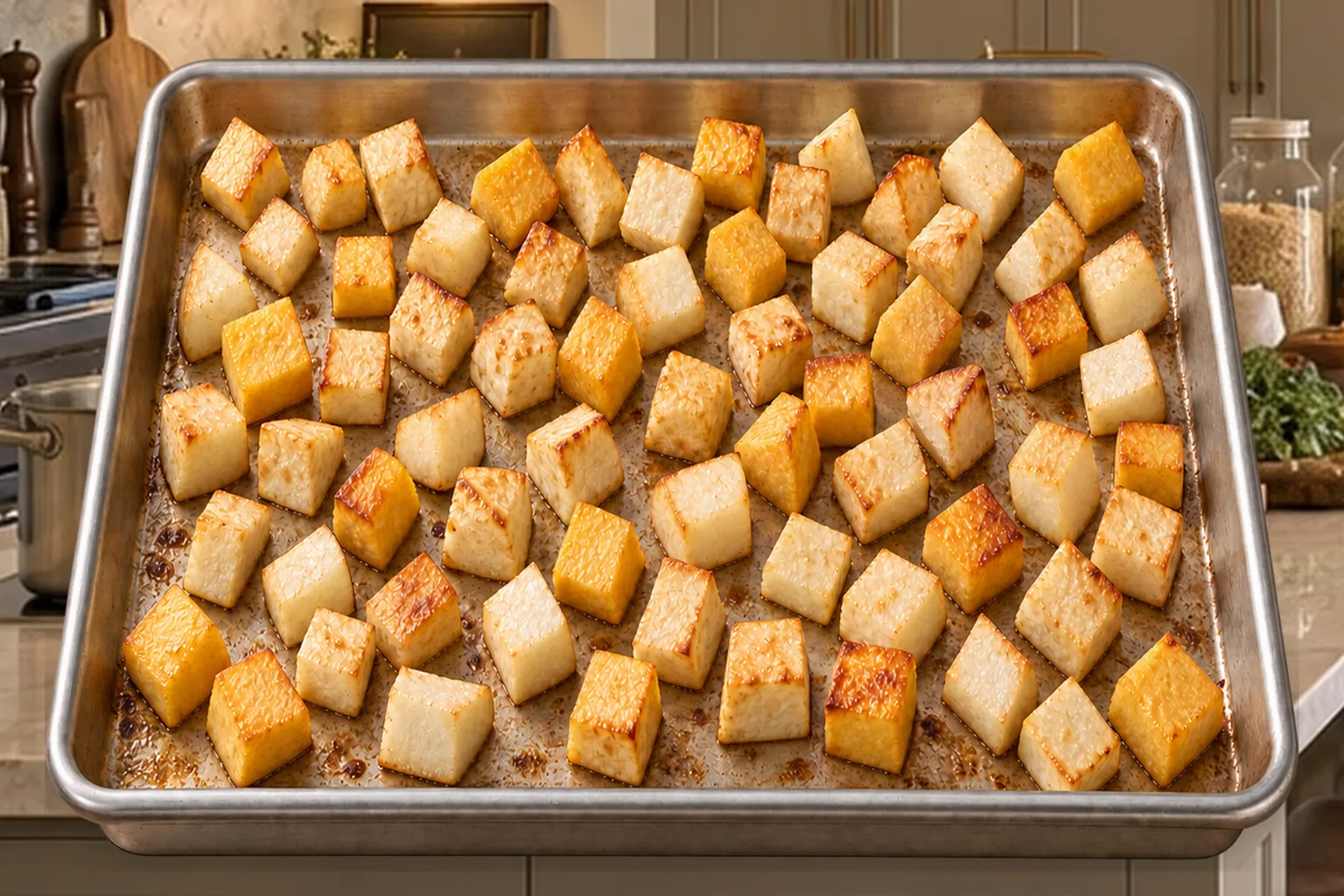
Roast for up to 15 minutes more. Begin checking before the full time if your cubes run small or the first side browned deeply. The total oven time can reach 40 minutes, but the vegetables, not the clock alone, determine when the pan is ready.
Test one rutabaga cube and one celery-root cube with the point of a fork. It should enter the center without a hard crunch, while the cube still holds together when lifted. The black radish should have softened and lost most of its sharp raw smell.
The finished pan should show mixed shades rather than one uniform color: pale gold on broad surfaces, deeper brown at some corners, and creamy interiors when a cube breaks. Stop before the smallest pieces become dark and hollow.
Use The Physical Cues Instead Of Guessing
Before roasting, the cubes look matte and firm. After coating, they have a light sheen but keep sharp edges. If the pan looks flooded with fat, spread the vegetables over more surface area rather than leaving them piled together.
At the first turn, the undersides should show patchy browning and release from the sheet pan. If they cling firmly, slide the spatula under them and give them more time rather than scraping away the browned face.
When finished, the aroma is earthy and gently sweet with a savory note from the fat. The cubes feel tender under a fork, yet remain separate. Pale hard centers need more oven time; collapsed greasy pieces have gone too far.
Serve Hot, Warm, Or At Room Temperature
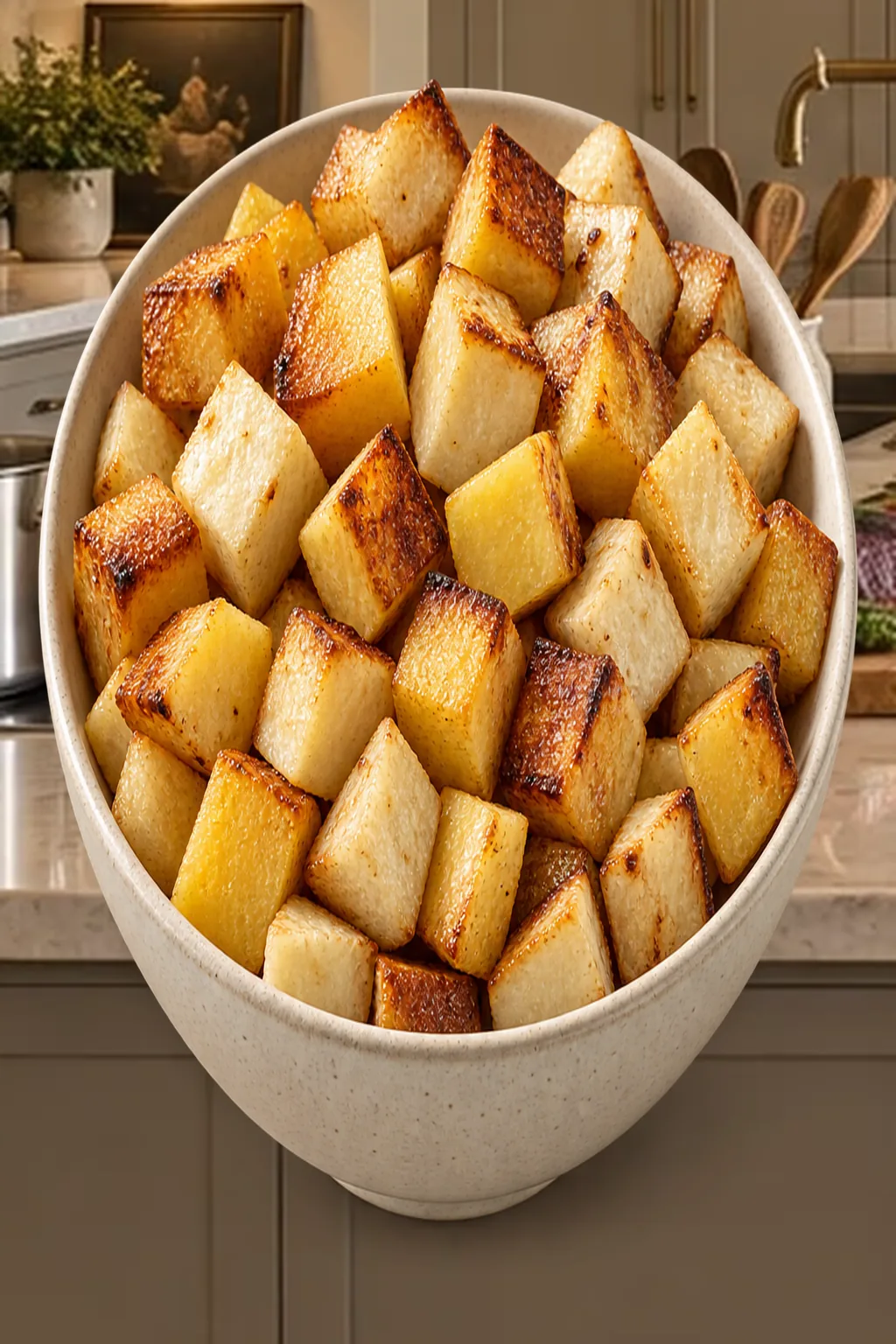
Transfer the roasted roots to a shallow serving bowl so they do not continue cooking against the hot sheet pan. Serve them hot beside the Pan-Seared Salmon for Full GAPS, or let them cool to warm or room temperature for a composed plate.
For the same meal, add Blanched Green Beans or Blanched Asparagus, plus Dill-Marinated Cucumber or Dill-Marinated Sweet Onions.
The Fresh Herb Vinaigrette for Full GAPS belongs on the completed salad or at the table, not in this roasting pan. Keeping it separate preserves the measured fat and the crisp roasted surfaces.
This component is especially useful when you want to prep earlier in the day. Roast it before the final protein and use the source-supported hot, warm, or room-temperature serving range. The source does not assign a multi-day refrigerated storage limit, so this post does not invent one.
Recommended Equipment
- Large rimmed stainless-steel sheet pan
- Large mixing bowl
- Sturdy cutting board
- Sharp chef’s knife
- Vegetable peeler
- Measuring cup and measuring teaspoon
- Stainless or silicone spatula
- Shallow serving bowl
Frequently Asked Questions
Is This Potato Salad?
No. Potatoes are not used in this Full GAPS recipe. Rutabaga, celery root, and black radish give the finished bowl a hearty root-vegetable texture while keeping the ingredient list inside this recipe’s GAPS route.
Can I Use Avocado Oil For Roasting?
Keep cold-pressed avocado oil raw on GAPS. Use melted ghee or rendered animal fat for the 400°F roast.
Can I Use Butter Instead Of Ghee?
Butter can be used after it has been introduced, but its milk solids may brown before the dense roots are tender. Ghee is the steadier dairy-fat option for this oven temperature.
Can I Use A Different Radish?
Yes. The source allows another radish variety when black radish is unavailable. Keep the recipe to one large peeled radish and cut it to the same one-inch size as the other roots.
Why Do The Cubes Need Space?
Space lets oven heat reach the sides and allows moisture to escape. Overlapping cubes steam one another and slow the browning that gives this simple recipe its flavor.
How Do I Know The Roots Are Done?
Look for browned corners and flat faces, then test the centers. A fork should enter without a hard crunch, and the cubes should remain intact when lifted.
Can I Make This Before Dinner?
Yes. The vegetables may be served hot, warm, or at room temperature. Roast them before the final protein and move them off the hot sheet pan when they are tender.
Roasted Root Vegetable Salad Recipe
Roasted Root Vegetable Salad for Full GAPS
Ingredients
Equipment
Method
- Heat the oven to 400°F and place a rack in the center.
- Wash and dry the three roots. Cut a flat surface on each, peel away every tough or deeply grooved section, and cut the flesh into cubes about 1 inch across.
- Place all cubes in the mixing bowl. Add the melted ghee or rendered animal fat and sea salt, then toss until every surface has a thin sheen. Spread the cubes in one uncrowded layer on the stainless-steel sheet pan with narrow channels of bare metal between them.
- Roast for 25 minutes without repeatedly opening the oven.
- Lift several cubes to check the undersides. When they show patchy golden-brown color, turn the cubes and move paler center pieces toward the hotter outer area of the pan.
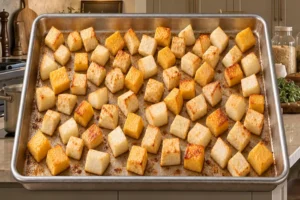
- Roast for up to 15 minutes more, checking before the full time when pieces run small. Stop when a fork enters the centers without a hard crunch and the cubes remain intact with browned corners and flat faces.
- Transfer the roots to a shallow serving bowl and serve hot, warm, or at room temperature.
Notes
Cooking fat: Use melted ghee or rendered animal fat. Keep cold-pressed avocado oil raw.
Timing: The source gives 25 minutes plus up to 15 additional minutes; it does not assign a separate prep time to this component.
Physical cues: Look for patchy browning at the turn, tender fork-pierced centers, distinct cubes, and a gently sweet earthy aroma.
Serving: Serve hot, warm, or at room temperature. The source does not assign a multi-day refrigerated storage limit.
Tried this recipe?
Let us know how it was!Make Room For The Parts Of Dinner That Need You Last
The planned Weekly Kitchen Rhythm Planner helps you line up make-ahead vegetables with a last-minute protein, so every pan does not need attention at once. Find current resources and upcoming releases in the WFLI shop.

Leave a comment