

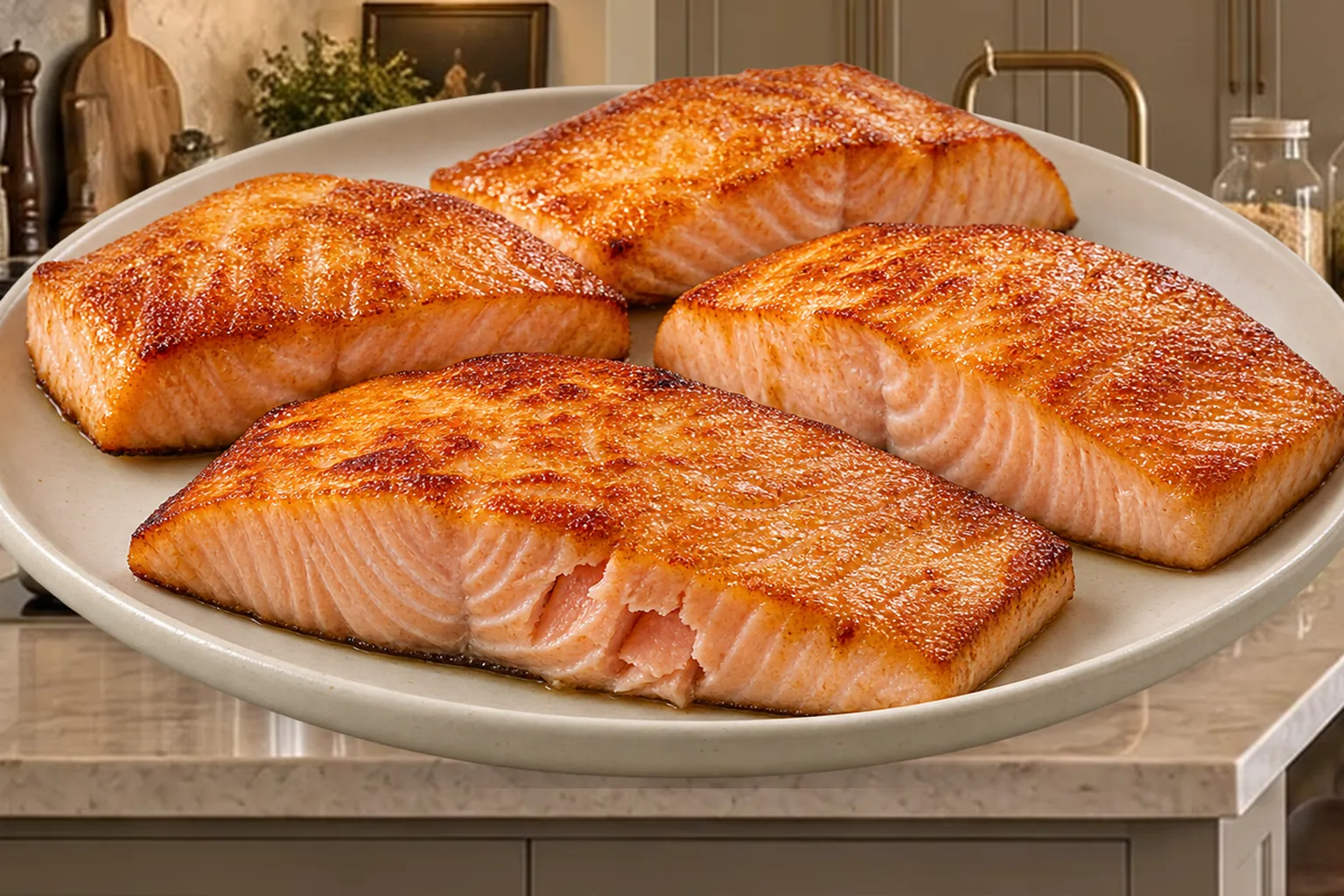
This pan-seared salmon gives you a plain, useful Full GAPS protein with a golden surface and a moist center. Fresh salmon cooks in ghee or introduced butter for three to five minutes per side, with sea salt added in the pan. There is no sauce, breading, sweetener, or garnish hiding the fish.
In our family of eight, a simple protein makes dinner easier to finish in more than one direction. I can serve the salmon with plain vegetables for one plate, vinaigrette and a composed salad for another, and still keep the base recipe clear enough that everyone knows what is in it.
This salmon also works as the warm protein in a composed salad. Keeping it as its own recipe makes the timing easier to follow and lets you pair it with whichever vegetables your family wants that day. Ahi tuna needs a much shorter sear and a different doneness cue, so it belongs in its own recipe rather than being tucked into the notes here.
Where Pan-Seared Salmon Fits On GAPS
This recipe fits Full GAPS. Fresh fish is a supported food, and the cooking fat follows the current GAPS rule for heat. Use ghee, or use butter after butter has been introduced and tolerated.
Use ghee for the dairy-light route instead of heating cold-pressed olive oil. Ghee is clarified butter with the milk solids and whey removed, and it is the practical GAPS cooking fat for a hot skillet.
This is a true pan sear, so it belongs in Full GAPS rather than the Introduction Diet. A short ingredient list does not move a high-heat preparation into an earlier stage.
Choose Fresh Salmon Portions
Use one and one-half pounds fresh salmon. Four portions of roughly similar thickness cook more evenly than one piece with a thin tail and a thick center. Skin-on and skinless portions both fit this preparation, so use the fresh salmon available to you.
The salmon should smell clean and mild. The flesh should look moist without sitting in cloudy liquid, and it should spring back lightly when pressed. Skip pieces with dry brown edges or a strong stale odor.
Pat excess surface moisture away before the salmon reaches the skillet. A wet surface steams first and makes a golden sear harder to develop. Keep the portions cold until the pan and the rest of the meal are ready.
If the portions vary in thickness, place the thickest pieces in the center of the skillet and the thinner ones nearer the edge. Watch each piece rather than forcing every portion to leave the pan at the same second.
Set the portions on a clean plate before the pan heats so they can move into the skillet without delay. Keep the sea salt, measured fat, spatula, and warm serving plate beside the range. This cook moves quickly, and having those four things ready prevents a golden surface from turning dark while you search for a tool.
Do not stack the portions or press them flat. Full contact with the skillet comes from the natural weight of the fish. Pressing squeezes moisture from the surface and does not make a thick center cook at the same rate as a thin one.
Use A GAPS-Compatible Cooking Fat
Measure two tablespoons ghee, or butter after it has been introduced. Ghee is the broadest Full GAPS route for this hot skillet because the milk solids and whey have been removed. If you need it, make the Homemade Ghee first and measure from the finished jar.
Butter is still supported for cooking once it fits your dairy-introduction sequence, but its small remaining milk solids can brown quickly in a very hot pan. Watch the aroma and color of the fat rather than letting it turn dark and bitter.
Do not substitute cold-pressed olive oil in this hot skillet. Keep olive oil raw for dressings and finished food, including the separate Fresh Herb Vinaigrette used with a completed composed salad.
Heat The Artichaut Skillet Before Adding Salmon
Place the registered Le Creuset Signature 10.25-inch Artichaut skillet over medium-high heat. Let it become hot before adding the ghee or butter. The pan should feel decisively hot when your hand is held safely above it, without visible smoke.
Add the measured fat and tilt the skillet so it coats the cooking surface. The fat should melt promptly and look fluid. With ghee, look for a shimmer; with butter, watch for foaming without dark scorched solids.
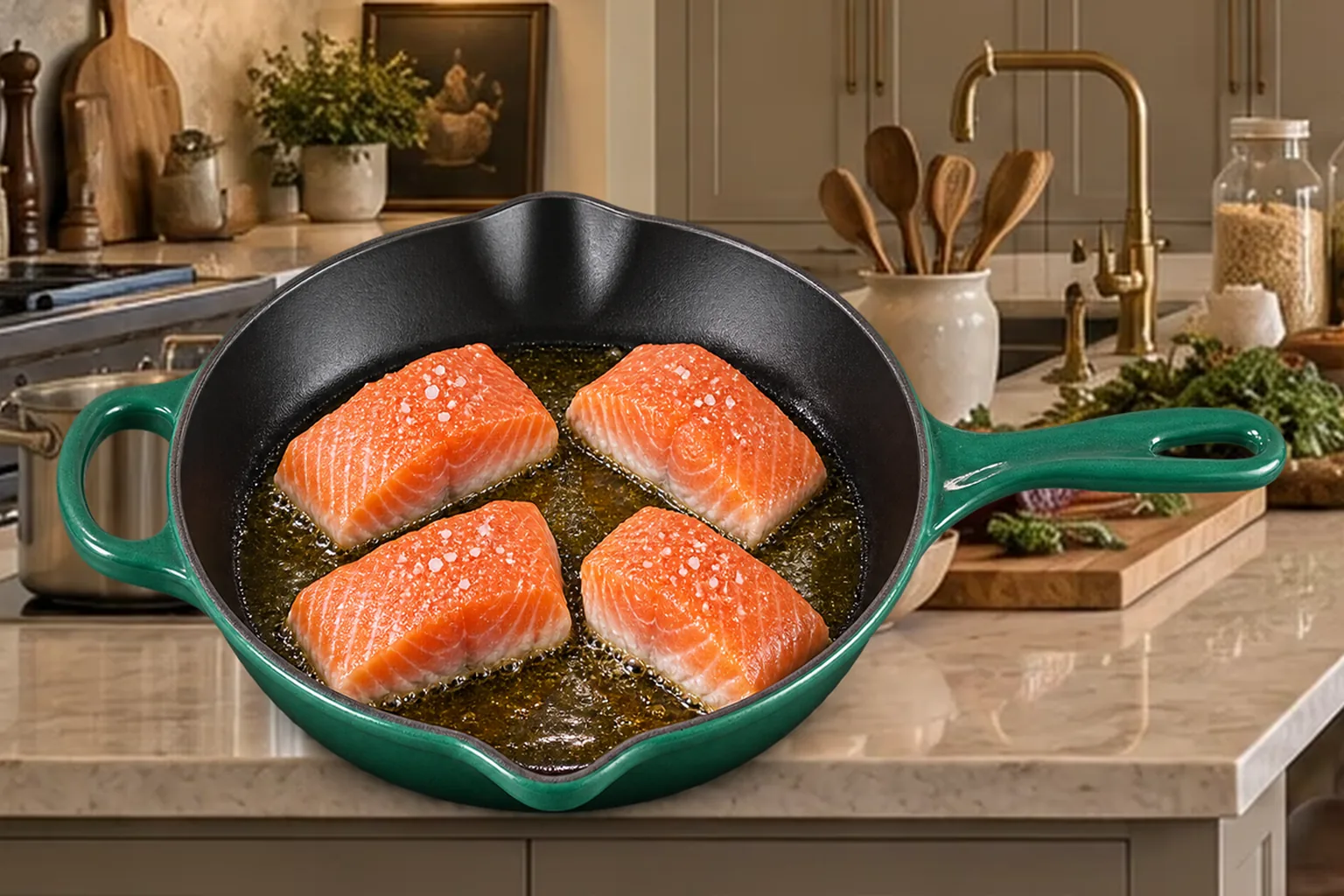
Set the salmon portions into the skillet with space between them. Do not crowd or overlap the fish. As soon as the salmon is in the pan, reduce the heat to medium.
Salt And Cook The First Side
Sprinkle the top side with sea salt to taste. Cook the first side for three to five minutes. Leave the portions in place long enough for the surface against the skillet to brown.
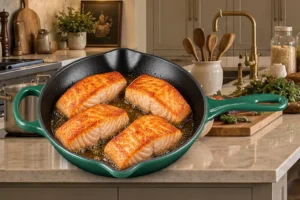
Watch the side of each portion. The opaque band will rise from the pan while the upper center stays coral. When the seared face releases with gentle pressure from a thin spatula and shows broad golden color, it is ready to turn.
If the fish grips the skillet firmly, give it more time instead of scraping. If the fat smells bitter or the crust darkens too quickly, lower the heat. The desired surface is golden and savory, not black.
Flip Once And Finish The Second Side
Turn each portion once with a thin spatula or fish turner. Sprinkle the newly exposed side with sea salt. Cook for another three to five minutes, using the same medium heat.
The exact time depends on thickness and the finished doneness you want. Medium-rare salmon keeps a darker pink middle. For a more opaque center, continue only until that center reaches the texture you want rather than extending the cook automatically.
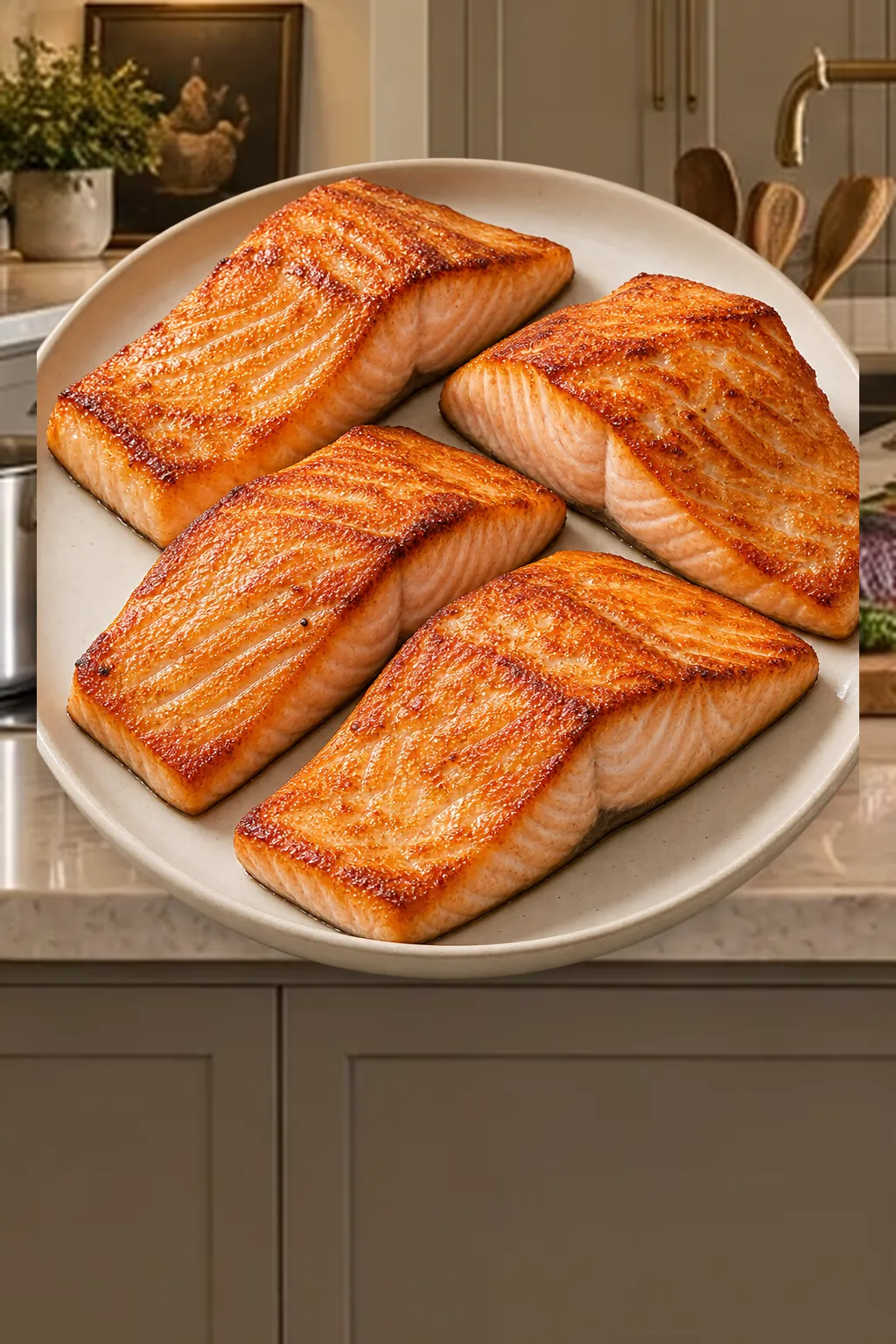
The first side should face up with a broad even crust. The fish should remain in one piece and flake under light fork pressure without becoming dry or chalky at the edges.
When one portion is thinner, check it at the three-minute end of the range and move it to the warm plate as soon as it is ready. Let a thicker portion finish separately. The three-to-five-minute range is there to accommodate thickness, not to require every piece to remain in the skillet for the maximum time.
Keep the serving plate close to the skillet so the salmon does not travel across the kitchen while hot fat is still on its surface. Set each piece down with its golden face visible and leave it undisturbed while the remaining portions finish.
Use The Physical Cues Instead Of Guessing
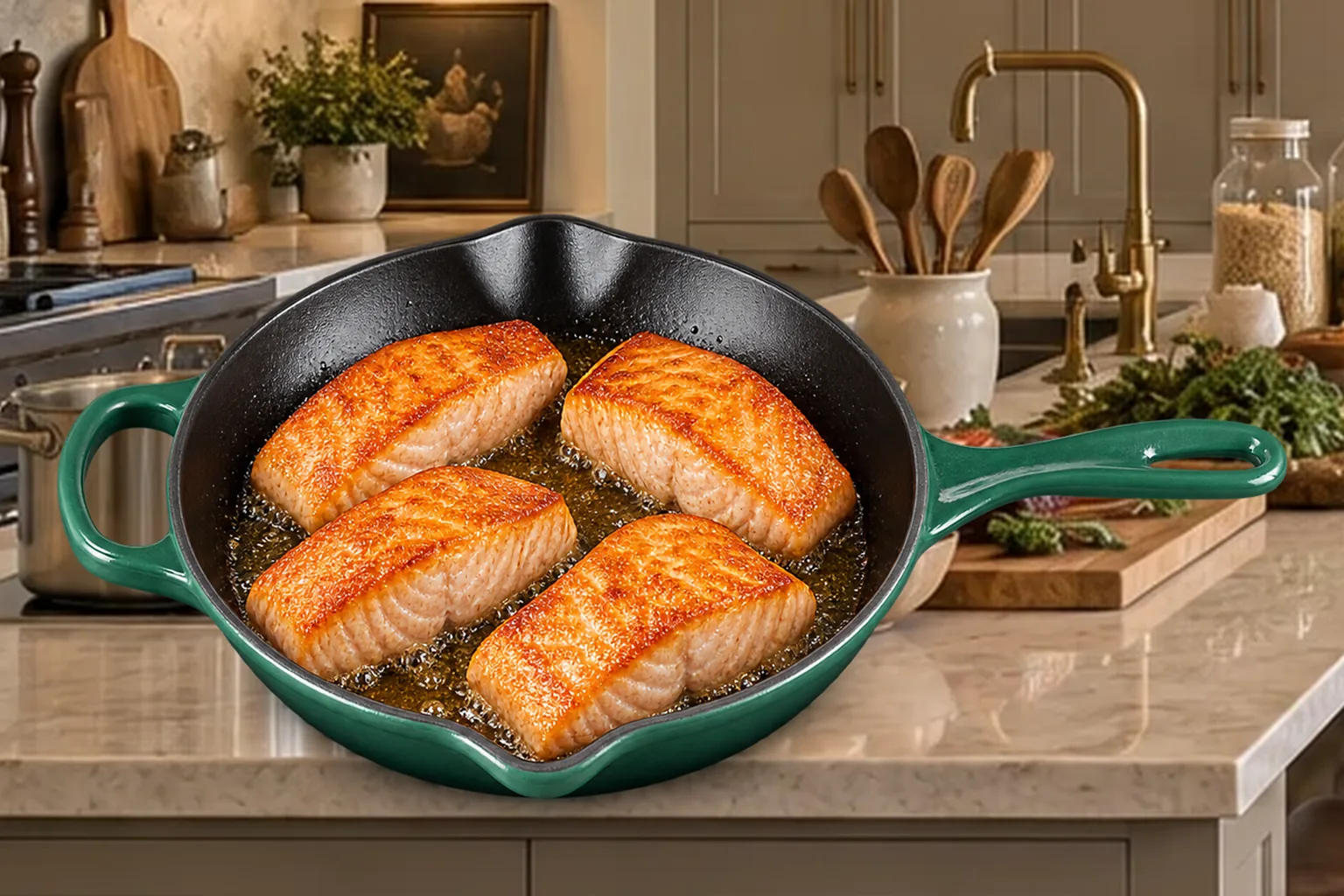
Raw salmon looks translucent and coral. As it cooks, an opaque band rises from the skillet side. The ghee should smell buttery and clean, and the searing fish should smell savory rather than acrid.
The underside is ready to turn when it releases and has broad golden patches. A pale wet surface needs more contact time. A black edge or sharp burnt smell means the pan is too hot.
After flipping, the second side develops the same color while the center finishes. A darker pink middle indicates medium-rare salmon. The final portion should feel springy and moist, not hard.
Serve The Salmon While It Is Warm
Move the salmon to a warm plate as each portion reaches its desired center. Serve it promptly so the crust remains distinct from the moist interior.
For the same composed meal, add the separate Blanched Green Beans, Blanched Asparagus, and either Dill-Marinated Cucumber or Dill-Marinated Sweet Onions.
The Fresh Herb Vinaigrette for Full GAPS can dress the completed salad while this salmon keeps its own simple seasoning. Keeping each component separate also makes the meal easier to scale for the number of people at your table.
This salmon is written to be cooked and served with the meal it anchors. Make it last, after any chilled vegetables and dressing are ready, so the crust reaches the table while it is still distinct from the moist center.
Recommended Equipment
- Le Creuset Signature 10.25-inch Artichaut skillet
- Thin stainless fish spatula or turner
- Measuring tablespoon
- Small dish for measured sea salt
- Warm serving plate
Frequently Asked Questions
Can I Use Olive Oil For The Sear?
No heated olive oil is used here. Use ghee, or butter after butter is introduced, and keep cold-pressed olive oil raw for finishing and dressings.
Can I Use Butter Instead Of Ghee?
Yes after butter has been introduced and tolerated. Watch it closely in the hot skillet because the remaining milk solids can brown faster than ghee.
Do I Need To Remove The Skin?
This formula works with either skin-on or skinless fresh salmon. Keep the preparation you buy; the important part is dividing it into portions of similar thickness.
Can I Use Frozen Salmon?
This recipe is written for fresh salmon. Frozen portions need to be fully thawed and dried before they can follow the same physical cues; do not put frozen fish into the hot skillet and expect the same timing.
How Do I Know When To Flip?
Flip when the first side releases with gentle spatula pressure and has a broad golden surface. The opaque cooked band should have risen partway up the side.
How Long Does The Salmon Cook?
Cook three to five minutes on the first side, flip once, salt the second side, and cook another three to five minutes. Thickness and desired center determine where each portion falls inside that range.
Pan-Seared Salmon Recipe
Pan-Seared Salmon for Full GAPS
Ingredients
Equipment
Method
- Pat the salmon portions dry and arrange them on a clean plate. Keep the portions cold until the skillet, fat, salt, spatula, and warm serving plate are ready.
- Heat the Le Creuset Signature 10.25-inch Artichaut skillet over medium-high heat until decisively hot but not smoking. Add the ghee or introduced butter and tilt the skillet until the cooking surface is coated; the ghee should shimmer or the butter should foam without darkening.
- Place the salmon portions in the skillet with space between them, reduce the heat to medium, and salt the exposed tops. Cook for 3 to 5 minutes without pressing, until the opaque band rises partway up each portion and the first side releases with gentle spatula pressure.
- Flip each portion once with a thin fish spatula and salt the newly exposed side.
- Cook the second side for 3 to 5 minutes, checking thinner pieces first. The first side should stay broadly golden; the center should remain moist and may be darker pink for medium-rare or more opaque for the doneness you prefer.
- Transfer each finished portion to the warm serving plate as soon as it is ready and serve promptly while the crust is distinct from the moist center.
Notes
Cooking fat: Use ghee, or butter after it has been introduced and tolerated. Keep cold-pressed olive oil raw.
Doneness: A broad golden surface, clean buttery aroma, and moist springy center are the useful physical cues. Lower the heat if the fat smells bitter or the edges blacken.
Timing: Portion thickness determines where each piece falls within the three-to-five-minute range on each side.
Serving: Cook the salmon after chilled vegetables and dressing are ready so it reaches the table warm.
Tried this recipe?
Let us know how it was!Build The Rest Of The Meal Around One Clear Protein
The planned Weekly Kitchen Rhythm Planner helps line up components like chilled vegetables, vinaigrette, and a last-minute hot protein so dinner does not depend on doing everything at once. Find current resources and upcoming releases in the WFLI shop.

Leave a comment