

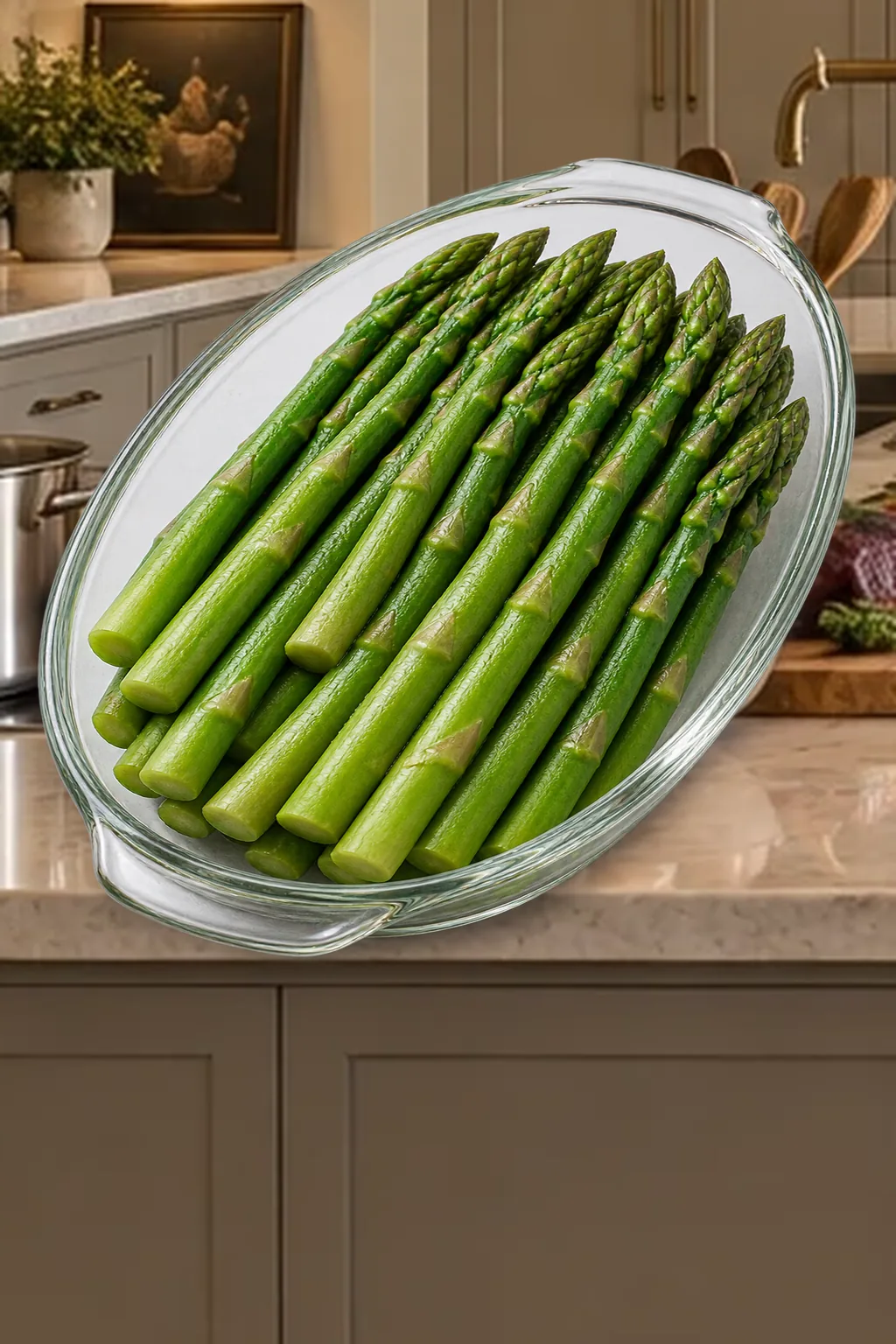
This blanched asparagus is a plain Full GAPS component built around one exact contrast: the spears simmer for four minutes, then cool immediately under running water. The asparagus stays whole and recognizable, with tender stalks and intact tips ready for fish, eggs, or a composed salad.
In our household of eight, a vegetable that can be prepared before the final dinner rush earns its place. I can chill the asparagus while the rest of the meal is still coming together, then serve it plain for one child and add vinaigrette to another part of the platter.
This is the measured asparagus branch from the Salade Niçoise source. The green-bean branch simmers for 10 minutes, so it has its own post and card. The salmon, marinated cucumber, marinated onions, roasted roots, hard-boiled eggs, vinaigrette, and final composed salad remain separate recipes too.
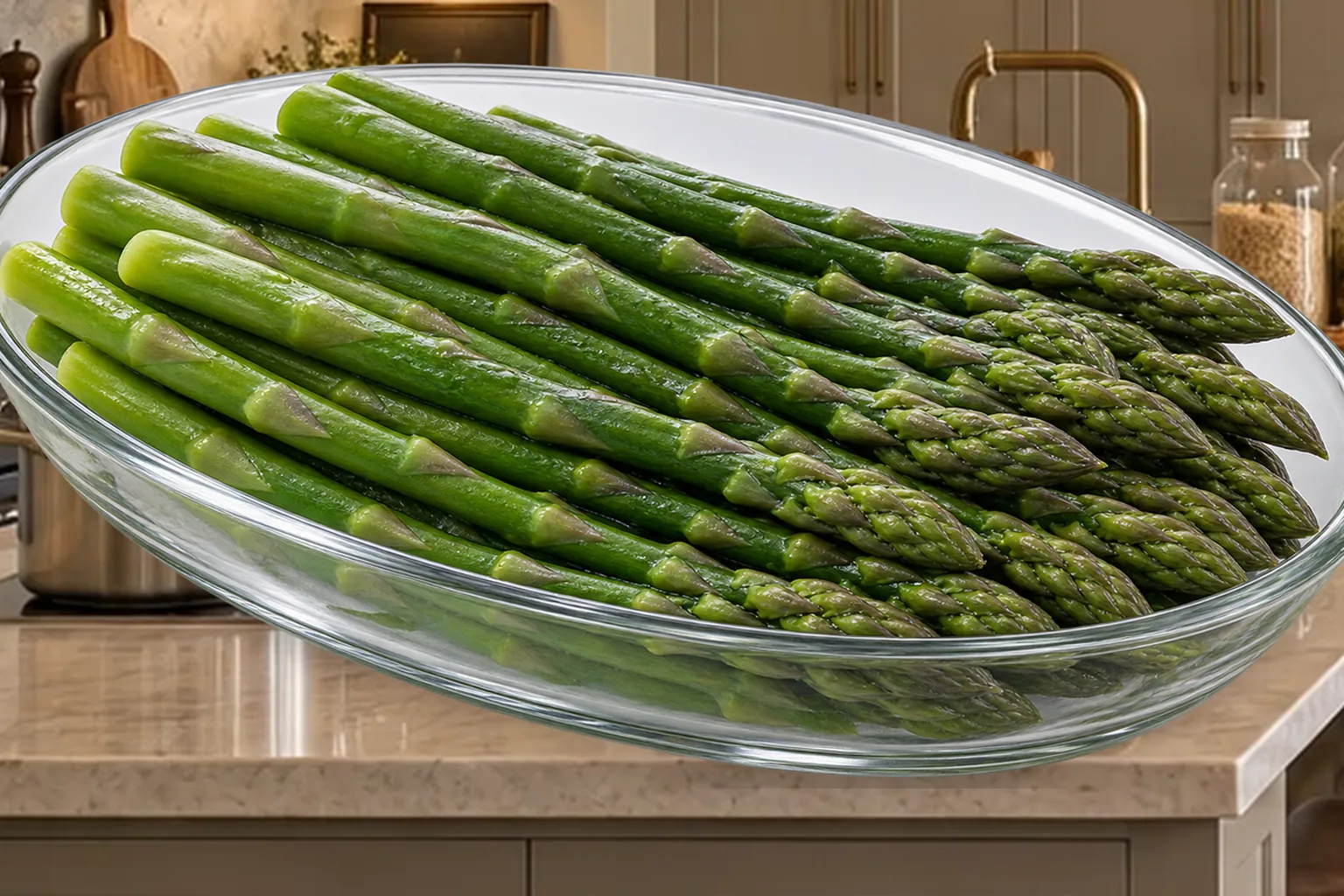
Where Blanched Asparagus Fits On GAPS
This recipe fits Full GAPS. Asparagus is listed among the non-starch fresh vegetables in the current GAPS text. The card uses only asparagus, water, and sea salt, without sugar, starch, a bottled sauce, or a commercial seasoning blend.
The GAPS text generally recommends steaming vegetables because boiling water carries away nutrients when it is discarded. That guidance remains the routine technique. This post preserves the source’s specific salted-water method because it is a measured component of the larger salad, with a four-minute simmer and immediate cold rinse.
Asparagus is not listed in the staged Introduction Diet sequence used by this recipe, so the card stays in its supported Full GAPS lane. A short ingredient list does not move a food into an earlier stage.
Choose Firm Asparagus With Closed Tips
Use one pound fresh asparagus. Look for straight, firm spears with tightly closed tips. The cut ends should not feel slimy, and the stalks should not be deeply wrinkled or limp.
Wash the asparagus in cool water, paying attention to the tips where grit can settle. Remove the woody bottom portion from every spear. You can bend each spear until the dry end snaps away or line up the spears and trim to the point where the stalk looks moist and fresh inside.
Keep the spears whole. Whole asparagus is easier to lift, drain, rinse, and arrange in a composed salad. Cutting it into short pieces would change both the presentation and the way the delicate tips move through the hot water.
Try to choose spears of similar thickness so the four-minute cook affects them evenly. If the bundle contains a few very thin spears, keep them together where you can watch them; the source gives one cook time, so visual tenderness still matters.
Keep the tips pointed in the same direction while trimming if that makes the bundle easier to manage. The tips are the most delicate part, so do the washing and arranging before the water boils rather than rushing once the pot is ready.
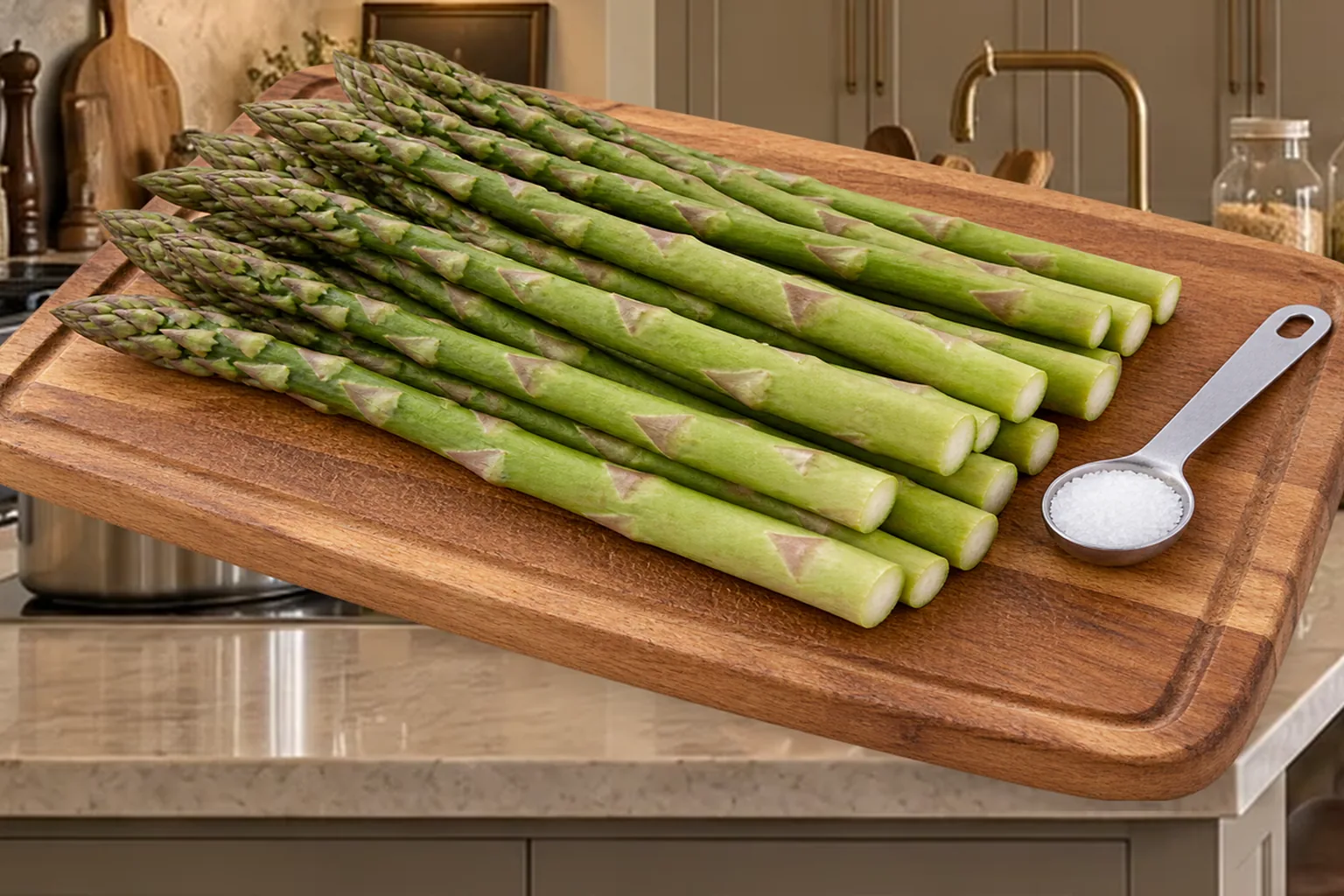
Bring Eight Cups Of Salted Water To A Boil
Measure eight cups water and two teaspoons sea salt into a large stainless-steel pot. A 10-quart Le Creuset Classic stainless-steel stockpot gives the spears and water room without crowding, although another correctly sized GAPS-compatible stainless pot also works.
Bring the salted water to a full boil before adding the asparagus. The surface should move actively in the center as well as around the edges. Starting with fully boiling water makes the source’s four-minute simmer clear and repeatable.
Set up the draining station now. Place a stainless colander where it will be stable, clear the route from the burner, and make sure cold running water is available. Four minutes passes quickly, especially when several parts of dinner are happening at once.
Add the asparagus carefully so hot water does not splash. The boil will calm when the cool spears enter. Let the water return to a simmer, then begin the four-minute cooking period.
Use a timer, but also watch the pot. The four minutes belongs to asparagus cooking at a simmer, not to the interval when the newly added spears have temporarily cooled the water. Keep the pot uncovered so the bubbles, color, and tips stay visible throughout the short cook.
Simmer The Asparagus For Four Minutes
Keep the water at a steady simmer rather than a violent rolling boil. Small bubbles should rise continuously while the spears move gently without the tips being knocked apart.
Cook for the full source time of four minutes. The asparagus should deepen in color and lose its raw, chalky look. Lift one average-thickness spear with tongs and press the lower stalk with a fork. It should yield with light resistance while the tip remains intact.
The time is much shorter than the source’s green-bean branch. Do not borrow the 10-minute green-bean timing simply because both vegetables appear in the same composed salad; the formulas stay separate for exactly this reason.
Do not add butter, ghee, oil, garlic, lemon, or herbs to the cooking water. Those may belong in other asparagus dishes, but this measured component uses only asparagus, water, and sea salt.
Drain And Rinse Under Cold Water
Set the colander securely in or over a heat-safe receiving bowl before lifting the pot. Drain the asparagus carefully, keeping both pot and colander fully supported. Rinse the spears under cold running water immediately.
Turn the asparagus gently so cool water reaches the middle of the pile. Continue until visible steam stops and the stalks feel cool instead of warm. Protect the tender tips from rough tossing or pressure.
Let the colander stand until water no longer streams from the bottom. A gentle shake is enough. Do not squeeze or press the spears, and do not leave them sitting in a puddle that will dilute a dressing added later.
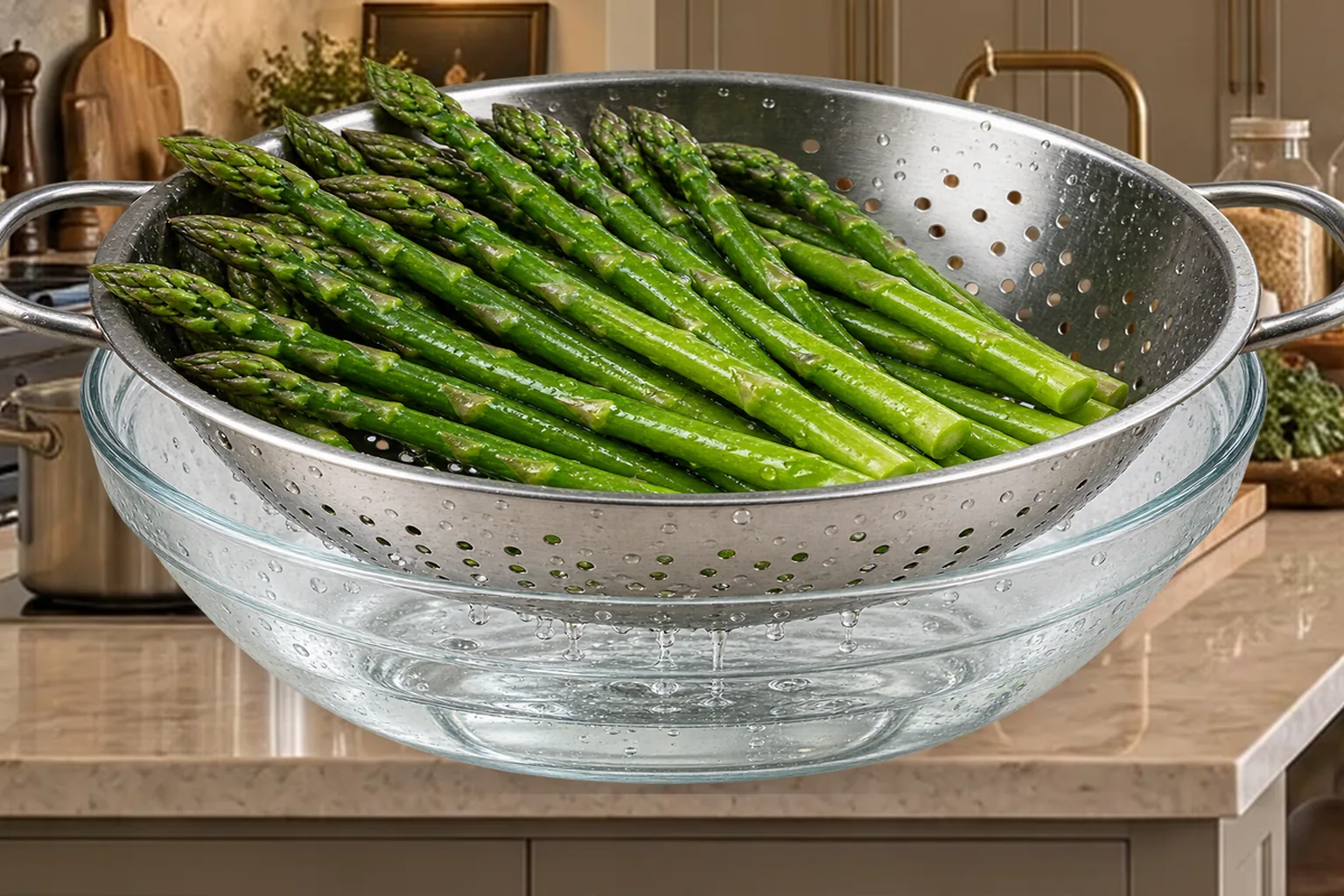
Chill The Asparagus Until Serving
Move the drained asparagus to a clean covered container and refrigerate it until the rest of the meal is ready. The source says to chill until serving and does not supply a multi-day storage limit, so I do not add one.
Before serving, check the container for collected water and drain it away. Arrange the spears in the same direction on the platter if you want the component to be easy to lift without breaking the tips.
At 2x, use two pounds asparagus, 16 cups water, and four teaspoons sea salt. Increase the pot size when necessary so the doubled water and long spears remain safely below the rim. The cook remains four minutes after the water returns to a simmer.
Use The Physical Cues Instead Of Guessing
Raw asparagus feels firm and may squeak slightly when the stalks rub together. The tips are compact and the surface looks more matte. During cooking, the green deepens and the stalks become smoother and wetter.
At four minutes, an average spear should bend a little while holding its shape. A fork should enter the thicker lower stalk with light resistance. The tip should remain recognizable rather than separating into soft fragments.
After the cold rinse, steam should be gone and the spears should feel cool. Droplets are expected, but the asparagus should not be submerged. Gray-green color, collapsed tips, or stalks that fold without resistance indicate overcooking.
Serve It Plain Or With A Separate Dressing
This asparagus belongs in the final Salade Niçoise, where it sits beside fish, eggs, olives, marinated vegetables, and roasted roots. Keeping it plain until assembly leaves every component recognizable.
The source also allows a gentle finish of extra Fresh Herb Vinaigrette for Full GAPS. The vinaigrette is its own measured formula and card. Add the amount you want at serving instead of nesting that dressing inside this recipe.
For an asparagus dish with a different formula, use the GAPS Marinated Asparagus Salad With Lemon Mint Vinaigrette. Its dressing, herbs, and method make it separate from these plain four-minute spears.
For the source’s longer-cooking companion vegetable, use the separate Blanched Green Beans for Full GAPS. Linking the two makes their four-minute and 10-minute timing easy to compare without merging them into one card.
Recommended Equipment
- Le Creuset Classic stainless-steel stockpot, 10 quart, or another correctly sized stainless pot
- Eight-cup liquid measuring vessel
- Measuring teaspoon
- Stainless tongs
- Stainless colander
- Large heat-safe receiving bowl
- Covered glass storage container
Frequently Asked Questions
Can I Steam The Asparagus Instead?
Steaming is the general GAPS preference for vegetables, but this card preserves the source’s measured salted-water method. Use a steaming recipe when you want that technique rather than changing this formula while keeping its four-minute timing.
Do I Need An Ice Bath?
No ice bath is specified. The source says to drain the asparagus and rinse it under cold water, then chill it until serving.
Should I Peel Thick Asparagus?
The source calls for washed asparagus with the stems removed and does not direct peeling. Keep the card to that preparation rather than adding an unmeasured trimming step.
Can I Use Frozen Asparagus?
This formula begins with one pound washed asparagus with the woody ends removed, which describes fresh spears. Frozen asparagus has already been processed and may not follow the same four-minute timing or keep intact tips.
Why Use Eight Cups Of Water?
Eight cups is the source measurement for one pound asparagus. It gives the spears room in the pot and gives the two teaspoons salt a defined liquid amount.
How Long Does The Asparagus Cook?
Simmer for four minutes after the water returns to a simmer. Then drain, rinse under cold water, and chill until serving.
Blanched Asparagus Recipe
Blanched Asparagus for Full GAPS
Ingredients
Equipment
Method
- Wash the asparagus and remove every dry woody bottom end. Keep the spears whole and the tips intact.
- Measure the water and sea salt into the stockpot and bring to a full boil.
- Add the asparagus carefully. When the water returns to a simmer, cook for 4 minutes, until the green deepens and the lower stalk yields with light resistance while the tips remain intact.
- Drain the asparagus in a securely supported stainless colander and rinse under cold running water, turning gently until visible steam stops and the spears feel cool.
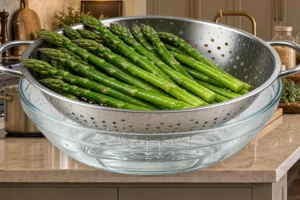
- Drain well, transfer to a covered container, and chill until serving. If desired, dress at serving with separately made Fresh Herb Vinaigrette.
Notes
Exact method: This card preserves the source’s eight cups water, two teaspoons sea salt, and four-minute asparagus simmer.
Technique: Tier 0 generally prefers steaming vegetables; this is the source-specific salted-water component.
Storage: The source says to chill until serving and does not assign a multi-day storage limit.
Tried this recipe?
Let us know how it was!Prepare The Plain Components Before Dinner
The planned Weekly Kitchen Rhythm Planner is built for jobs like washing vegetables, making dressings, and cooking plain components before the final meal window. Find current resources and upcoming releases in the WFLI shop.

Leave a comment