

These blanched green beans are a simple Full GAPS component with an exact job: cook one pound of trimmed beans in eight cups of salted water for 10 minutes, cool them under running water, and chill them until the rest of the meal is ready. The beans stay whole and recognizable, with a clean savory flavor that can sit beside fish, eggs, or a composed salad.
In our household of eight, a plain vegetable component is often more useful than a side dish with every flavor already added. I can prepare the beans earlier, keep them cold, and let the rest of the plate decide what they need. Some people may want vinaigrette, while a child may want the beans left exactly as they are.
This is the measured green-bean branch from the Salade Niçoise source. The asparagus branch has a different four-minute cooking time, so it remains a separate recipe. The salmon, marinated cucumber, marinated onions, roasted roots, hard-boiled eggs, vinaigrette, and final composed salad also keep their own posts and cards.
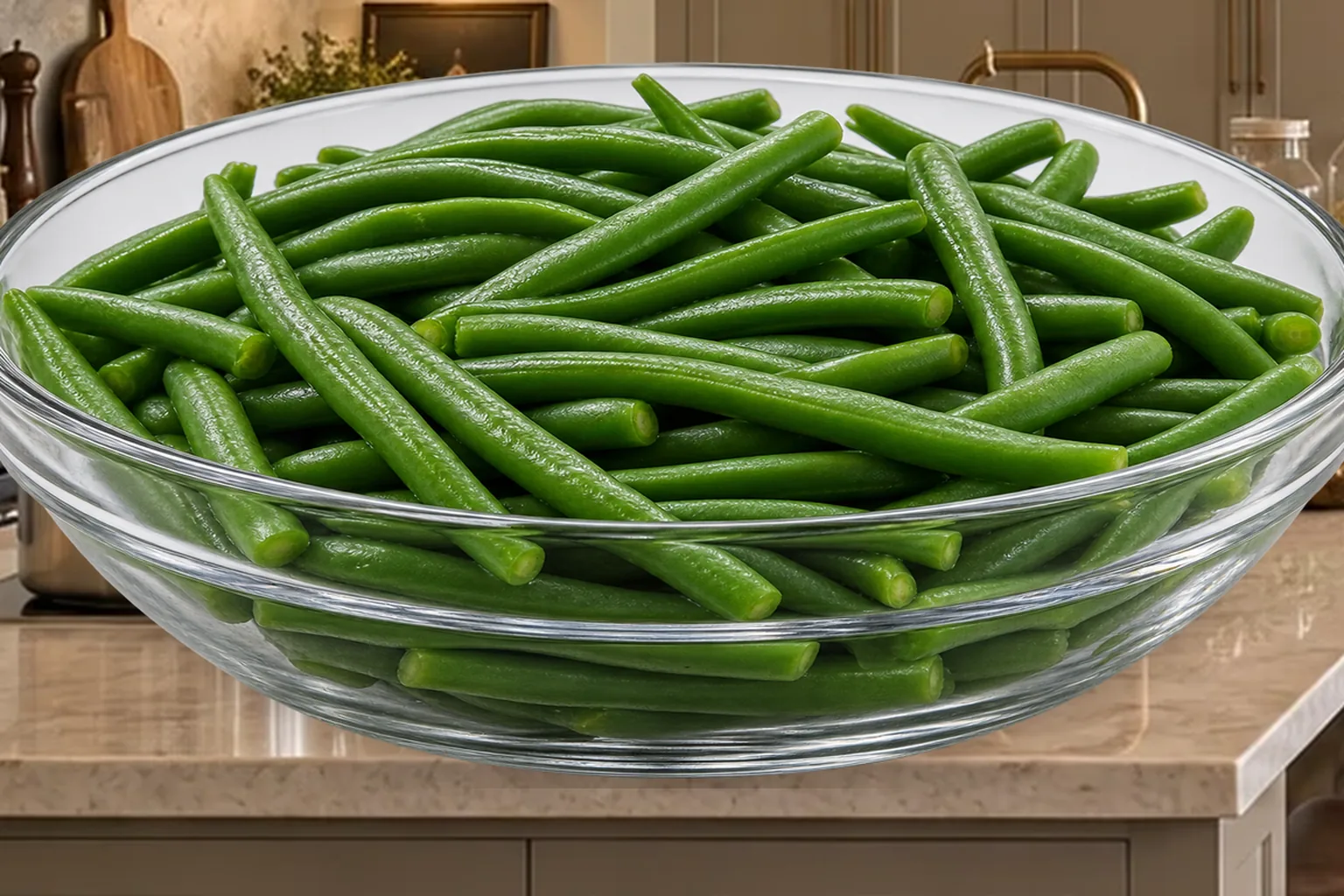
Where Blanched Green Beans Fit On GAPS
This recipe fits Full GAPS. Green beans are listed among the non-starch fresh vegetables in the current GAPS text. This card uses only green beans, water, and sea salt; there is no sugar, starch, commercial seasoning blend, or bottled sauce.
The GAPS text generally recommends steaming vegetables because boiling water carries away nutrients when it is discarded. That recommendation remains the routine technique. This post preserves the source’s exact salted-water method because it is a specific measured component of the larger salad, with a 10-minute simmer and immediate cold rinse.
Green beans are not listed in the staged Introduction Diet sequence used by this recipe, so I do not label the card for an Intro stage. Keep the recipe in its supported Full GAPS lane rather than moving it earlier because the ingredient looks simple.
Choose Firm Green Beans
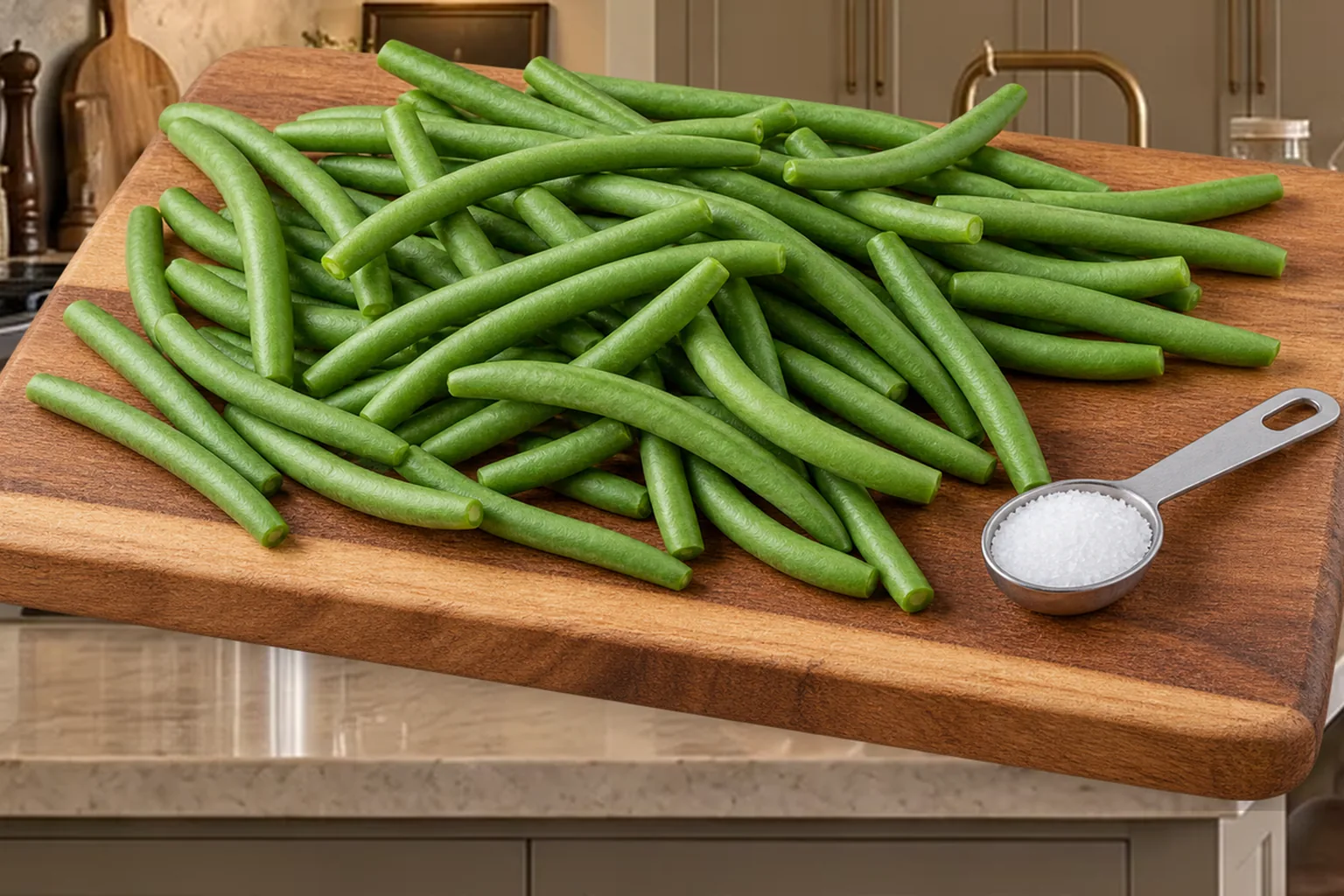
Use one pound fresh green beans. Look for pods that feel firm and smooth, without collapsed areas, brown wet spots, or shriveled ends. The color may vary slightly by variety, but the beans should look fresh rather than gray or leathery.
Wash the beans in cool water. Snap or cut away the stem end from each pod. The slender blossom end can remain unless it is dry or damaged. Discard any pod that feels slimy or has a sour smell before it reaches the pot.
Keep the beans whole for this formula. Whole beans are easier to lift, drain, rinse, and arrange in a composed salad. Cutting them into short pieces would change the presentation and may change how quickly the interior softens.
Bring Eight Cups Of Salted Water To A Boil
Measure eight cups water and two teaspoons sea salt into a large stainless-steel pot. A 10-quart Le Creuset Classic stainless-steel stockpot gives the water and beans plenty of room without crowding, although any correctly sized GAPS-compatible stainless pot works.
Bring the salted water to a full boil before adding the beans. The surface should move actively from the center as well as the edges. Adding the beans to lukewarm water would make the source’s 10-minute simmer harder to interpret.
Add the beans carefully so the hot water does not splash. The boil will calm when the cool beans enter. Let the water return to a simmer, then begin the 10-minute cooking period.
Set up the draining station before the beans go into the pot. Place the colander where it will be stable, clear the path from the burner, and make sure cold running water is available. Ten minutes passes quickly, and a ready landing place keeps the beans from continuing to sit in hot water while you search for equipment.
Use a timer, but let the pot tell you when the simmer has returned. The 10 minutes belongs to the simmering beans, not to the interval when newly added beans have temporarily cooled the water. Keep the pot uncovered so you can see the water and the pods clearly.
Simmer The Green Beans For Ten Minutes
Keep the water at a steady simmer rather than a violent rolling boil. Small bubbles should rise continuously, and the beans should move gently in the pot without being battered against the sides.
Cook for the full source time of 10 minutes. The beans should deepen in color and lose their raw matte look. At the end, lift one bean with tongs and press the thickest part with a fork. It should yield with light resistance while the pod remains intact.
This is not a one-minute restaurant blanch. Other green-bean recipes on the site use their own timing and texture. Follow this card’s 10-minute simmer rather than borrowing a shorter cook from a different formula.
Do not add butter, ghee, oil, garlic, or herbs to the cooking water. Those may fit other dishes, but the measured source component uses water and sea salt only.
Drain And Rinse Under Cold Water
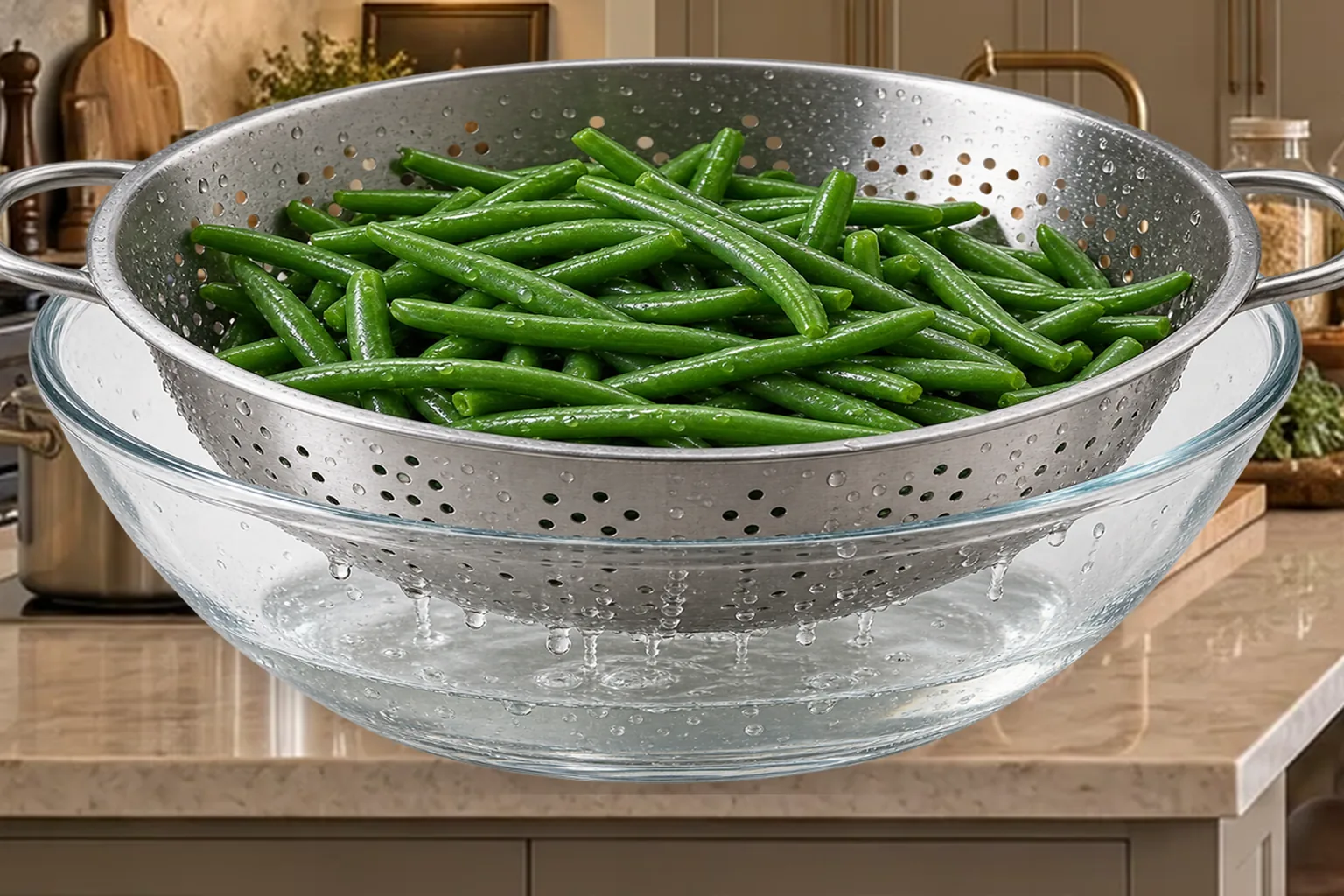
Set a stainless colander securely in or over a heat-safe receiving bowl before lifting the pot. Drain the beans carefully, keeping the pot and colander fully supported. Then rinse the beans under cold running water.
Turn the beans gently so cool water reaches the middle of the pile. Continue until visible steam stops and the beans feel cool rather than warm. The rinse ends the hot-water cooking and prepares the beans for chilling.
Let the colander stand until water no longer streams from the bottom. Shake it gently once or twice without bruising the pods. A puddle in the storage bowl will dilute any dressing added later and make the finished component look watery.
Chill The Beans Until Serving
Move the drained beans to a clean covered container and refrigerate them until the rest of the meal is ready. The source says to chill until serving and does not provide a multi-day storage limit, so I do not add one.
Before serving, check the bottom of the container. If water has collected, drain it away rather than stirring it back through the beans. The pods should remain distinct and clean-tasting.
At 2x, use two pounds green beans, 16 cups water, and four teaspoons sea salt. Use a pot large enough for the doubled water and beans without crowding or risking overflow. The 10-minute cook remains the same once the water returns to a simmer.
Use The Physical Cues Instead Of Guessing
Raw green beans are firm, slightly matte, and may make a crisp sound when bent. During cooking, their color deepens and their surfaces become smoother and wetter. The salted water should smell vegetal and clean, without browned or scorched notes.
After 10 minutes, the beans should bend more easily while holding together. A fork should enter the thickest part with light resistance. Split pods, gray color, or a mushy surface indicate the beans have moved past the intended texture.
After the cold rinse, steam should be gone. Water droplets are normal, but the beans should not sit submerged in water. Once chilled and drained, they should look like an intentional vegetable component rather than a wet pile.
Serve Them Plain Or With A Separate Dressing
These beans belong in the final Salade Niçoise, where they sit beside fish, eggs, olives, marinated vegetables, and roasted roots. Keeping them plain until assembly lets every component stay recognizable.
The source also allows the beans to be gently dressed with extra Fresh Herb Vinaigrette for Full GAPS. That vinaigrette remains its own measured formula and recipe card. Add only the amount you want when serving instead of nesting the dressing inside this card.
For a fuller green-bean side with a different formula, see Green Beans With Crisp Bacon And Pecorino. The bacon, cheese, lemon, onion, oil, and shorter cooking time make it a separate recipe rather than a variation of this plain component.
Serve the chilled beans with salmon, sardines, hard-boiled eggs, roast chicken, or another Full GAPS meal. Add a compatible fat at the meal when it fits the plate; do not silently add one to this exact three-ingredient card.
Recommended Equipment
- Le Creuset Classic stainless-steel stockpot, 10 quart, or another correctly sized stainless pot
- Eight-cup liquid measuring vessel
- Measuring teaspoon
- Stainless tongs
- Stainless colander
- Large heat-safe receiving bowl
- Covered glass storage container
Frequently Asked Questions
Can I Steam The Green Beans Instead?
Steaming is the general GAPS preference for vegetables, but this card preserves the source’s measured eight-cup salted-water method. Use a steaming recipe when you want that technique rather than changing this formula while keeping its timing.
Do I Need An Ice Bath?
No ice bath is specified. The source says to drain the beans and rinse them under cold water, then chill them until serving.
Can I Use Frozen Green Beans?
This measured source formula begins with one pound washed green beans with the stems removed, which describes fresh beans. Frozen beans have already been processed and may not follow the same 10-minute timing.
Why Use Eight Cups Of Water?
Eight cups is the source measurement for one pound of beans. It gives the beans room in the pot and gives the two teaspoons salt a defined liquid amount.
Can I Add Butter Or Ghee?
Serve the beans with a compatible fat when it fits the meal, but keep this card’s cooking formula to green beans, water, and sea salt. The optional source-supported finish is a separately made Fresh Herb Vinaigrette.
How Long Do The Beans Cook?
Simmer them for 10 minutes after the water returns to a simmer. Then drain, rinse under cold water, and chill.
Blanched Green Beans Recipe
Blanched Green Beans for Full GAPS
Ingredients
Equipment
Method
- Wash the green beans and remove every stem end. Keep the pods whole.
- Measure the water and sea salt into the stockpot and bring to a full boil.
- Add the beans carefully. When the water returns to a simmer, cook for 10 minutes, until the beans deepen in color, bend easily, and yield with light resistance at the thickest part.
- Drain the beans in a securely supported stainless colander and rinse under cold running water, turning gently until visible steam stops and the beans feel cool.
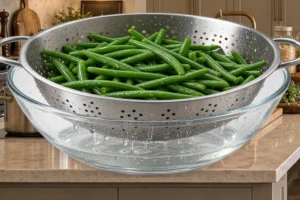
- Drain well, transfer to a covered container, and chill until serving. If desired, dress at serving with separately made Fresh Herb Vinaigrette.
Notes
Exact method: This card preserves the source’s eight cups water, two teaspoons sea salt, and 10-minute green-bean simmer.
Technique: Tier 0 generally prefers steaming vegetables; this is the source-specific salted-water component.
Storage: The source says to chill until serving and does not assign a multi-day storage limit.
Tried this recipe?
Let us know how it was!Prepare The Plain Components Before Dinner
The planned Weekly Kitchen Rhythm Planner is built for jobs like washing vegetables, making dressings, and cooking plain components before the final meal window. Find current resources and upcoming releases in the WFLI shop.

Leave a comment