

This homemade za’atar for Full GAPS keeps the traditional tart-herb-sesame profile while using properly prepared sesame seeds. Sumac, marjoram, thyme, oregano, mineral salt, black pepper, and optional cumin are mixed only after the measured sesame has been soaked, sprouted, and dried completely.
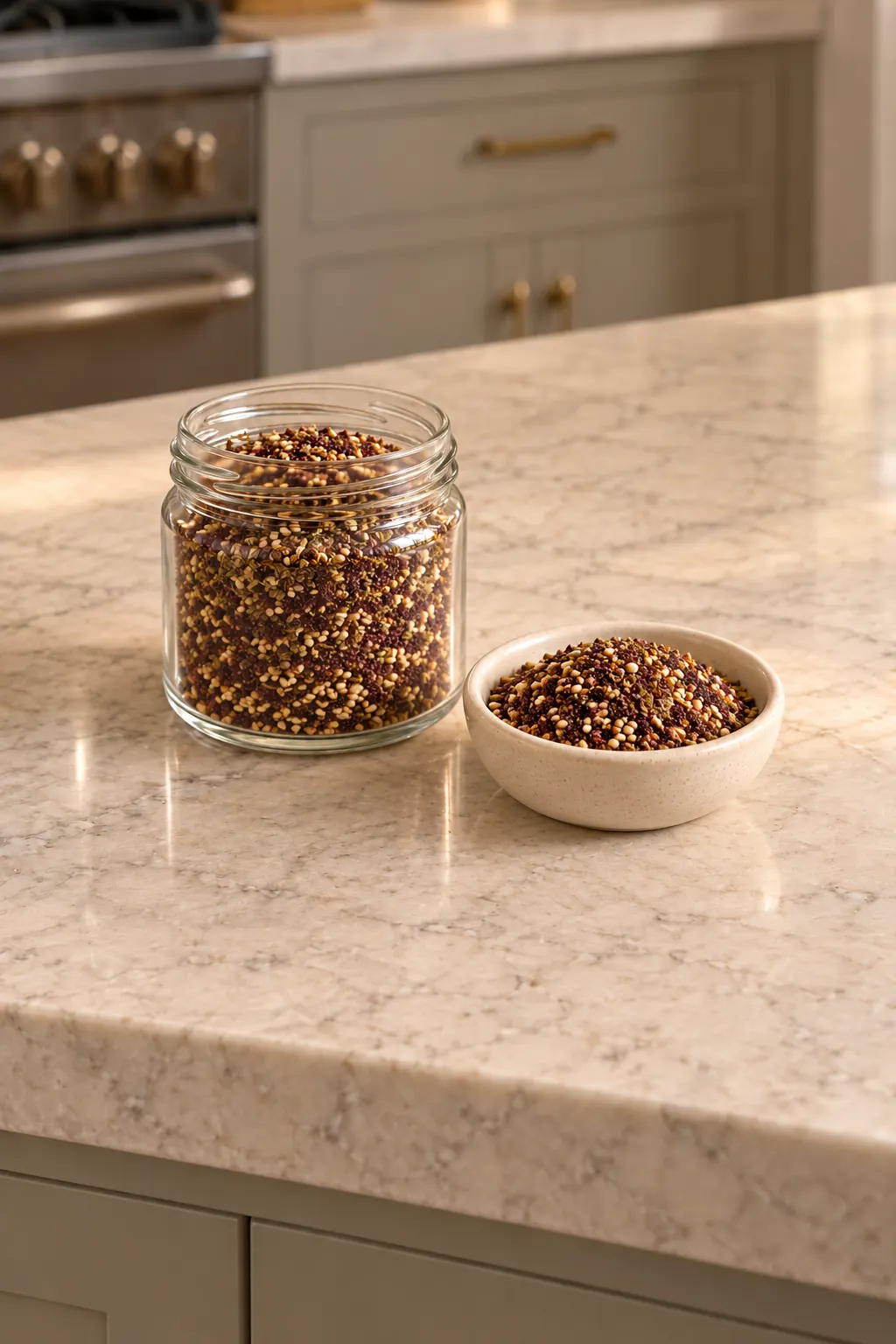
The finished blend is dry, loose, and intensely aromatic. Measure one-quarter cup into the matching Middle Eastern beef stew, then keep the remaining blend sealed for another batch.
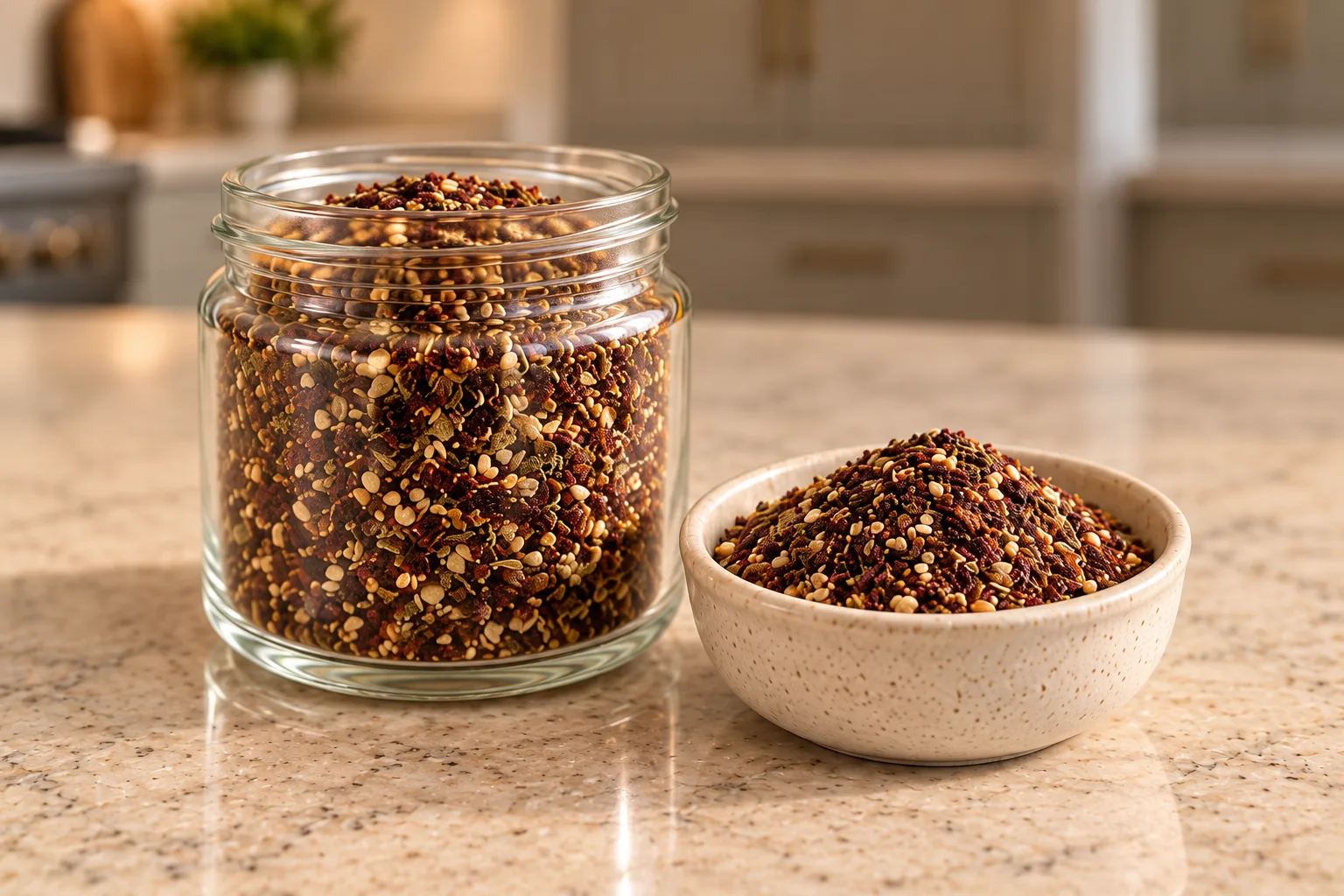
A Za’atar Blend Built for Full GAPS
Za’atar is a family of Middle Eastern seasoning blends rather than one universal recipe. This version is centered on ground sumac, marjoram, thyme, oregano, and sesame, with cumin as an optional measured addition.
The bright flavor comes from sumac. Marjoram and thyme make the blend savory, oregano deepens the herb profile, and the prepared sesame adds a light nutty texture without turning the mixture oily.
Making a full jar at once is useful when the same seasoning will go into stew, roasted vegetables, eggs, or meat during the week.
Where This Blend Fits on GAPS
This is a Full GAPS pantry seasoning after sesame seeds have been introduced and tolerated. Wait until diarrhea has settled before adding whole seeds.
Measure the sesame while it is still raw and dry, then complete the 12-to-24-hour soak, sprouting, and drying before mixing the final blend. Do not toast the seeds.
Use pure single-ingredient herbs and spices without starch, flour, sugar, flavor enhancers, anti-caking blends, or seed oils.
Measure the Sesame Before Preparing It
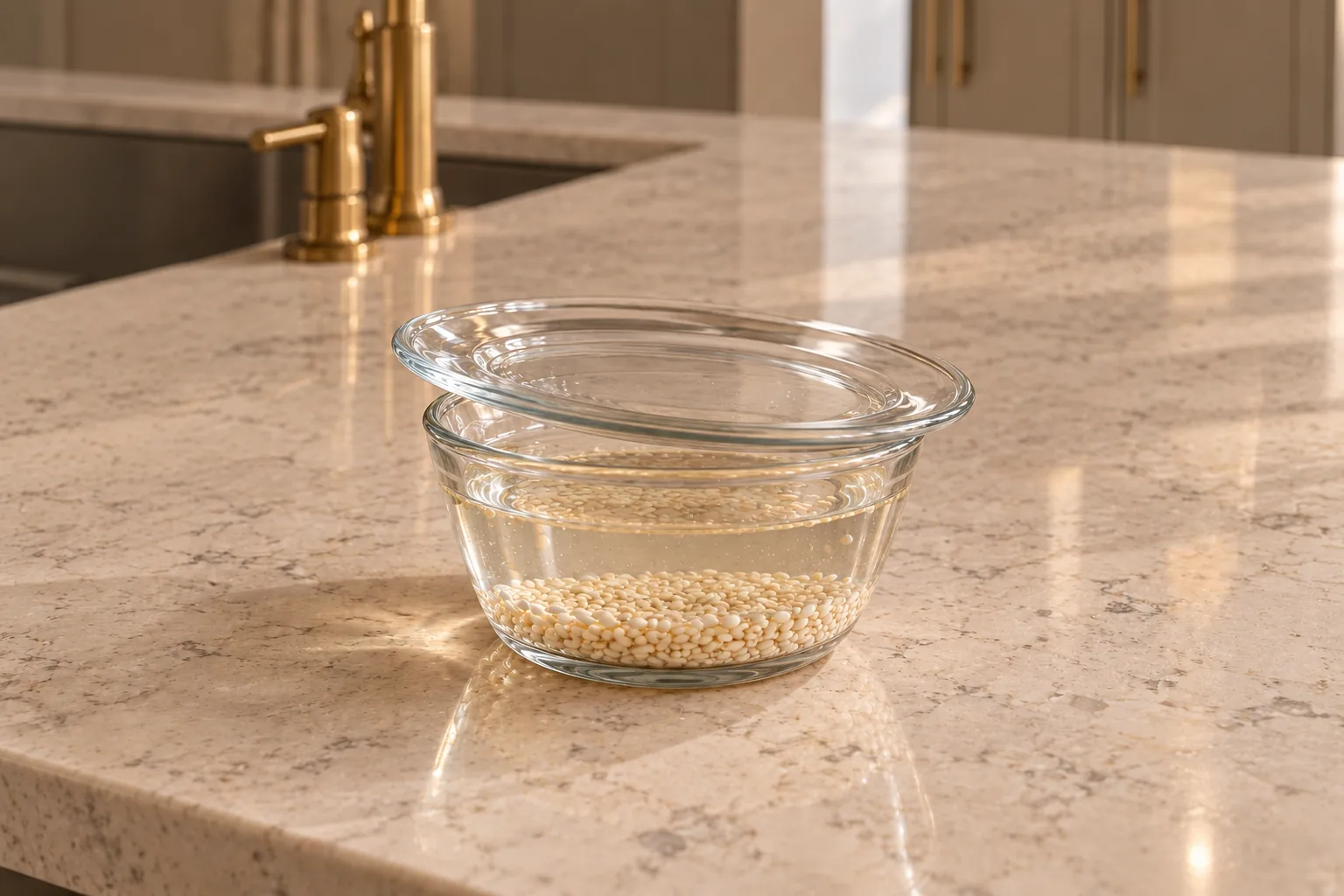
Start with two tablespoons raw white sesame seeds. Measuring before soaking preserves the intended herb-to-seed ratio even though the seed volume changes while wet.
Put the seeds in a small glass or ceramic bowl and cover them with warm filtered water by about two inches. Add a small pinch of sea salt and stir once.
Cover the bowl with a plate or clean linen and leave it for 12 to 24 hours.
Sprout Until Tiny Shoots Appear
Drain the soaked seeds through a fine-mesh stainless-steel strainer and rinse them well. Transfer them to a clean glass sprouting jar.
Keep the seeds moist without leaving them submerged. Rinse and drain them each day until tiny shoots appear, usually in two to three days.
The shoots should be just visible. Long green sprouts are unnecessary for this dry seasoning blend.
Dry the Sprouted Sesame Completely
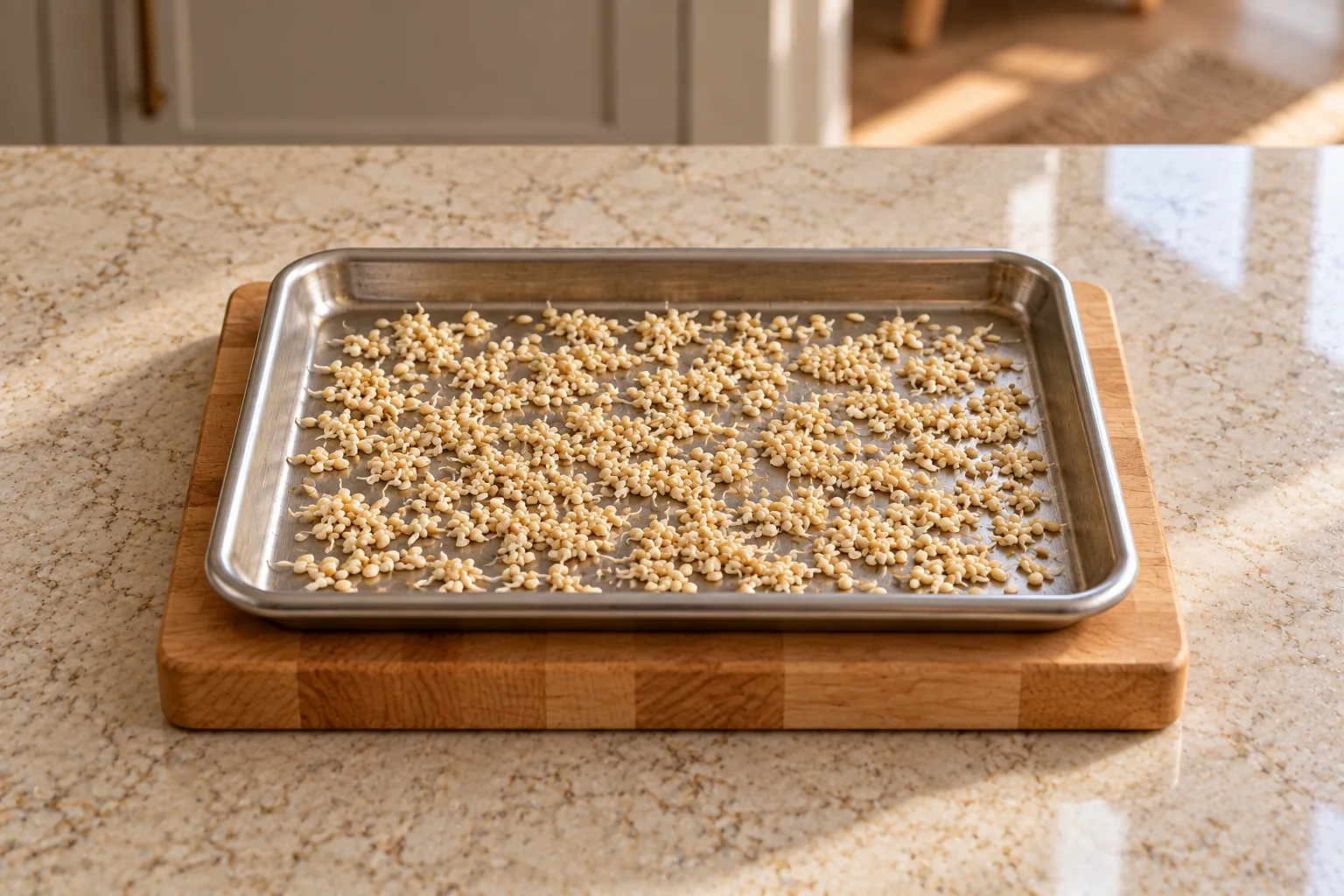
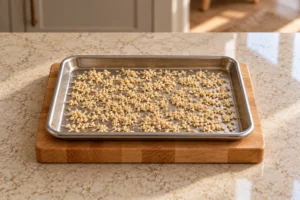
Spread the sprouted seeds in a thin layer on a stainless-steel sheet pan. Dry them at the lowest oven setting until they are completely dry and loose.
Stir or shake the pan occasionally so damp clusters separate. The seeds are ready when they pour freely, do not cling to the pan, and leave no cool damp spot when pressed between dry fingers.
Let the seeds cool completely before mixing. Warm seeds can create condensation inside the storage jar.
Mix the Herbs and Spices Evenly
Combine one-half cup ground sumac, three tablespoons dried marjoram, three tablespoons dried thyme, the full prepared sesame yield, two tablespoons dried oregano, two teaspoons sea salt, one-half teaspoon freshly ground black pepper, and the optional tablespoon cumin.
Stir from the bottom of the bowl until the pale sesame seeds and dark herb flecks are distributed through the red-purple sumac. Break up any soft clumps with the back of the spoon.
The blend should remain dry and crumbly rather than becoming a paste. No oil or lemon juice is added to the storage jar.
Measure the Stew Portion First
Measure one-quarter cup for the Middle Eastern beef stew before transferring the rest to storage. That keeps the stew amount exact and prevents repeated scooping from introducing moisture.
The remaining blend should smell tart, herbal, and lightly nutty. Sumac should lead, with thyme and marjoram close behind.
Use a clean, dry spoon every time you open the jar.
Storage
Transfer the cooled za’atar to a small airtight glass jar and keep it in a cool, dark pantry. Do not store it beside the stove or in direct window light.
Check that the blend remains dry and loose before each use. Discard it if moisture, mold, or an unpleasant stale-oil smell develops.
Label the jar with the preparation date and the words prepared sesame so it is not confused with an ordinary store-bought blend.
Ways to Use Homemade Za’atar
Use the measured one-quarter cup in Middle Eastern beef stew, or season roasted turnips, carrots, radishes, eggs, lamb, or beef with smaller amounts.
Because the blend already contains salt, taste the finished dish before adding more. Recipes that provide their own separate salt measurement should keep that amount unless the recipe specifically directs otherwise.
For cold use, za’atar can be stirred into cultured sour cream or sprinkled over a finished salad after the seeds have been properly prepared and tolerated.
Recommended Equipment
Use a small glass or ceramic soaking bowl, fine-mesh stainless-steel strainer, glass sprouting jar, stainless-steel sheet pan, stainless measuring cups and spoons, small glass mixing bowl, stainless spoon, and an airtight glass storage jar.
Frequently Asked Questions
Can I Use Store-Bought Za’atar?
Use this measured homemade blend when you need a verified Full GAPS version. Commercial blends may contain toasted sesame, fillers, oils, or ingredients that do not match this recipe.
Do I Measure Sesame Before or After Sprouting?
Measure two tablespoons while the seeds are raw and dry, then use the entire sprouted and dried yield.
Can I Stop After Soaking the Sesame?
No. Continue through sprouting and complete drying before mixing the dry blend.
Should I Toast the Sesame?
No. Keep the prepared sesame unroasted.
Is Cumin Required?
No. One tablespoon ground cumin is the optional measured branch. The rest of the blend stays unchanged if it is omitted.
Why Must the Seeds Cool Before Storage?
Warm seeds can create condensation in the jar. Cool them fully so the finished blend remains dry.
Homemade Za’atar Recipe
Homemade Za’atar for Full GAPS with Prepared Sesame
Ingredients
Equipment
Method
- Measure the raw dry sesame. Put it in a glass or ceramic bowl, cover by about 2 inches with warm filtered water, add a small pinch sea salt, cover, and soak 12 to 24 hours.
- Drain through a fine-mesh stainless strainer, rinse, and transfer to a clean sprouting jar.
- Keep the seeds moist, rinsing and draining daily, until tiny shoots appear, about 2 to 3 days.
- Spread the sprouted sesame thinly on a stainless sheet pan and dry at the lowest oven setting until completely dry, loose, and free-flowing. Cool fully.
- Combine the sumac, marjoram, thyme, full prepared sesame yield, oregano, sea salt, black pepper, and optional cumin in a dry glass bowl.
- Stir from the bottom until the pale sesame and dark herbs are evenly distributed through the red-purple sumac and no soft clumps remain.
- Measure 1/4 cup for the Middle Eastern beef stew.
- Transfer the remaining za’atar to an airtight glass jar and store in a cool, dark pantry with a clean dry spoon.
Notes
- Full GAPS: Use after properly prepared sesame seeds are introduced and tolerated.
- Sesame: Measure 2 tablespoons raw, then soak 12–24 hours, sprout 2–3 days, dry completely, and use the full yield.
- No toasting: Keep the prepared sesame unroasted.
- Stew portion: Measure 1/4 cup for the matching beef stew.
- Scaling: At 2x, double every measured ingredient and prepare 4 tablespoons raw sesame before mixing.
Tried this recipe?
Let us know how it was!Plan More One-Pot Meals
The planned One-Pot & Sheet Pan collection will gather family dinners, their component seasonings, and practical timing cues in one place. Find current guides and catalog updates in the WFLI shop.

Leave a comment