

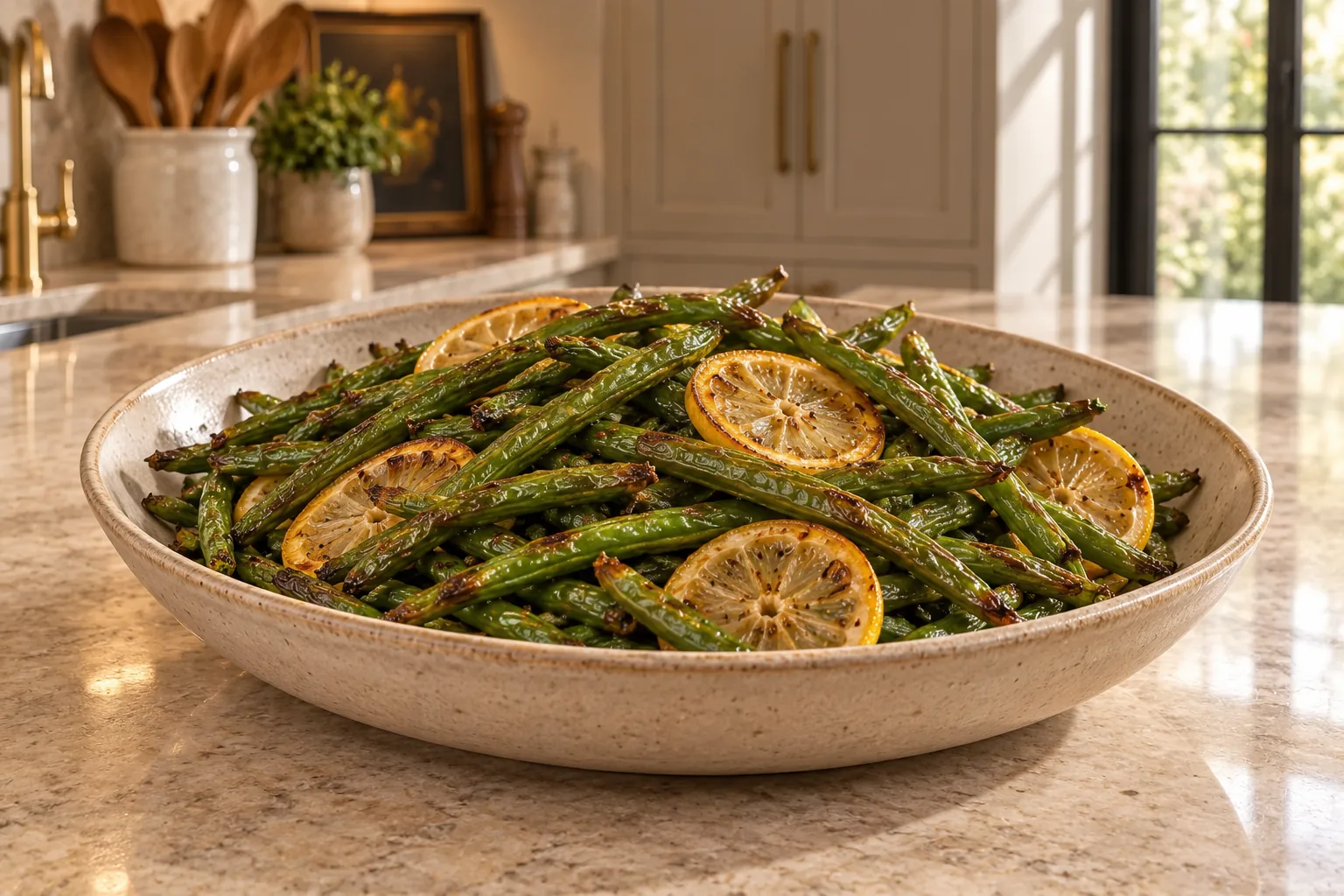
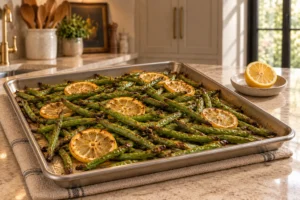
These GAPS lemon roasted green beans come out wrinkled, browned in places, and tender through the center. Lemon slices roast in the open spaces on the pan, while a final squeeze of fresh lemon wakes up the whole dish after it leaves the oven.
The recipe makes six side-dish servings with one pound of beans and only a few measured additions. Choose one GAPS cooking fat and one teaspoon of either traditionally fermented fish sauce or qualifying coconut aminos. The sauce adds depth without turning the beans into a sweet glaze.
Why High Heat Works for Green Beans
Green beans can go from crisp to limp when they cook in trapped moisture. A hot oven handles them differently. The surface dries, the skins wrinkle, and the places touching the stainless pan pick up dark roasted spots while the centers become tender.
Our weekdays already hold breakfast, homeschool, cooking from scratch, and then my second shift. I do not currently bulk-prep, and I feel that decision every weekday. A side dish with one pan and a clear endpoint is useful because it can roast while the rest of dinner is moving.
The same simplicity helps at a holiday meal. The beans need ten minutes of preparation and about twenty minutes in the oven. You can trim and dry them earlier, then coat and roast them close to serving so the browned surface stays intact.
Choose beans that are firm and smooth before cooking. A bean should snap when bent instead of folding like a soft cord. Very large beans can still roast, but they may need more time for the center to become tender. Keep the pound measure and let the endpoint, rather than bean size alone, decide when the pan is ready.
If you trim ahead, wash and dry the beans before refrigerating them in covered glass with a clean linen towel. Any moisture that collects should be dried again before the fat goes on. The work saved earlier only helps if the beans still reach the oven with dry skins.
When These Beans Fit on GAPS
This is a Full GAPS side dish. String beans and fresh lemon are included on the Full GAPS food list. Use a cooking fat that GAPS keeps for heat: melted ghee, natural non-hydrogenated coconut oil, lard, or fat rendered from additive-free uncured bacon.
Cold-pressed olive and avocado oils belong on finished food without heating. They are useful raw oils, but this 450°F roast uses one of the measured cooking fats instead. Keep the amount at two tablespoons so every bean can be coated without leaving a deep pool on the pan.
If you choose ghee, the linked Homemade Stovetop Ghee gives you the separate component recipe. Melt it before measuring so the full two tablespoons distribute evenly over the beans.
Choose Fish Sauce or Coconut Aminos
The recipe gives you two equal sauce choices. Use one teaspoon traditionally fermented, unsweetened fish sauce with no excluded additives, or one teaspoon coconut aminos after checking the current manufacturer’s ingredients. Use one, not both.
The fish sauce brings a salty fermented depth. Coconut aminos gives a different, slightly rounder flavor. It is not an automatic label category. Read the actual bottle and leave it out if sugar or another non-GAPS ingredient appears in the formula.
Keep the sea salt at one-half teaspoon with either choice. The sauce and salt work together, so adding more before roasting can make the concentrated browned edges too salty. Finish the pan first, then judge the complete dish.
Use an Unlined Stainless Pan
This version uses a large unlined, uncoated stainless steel rimmed sheet pan. A parchment-lined pan softens direct contact with the metal. Bare stainless transfers heat directly to the beans, so start checking at about fifteen minutes instead of treating twenty minutes as a guarantee.
Choose a pan large enough to hold one pound of beans in one layer. Crowded beans trap steam and soften before they brown. If the beans overlap in a pile, use a second pan rather than pretending a packed pan will roast the same way.
Set the oven rack in the middle and heat the oven fully to 450°F before the pan goes in. A partly heated oven extends the steaming phase and makes the clock less useful. The pan should begin roasting as soon as it reaches the rack.
A dark, lightweight pan and a heavy stainless pan will not brown at exactly the same rate. This method calls for uncoated stainless, but even stainless pans vary in thickness. That is why the fifteen-minute check matters. Look underneath a bean at the edge of the pan instead of deciding from the top alone.
Do not pour extra oil over the pan because the beans look dry after several minutes. The measured fat is already on their surfaces. As the beans lose moisture, the coating becomes less shiny and the skin begins to pucker. That change is part of roasting, not a sign that the formula needs another drizzle.
Dry and Coat Every Bean
Trim the stem ends from one pound fresh green beans. Tender baby beans can keep their narrow ends. Wash the beans, then dry them thoroughly with a clean linen towel. The skins should look dry rather than beaded with water.
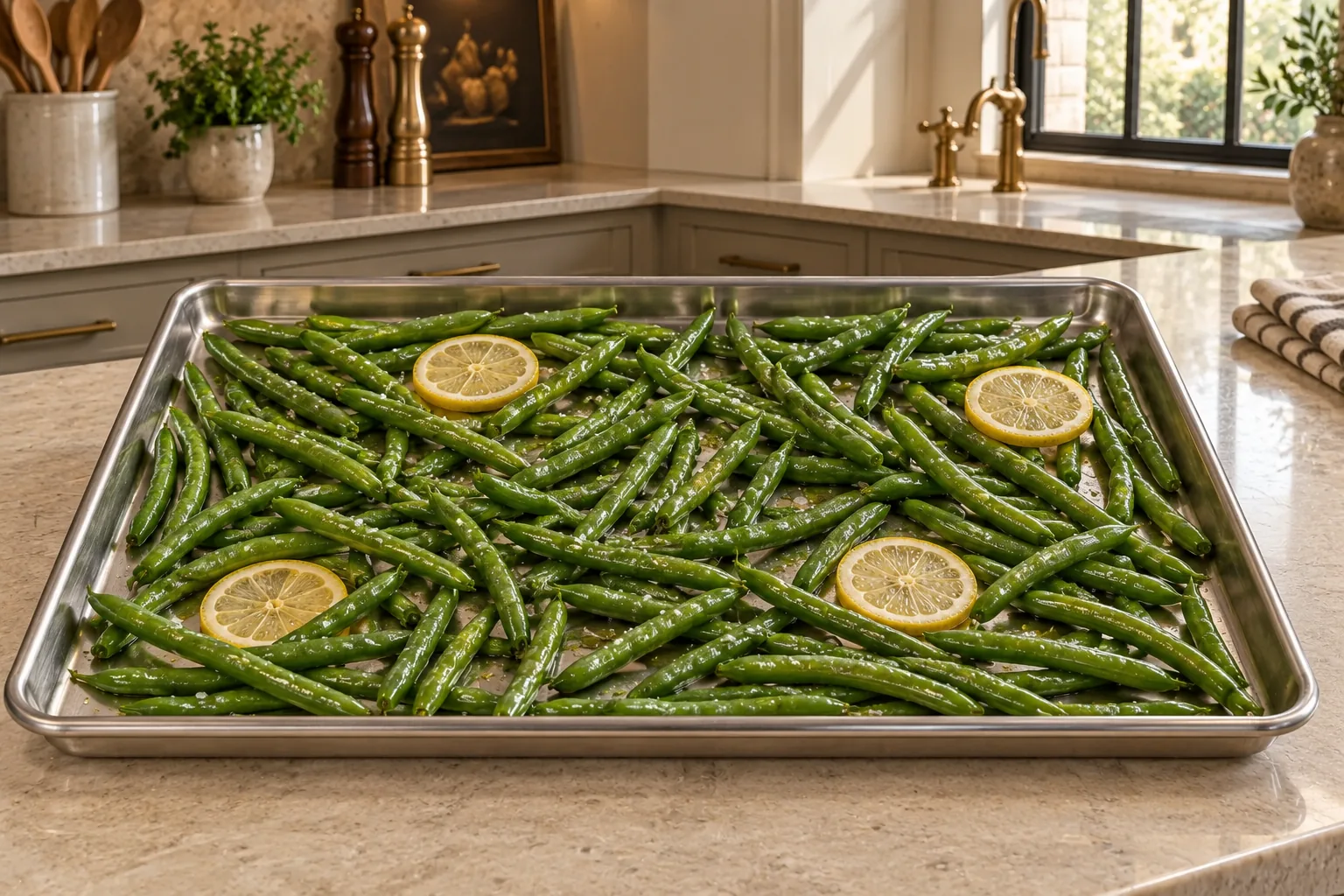
Spread the beans across the stainless pan. Add the two tablespoons melted cooking fat, one teaspoon chosen sauce, and one-half teaspoon sea salt. Turn the beans with tongs until they have a thin, even sheen. No bean should sit dry while another rests in a puddle.
Cut one lemon in half. Slice one half and place those slices in open spaces between the beans. Keep the other half whole for the final squeeze. The slices roast with the beans, but the reserved juice stays fresh and goes on only after the pan leaves the oven.
Roast to Wrinkled Skins and Brown Spots
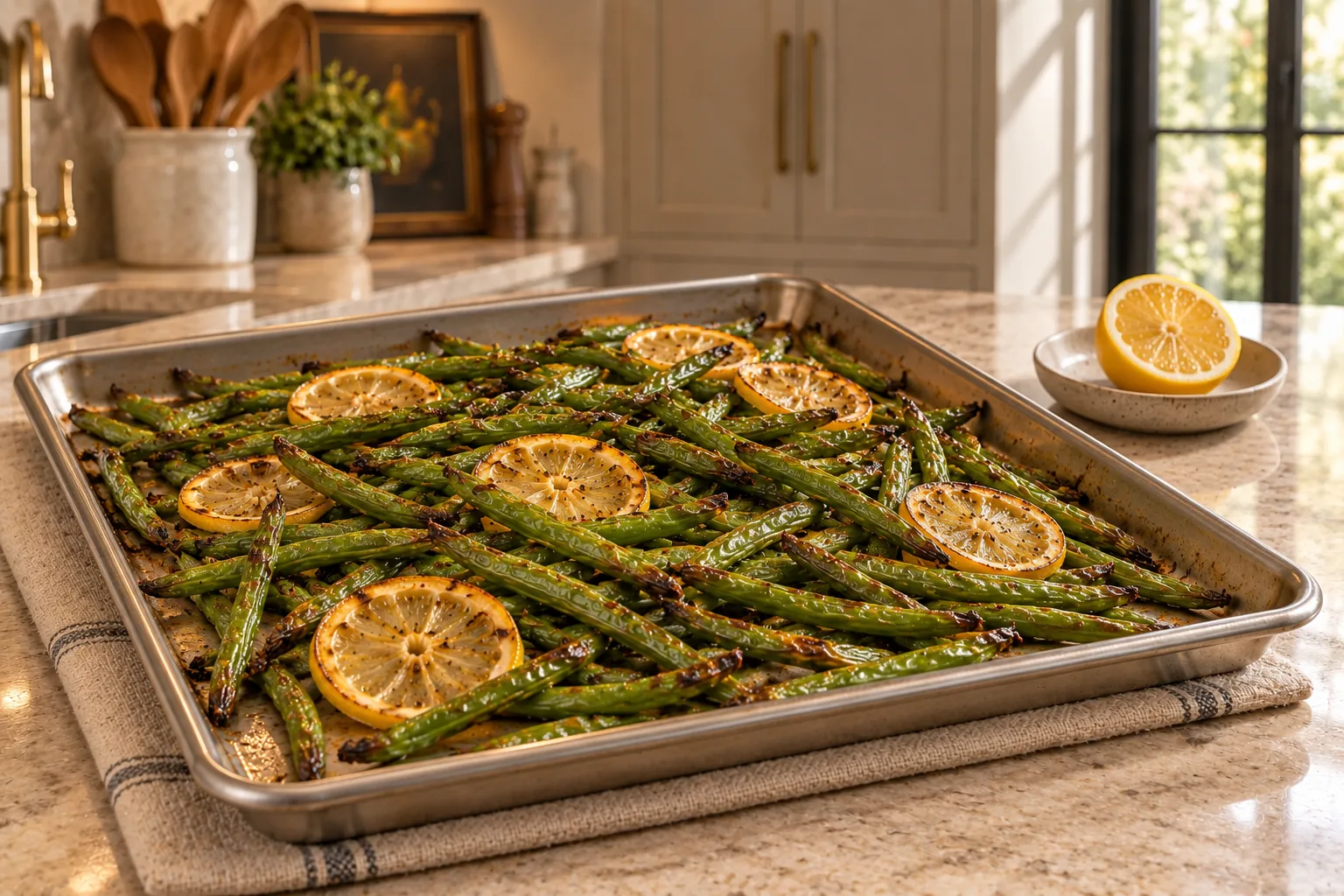
Put the pan on the middle rack and check the beans at about fifteen minutes. Look first at the beans touching the hottest parts of the pan. Turn any that are browning much faster, then return the pan to the oven.
The beans are ready when the skins are wrinkled, the surfaces have brown spots, and the centers are tender when pierced. They should bend without tasting raw, but they should not collapse into wet, olive-colored strands. Plan on about twenty minutes, but the physical cues control this bare-stainless version.
The lemon slices will look softened and lightly browned at the edges. They belong on the roasting pan for aroma and contact flavor. Do not replace the final fresh squeeze with juice that cooked for the full roasting time.
Slice the roasting half thinly enough to soften in the same window as the beans, but keep the rounds intact. Thick wedges can stay firm while the beans finish. The reserved half should remain unsqueezed until the hot pan is on the counter so its juice stays fresh and sharp.
Finish with Fresh Lemon
Remove the pan from the oven and squeeze the reserved lemon half over the hot beans. The fresh juice should smell bright the moment it hits the warm fat. Turn the beans once so the juice reaches the whole pan, then move them to a serving dish.
Serve them beside roasted meat, poultry, fish, or another Full GAPS main dish. On a holiday table, the browned beans work well next to Fermented Cranberry Sauce because one is hot and savory while the other is cold, tart, and fermented.
Storage and Reheating
Cool leftovers, then refrigerate them in covered glass. Reheat the beans on a stainless pan in a hot oven just until warmed. A skillet also works with a small amount of the same cooking fat.
The reheated skins will soften more than the first pan. That is normal. Avoid adding water during reheating unless you want a softer steamed result, because moisture works against the browned surface you built in the first roast.
Recommended Equipment
- Large unlined, uncoated stainless steel rimmed sheet pan
- Clean linen kitchen towel
- Stainless steel tongs
- Measuring spoons
- Small heat-safe cup for melting the cooking fat
- Citrus knife and cutting board
- Neutral glass or ceramic serving dish
Frequently Asked Questions
Are Green Beans Allowed on Full GAPS?
Yes. The Full GAPS food list includes string beans. This recipe roasts them until their centers are tender and their skins are wrinkled and browned.
Can I Use Olive or Avocado Oil?
Keep cold-pressed olive and avocado oils for raw use on finished food. For this 450°F roast, use two tablespoons melted ghee, coconut oil, lard, or rendered fat from qualifying uncured bacon.
Do I Have to Use Fish Sauce?
No. Replace the one teaspoon fish sauce with exactly one teaspoon qualifying coconut aminos. Check the current ingredient label and keep every other measurement unchanged.
Why Did My Beans Steam Instead of Brown?
Surface water and crowding are the first things to check. Dry the beans thoroughly, use a fully heated oven, and spread them in one layer on a large pan.
Can I Line the Pan?
A parchment-lined pan transfers heat differently. This version uses unlined stainless steel, so begin checking sooner and finish by wrinkling, browning, and tenderness rather than assuming identical timing.
More Full GAPS Side Dishes
For another green-bean method, Full GAPS Green Beans with Brown Butter and Pepitas moves the beans to the stovetop and adds properly prepared pumpkin seeds. The two recipes use different fats, equipment, and endpoints, so each keeps its own post and recipe card.
Put the Holiday Meal on a Timeline
The upcoming Holiday Menu & Prep Timeline lays out the menu and the day-by-day work before the holiday, so quick sides like these land in the right cooking window. Find it with the current and upcoming family resources in the WFLI shop.
GAPS Lemon Roasted Green Beans Recipe
GAPS Lemon Roasted Green Beans with Fish Sauce or Coconut Aminos
Ingredients
Equipment
Method
- Heat the oven to 450°F with a rack in the middle. Set out a large unlined, uncoated stainless steel rimmed sheet pan.
- Wash the scaled green beans, trim the stem ends, and dry the beans thoroughly with a clean linen towel. Spread them in one layer on the pan.
- Add the scaled melted cooking fat, the scaled fish sauce or qualifying coconut aminos, and the scaled sea salt. Turn until every bean has a thin even sheen. Place the scaled lemon slices in open spaces and reserve the unsliced lemon half.
- Roast and begin checking at about 15 minutes. Turn beans that brown much faster against the bare pan, then continue until the skins are wrinkled, the surfaces are brown in places, and the centers are tender, about 20 minutes as an estimate.
- Remove the pan from the oven. Squeeze the reserved scaled lemon half over the hot beans, turn once, transfer to a serving dish, and serve.
Notes
Tried this recipe?
Let us know how it was!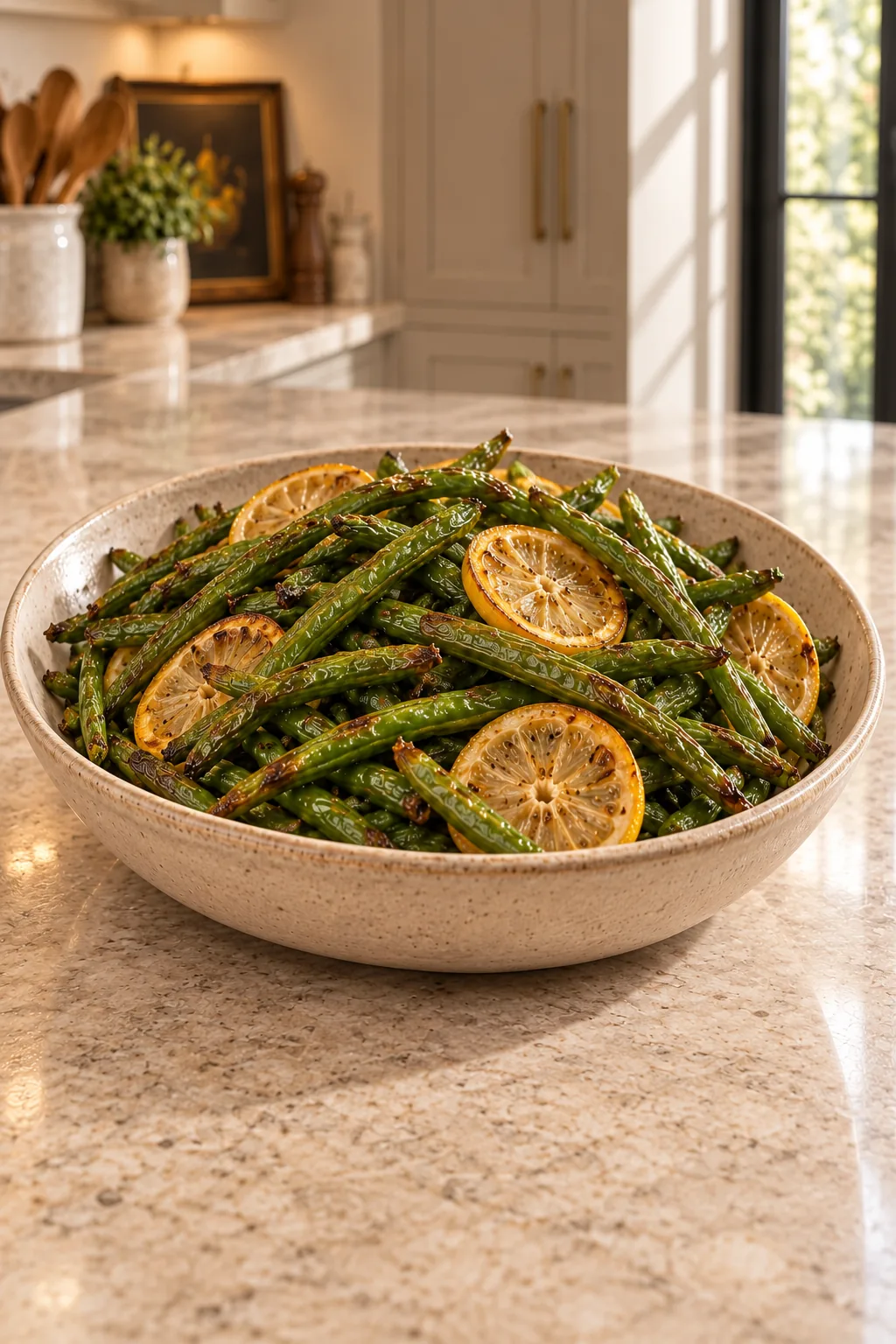

Leave a comment