

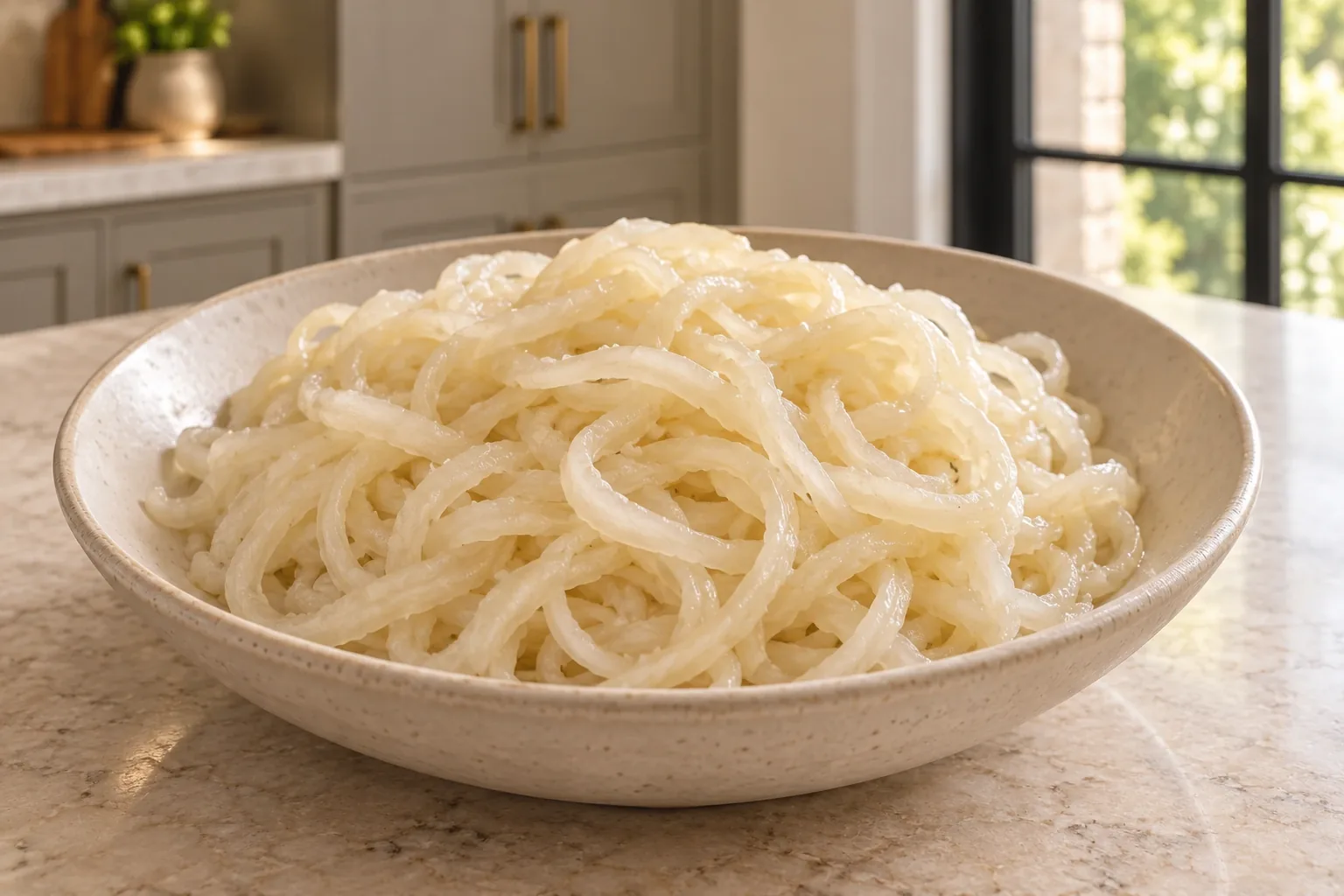
These daikon radish noodles turn one large non-starchy vegetable into a hot Full GAPS side dish in twenty-five minutes. The noodles stay pale and flexible, with a mild radish flavor and enough structure to carry ghee, Meat Stock, fish stock, or cultured cream.
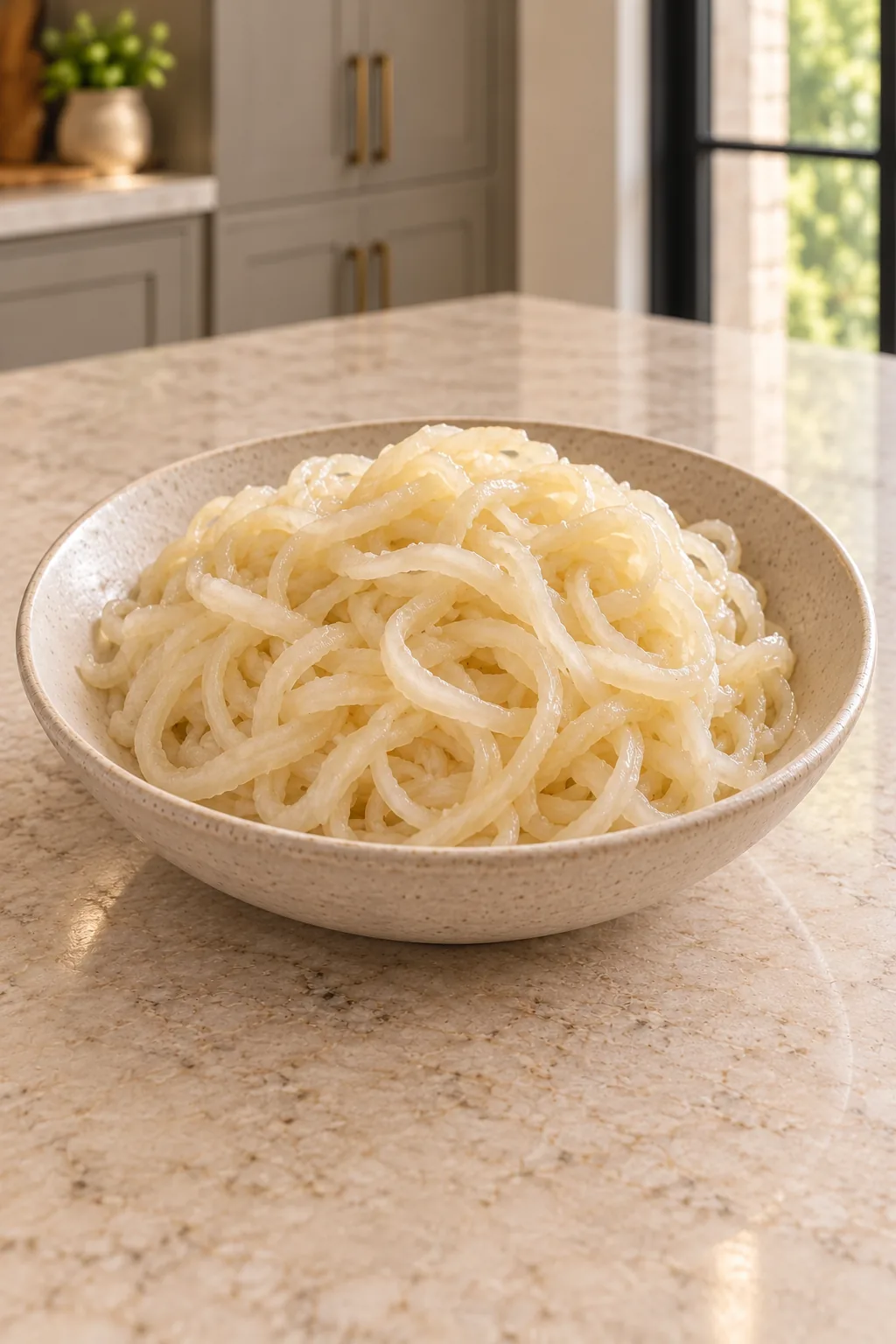
The base recipe is simple: spiralized daikon, two tablespoons of one accepted cooking fat, and three-quarter teaspoon mineral salt. Sauté it for exactly ten minutes. You can stop there, which is the plain ghee branch photographed here, or fold through one measured quarter-cup finishing liquid.
A fast side matters in our house. Breakfast, homeschool, three businesses, lunch, dinner, and second shift all have to fit into the same weekday. This recipe gives you a real vegetable on the plate without asking for another long bake, ferment, or stockpot.
GAPS Placement: Full GAPS
Prep Time: 10 minutes
Cook Time: 15 minutes
Total Time: 25 minutes
Yield: The source does not state a fixed serving count
Choose The Right Daikon
Use eighteen to twenty-four inches of daikon radish that is two to three inches in girth and weighs just over one pound. That may be two foot-long pieces or three to four shorter pieces, depending on how the market cuts them.
Choose firm sections without deep soft spots. Peel every piece, trim both ends, and cut the radish into lengths that fit your stainless-steel spiralizer or vegetable peeler. Keep the cut pieces stable on a board while you work.
Daikon holds much more water than wheat pasta. That moisture is part of why the raw spirals look crisp and opaque before cooking, then soften and turn slightly translucent in the skillet.
Raw daikon has a sharper radish bite. Medium heat softens that edge and brings out a milder vegetable flavor without turning the strands into a neutral copy of wheat noodles. Expect a vegetable noodle with its own taste and moisture, not a grain-free pasta that behaves exactly like flour dough.
Make Long Daikon Noodles
Use a tool with stainless-steel food-contact surfaces. Rotate each peeled section through a spiralizer or draw a julienne vegetable peeler along its length to make long noodles. Stop when the remaining core or stub becomes too small to hold safely in the tool.
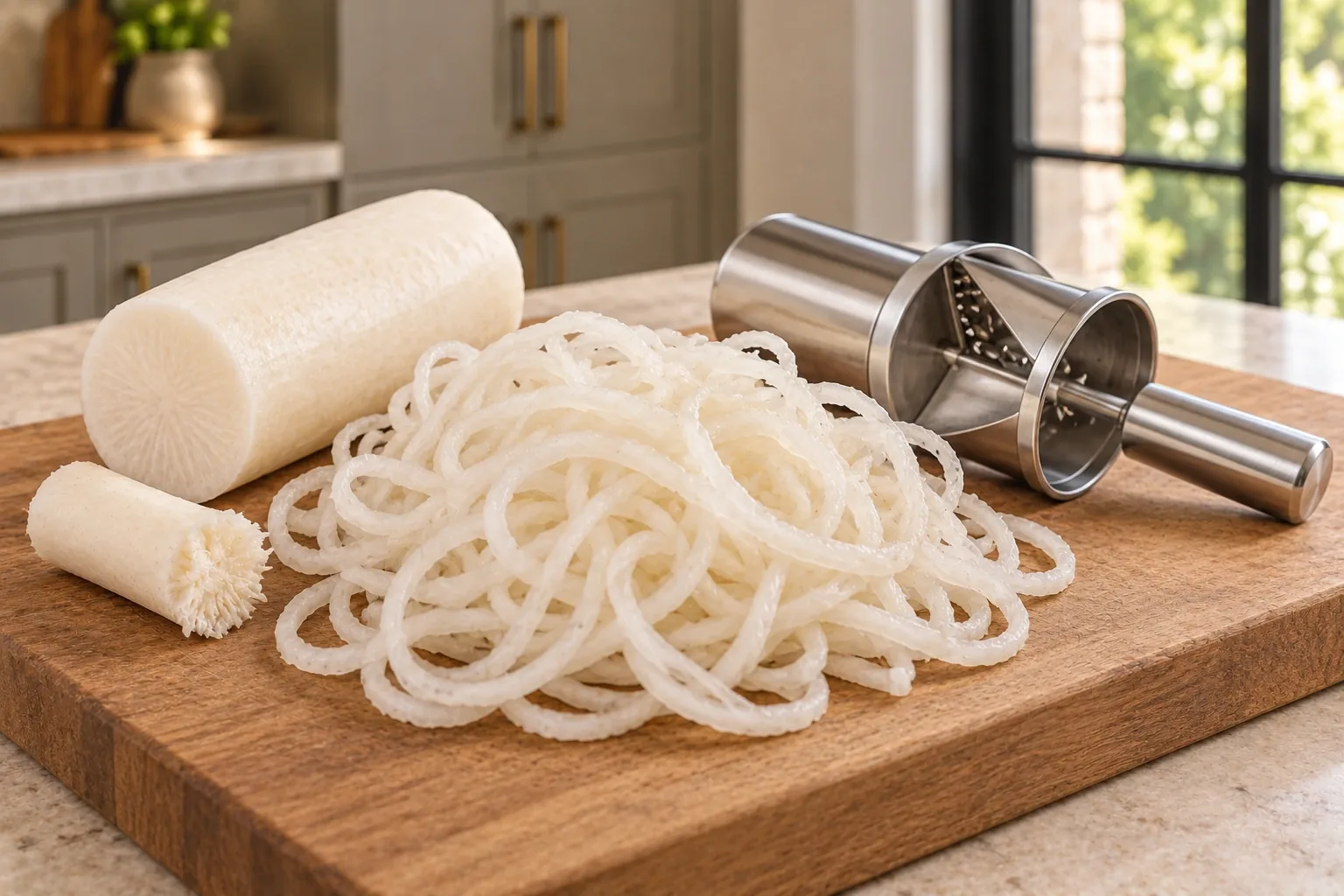
The raw noodles should be long, pale white, moist, and flexible enough to coil without turning mushy. A little variation in length is normal. Keep the fibrous core or stub out of the noodle pile instead of forcing it through and creating short hard pieces.
A crank spiralizer makes rounder continuous strands. A julienne vegetable peeler makes flatter narrow ribbons. Either tool fits the accepted method when its food-contact surfaces are stainless steel. Pick one tool for the batch so the pieces cook at roughly the same rate.
Do not salt the raw noodles while they sit on the board. The measured salt goes into the skillet with the noodles so the cooking time and moisture release stay tied to the accepted method.
Choose One Cooking Fat
Use two tablespoons homemade ghee, coconut oil, additive-free uncured bacon fat, or another accepted rendered animal fat. Butter is a separate dairy choice and belongs only after dairy has been introduced and tolerated.
The photographed branch uses ghee. It gives the noodles a light gloss without adding another flavor or visible topping. Do not heat olive oil for this recipe.
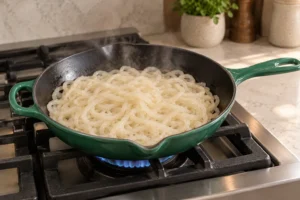
Melt the measured fat in a large stainless-steel skillet, wok, or broad-based enameled cast-iron vessel over medium heat. The exact photographed vessel is the Le Creuset Signature 10.25-inch skillet in Artichaut. Keep its base centered on the burner with both handles clear.
Sauté For Exactly Ten Minutes
Add the daikon noodles and three-quarter teaspoon mineral salt to the melted fat. Sauté over medium heat for exactly ten minutes, turning the noodles gently so the strands wilt evenly without being cut into short pieces.
The endpoint is hot, flexible, and wilted. The color shifts from raw opaque white toward a slightly translucent pale cream. The noodles still have visible vegetable texture and separate strands. They should not dissolve into a wet mash or brown like fried potatoes.
Spread the noodles across the pan instead of leaving one tight mound in the center. Turn them gently from the bottom so the strands nearest the skillet do not soften far ahead of the noodles on top. Cutting motions shorten the spirals, so lift and fold rather than chopping through them.
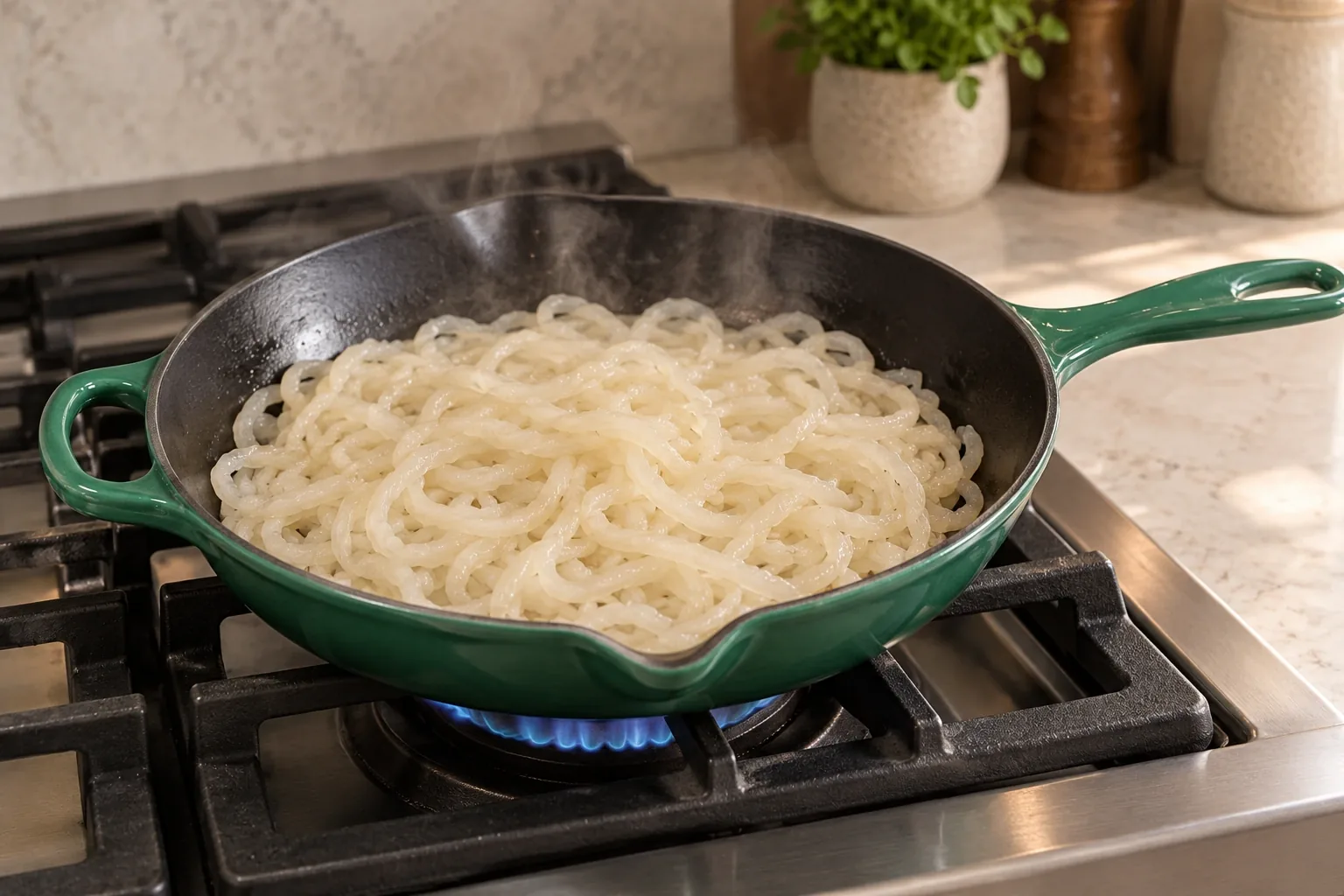
A little steam and surface moisture are expected. Continue only to the ten-minute endpoint. Extending the sauté to chase every trace of moisture can over-soften the spirals.
Use One Optional Quarter-Cup Finish
The finishing liquid is optional. If you use it, choose exactly one quarter cup of homemade raw-meaty Meat Stock, properly prepared fish stock, or raw cream or properly cultured cream after dairy has been introduced and tolerated.
Do not combine the branches. Meat Stock gives the noodles a savory meat-stock finish. Fish stock keeps the finish suited to a fish meal. The cream branch makes the noodles richer and belongs only after the dairy sequence reaches that food.
Fold the chosen liquid through after the ten-minute sauté. Use the full measured quarter cup for the 1x recipe or the scaled amount shown by the recipe card. The photographed plain branch stops before this optional step.
The finished strands should look lightly coated, not submerged. If liquid collects in one area, keep folding until it reaches the full mound. This step distributes the measured finish; it is not a second long simmer.
Daikon Radish Noodles for Full GAPS
Ingredients
Equipment
Method
- Peel the scaled amount of daikon radish.
- Cut the peeled daikon into sections that fit the stainless-steel spiralizer or vegetable peeler.
- Trim both ends of every section.
- Use the stainless-steel food-contact tool to turn the daikon into long noodles, rotating each section as you go.
- Leave the fibrous core or stub behind when a section becomes too small or hard to spiralize safely.
- Melt the scaled amount of one chosen cooking fat in a large stainless-steel skillet, wok, or broad-based enameled vessel over medium heat.
- Add the daikon noodles and the scaled mineral salt shown in the ingredient list.
- Sauté over medium heat for exactly 10 minutes, turning gently, until the noodles are hot, wilted, flexible and slightly translucent while separate strands remain.
- The finishing liquid is optional. If using it, fold through the scaled amount of one chosen branch only: homemade raw-meaty Meat Stock, properly prepared fish stock, or raw/properly cultured cream after dairy is introduced and tolerated. Do not combine branches.
Notes
Tried this recipe?
Let us know how it was!The Physical Cues That Matter
The raw daikon is crisp and opaque. Peeled sections are firm, and the spiralized strands look moist without being limp.
The core stays behind. Stop the tool when the remaining piece is too small or fibrous to make useful long noodles.
The fat is measured. Two tablespoons coat the pan and noodles. Do not add an unmeasured extra pour.
The noodles wilt without browning. At ten minutes they are hot, flexible, pale, and slightly translucent with separate strands.
The optional finish stays singular. Choose one stock or cream branch, measure a quarter cup, and fold it through without combining choices.
Why This Recipe Fits Full GAPS
Daikon is used here as a non-starchy vegetable. The cooking-fat choices stay within Full GAPS forms: ghee, coconut oil, additive-free uncured bacon fat, another accepted rendered animal fat, or butter after dairy has been introduced and tolerated.
The optional savory branch uses raw-meaty Meat Stock or properly prepared fish stock. It does not substitute early bare-bone broth. The cream branch follows the dairy-introduction sequence.
This post is labeled Full GAPS rather than the Introduction Diet. Keep the formula and its optional branches together only after the named ingredients fit your current Full GAPS food set.
Serving And Storage
Serve the noodles hot as a side dish or under a separate Full GAPS meat, fish, or sauce recipe. The plain ghee branch has a mild flavor, so it can sit beside many meals without competing with them.
The source does not state a fixed serving count or refrigerator duration. Make the amount you plan to serve, refrigerate any leftovers promptly in a covered glass container, and reheat gently only until hot. Do not invent a multi-day storage promise from the twenty-five-minute recipe.
If reheating noodles finished with cream, use gentle heat to keep the dairy from separating. For a stock-finished branch, stir as it warms so the measured liquid coats the strands again.
Keep plain noodles separate from a sauce or entrée until serving when you want the spirals to hold their shape. A heavy sauce left on the noodles can continue softening them while they sit.
Recommended Equipment
Use a stainless-steel spiralizer or julienne vegetable peeler, a stable wood cutting board, a stainless-steel knife, measuring spoons and cups, and a large task-appropriate skillet, wok, or broad-based enameled vessel.
The photographed pan is the exact registered Le Creuset Signature 10.25-inch skillet in Artichaut. Keep the full base centered on a properly sized burner. Every handle and support stays inside the frame and clear of the counter edge.
Related Full GAPS Foundations
Make the linked homemade ghee before cooking when you want the photographed plain branch. Use Chicken Meat Stock for the optional raw-meaty Meat Stock finish. Each component keeps its own complete method and card.
Put This Side Dish Into A Full GAPS Week
The Two-Week Full GAPS Meal Plan turns audited recipes into fourteen days of breakfasts, lunches, dinners, sides, and snacks with shopping lists. Find it with the current Full GAPS guides in the WFLI shop.
Frequently Asked Questions
How Much Daikon Do I Need?
Use eighteen to twenty-four inches of daikon, two to three inches in girth, weighing just over one pound.
Can I Use Butter Instead Of Ghee?
Yes, only after butter has been introduced and tolerated through the dairy sequence. Before that point, use ghee, coconut oil, or an accepted rendered animal fat.
Can I Heat Olive Oil For These Noodles?
No. Choose one of the accepted heated fats listed in the recipe.
Is Bone Broth The Same As The Meat Stock Finish?
No. The linked raw-meaty Meat Stock is distinct from delayed bare-bone broth.
Can I Combine Stock And Cream?
No. The optional finish is exactly one quarter cup of one chosen branch.
How Long Do Daikon Noodles Cook?
Sauté them for exactly ten minutes over medium heat. Prep is ten minutes and the full recipe time is twenty-five minutes.
Can I Double The Recipe?
Yes. Use the 2x control for thirty-six to forty-eight inches daikon, four tablespoons one chosen fat, one and one-half teaspoons salt, and an optional one-half cup of one finishing liquid. Use enough pan capacity or cook equal batches separately so each batch receives the same ten-minute sauté.
How Many Servings Does This Make?
The source does not state a fixed yield, so this recipe card does not invent one. Portion the finished noodles for the meal you are serving.

Leave a comment