

Fermented sesame milk is a distinct Full GAPS formula with its own ratio: one cup raw hulled sesame seeds blended with exactly three cups filtered water. After straining, homemade cultured whey and raw honey support a 20-to-24-hour ferment that gives the milk a clean tang and a softly nutty sesame flavor.
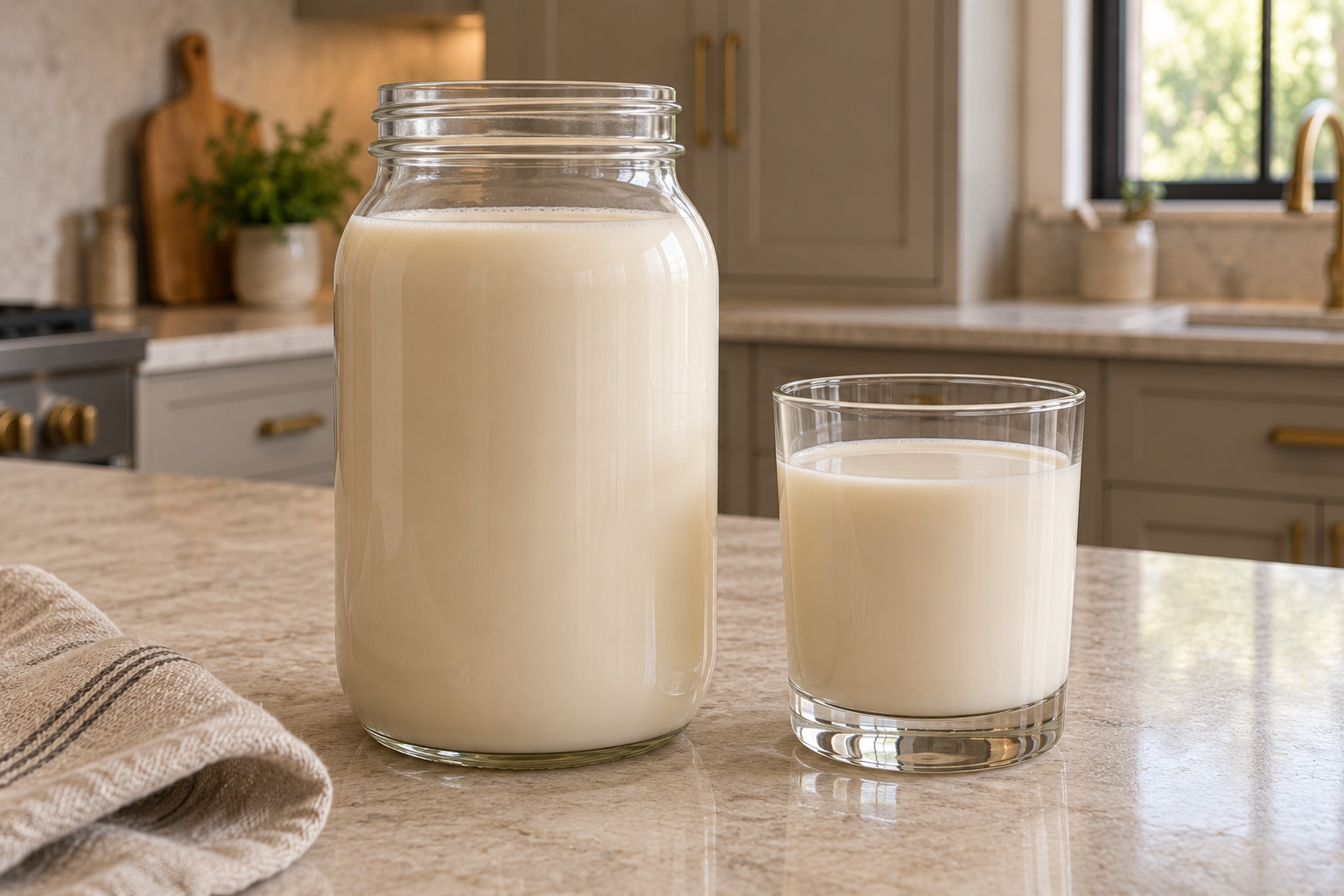
This is not the standard four-cup nut milk with sesame swapped into it. The lower water measure keeps the small seeds from producing a thin, washed-out drink. The finished milk is pale ivory with a warm-beige cast, smooth enough to drink, and useful anywhere a recipe benefits from a cultured dairy-free milk.
A Separate Formula For Tiny Sesame Seeds
Sesame behaves differently from larger nuts in the blender and strainer. The seeds break into a much finer paste, and the finished milk carries a clear sesame aroma even after the solids are removed. Giving it a separate card keeps the three-cup water ratio and fine-pulp cues easy to follow.
I appreciate recipes with a fixed ratio in our kitchen. With six children, work, and homeschool filling the week, the jar needs to be repeatable. If one batch is creamy and another is watery because the water was guessed, it becomes harder to plan breakfast, smoothies, or baking around it.
The method stays simple: soak the sesame, rinse it well, blend until evenly cloudy, add homemade whey and raw honey, strain the fine paste, and culture the milk in a pressure-aware glass jar.
Keeping the sesame formula separate also prevents two common texture mistakes. Using the four-cup standard ratio can make the sesame flavor seem weak, while carrying the unstrained cashew method into this batch can leave an overly dense, pasty drink. Three cups of blending water plus a careful cloth strain gives the intended middle ground.
Use Raw Hulled Sesame Seeds
Measure one cup raw hulled sesame seeds. Choose plain, unsalted seeds without oil, seasoning, or a toasted coating. Hulled sesame gives the finished milk its pale color and keeps the flavor gentler than an unhulled batch.
Do not replace the measured sesame with hemp, chia, flax, protein powder, or tahini. Those are different ingredients and do not follow this formula. Prepared tahini has already been ground and may include oil or salt, so it cannot stand in for the soaked whole seeds.
The small seed size means careful rinsing matters. Use a fine stainless strainer that will hold the sesame without letting it wash away.
Soak Overnight With Mineral Salt
Combine the sesame seeds with two to three cups filtered water and two teaspoons natural mineral salt in a glass or ceramic bowl. Cover and soak overnight for at least seven hours.
The seeds will look slightly fuller after soaking, and the water may be cloudy or faintly beige. Drain the soaking water completely. It does not become part of the milk.
Rinse with cool filtered water in a fine strainer. Move the seeds gently so fresh water reaches the whole batch. Let the excess water drain before transferring them to the blender.
Blend With Exactly Three Cups Water
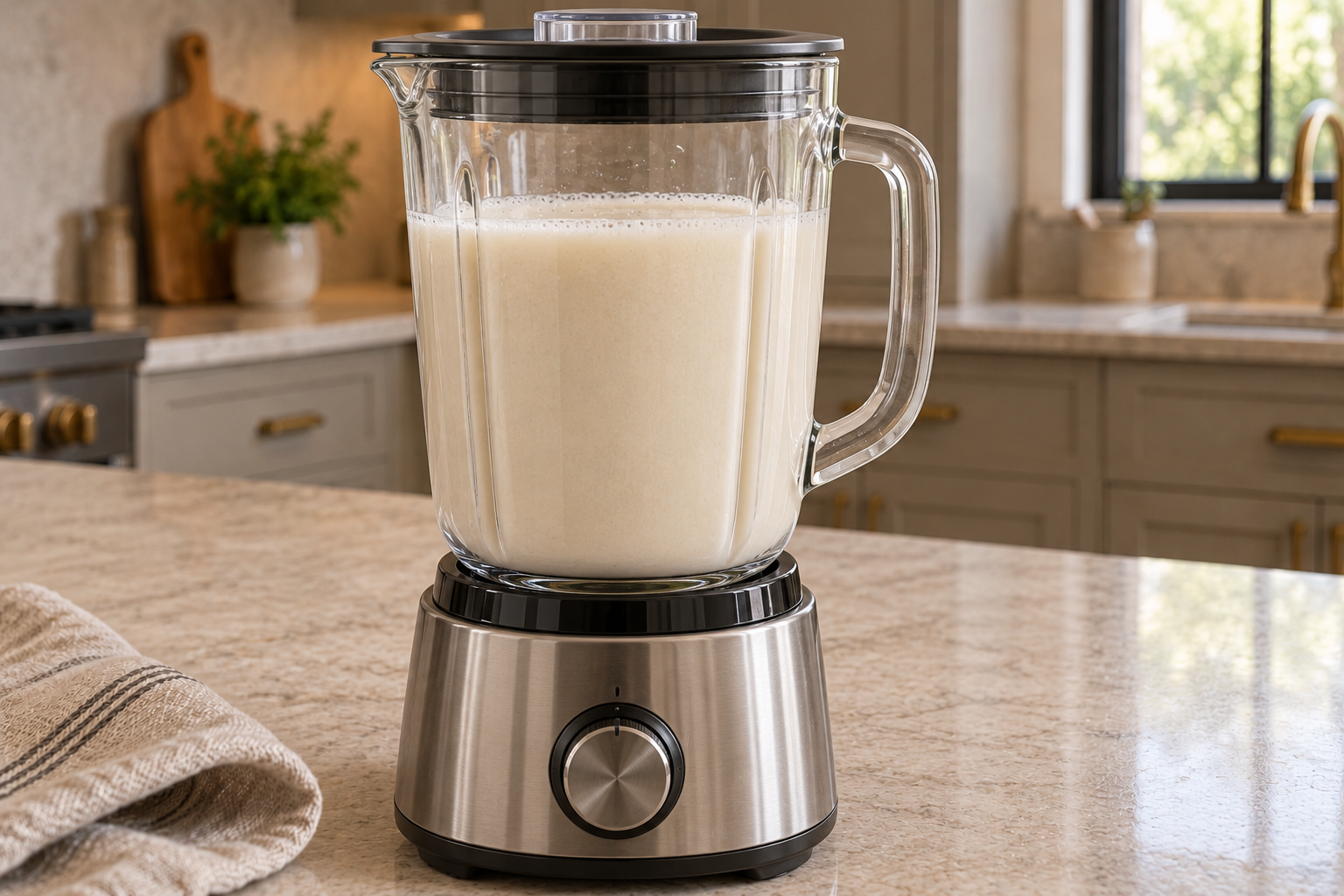
Add the drained sesame to a glass-contact blender with exactly three cups fresh filtered water. Blend for about 50 seconds on medium-high.
Stop the machine before checking. The liquid should be uniformly cloudy, pale ivory with a warm-beige cast, and fine enough that no intact seeds are floating. A modest uneven foam ring is normal. The stopped liquid should still move freely in the jar.
If you can see a clear water layer or many whole seeds, blend a little longer. Do not keep running the blender until the mixture heats or turns into a thick tahini-like paste. This stage is milk with a fine suspended pulp.
Add Cultured Whey, Raw Honey, And Salt
Add one-quarter cup homemade cultured whey, two tablespoons raw honey, and one-half teaspoon natural mineral salt. The whey should come from homemade yogurt or kefir fermented for at least 24 hours. This 24-hour GAPS yogurt can be strained for the starter.
Blend for only a few seconds to distribute the additions. The color should remain even, and the milk should not become noticeably thicker.
Commercial whey powder, protein concentrate, flavored yogurt, and commercial probiotic powder are different products. Keep the starter at the measured one-quarter cup of homemade cultured whey.
Strain The Fine Sesame Paste
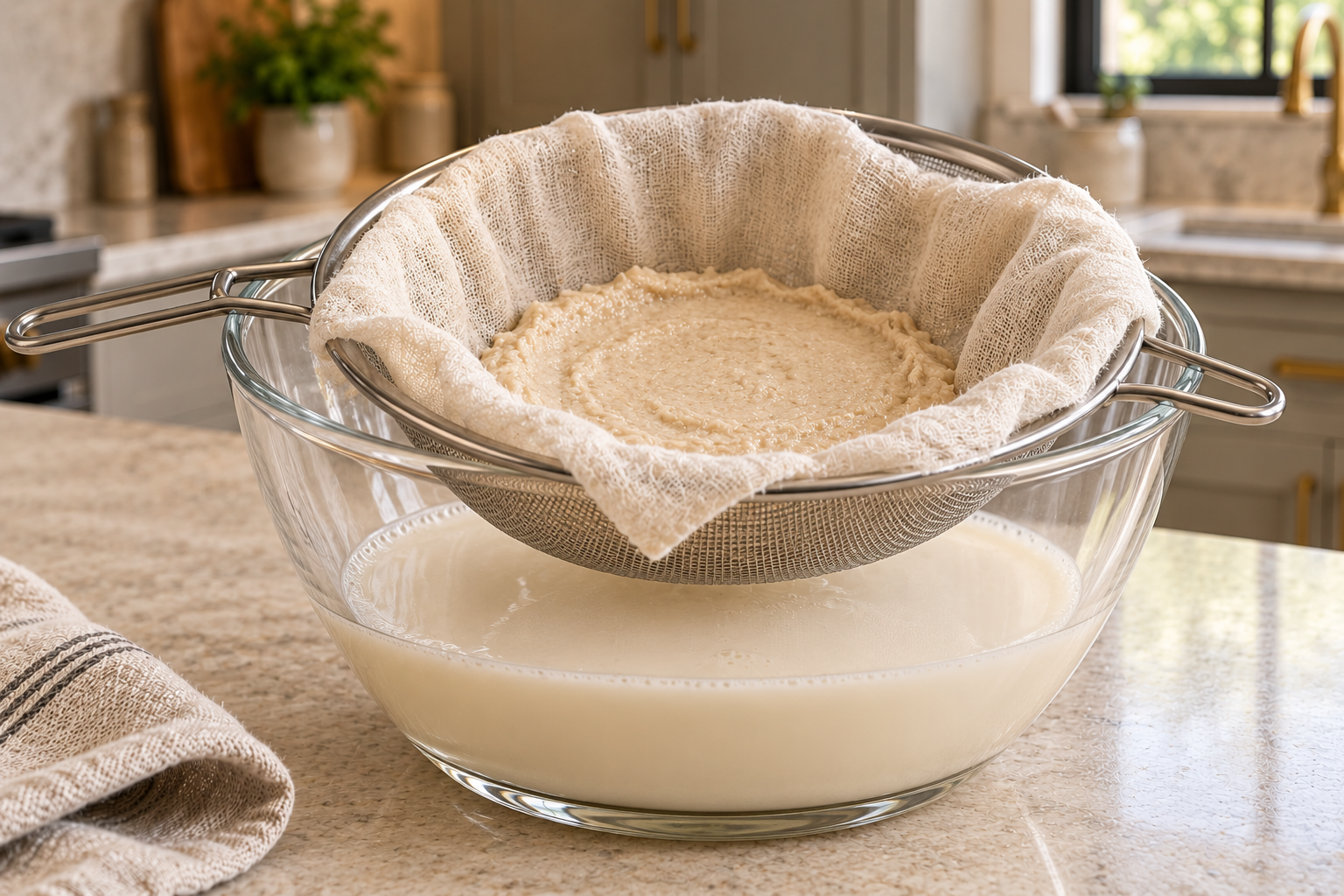
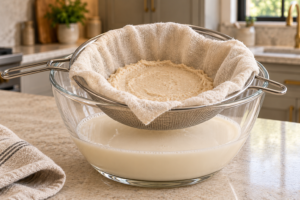
Set a fine stainless-steel mesh strainer securely over a large glass bowl. Line it with tightly woven linen, cotton cheesecloth, or muslin. Both strainer handles and the rim need visible support from the bowl.
Transfer the blended mixture into the cloth. Gather and press the cloth in manageable portions so the smooth milk collects below. Sesame leaves a fine, damp paste rather than the coarse, crumbly meal produced by almonds.
The paused method image shows that exact cue. The retained solids are pale beige and very finely ground, almost tahini-like in particle size, while the strained liquid below is smooth and pourable. The cloth remains nested in the supported strainer; nothing hangs unsupported over the bowl.
Strain before fermentation. Leaving the entire sesame paste in the jar would change the texture and make a different formula.
Ferment In A Pressure-Aware Glass Jar
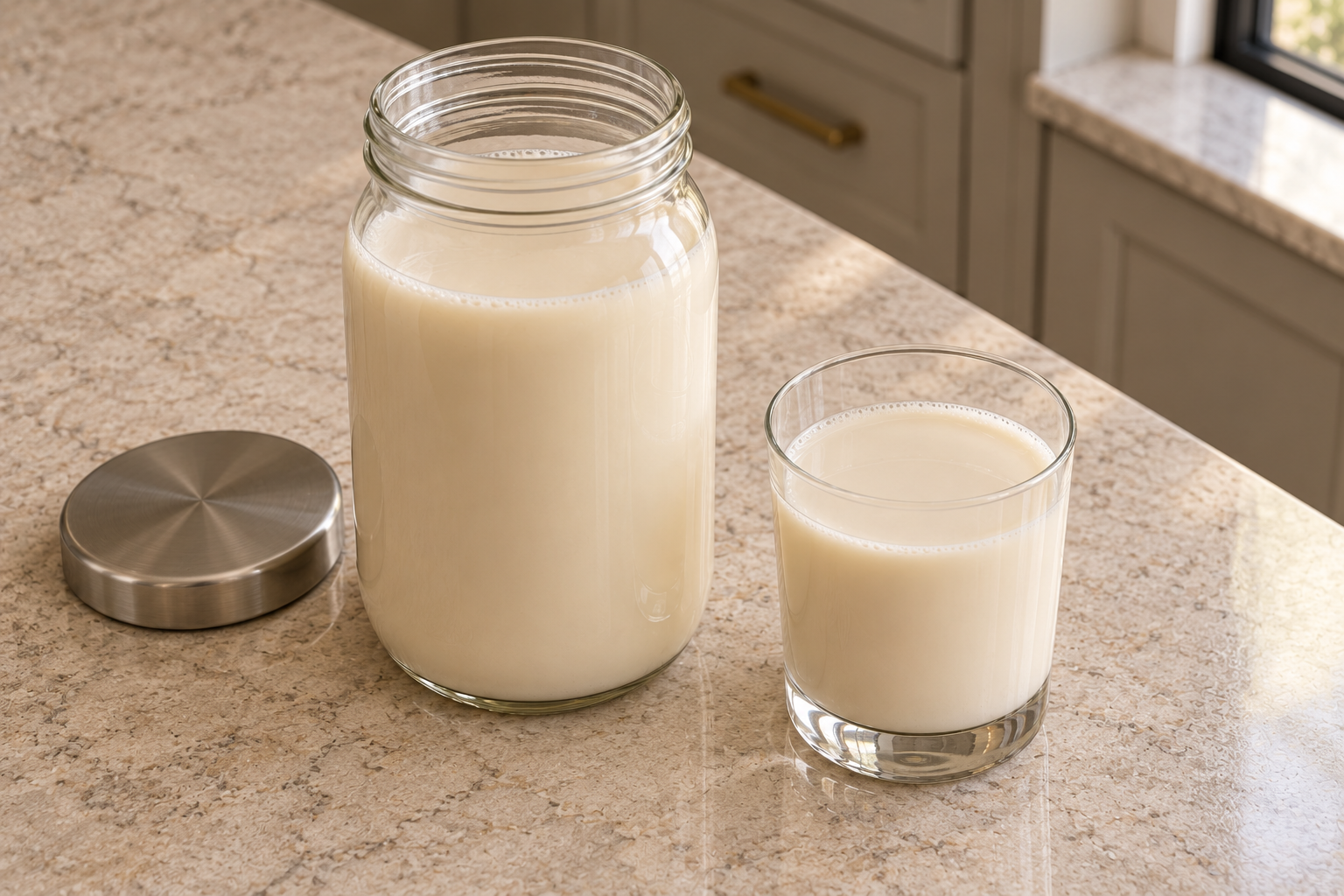
Transfer the strained milk to a clean wide-mouth glass jar and leave headspace. Fit an airlock or place a plain stainless-steel lid loosely enough for pressure to vent. Do not tighten a rigid lid during active fermentation.
Keep the jar in a warm, steady place for 20 to 24 hours. The aroma should become clean and cultured, and the sesame flavor will remain underneath the tang. A light foam line or early separation may appear.
Refrigerate within the measured window. Once the milk is chilled, close the jar fully. Do not extend the room-temperature ferment simply to make it more sour.
How Fermented Sesame Milk Should Taste And Look
The finished milk is pale ivory rather than bright white. It pours easily and may leave a faint creamy line on the glass. It should not be grainy, chunky, or thick like tahini.
The aroma is gently sour with a recognizable sesame note. Raw honey should not dominate the finished drink. Natural separation is expected during refrigeration, so shake the closed jar before measuring or serving.
Drink it cold, add it to a smoothie, or use it in a grain-free batter that pairs well with sesame. Its flavor is more distinct than the standard almond branch, so choose recipes where a softly toasted-nut impression belongs even though the seeds themselves were not toasted.
For baking or smoothies, shake first and measure after the settled layers look even. If a recipe depends on a neutral milk flavor, the standard almond branch may be a better fit. If sesame is welcome, this version adds a deeper flavor without changing the other liquid measurements in the recipe you are making.
Where This Fits On GAPS
This recipe belongs on Full GAPS after properly prepared sesame is tolerated. It uses raw hulled sesame seeds, filtered water, homemade cultured whey, raw honey, and natural mineral salt. It is not an Introduction Diet milk.
The recipe does not include commercial sesame milk, tahini, maple syrup, cane sugar, protein powder, hemp, chia, or flax. A different seed cannot be dropped into this three-cup formula unless it is the sesame formula itself.
If your household follows a narrower Full GAPS variation, use this milk only when each measured ingredient fits the individual plan.
Storage
Keep the milk covered in the refrigerator for up to seven days. Pour servings from the storage jar rather than drinking from it.
Separation is normal. Shake the closed jar until the color looks even before every pour. A normal settled layer should reincorporate with shaking.
Discard the batch if it develops visible surface growth, an unexpected putrid aroma, or pressure that continues building after refrigeration. Wash and dry every food-contact part before making another batch.
Recommended Equipment
Use a glass or ceramic soaking bowl, a fine stainless strainer for rinsing the small seeds, a glass-contact blender, a second securely supported fine stainless strainer, tightly woven natural cloth, a large glass receiving bowl, and a wide-mouth glass fermenting jar.
An airlock is useful when it fits your jar. A loose plain stainless lid can also keep the active ferment pressure-aware. Avoid plastic food-contact tools and unsupported cloth bags.
Because sesame seeds are small, check the mesh before soaking and rinsing the full cup. If dry seeds slip through, use a finer stainless strainer. For the milk itself, tightly woven cloth does the final work; ordinary coarse cheesecloth can allow too much fine paste into the bowl.
Frequently Asked Questions
Can I Use Tahini Instead Of Sesame Seeds?
No. This formula begins with one cup raw hulled sesame seeds that are soaked, rinsed, blended, and strained.
Why Does Sesame Milk Use Three Cups Water?
The three-cup ratio belongs to the sesame formula. It keeps the finished milk flavorful and smooth rather than thin.
Do I Have To Strain It?
Yes. Straining removes the fine sesame paste and gives the milk its smooth drinkable body.
Can I Use Store-Bought Sesame Milk?
No. Commercial milk does not follow the measured soaking, blending, starter, and fermentation method in this card.
Why Does The Milk Separate?
Homemade sesame milk naturally separates in the refrigerator. Close and shake the jar before serving.
How Long Does It Ferment?
Ferment for 20 to 24 hours in a warm steady place, then refrigerate. Keep the active jar pressure-aware.
Can I Double The Recipe?
Yes. The 2× card control doubles every measured ingredient. Use equipment with safe working capacity and process in batches when needed.
Fermented Sesame Milk Recipe
Fermented Sesame Milk for Full GAPS
Ingredients
Equipment
Method
- Combine the raw hulled sesame seeds with 2 to 3 cups filtered water and 2 teaspoons mineral salt in a glass or ceramic bowl. Cover and soak overnight for at least 7 hours.
- Drain and discard the soaking water. Rinse the sesame thoroughly with cool filtered water in a fine stainless strainer and let the excess water drain.
- Blend the drained sesame with exactly 3 cups fresh filtered water for about 50 seconds on medium-high, until the liquid is uniformly cloudy, pale ivory with a warm-beige cast, and free of large floating seeds. Stop the blender before checking.
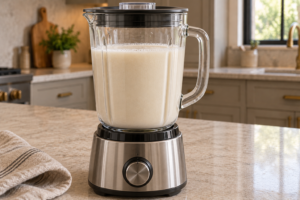
- Add the homemade cultured whey, raw honey and remaining 1/2 teaspoon mineral salt. Blend for only a few seconds to distribute them.
- Set the fine stainless strainer securely over a large glass bowl and line it with tightly woven cloth. Transfer the milk into the cloth, then gather and press until smooth sesame milk collects below and a very fine pale-beige sesame paste remains in the cloth.
- Transfer the strained milk to a clean wide-mouth glass jar, leaving headspace. Fit an airlock or set a stainless-steel lid loosely so pressure can vent. Ferment in a warm steady place for 20 to 24 hours.
- Refrigerate within the 20-to-24-hour window. Once chilled, close the jar fully. Shake the closed jar before serving because natural separation is expected.
Notes
Tried this recipe?
Let us know how it was!More Dairy-Free Drinks And Ferments
The upcoming Drinks & Ferments Cookbook will gather cultured drinks, dairy-free choices, family-sized batches, and exact sensory cues. Watch the WFLI shop as the collection is completed.

Leave a comment