

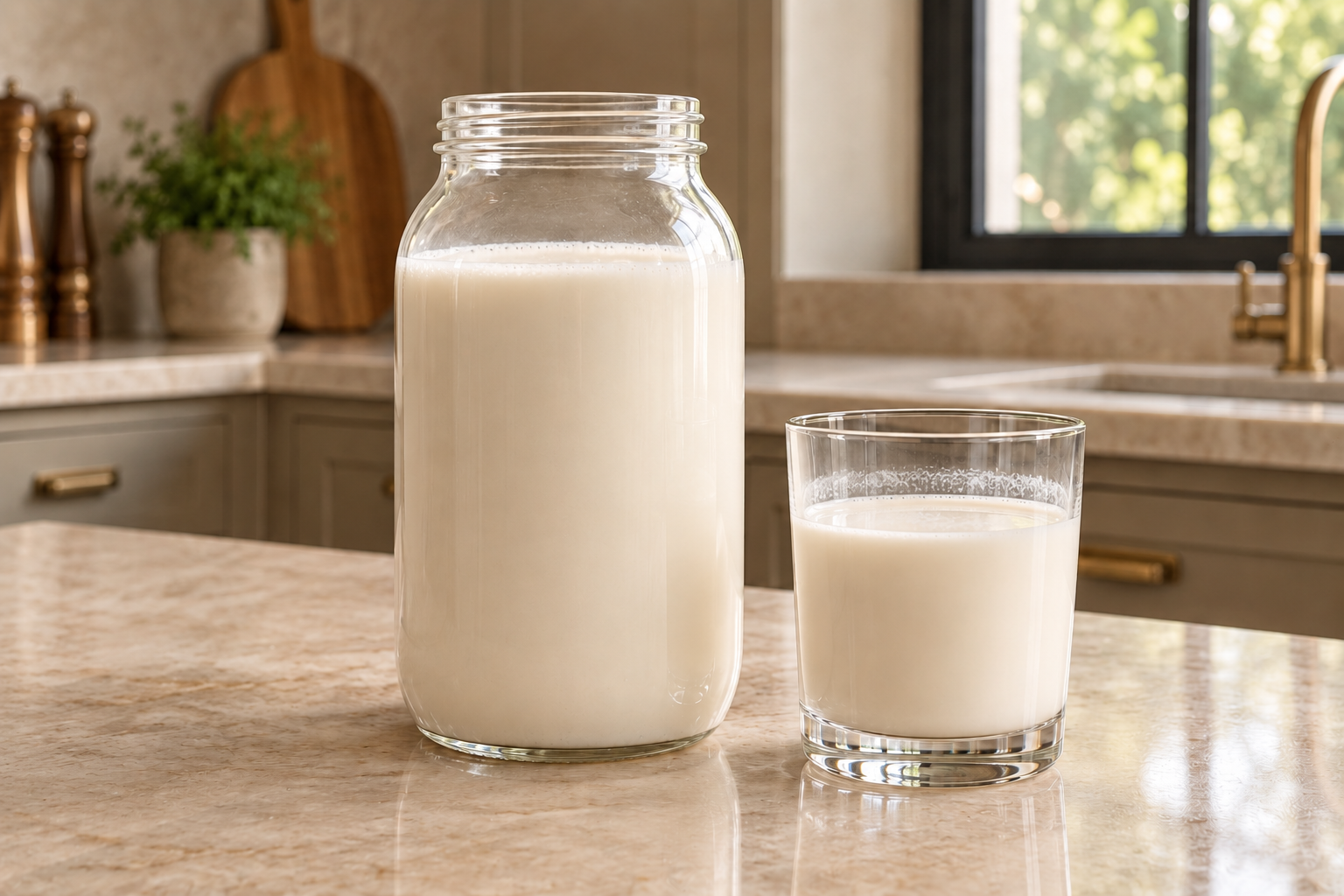
Thick fermented nut or seed milk gives you the cultured tang of the standard Full GAPS milk with a little more body. The difference is precise: this formula blends one cup of properly prepared nuts or oily seeds with three and one-half cups filtered water, then strains and cultures the milk for 20 to 24 hours.
The half-cup reduction matters. The finished milk still pours easily, but it leaves a faint creamy coating on the glass and holds up better in smoothies, breakfast bowls, sauces, and batters. The photographed batch uses blanched almonds so the visible texture stays consistent from blending through serving.
When A Thicker Cultured Milk Is Useful
I reach for this version when the four-cup standard milk feels too light for the job. It gives a smoothie more body without adding commercial thickeners, and it keeps a pancake or muffin batter from becoming watery. Poured into a glass, it feels closer to a light drinkable yogurt while remaining unmistakably milk.
That distinction is useful in our family kitchen. With six children, work, and homeschool all sharing the same week, I do not want to guess whether a jar is intended for drinking or for a recipe. A clearly labeled thicker batch can move into breakfast and baking while the standard batch stays available for ordinary pouring.
This is still one straightforward rhythm: soak, rinse, blend, add the starter and honey, strain, and culture. The method is not harder than the standard milk. The exact three-and-one-half-cup water measure is what produces the different result.
Choose One Properly Prepared Nut Or Seed
Use one cup of one raw, unsalted option: blanched almonds, hazelnuts, Brazil nuts, pecans, macadamias, walnuts, pumpkin seeds, or sunflower seeds. Choose an ingredient without added oil, flavoring, salt, or coating.
These alternatives share the same water ratio, straining step, and fermentation window, so they stay within one formula. Pick one rather than mixing several partial bags. A single choice makes it easier to recognize the normal aroma, color, and thickness of the finished milk.
Blanched almonds make a mild, creamy batch and are used in all four photographs here. Pecans and walnuts give a darker nut flavor. Pumpkin or sunflower seeds make the result more seed-forward. Keep the chosen amount at one cup and do not change the three-and-one-half-cup blending-water measure.
Soak Overnight In Salted Water
Place the nuts or seeds in a glass or ceramic bowl. Add two to three cups filtered water and two teaspoons natural mineral salt. The water should cover the batch with enough room for the pieces to swell slightly.
Cover and soak overnight for at least seven hours. Properly soaked nuts or seeds look a little fuller and feel less brittle. The water may become cloudy or lightly colored. Drain it completely because it is not part of the milk.
Rinse with cool filtered water, moving the pieces so fresh water reaches the whole batch. Let the excess water drain away before the nuts or seeds go into the blender.
Use Exactly Three And One-Half Cups Water
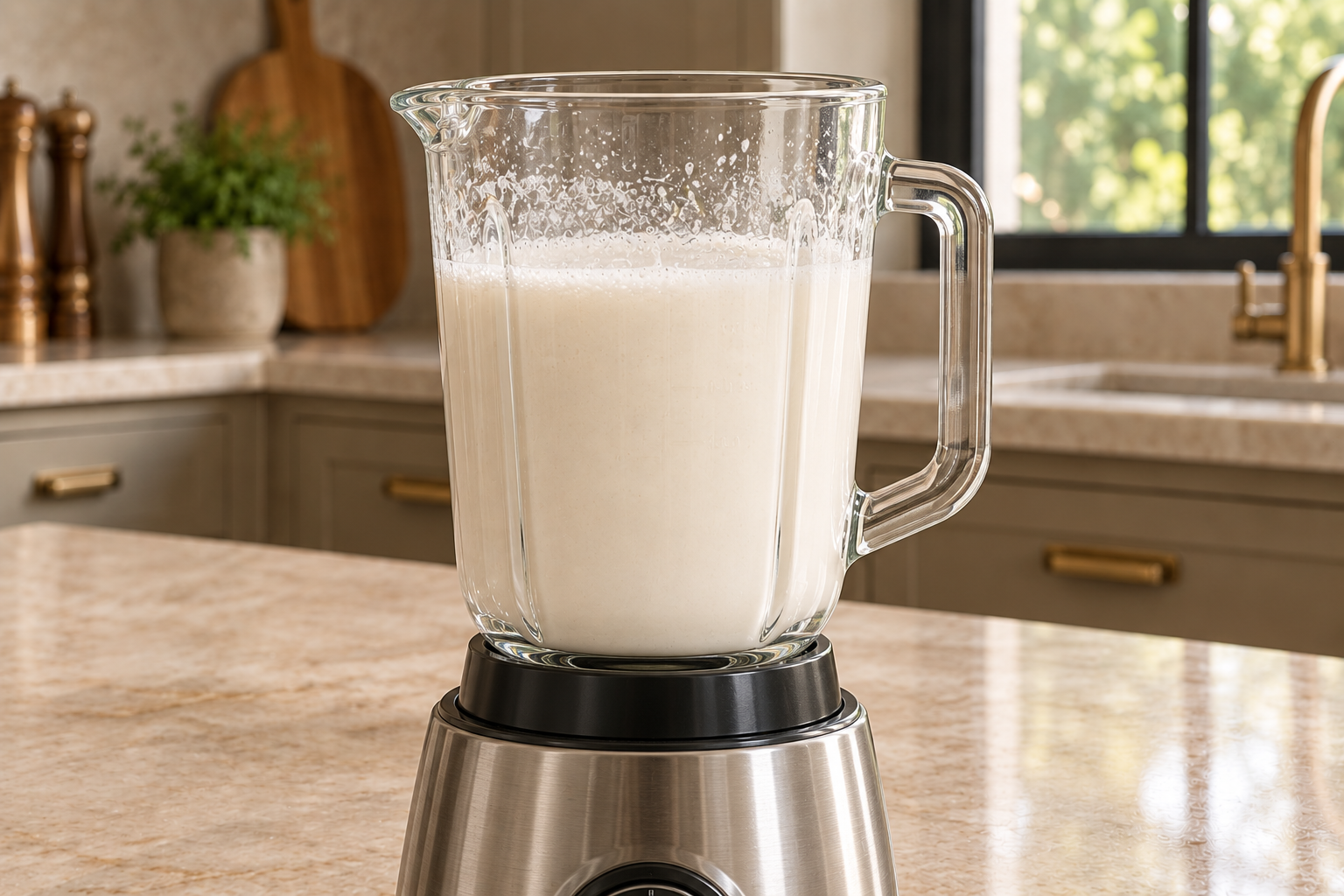
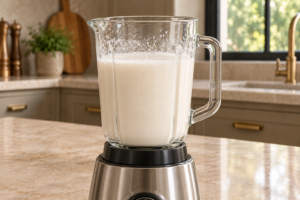
Add the drained nuts or seeds to a glass-contact blender with exactly three and one-half cups fresh filtered water. Blend for about 50 seconds on medium-high.
Stop the blender before checking. The liquid should be uniformly cloudy, creamy off-white, and smooth enough that no large pieces are floating. It will coat the glass jar more than the standard fermented nut or seed milk, but it should still move freely when the stopped jar is tilted.
A fine suspended pulp and a modest uneven foam ring are normal. Large fragments or a gritty clear layer show that the batch needs a little more blending. Do not continue until it becomes a paste; the goal is creamy milk.
Add Homemade Whey, Raw Honey, And Salt
Add one-quarter cup homemade cultured whey, two tablespoons raw honey, and one-half teaspoon natural mineral salt. The whey should be drained from homemade yogurt or kefir fermented for at least 24 hours. You can begin with this 24-hour GAPS yogurt method.
Blend for only a few seconds to distribute those additions. The milk should remain smooth and pourable. Raw honey occupies the exact measured sweetener position while keeping the formula within Full GAPS.
Do not substitute commercial whey powder, protein concentrate, flavored yogurt, or commercial probiotic powder. They are different products and do not replace the measured homemade cultured whey.
Strain The Thicker Milk Securely
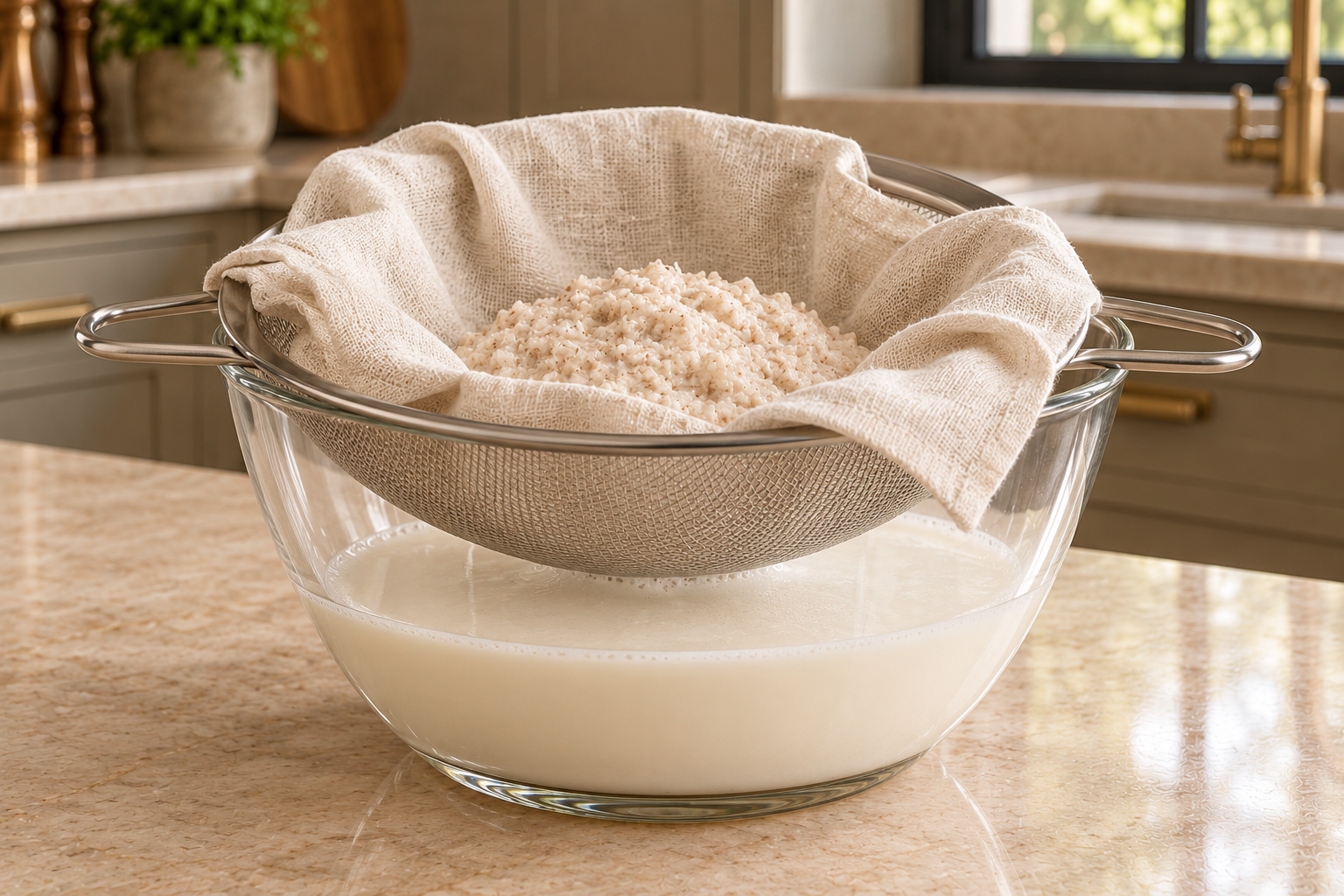
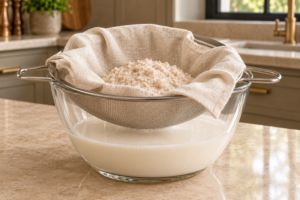
Set a fine stainless-steel strainer securely across a large glass bowl. Line it with tightly woven linen, cotton cheesecloth, or muslin. The strainer rim and handles need full contact with the bowl so the setup stays stable when the thicker mixture is added.
Transfer the blended mixture into the cloth. Gather the cloth and press the milk through in manageable portions. The receiving bowl should collect a smooth, creamy liquid while the cloth holds a damp mound of pale pulp.
The method photograph shows the safe paused arrangement: the cloth is nested in the strainer, the strainer spans the bowl, and the bowl rests flat on the counter. Nothing is suspended in the air and no hand has to hold the weight of the batch.
Keep the straining step. This thicker formula is not the unstrained cashew method. Its body comes from the lower water ratio, not from leaving all of the pulp in the milk.
Ferment For 20 To 24 Hours
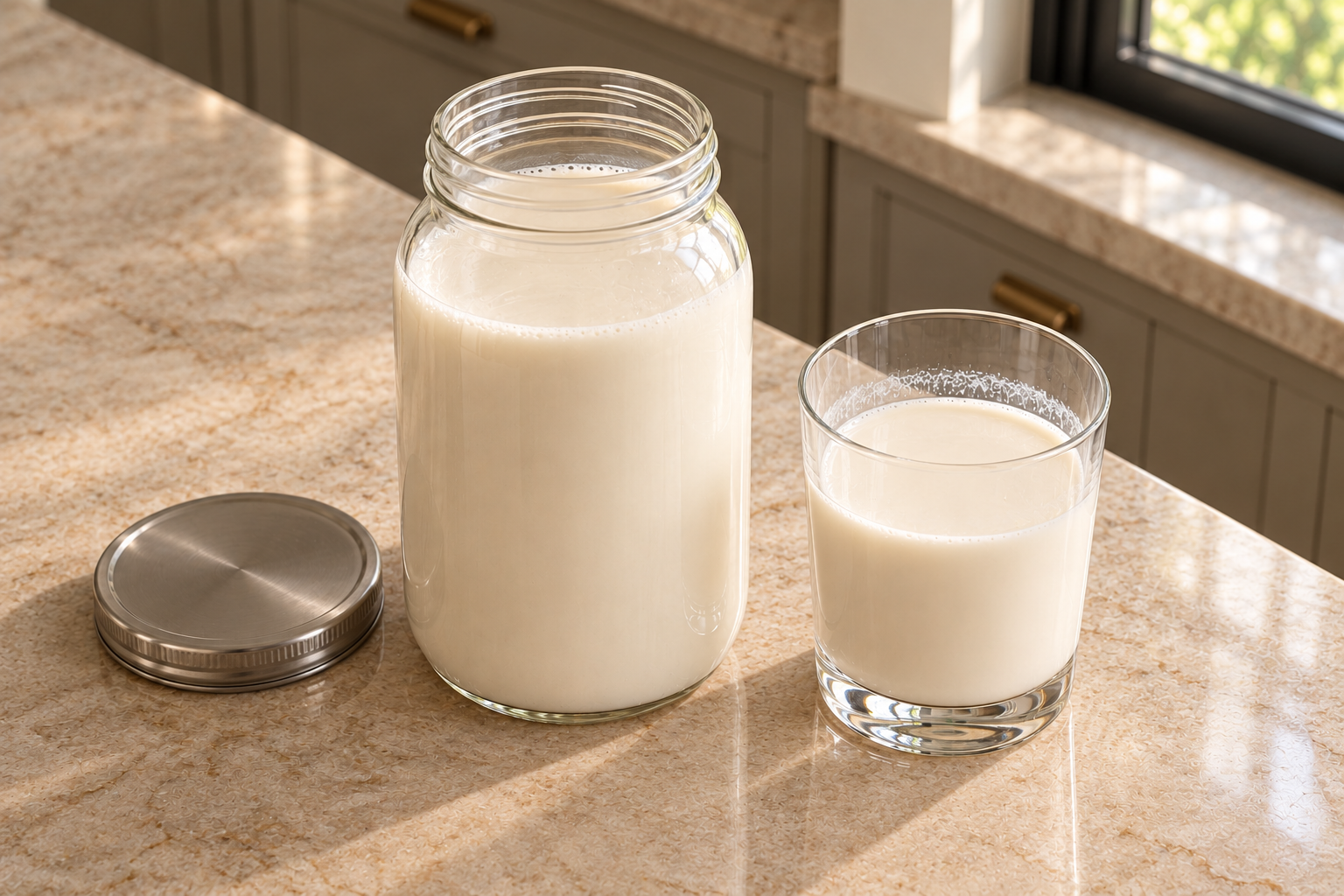
Transfer the strained milk to a clean wide-mouth glass jar, leaving headspace. Fit an airlock or position a plain stainless-steel lid loosely enough for pressure to vent. Do not tighten a rigid lid during active fermentation.
Keep the jar in a warm, steady place for 20 to 24 hours. The milk should develop a clean cultured tang and remain pourable. A faint foam line or the beginning of natural separation may appear.
Use the measured window rather than extending the ferment in search of a stronger sour taste. At the endpoint, the aroma should be clean and tangy, not stale or putrid. Move the jar to the refrigerator within 24 hours and close it fully once chilled.
Texture, Flavor, And Serving Cues
The finished milk should pour in a smooth ribbon that settles quickly in the glass. A faint opaque coating line may remain above the liquid. It should not hold peaks, mound on a spoon, or resemble spoonable yogurt.
The cultured aroma is gently sour. Almond milk stays mild and nutty underneath; other allowed nuts or seeds keep their own flavor. The honey should not make the finished batch taste like a sweet beverage.
Shake the closed chilled jar before measuring or pouring. Use the milk in smoothies, grain-free batters, creamy drinks, or a sauce that benefits from a little more body. For a lighter glass or a recipe that needs ordinary milk consistency, use the linked standard formula.
Where This Fits On GAPS
This recipe belongs on Full GAPS after the chosen nut or oily seed is tolerated and properly prepared. It uses filtered water, homemade cultured whey, raw honey, and natural mineral salt. It is not an Introduction Diet milk.
The card does not include commercial nut milk, maple syrup, cane sugar, protein powder, hemp, or a half-cup flax branch. If your household uses a narrower Full GAPS variation, choose an ingredient already tolerated within that approach.
A different water ratio changes the texture; it does not change the stage placement of the ingredients. Introduce foods according to the individual plan before using them in this milk.
Storage
Keep the milk covered in the refrigerator for up to seven days. Pour servings from the storage jar rather than drinking from it.
Natural separation is expected. A creamier layer may rise while a thinner layer settles below. Shake the closed jar until the color and body look even before every use.
Discard a batch with visible surface growth, an unexpected putrid aroma, or continued pressure after refrigeration. Wash and dry the jar, blender, cloth, strainer, and bowl thoroughly before making another batch.
Recommended Equipment
You need a glass or ceramic soaking bowl, a glass-contact blender, a fine stainless-steel mesh strainer, tightly woven natural cloth, a large glass receiving bowl, and a clean wide-mouth glass fermenting jar. An airlock is useful when it fits; a loose plain stainless lid can also provide a pressure-aware closure.
Choose a blender large enough for the measured liquid and do not overfill it. The strainer must span the bowl securely, and the bowl must be deep enough to keep the strained milk below the cloth.
Frequently Asked Questions
How Is This Different From Standard Fermented Nut Milk?
This formula uses three and one-half cups blending water. The standard formula uses four cups. The lower water amount makes this milk creamier while keeping it pourable.
Can I Use Store-Bought Nut Milk?
No. This card begins with one cup of properly prepared raw nuts or seeds. Commercial milk does not follow the measured formula.
Why Is The Milk Still Strained?
Straining removes fine pulp and keeps the texture smooth. The extra body comes from the lower water ratio.
Can I Make It Even Thicker?
Keep the three-and-one-half-cup measure for this formula. A further change would be a different, untested ratio rather than this recipe.
Can I Use Yogurt Instead Of Whey?
This card uses one-quarter cup homemade cultured whey drained from yogurt or kefir fermented for at least 24 hours.
Why Does It Separate In The Refrigerator?
Homemade strained nut and seed milk naturally separates. Close the jar and shake before serving.
How Long Does It Ferment?
Use 20 to 24 hours in a warm steady place, then refrigerate. Keep the active jar pressure-aware rather than tightly sealed.
Can I Double The Batch?
Yes. The 2× card control doubles each measured ingredient. Use equipment and jars with enough working space, and process the milk in batches if needed.
Thick Fermented Nut Or Seed Milk Recipe
Thick Fermented Nut or Seed Milk for Full GAPS
Ingredients
Equipment
Method
- Combine the selected nut or seed with 2 to 3 cups filtered water and 2 teaspoons mineral salt in a glass or ceramic bowl. Cover and soak overnight for at least 7 hours.
- Drain and discard the soaking water. Rinse thoroughly with cool filtered water and let the excess water drain.
- Blend the drained nuts or seeds with exactly 3 1/2 cups fresh filtered water for about 50 seconds on medium-high, until the liquid is uniformly cloudy, creamy, and free of large floating pieces. Stop the blender before checking the texture.
- Add the homemade cultured whey, raw honey and remaining 1/2 teaspoon mineral salt. Blend for only a few seconds to distribute them.
- Set the fine stainless strainer securely over a large glass bowl and line it with tightly woven cloth. Transfer the milk into the cloth, then gather and press the cloth until the smooth creamy milk is collected below and the damp pulp remains in the cloth.
- Transfer the strained milk to a clean wide-mouth glass jar, leaving headspace. Fit an airlock or set a stainless-steel lid loosely so pressure can vent. Ferment in a warm steady place for 20 to 24 hours.
- Refrigerate within the 20-to-24-hour window. Once chilled, close the jar fully. Shake the closed jar before serving because natural separation is expected.
Notes
Tried this recipe?
Let us know how it was!More Creamy Drinks And Ferments
The upcoming Drinks & Ferments Cookbook will bring cultured drinks, dairy-free options, family-sized batches, and exact texture cues together. Watch the WFLI shop as the collection is completed.

Leave a comment