

Brie cloud bread gives you a light, flexible bread option for Later Full GAPS without grain, starch, nut flour, or cream cheese. Six separated eggs provide the structure, a small amount of properly aged Brie brings richness, and dissolved gelatin helps the whipped whites hold their lift. The finished rolls are soft and airy rather than chewy, with a delicate golden surface and enough strength to carry a modest sandwich filling.
In our house, lunch has to fit around homeschooling before I leave for second shift. A recipe that can become individual rolls or one large flatbread is useful because I can choose the shape that suits the day without changing the batter. The important boundary is that this is still an occasional Later Full GAPS baked food, not a reason to rebuild every meal around sandwiches.
This post contains one four-ingredient formula. Shape it as at least 12 small rolls, 2 large rounds, or 1 large rectangle. The rolls bake for 12 to 15 minutes. Large shapes need 25 to 30 minutes. Those are two bake ranges for the same batter, so choose the shape before the pan goes into the oven.
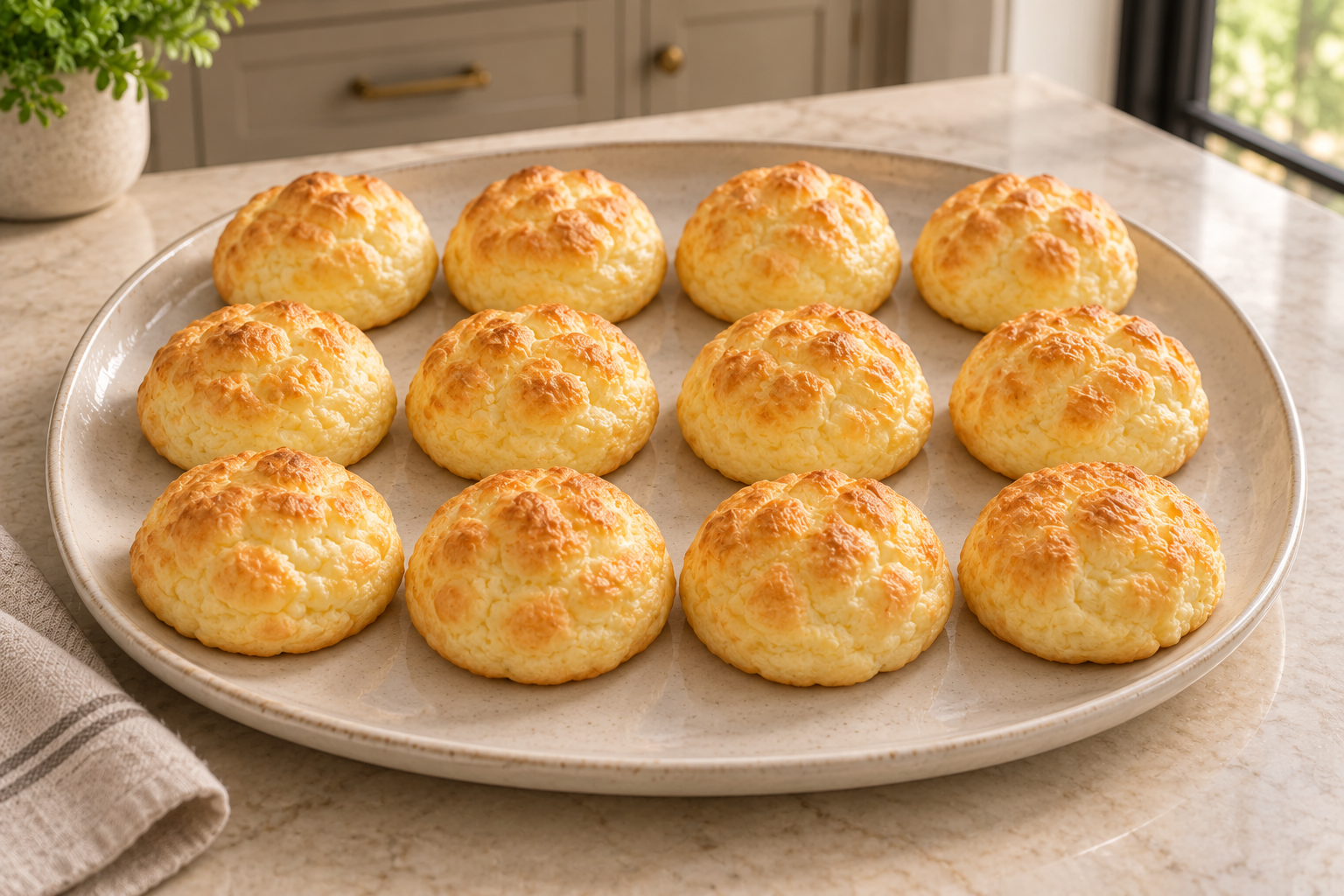
Why This Cloud Bread Uses Aged Brie
Most cloud bread recipes lean on cream cheese. This version uses one-quarter pound of additive-free, properly aged or cultured Brie or Port Salut. Brie is directly included among the cheeses allowed on Full GAPS, but cheese belongs later in the dairy-introduction structure when someone is rebuilding dairy tolerance from the beginning. That is why this recipe is labeled Later Full GAPS.
Choose a cheese with a short, recognizable ingredient list and no starches, gums, emulsifiers, colors, or other additions. If you use Brie, trim only the thin rind at the outer ends and leave the top and bottom rind intact. If you use Port Salut, remove any rind colored with annatto. The remaining cheese should weigh one-quarter pound before it goes into the blender.
What the Texture Should Be
Cloud bread is not a grain-free copy of a wheat roll. It is lighter, softer, and more egg-forward. Fresh from the oven, the outside should be dry to the touch and pale golden while the center remains tender and porous. The rolls may settle slightly as they cool. That is normal; a complete collapse into a damp, flat round usually means the whites were under-whipped, the gelatin was not fully dissolved, or too much air was pressed out during folding.
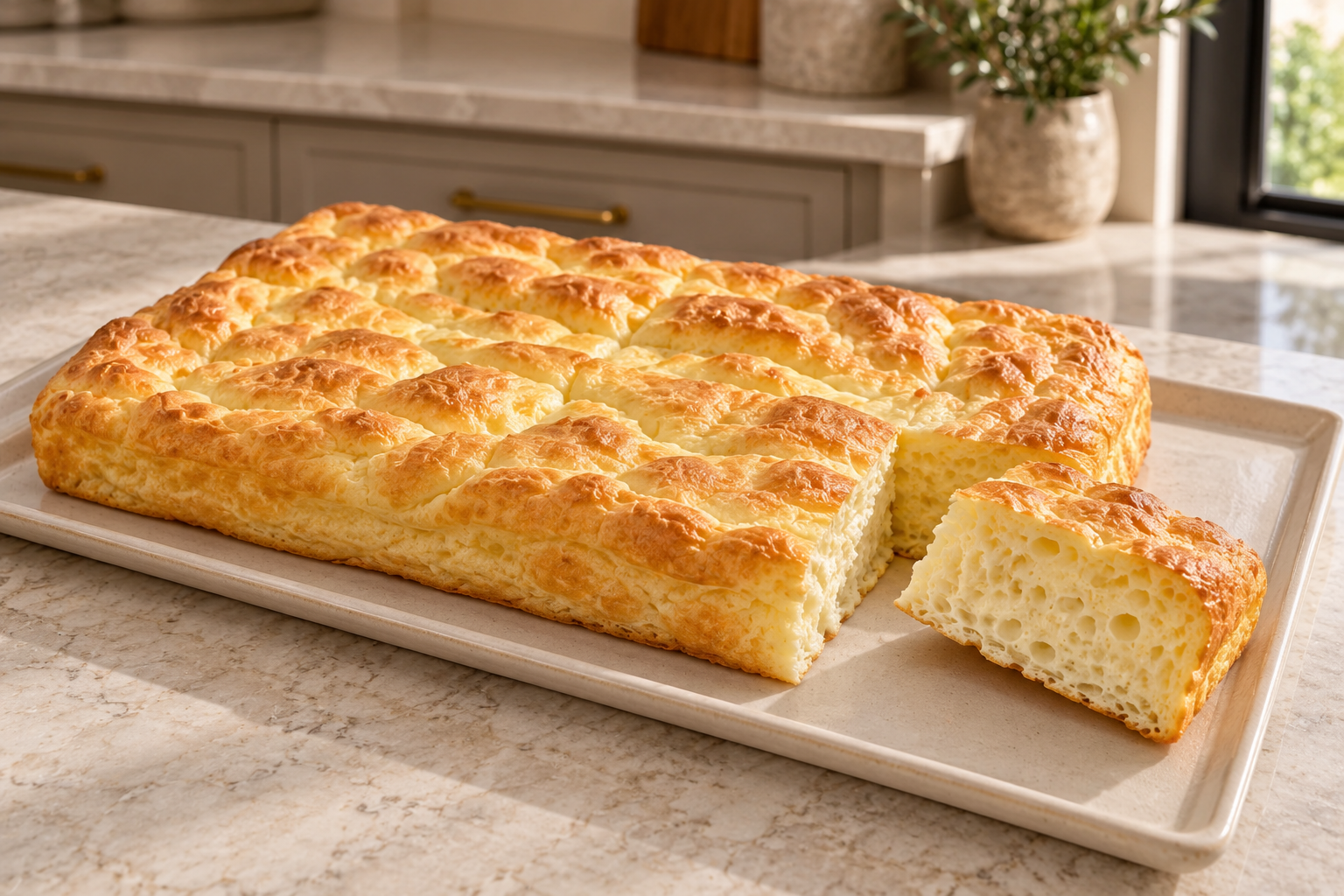
The large rectangle is the same batter spread into one shape. It needs the longer bake because the center is thicker and holds more moisture. A cut piece should show an airy, irregular interior with no wet streak through the middle.
Separate the Eggs Cleanly
Separate all 6 eggs while they are cold, placing the whites in a completely clean stainless-steel mixing bowl and the yolks in the blender container. Even a smear of yolk or cooking fat can keep the whites from reaching full volume. After separating them, let the whites lose their refrigerator chill while you prepare the cheese and gelatin.
Use a blender or food processor with glass or stainless-steel food-contact surfaces. Add the cheese pieces and all 6 yolks, then blend until smooth. Tiny permitted rind flecks are fine, but there should not be large rubbery pieces that would tear through the whipped whites later.
Dissolve the Gelatin Until Foamy
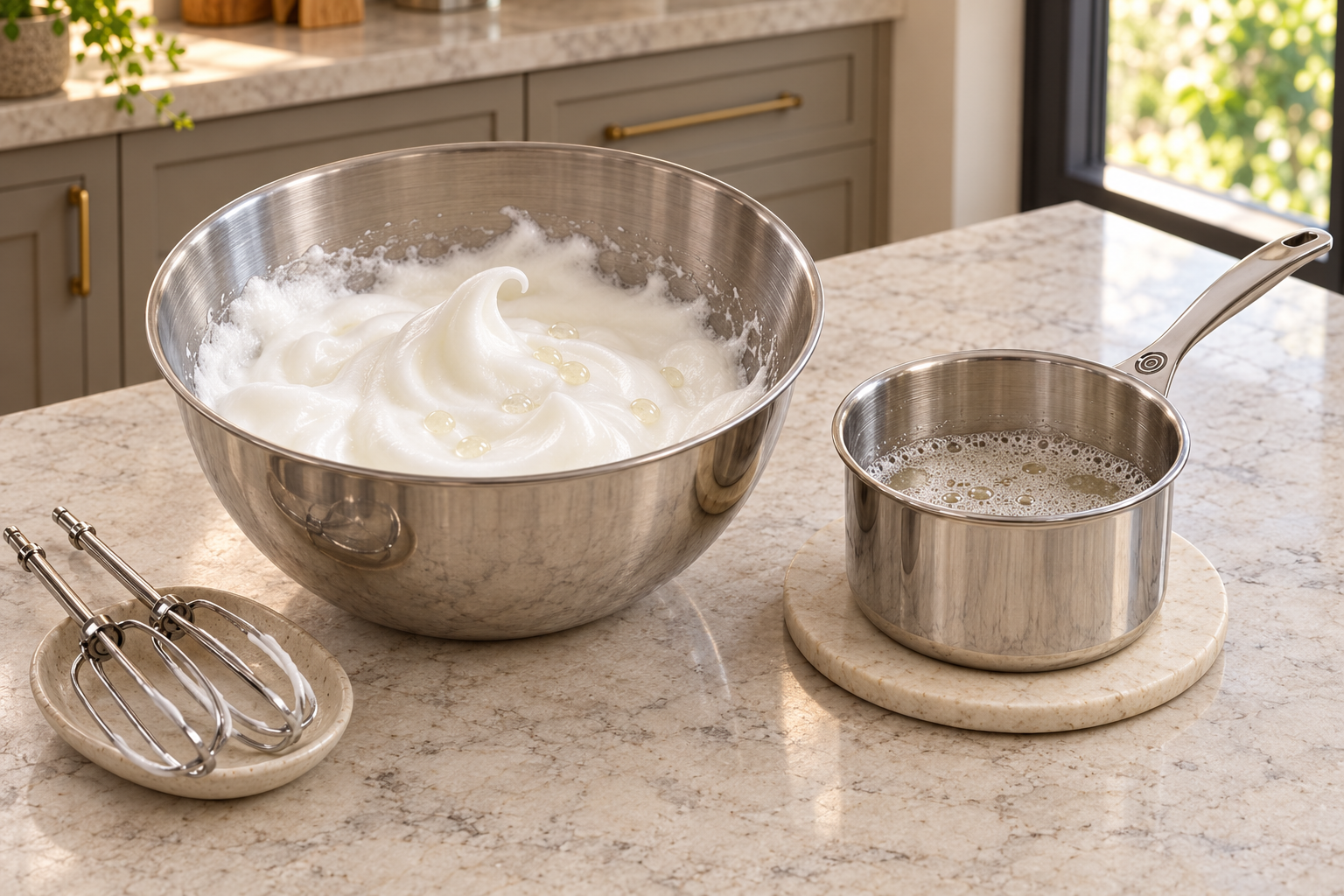
Put 1 tablespoon filtered water in a very small stainless-steel saucepan or metal measuring cup. Sprinkle 1/2 teaspoon plain, additive-free gelatin evenly over the water and let it bloom briefly. The dry granules will darken as they absorb the water.
Set the saucepan over medium heat and stir continuously for 30 seconds to 1 minute. Stop when the gelatin is completely dissolved and the small amount of liquid looks clear and foamy. Do not leave undissolved granules clinging to the bottom. Set it aside just long enough to cool slightly; it should remain fluid when it reaches the egg whites.
Whip From Soft Peaks to Stiff Peaks
Beat the 6 egg whites on high until soft peaks form. When you lift the beaters, a peak should rise and then curl over at the tip. The whites should look glossy and cohesive, not bubbly liquid at the bottom of the bowl.
Keep the mixer running while adding the cooled gelatin water gradually. Continue beating until the whites hold stiff peaks. A stiff peak stands upright when the beaters lift, and the mixture remains glossy rather than dry, grainy, or clumped. Stop there. Over-beaten whites are harder to fold and lose more volume.
Fold Without Deflating the Batter
Add the Brie-and-yolk mixture to the whipped whites. Use a wooden spatula to cut down through the center, sweep across the bottom, and lift the mixture over itself. Turn the bowl and repeat. This is gentle work, but it still has to be complete.
Stop when no white or yellow streaks remain. The finished batter should be pale, thick, airy, and able to sit in a mound for the roll shape. If it flows like a thin custard, the whites lost too much air and the rolls will spread.
Choose Rolls, Rounds, or One Rectangle
Line an uncoated stainless-steel baking sheet with unbleached parchment and heat the oven to 325°F. For rolls, use a stainless-steel spoon or scoop to portion at least 12 equal mounds. Leave space between them so hot air can move around each roll. The mounds should be softly rounded and similar in size so they finish together.
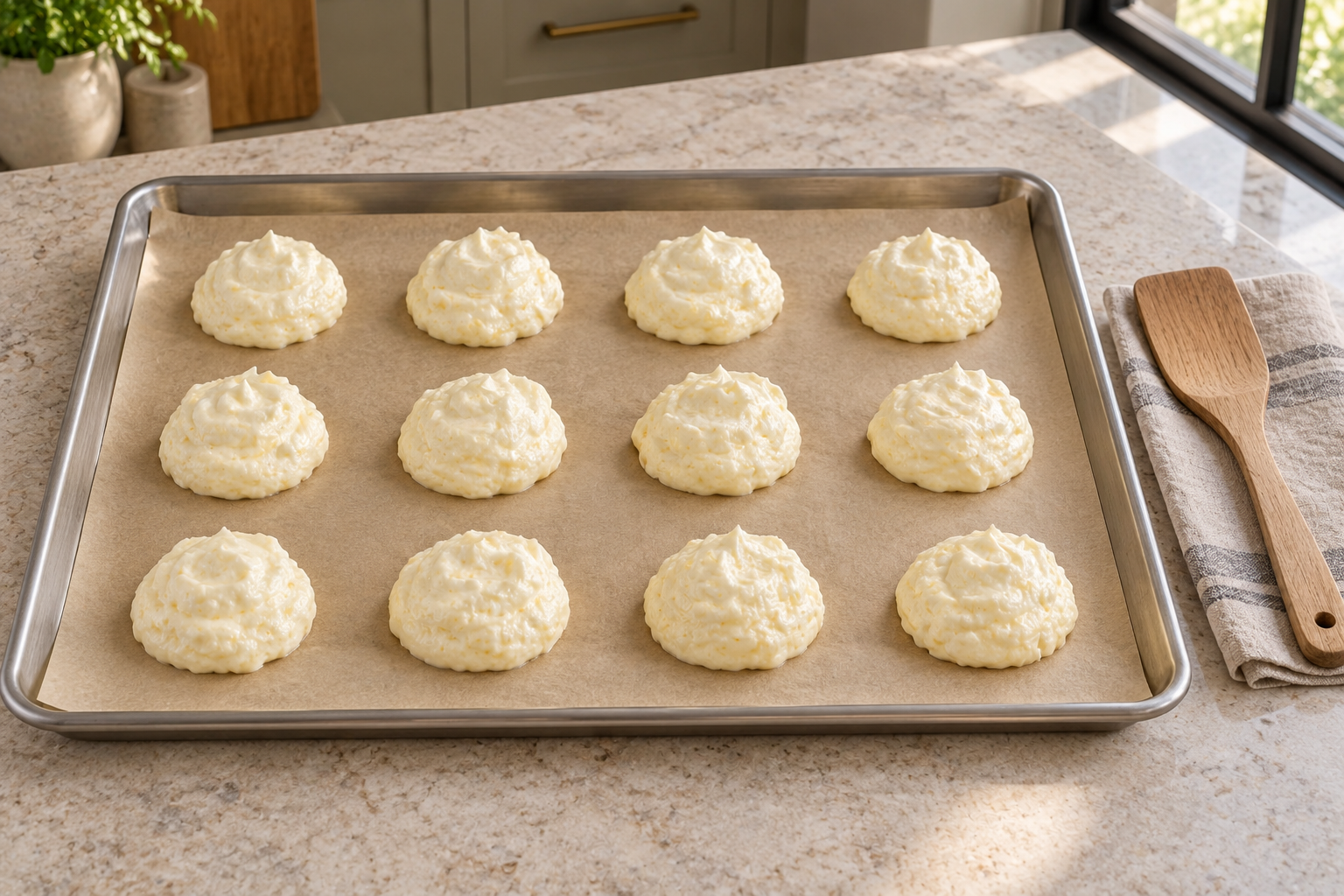
For 2 large rounds, divide the batter in half and spread each portion gently. For 1 rectangle, spread the batter into a single even shape. Do not keep smoothing until every bubble disappears. An even thickness matters more than perfectly straight edges.
Bake Until Puffed, Set, and Golden
Bake small rolls in the center of the oven for 12 to 15 minutes. Begin checking at 12 minutes. They are ready when they are puffed, lightly golden on top, and no longer wet or shiny in the center. A fingertip pressed very lightly near the middle should meet a set, springy surface rather than leave a wet dent.
Bake 2 large rounds or 1 large rectangle for 25 to 30 minutes. The center needs to look set and evenly golden, not pale and damp while the edges are already dark. If the outer edge colors much faster than the middle, check that the shape was spread to an even thickness.
Move the baking sheet to a heat-safe surface and let the bread settle before lifting it from the parchment. Pulling a hot roll too quickly can tear its tender bottom. Once it releases cleanl, transfer it to a rack or platter so steam does not collect underneath.
Brie Cloud Bread for Later Full GAPS
Ingredients
Equipment
Method
- Line one large or two smaller uncoated stainless-steel baking sheets with unbleached parchment. Heat the oven to 325°F.
- Trim only the thin outer end rind from Brie, leaving the top and bottom rind. If using Port Salut, remove any annatto-colored rind. Cut the cheese into roughly 1-inch pieces.
- Blend the cheese with all 6 egg yolks until smooth and any permitted rind pieces are very small. Set aside briefly.
- Put 1 tablespoon filtered water in a very small stainless-steel saucepan. Sprinkle the gelatin over it and let it bloom briefly. Stir over medium heat for 30 seconds to 1 minute, until completely dissolved, clear, and foamy. Set aside to cool briefly.
- Whip all 6 egg whites in a clean stainless-steel bowl until soft peaks form. Continue beating while adding the cooled gelatin water gradually, then beat to glossy stiff peaks.
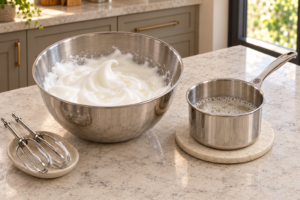
- Add the cheese-yolk mixture to the whites. Fold gently with a wooden spatula until no white or yellow streaks remain; keep the batter thick and airy.
- For rolls, portion at least 12 equal mounds in three rows of four on the prepared sheet. For large bread, divide into 2 rounds or spread as 1 even rectangle without pressing out the air.
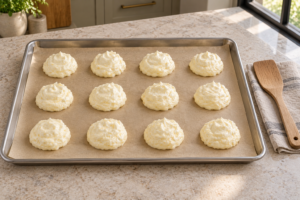
- Bake small rolls for 12 to 15 minutes, or large rounds/one rectangle for 25 to 30 minutes. The bread is ready when puffed, lightly golden, set and springy in the center with no wet shine. Let it settle before lifting from the parchment.
Notes
Tried this recipe?
Let us know how it was!Later Full GAPS Placement
This recipe fits Later Full GAPS after the applicable dairy-introduction steps are complete and qualifying cultured cheese is tolerated. It is not an Intro Diet recipe. Someone who has not yet introduced cheese should wait rather than treating a different ingredient as an automatic one-for-one substitute inside this formula.
The four ingredients are eggs, qualifying aged cheese, filtered water, and plain additive-free gelatin. Check each packaged ingredient every time you buy it. The cheese must not bring starch, gums, coloring, or other additions into the recipe, and the gelatin should be plain.
Use cloud bread as an occasional baked food alongside the meat, fish, eggs, vegetables, natural fats, stock, and fermented foods that carry the diet. It works as a tool for a practical lunch; it does not need to turn lunch into a bread-centered meal.
Ways to Serve It
Split a roll gently and fill it with sliced roast meat, leftover chicken, egg salad made with homemade GAPS mayonnaise, or another simple filling that fits your current Full GAPS foods. Keep wet fillings modest so the tender bread does not become waterlogged.
Cut the large rectangle into squares for a family lunch platter, or make 2 rounds when you want larger open-faced portions. The mild Brie flavor works with savory fillings, while the airy texture keeps the bread from overpowering what you put on it.
If you need help building the rest of the plate, the Full GAPS Diet guide explains how meat, fish, eggs, vegetables, stock, fats, and fermented foods fit together in everyday meals.
Storage and Make-Ahead Notes
Let the rolls or flatbread cool before storing them so trapped steam does not soften the surface. Refrigerate them in a covered glass container. This gelatin-supported version is designed to hold overnight and for several days without turning immediately soggy.
Separate layers with unbleached parchment if you need to stack the rolls. For the large rectangle, cut only what you need and keep the rest covered. Serve cold or let a portion lose its refrigerator chill briefly. Avoid heating it until dry; its appeal is the soft, airy center.
Troubleshooting Cloud Bread
The batter spread flat. Check for yolk or fat in the whites, confirm that the gelatin dissolved completely, and whip to a true stiff peak before folding. Fold only until the mixture is streak-free.
The center stayed damp. Keep large shapes in the oven for their full 25-to-30-minute range. A large rectangle cannot use the 12-to-15-minute roll timing.
The bread tasted rubbery. Large rind pieces may not have been blended finely enough, or the bread may have baked past its golden, set endpoint. The interior should remain tender and porous.
The bottoms stuck. Use unbleached parchment, allow the baked bread to settle briefly, and lift only after the tender base releases cleanly.
Recommended Equipment
- Blender or food processor with glass or stainless-steel food-contact surfaces
- Large stainless-steel mixing bowl
- Electric mixer with stainless-steel beaters
- Le Creuset Signature stainless-steel saucepan or small stainless-steel measuring cup
- Uncoated stainless-steel rimmed baking sheet
- Unbleached parchment paper
- Wooden spatula
- Stainless-steel spoon or scoop Wire cooling rack or ceramic platter
Frequently Asked Questions
Can I Use Port Salut Instead of Brie?
Yes. Use the same one-quarter-pound amount of qualifying additive-free, properly aged or cultured Port Salut. Remove any rind colored with annatto before blending.
Do I Remove All the Brie Rind?
No. Trim only the thin rind at the outer ends. Leave the top and bottom rind, then blend until any permitted rind pieces are very small.
What Do Soft Peaks and Stiff Peaks Look Like?
A soft peak rises and curls over at the tip. A stiff peak stands upright. In both stages the whites should look glossy, not dry, grainy, or separated.
Can I Bake the Large Flatbread for 15 Minutes?
No. The 12-to-15-minute range belongs to the small rolls. Two large rounds or one rectangle need about 25 to 30 minutes so the center sets.
Is This an Intro Diet Bread?
No. This is a Later Full GAPS recipe for someone who has completed the applicable dairy-introduction steps and tolerates qualifying cultured cheese.
Why Does the Recipe Use Gelatin?
The dissolved gelatin is beaten into the egg whites between the soft-peak and stiff-peak stages. It supports the foam through folding, baking, and refrigerated storage.
More Breads, Wraps, and Lunch Ideas
For more practical ways to build an occasional bread or wrap into a complete meal, visit the Well Fed & Lived In shop for the upcoming Breads, Crackers & Wraps Cookbook and GAPS Lunchbox resources.

Leave a comment