

Fermented Brussels sprouts with garlic and ginger turn a sturdy vegetable into a tart Full GAPS condiment with a measured 5% mineral-salt brine. The sprouts are halved, packed tightly with whole garlic cloves and unpeeled ginger, held completely beneath the brine, and cultured for 7 to 14 days.
The useful endpoint is sensory rather than a stopped-bubble rule. The brine should taste pleasantly tart, and the sprouts should be softer than raw while still firm enough to lift from the jar without falling apart.
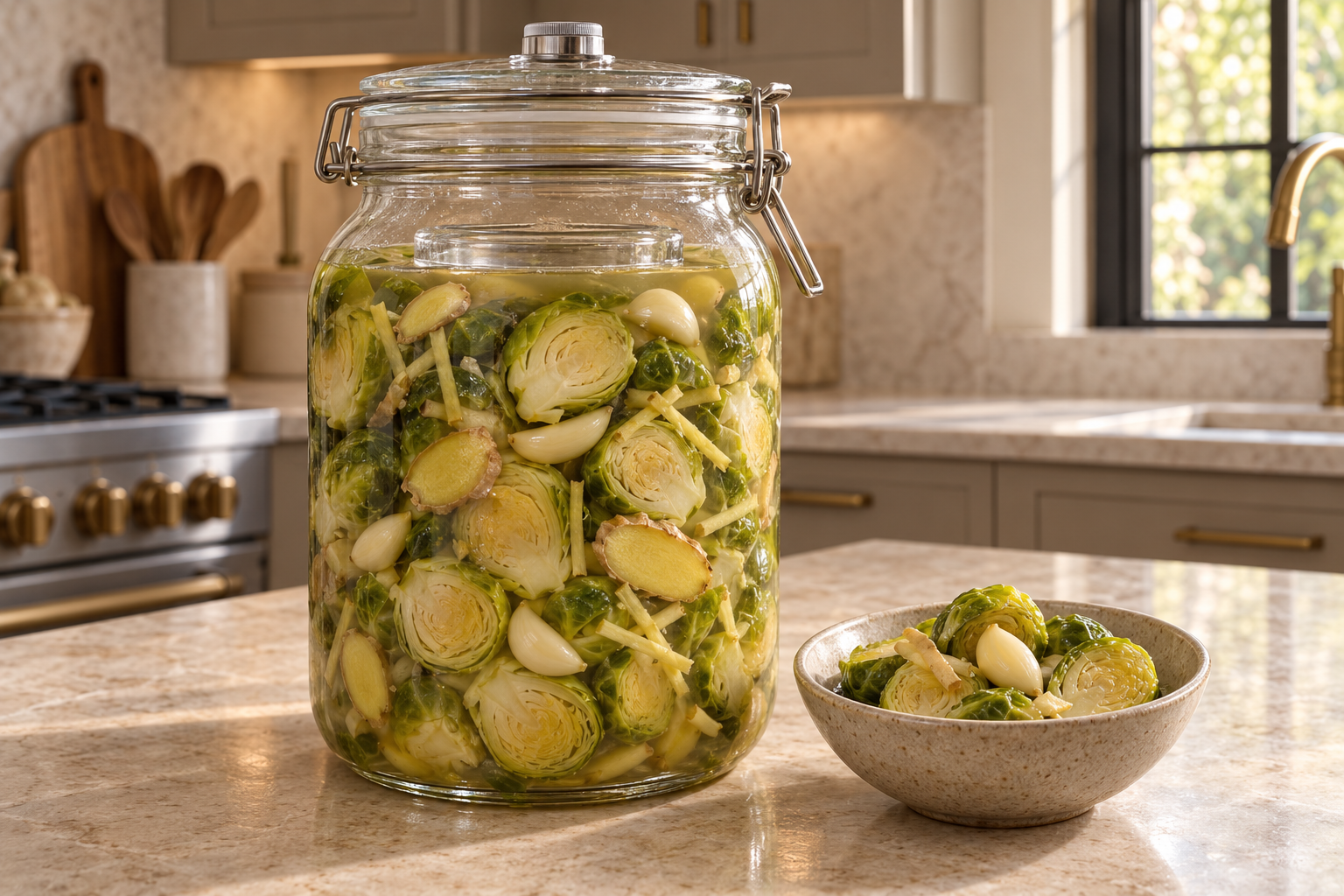
A Large-Batch Full GAPS Ferment
This recipe makes about 10 cups, so it is a useful batch when Brussels sprouts are in season or when you want a sharp vegetable condiment ready for several meals. The finished flavor is savory, garlicky, and warm from ginger without adding vinegar.
With six children, I prefer one correctly packed larger vessel over several mystery jars started on different days. One date, one brine ratio, and one clear first tasting window are easier to track while work, homeschool, and the rest of the kitchen keep moving.
The method is simple, but the setup matters. The vegetables stay below the liquid, the vessel keeps clean headspace, and the closure manages pressure without routine opening. Those three details do more useful work than repeatedly checking or stirring the jar.
Write the start date and the seven-day tasting date on a removable label outside the vessel. That keeps the ferment easy to track without opening it. If the room warms or cools during the week, the written dates still give you a clear window for the first sensory check.
Prepare The Brussels Sprouts, Garlic, And Ginger
Use two pounds Brussels sprouts. Wash them, remove damaged outer leaves, trim only the dry stem ends, and halve every sprout through the stem so the layers stay connected.
Peel one bulb of garlic, about 15 cloves, and leave the cloves whole. Whole cloves are easy to distribute through the packed sprouts and remain identifiable when the ferment is served.
Use a two-inch piece of fresh ginger without peeling it. Rinse the skin well, then slice or grate the ginger. Slices stay visually distinct; grated ginger spreads its warmth more evenly through the brine. Choose one preparation for the batch.
Keep a clean bowl nearby for the prepared vegetables. Check the total jar capacity before mixing the brine. The vessel needs room for about 10 cups vegetables, four cups brine, the glass weight, and one inch of headspace.
Mix A Five-Percent Mineral-Salt Brine
Measure four cups warm filtered water and weigh 50 grams fine natural mineral salt. Whisk until the salt dissolves completely and no crystals remain on the bottom of the pitcher.
The gram measurement controls this brine. Spoon volume changes with crystal size and packing, so the kitchen scale keeps the starting concentration consistent from batch to batch.
Warm water helps the mineral salt dissolve; it should not be hot enough to cook the sprouts. Let the brine cool toward room temperature if it feels hot after mixing.
Mix the full four cups even when the packed jar appears as if it may use less. The measured brine gives you enough liquid to fill spaces, release trapped air, and restore the proper level after the glass weight is seated. Do not change the salt amount to fit an estimated jar volume.
Pack The Vessel Without Large Air Pockets
Pack the halved Brussels sprouts, whole garlic cloves, and ginger tightly into a clean wide-mouth glass fermentation vessel. Distribute the garlic and ginger instead of leaving all of it at the top or bottom.
Press the vegetables into a stable arrangement without crushing the sprout halves. Large empty pockets make submersion harder and leave room for pieces to rise after the brine is added.
Pour the brine over the packed vegetables. Press gently so visible trapped air rises. The brine should cover the vegetables by about one-half to one inch, with about one inch of clean headspace below the rim.
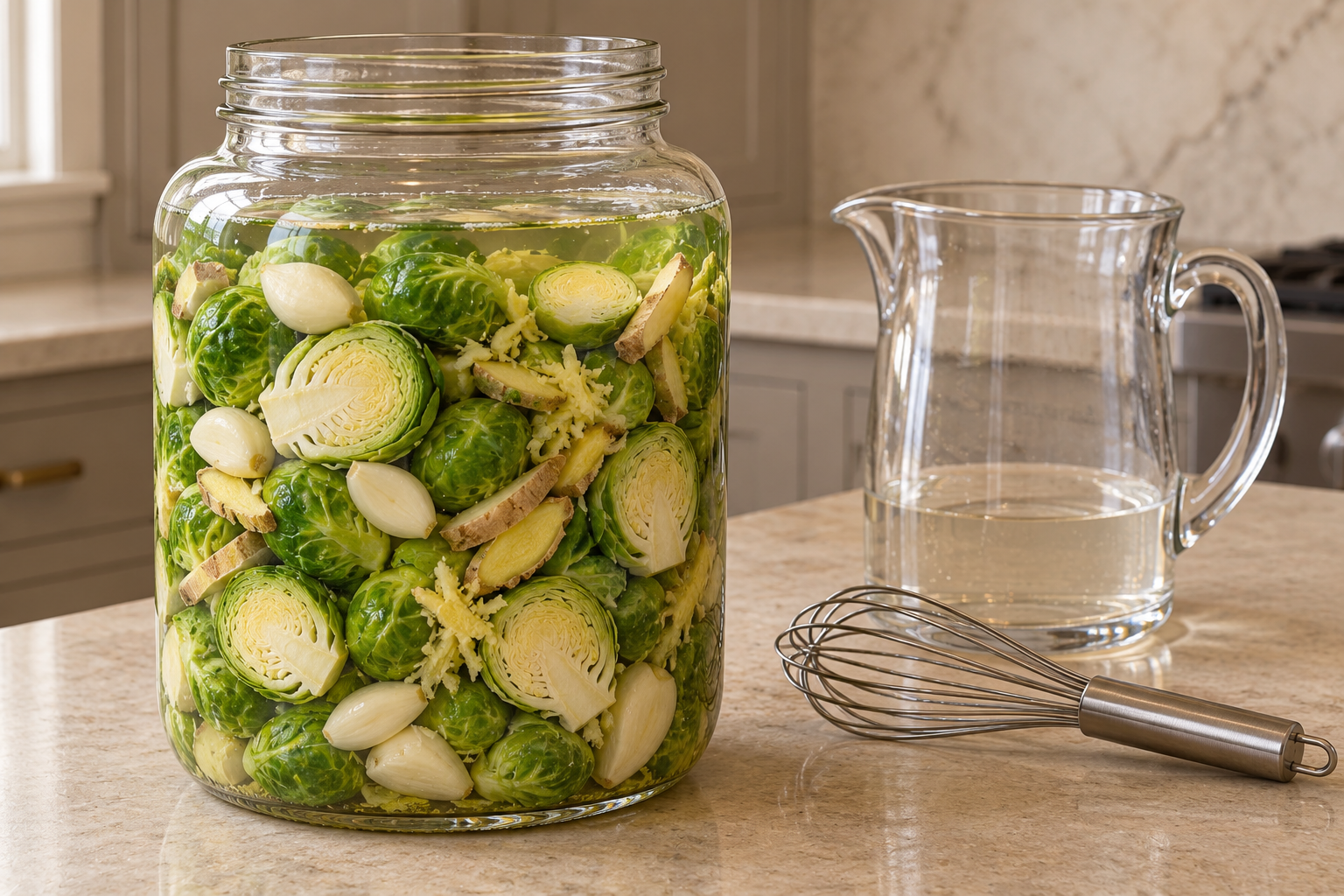
Keep Every Solid Below The Brine
Place a clean glass fermentation weight over the packed vegetables. The weight should rest evenly and hold every sprout, garlic clove, and ginger piece below the liquid.
Look around the rim of the weight. Small pieces can slip upward along the glass, so press them back under before adding the closure. Recheck the brine line after the weight is seated.
The weight should sit flat enough that it cannot tip and release a cluster of sprouts. If the vessel is too narrow for the weight or too full to leave headspace, move the entire measured batch to a larger compatible vessel instead of forcing the closure.
Fit an airlock or another self-venting, pressure-aware closure. Do not turn the jar into a rigid pressure-sealed container, and do not plan on routinely opening or burping an airlocked vessel.
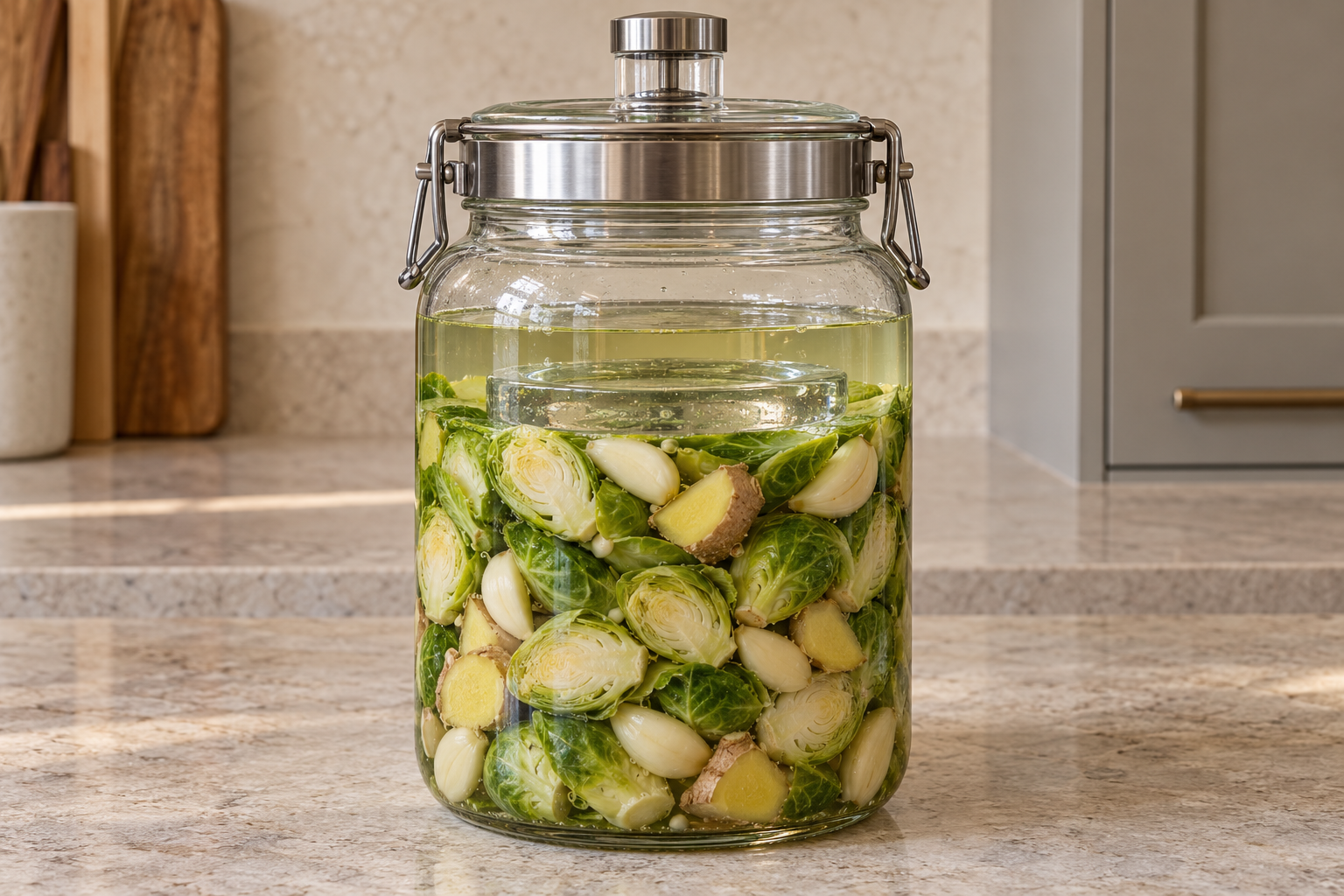
Ferment For Seven To Fourteen Days
Keep the closed vessel at room temperature out of direct sunlight for 7 to 14 days. Room temperature affects the pace, so treat the range as a tasting window rather than a promise that every kitchen reaches the same flavor on the same day.
Leave the airlocked or self-venting jar closed during the selected interval. Bubbling may change from day to day, but bubbles starting or stopping do not define readiness.
Begin the first sensory check within the seven-to-fourteen-day window. Open the vessel, smell the brine, and taste a small cleanly removed piece. The aroma should be pleasantly sour with clear garlic and ginger.
The sprouts are ready when they have softened from raw while remaining firm rather than mushy, and the brine tastes pleasantly tart. Refrigerate at that point instead of waiting for a lid to become taut or for bubbling to disappear.
A seven-day batch will usually taste fresher and less sour than one that runs closer to 14 days. That difference is useful, not a defect. Stop inside the window when the flavor fits the way your family will actually serve the condiment.
Serve It As A Condiment
Serve small portions of the sprouts, garlic, and ginger beside a Full GAPS meal. Drain each portion over the jar so the remaining solids stay covered.
The whole garlic cloves soften and become part of the condiment. Ginger slices remain more assertive, so divide them according to the amount each person wants.
Chop a drained sprout half and garlic clove into a meat bowl, place a few pieces beside roasted meat, or serve a small condiment portion with lunch. Keep the main jar at the table only long enough to remove clean portions, then return it to cold storage.
Use a clean fork or tongs every time. Return the jar to the refrigerator promptly and keep the glass weight in place when it helps hold the remaining vegetables below the brine.
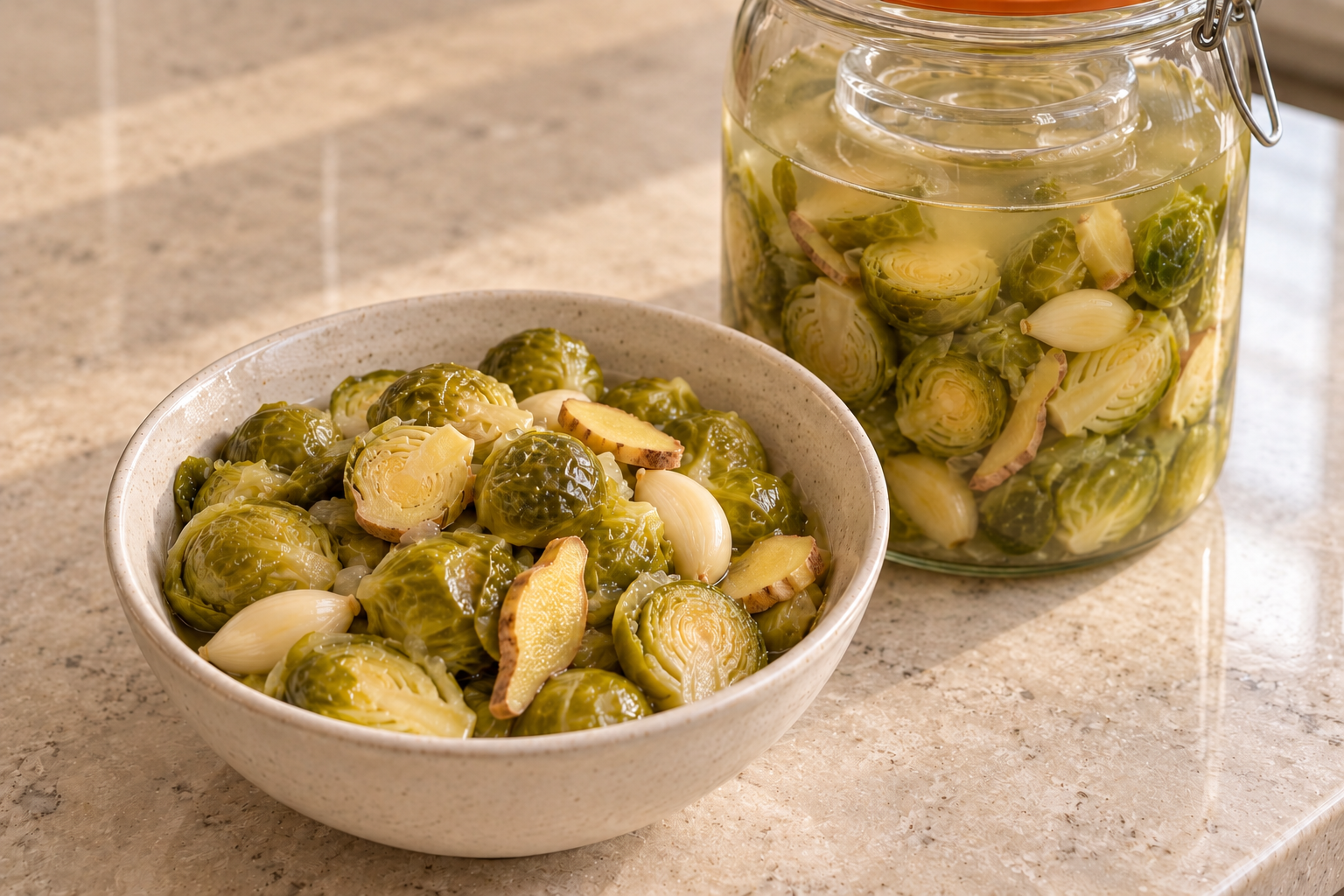
Where This Fits On Full GAPS
This is a Full GAPS fermented vegetable made from Brussels sprouts, garlic, fresh ginger, filtered water, and natural mineral salt. It contains no vinegar, sugar, sweetener, commercial starter, or packaged seasoning blend.
It is not an Introduction Diet recipe. The complete raw-vegetable ferment belongs here as a Full GAPS condiment when the ingredients and preparation fit the foods your family is using.
The technique relies on a measured brine, full submersion, clean nonreactive equipment, pressure-aware venting, protection from direct sunlight, and flavor and texture as the completion cues.
Storage
When the brine is pleasantly tart and the sprouts are softened but firm, cover and refrigerate the jar. Cold storage slows the fermentation; it does not turn the jar into a shelf-stable product.
Keep the remaining vegetables below the brine and use a clean utensil. A fixed refrigerator duration is not added because this exact formula does not provide one. Check the jar before serving and discard it if there is fuzzy mold, a putrid odor, or a failed seal or vessel.
Do not add fresh sprouts, garlic, ginger, or water to an old jar. Start a new measured batch when the first one is finished.
Recommended Equipment
Use a large wide-mouth glass vessel with enough room for the vegetables, brine, weight, and headspace; a glass fermentation weight; and an airlock or self-venting pressure-aware closure. The weight must fit the jar and remain easy to remove.
Optional glass fermentation weights with handles are a current option for compatible wide-mouth jars. You will also need a digital kitchen scale, a glass or ceramic pitcher, a stainless whisk, a knife, a cutting board, and clean stainless tongs.
Frequently Asked Questions
Why Is The Salt Measured In Grams?
Four cups water weigh about one kilogram, so 50 grams salt makes the 5% starting brine. A scale avoids changes caused by different crystal sizes.
Does The Ginger Need To Be Peeled?
No. Rinse the two-inch piece well and use it unpeeled, either sliced or grated.
Should The Garlic Cloves Stay Whole?
Yes. Peel the bulb, about 15 cloves, and distribute the whole cloves through the packed sprouts.
Do I Need To Burp The Jar?
Not when a functioning airlock or self-venting pressure-aware closure is fitted. Keep the vessel closed during the selected interval instead of routinely opening it.
What If A Sprout Floats Above The Brine?
Before closing the vessel, move the piece below the glass weight and verify that all solids remain under the liquid.
How Long Should The Sprouts Ferment?
Use the 7-to-14-day room-temperature window and begin checking flavor and texture within that range.
How Do I Know They Are Ready?
The brine should taste pleasantly tart, and the sprouts should be softened from raw while remaining firm rather than mushy.
Is Bubbling The Endpoint?
No. Bubbling can vary. Use tart flavor and firm softened texture to decide when to refrigerate the ferment.
Fermented Brussels Sprouts Recipe
Fermented Brussels Sprouts with Garlic and Ginger
Ingredients
Equipment
Method
- Wash the measured Brussels sprouts, remove damaged outer leaves, trim the dry stem ends, and halve every sprout through the stem.
- Peel the measured garlic and leave the cloves whole. Rinse the measured unpeeled ginger and slice or grate it.
- Whisk the measured mineral salt into the measured warm filtered water until completely dissolved.
- Pack the prepared sprouts, whole garlic and ginger tightly into the clean glass vessel, minimizing large air pockets.
- Pour the 5% brine over the vegetables. Press gently so trapped air rises. Keep the brine about 1/2 to 1 inch above the vegetables while leaving about 1 inch headspace below the rim.
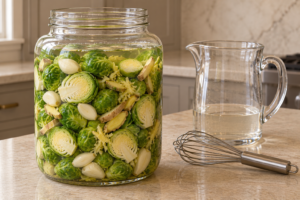
- Place the glass fermentation weight over the vegetables so every solid remains completely below the brine.
- Fit the airlock or self-venting pressure-aware closure. Keep the vessel at room temperature out of direct sunlight for 7 to 14 days. Do not routinely open or burp an airlocked vessel.
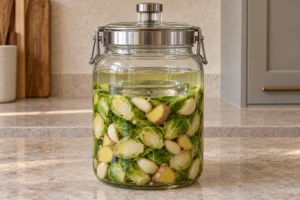
- Begin the first sensory check within the 7-to-14-day window. The brine should taste pleasantly tart and the sprouts should be softened from raw while remaining firm rather than mushy.
- When that endpoint is reached, cover and refrigerate the ferment. Serve the sprouts, garlic and ginger as a condiment.
Notes
Tried this recipe?
Let us know how it was!More Ferments For A Full GAPS Kitchen
The upcoming Drinks & Ferments Cookbook will collect WFLI fermentation methods, brines, cultured drinks, and troubleshooting cues in one practical place. Watch the WFLI shop as the collection is completed.

Leave a comment