

Easy pickled string beans turn fresh green beans into a tangy Full GAPS refrigerator side with no sugar or sweetener. The beans simmer briefly in apple cider vinegar or distilled white vinegar with dill, garlic, mineral salt, and filtered water, then finish pickling in the refrigerator.
This is a vinegar quick pickle, not a ferment. The active work takes about 21 minutes: 15 minutes to prepare the beans and jars, plus a six-minute simmer. Cooling and the 24-to-48-hour refrigerator rest happen afterward.
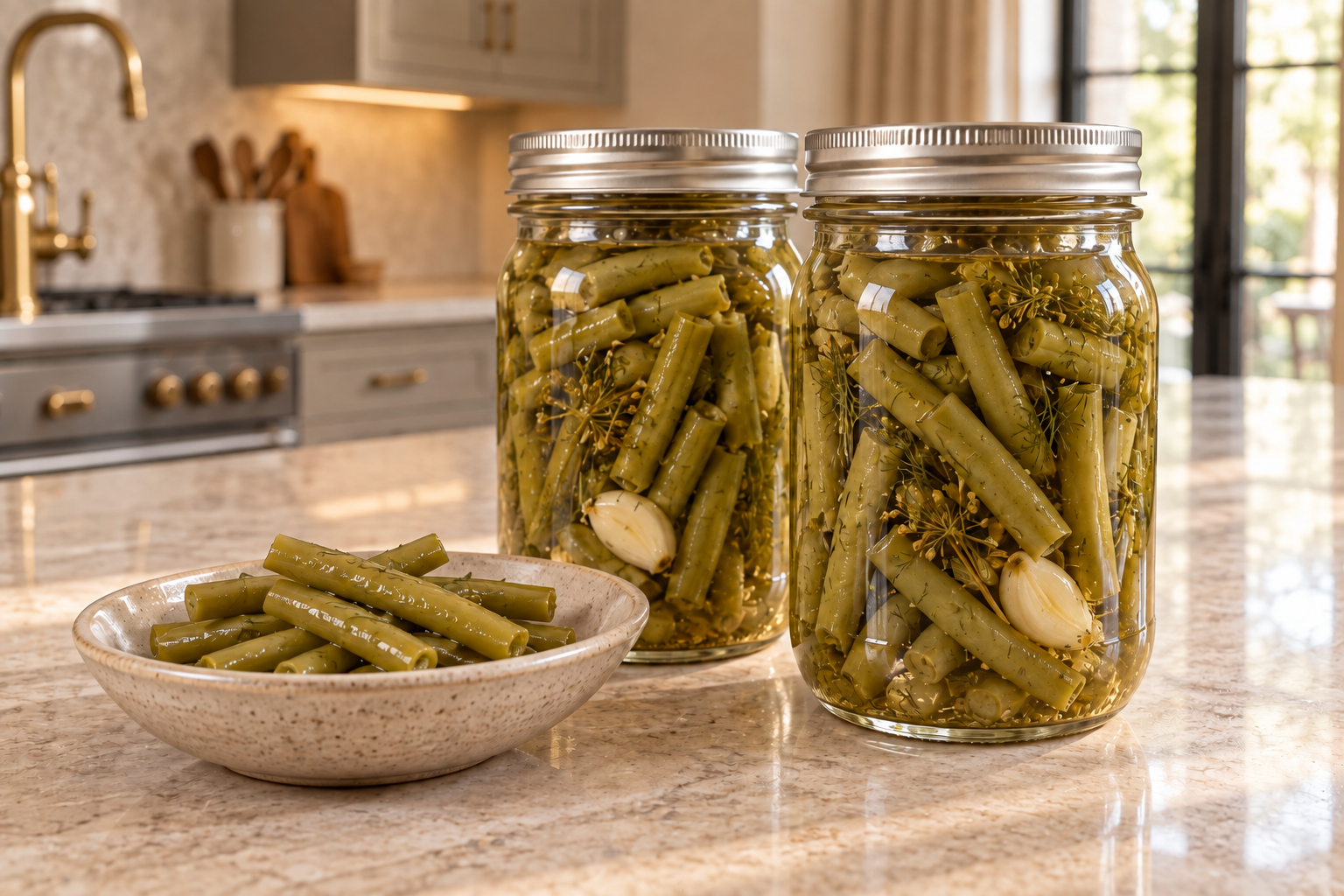
A Quick Pickle For The Refrigerator
Quick pickles are useful when you want a sharp vegetable side without waiting for fermentation. Vinegar supplies the acidity, the beans are cooked in the brine, and refrigeration holds the finished jars.
In our house, a ready jar helps when dinner already includes meat stock, a main dish, and several moving parts. With six children, work, and homeschool sharing the same kitchen, I appreciate a side that can be made ahead and served in a small portion without another pan on the stove that night.
These beans work beside roasted meat, chopped into a salad, or set out with other Full GAPS condiments. Their texture is tender-crisp rather than raw-crunchy. The six-minute simmer softens the beans enough to absorb the vinegar brine while leaving them intact.
The recipe makes about two cups. Pack it into two 16-ounce jars, one roomy quart jar, or four 8-ounce jars. Use clean glass jars with sound rims and lids that fit correctly.
Two smaller jars are practical when you want one on the table and one kept closed for later. A single quart jar works when the bean pieces are packed loosely enough for brine to move between them. Neither choice changes the measured batch.
Choose And Cut The String Beans
Measure three cups string beans, about 11 ounces. Trim the stem ends and cut the beans into pieces about two inches long. Keeping the pieces close in size helps them reach the same tenderness during the short simmer.
Fresh smaller beans reach a tender-crisp texture quickly. Large, mature beans may need longer than six minutes. Look for firm pods without soft wet spots, then rinse and dry them before cutting.
This post photographs the two-inch cut-bean branch. Keeping the photographed batch and the card on one preparation makes the jar fill, simmer cues, and serving bowl consistent.
Cut straight across with a sharp knife rather than crushing the pods under a dull blade. The open ends let the brine enter quickly. Collect the cut pieces in a bowl so the full three cups can move into the saucepan at once.
Build The Sugar-Free Vinegar Brine
Add one and one-half cups filtered water, one cup additive-free apple cider vinegar or distilled white vinegar, two teaspoons natural mineral salt, one teaspoon dried dill or the equivalent fresh dill sprigs, and two crushed garlic cloves to the saucepan.
Apple cider vinegar gives the beans a rounder fruit aroma. Distilled white vinegar makes a cleaner, sharper jar. Both choices stay at the same one-cup measure. Rice vinegar is not part of this Full GAPS card.
Bring the mixture to a boil and stir only until the mineral salt dissolves. The liquid should look clear enough that no salt crystals remain on the bottom. The garlic and dill will continue moving through the brine as it heats.
Simmer For Six Minutes
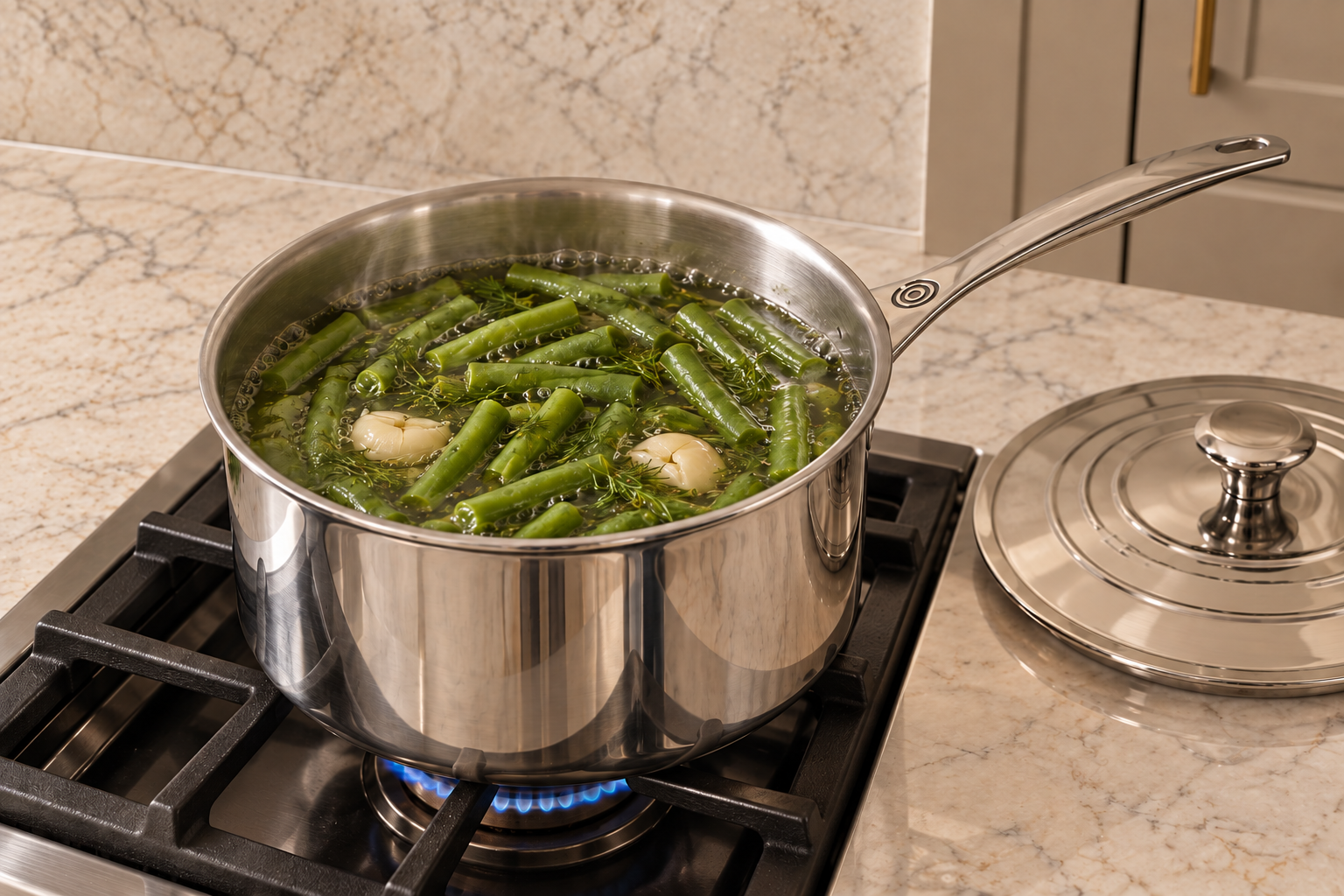
Add the cut beans, stir once, and cover the saucepan. Adjust the heat to maintain a steady simmer rather than a hard rolling boil.
Simmer fresh smaller beans for six minutes. At the endpoint, a bean should bend without feeling raw but should still offer some resistance when bitten. The color will shift from bright raw green toward an olive green as the hot vinegar brine penetrates.
For larger beans, continue only until they reach the tenderness you want. Keep the beans intact. A mushy bean that collapses when lifted has gone beyond the tender-crisp result described here.
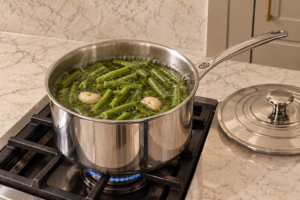
Lift the lid only for a paused check, then return it if the beans need another minute. Keep the Le Creuset stainless saucepan fully supported on the burner and place the hot lid on a safe surface, never balanced on the counter edge.
Fill The Jars While The Brine Is Hot
Set clean glass jars on the counter before the simmer ends. Spoon or ladle the beans into the jars, then divide the hot brine, dill, and garlic between them.
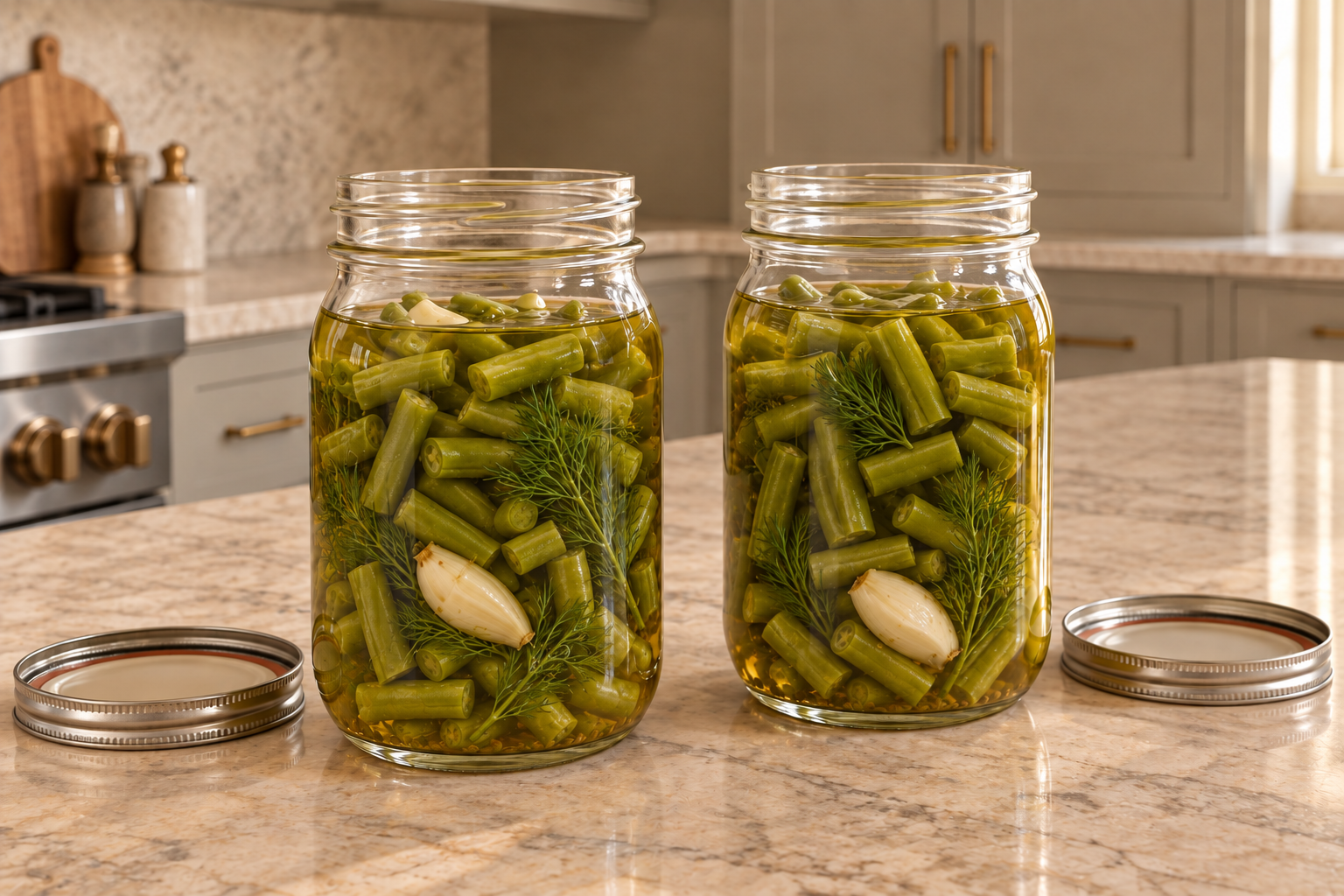
Press the beans down so they sit mostly below the liquid. A few tips may remain above the surface during cooling. An optional glass pickling weight can hold the beans down, but no weight is required for this refrigerated quick pickle.
Work steadily and keep every jar upright and supported. Do not pour into cold damaged glass. Leave headspace at the top instead of filling the jar to the rim.
Cool Before Adding The Lids
Leave the filled jars uncovered until the glass, beans, and brine reach room temperature. The cooling jars should rest away from the counter edge where they will not be bumped.
Do not tighten lids over steaming jars and do not leave the batch out to ferment. Once the contents reach room temperature, add the clean lids and move the jars directly to the refrigerator.
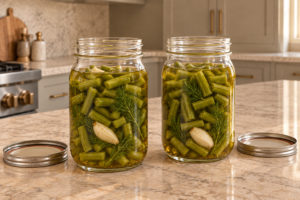
The method image shows the beans cut into two-inch lengths, mostly under the brine, with the lids resting beside the jars. That is the useful cue: uncovered for cooling, covered only for refrigeration.
Refrigerate Before Serving
Refrigerate the covered jars for 24 to 48 hours before eating. The rest gives the vinegar, garlic, and dill time to move through the cooked beans.
At 24 hours the flavor will be clear but lighter. At 48 hours the garlic and dill will be more settled into the brine. Both times are within the recipe window.
Use a clean fork or tongs to remove the portion you need. Let excess brine drip back into the jar, close the lid, and return the jar to the refrigerator promptly.
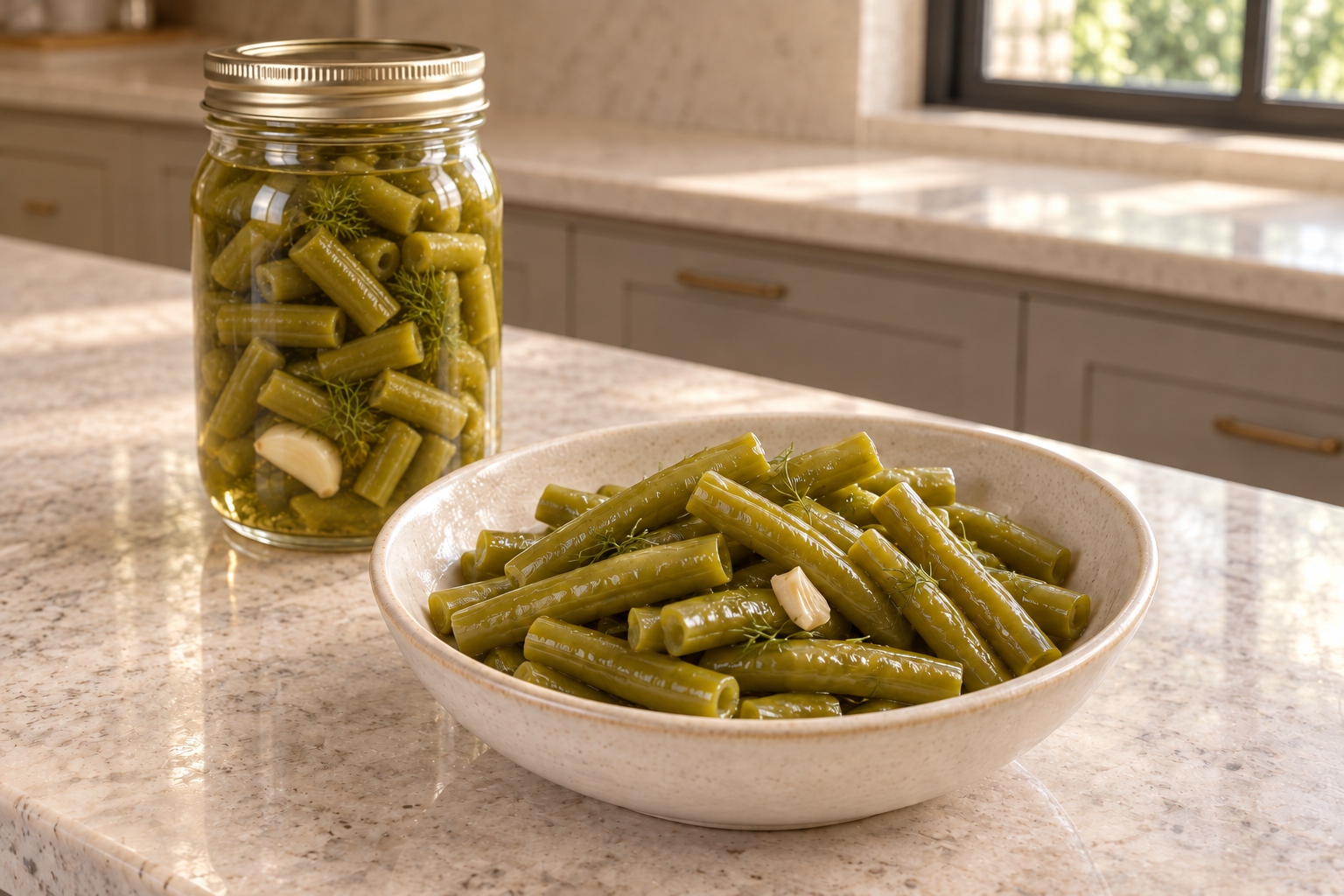
Serve the beans cold from the refrigerator or let a small portion lose the hardest chill before the meal. The vinegar aroma will be strongest when the jar is first opened. The garlic and dill should smell clear, and the beans should remain intact when lifted.
The beans can be eaten on their own, tucked beside roasted meat, or chopped into a Full GAPS salad. Spoon only the beans you need into a separate serving dish so crumbs and used utensils do not return to the storage jar.
Where This Fits On Full GAPS
This is a Full GAPS refrigerated quick pickle made from string beans, filtered water, additive-free vinegar, natural mineral salt, dill, and garlic. It contains no sugar, honey, commercial pickling blend, starch, or preservative.
It is not an Introduction Diet recipe. The complete vinegar-pickled string-bean preparation belongs here as a Full GAPS condiment or side.
This recipe is also not a fermented vegetable. It uses a six-minute simmer in vinegar brine and cold storage. Fermentation timing, brine ratios, weights, and endpoints do not control this method.
Storage
Keep the jars covered and refrigerated. The beans keep for at least three weeks in the refrigerator. This method does not create a shelf-stable canned product, so the jars stay cold from the time they are covered.
Mark the date on a removable label outside the jar if several pickles share the refrigerator. Use a clean utensil every time. Discard the contents if the jar develops unexpected pressure, surface growth, or an aroma that no longer matches vinegar, dill, garlic, and beans.
Make another batch rather than topping an old jar with new beans or brine. Fresh ingredients need the complete measured simmer and cooling method.
Recommended Equipment
The simmer photograph uses the exact Le Creuset Signature stainless steel saucepan with its fitted stainless lid. Use a saucepan large enough to hold the measured beans and brine without crowding the rim.
Two 16-ounce mason jars make the two-cup yield easy to divide. Optional glass pickling weights with handles can keep bean pieces below the brine. You will also need a stainless spoon or ladle, a cutting board, a knife, and clean fitted lids.
Frequently Asked Questions
Is This Recipe Fermented?
No. The beans simmer in vinegar brine, cool to room temperature, and finish in the refrigerator. There is no room-temperature culturing period.
Which Vinegar Can I Use?
Use one cup additive-free apple cider vinegar or distilled white vinegar. Keep the water, salt, dill, garlic, and bean amounts unchanged.
Why Is The Cook Time Six Minutes?
The written method uses a six-minute simmer for fresh smaller beans. That makes the active total 21 minutes rather than hiding the extra minute in the card.
Can I Leave The Beans Whole?
The original method permits whole beans in a quart jar, but this post and card use the two-inch cut branch so the pictured batch and directions stay consistent.
Do I Need A Pickling Weight?
No. Press the beans mostly below the brine. A glass or ceramic weight is optional when it helps with your jar shape.
When Can I Eat Them?
After the jars cool, cover and refrigerate for 24 to 48 hours. The longer rest gives a stronger settled pickle flavor.
Can I Water-Bath Can This Recipe?
No canning process is provided here. Keep this batch refrigerated and follow it as a refrigerator quick pickle.
How Long Do They Keep?
Keep them covered in the refrigerator for at least three weeks, using a clean utensil each time.
Easy Pickled String Beans Recipe
Easy Pickled String Beans (Full GAPS Quick Pickle)
Ingredients
Equipment
Method
- Combine the measured filtered water, vinegar, mineral salt, dill and crushed garlic in the lidded stainless saucepan. Bring to a boil, stirring briefly until the salt dissolves.
- Add the measured cut beans, stir and cover. Adjust the heat to maintain a simmer. Simmer for 6 minutes, until fresh smaller beans are tender with some crispness; continue longer only for larger beans or a softer result.
- Transfer the beans and brine to the clean glass jars. Press the bean pieces mostly below the liquid, using optional glass or ceramic weights only if helpful.
- Leave the jars uncovered until the contents reach room temperature. Add the clean lids, refrigerate for 24 to 48 hours, and keep refrigerated.
Notes
Tried this recipe?
Let us know how it was!More Full GAPS Condiments
The upcoming Sauces, Dressings & Condiments Cookbook will collect practical jars, dips, dressings, and sides that help complete a Full GAPS meal. Watch the WFLI shop as the collection is completed.

Leave a comment