

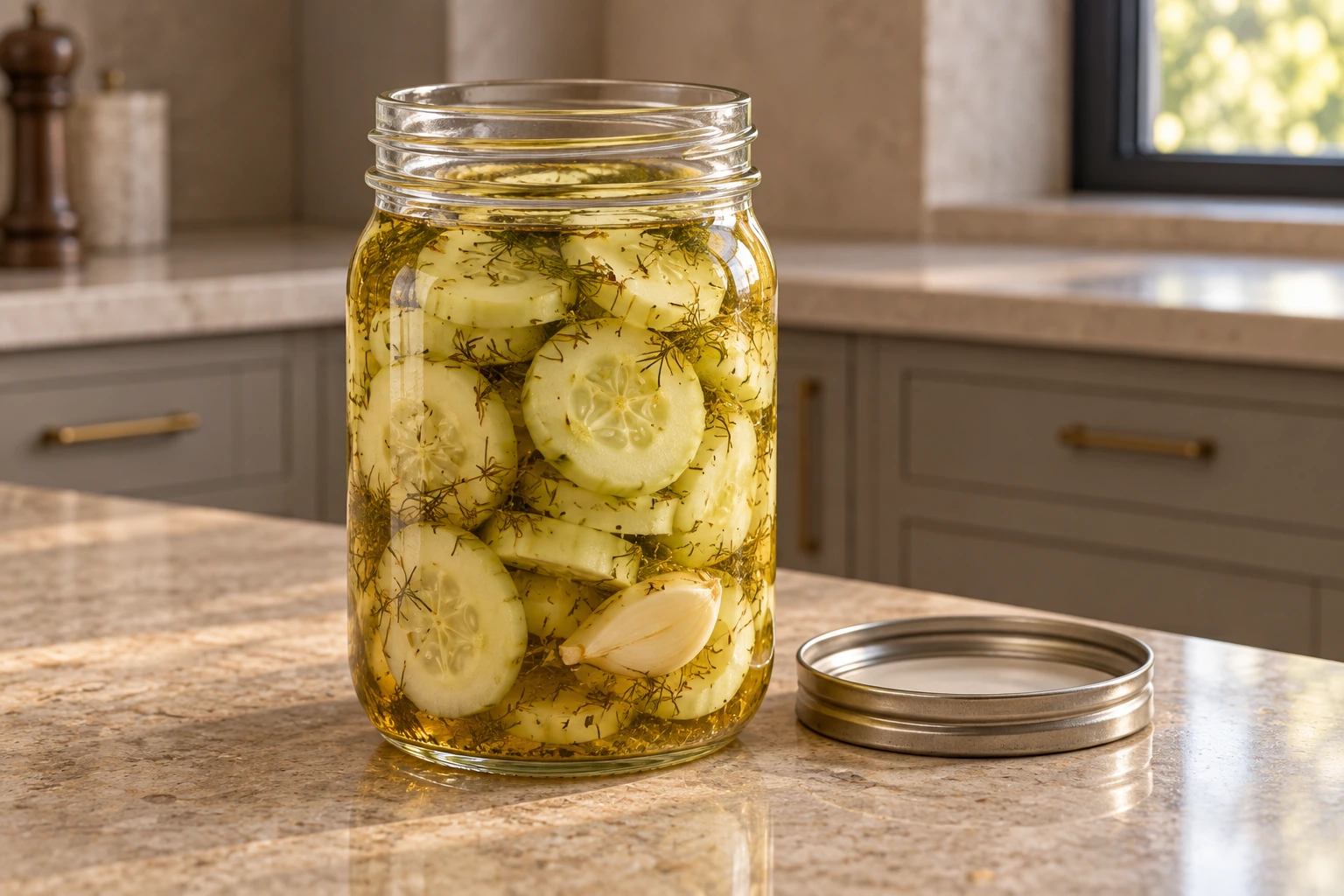
These Full GAPS pickled cucumbers are crisp, tangy refrigerator pickles made without sugar. Thin peeled cucumber rounds sit in a hot vinegar brine with mineral salt, dill, and optional garlic, then cool and chill until the flavor is as sharp and pickle-like as you want it.
This is a quick pickle, not a ferment. The vinegar supplies the acidity, the brine is brought to a full boil, and the finished jar stays refrigerated. There is no room-temperature culturing period and no probiotic claim attached to this method.
For our family of eight, a small jar like this works best as a bright side rather than a big batch that lingers. You can serve the cucumbers once they are fully chilled, or make the jar a day or two ahead when you want deeper dill-and-vinegar flavor with almost no work at mealtime.
GAPS Placement: Full GAPS after cucumber, the chosen additive-free vinegar, dill, and optional garlic have been introduced and tolerated
Prep Time: 10 minutes
Cook Time: 5 minutes
Total Time: 15 minutes, plus cooling, chilling, and optional 24-to-48-hour marinating
Yield: 10 servings
What These Quick Pickles Taste Like
The cucumbers stay fresh and crisp rather than developing the softer, more complex flavor of a fermented pickle. Vinegar gives them an immediate clean tang, dill adds a familiar savory note, and the optional smashed garlic makes the brine more assertive as the jar sits.
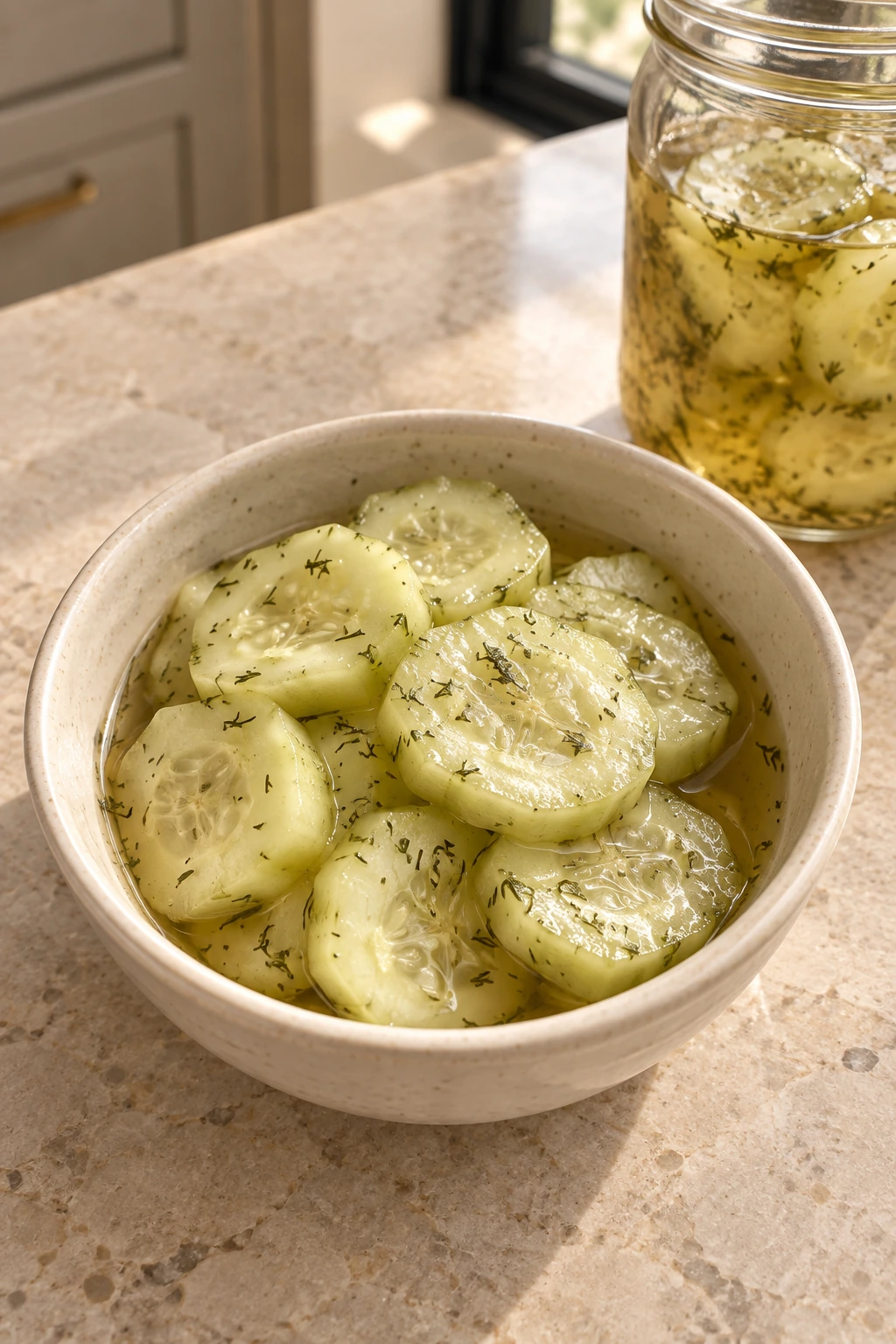
Apple cider vinegar gives the photographed batch a light golden color and a rounder fruit-acid flavor. Distilled white vinegar makes a clearer jar with a sharper, cleaner tang. Both work at the same measured half cup, so you can choose by flavor without changing the rest of the formula.
Set Up The Jar Before Heating The Brine
Finish every cold task before the saucepan goes on the stove. Peel and slice the cucumber, measure two packed cups, clean the jar and lid, and place the ladle or pouring vessel within reach. Once the brine reaches a full boil, it should go over the cucumbers while it is still hot rather than waiting while you cut the last few rounds.
Check the jar for chips or cracks, especially around the rim. Set it on a stable heat-safe surface where it can remain uncovered and undisturbed during cooling. The jar must be large enough for the measured cucumber and brine; forcing the last slices above the liquid leaves them outside the quick-pickling step.
Peel And Slice The Cucumbers Evenly
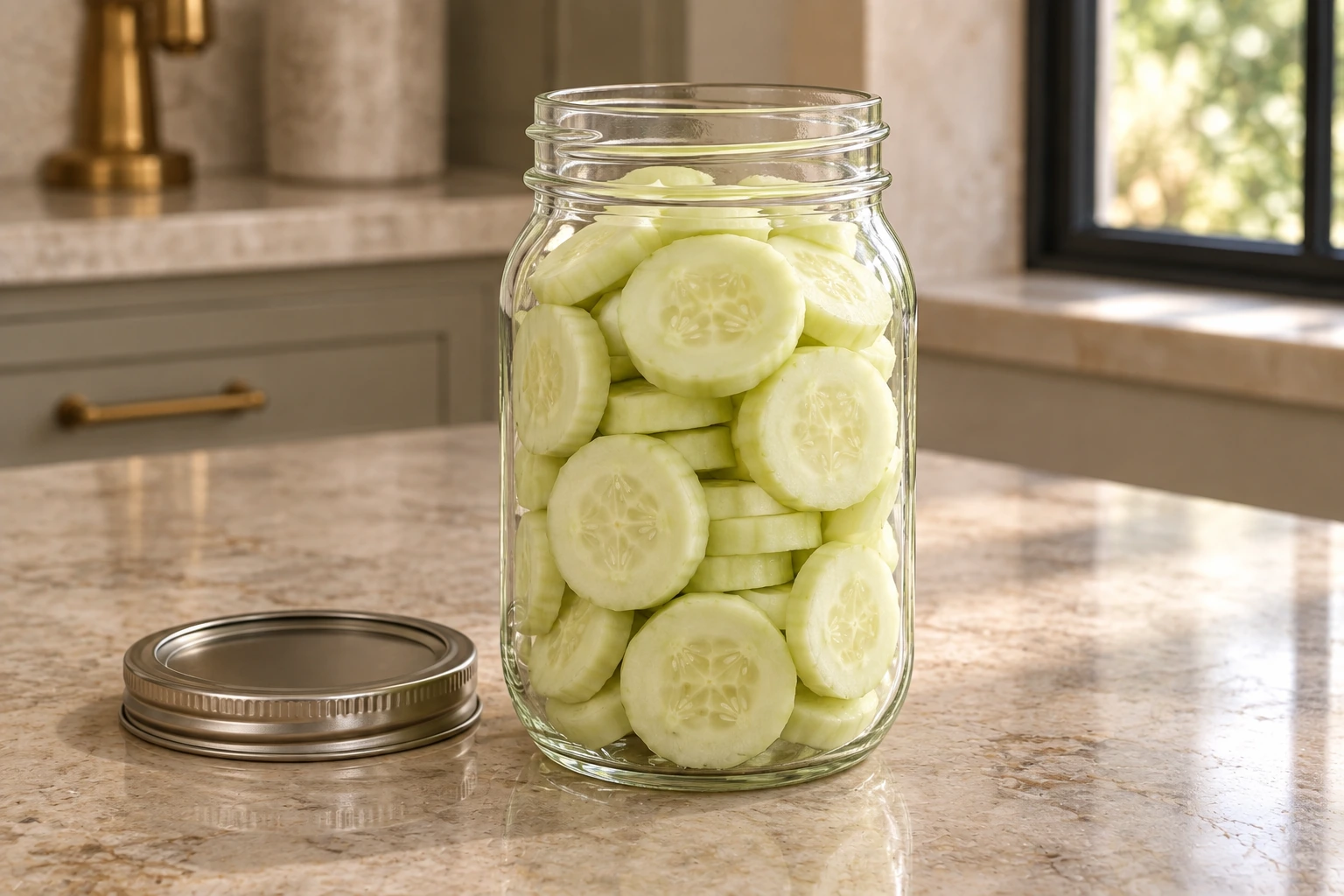
Peel the cucumber, then slice it into rounds one-quarter inch thick. A sharp chef’s knife works well. A mandoline can also make consistent slices when it is used with its hand guard and according to its safety directions. Even thickness matters because the hot brine reaches thin and thick pieces differently.
Measure two cups after slicing. Pack the rounds snugly into a clean two-cup glass mason jar, but do not crush or fold them. The slices should sit closely together while leaving small channels where the hot brine can move from the top of the jar to the bottom.
Choose An Additive-Free Vinegar
Use one-half cup additive-free apple cider vinegar or distilled white vinegar. Read the ingredient label and avoid added sugar, color, flavoring, or another unsupported ingredient. Rice vinegar is not used in this Full GAPS card.
Combine the vinegar with three-quarter cup filtered water and one teaspoon mineral salt. Add one-half teaspoon dried dill or one fresh dill sprig. Include one smashed garlic clove when you want a stronger savory jar, or leave it out without changing any other measure.
Bring The Brine To A Full Boil
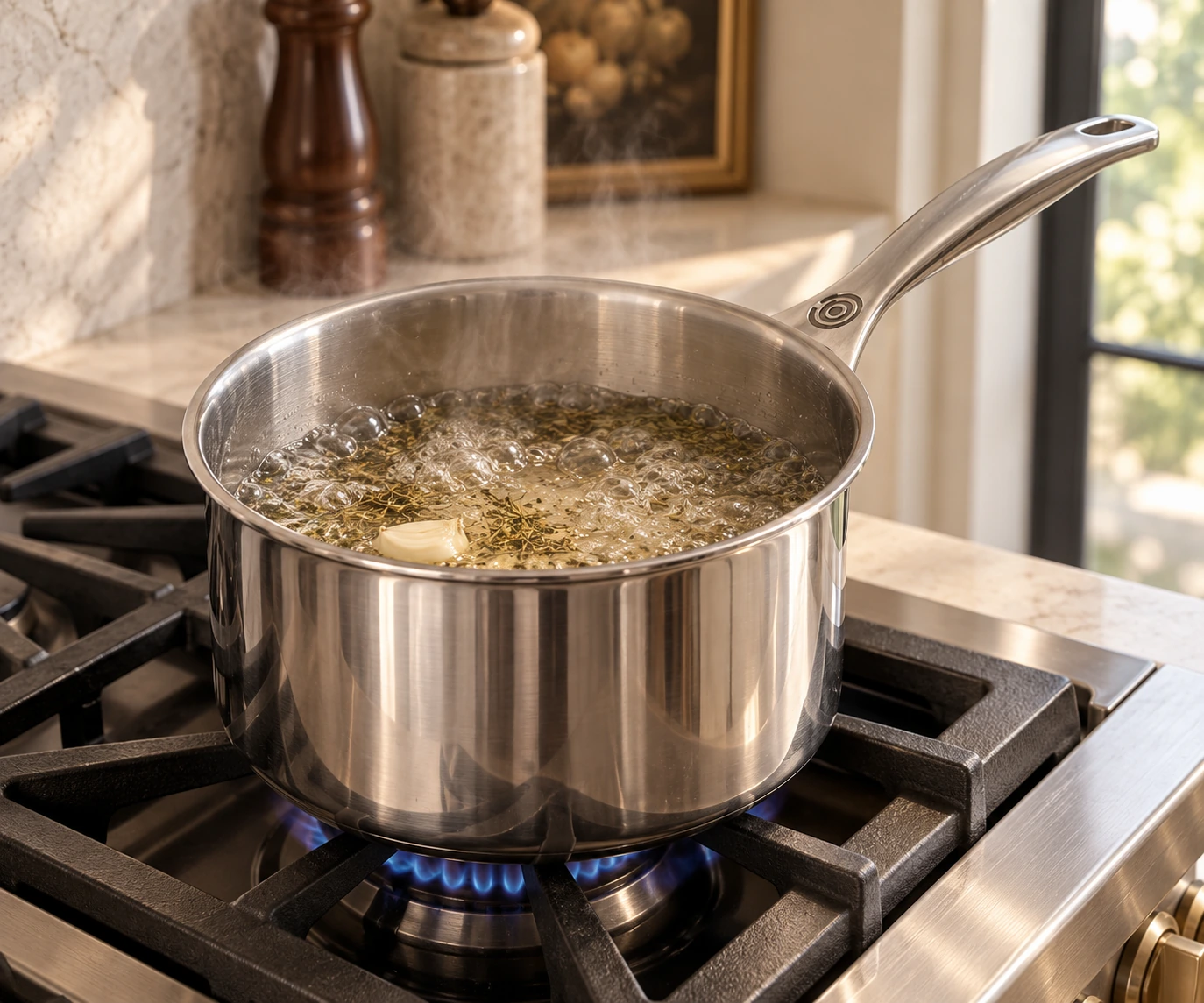
Place the water, vinegar, salt, dill, and optional garlic in a small Le Creuset stainless-steel saucepan. Bring the mixture to a full boil. Look for active bubbles across the surface, not only a few bubbles clinging around the edge.
The boil dissolves the measured salt and heats the vinegar brine for the quick-pickle method. This is not a fermentation step. Once the surface is boiling steadily, remove the saucepan from the heat and move directly to filling the prepared jar.
Cover Every Slice With Hot Brine
Set the packed jar on a heat-safe work surface. Carefully ladle or pour the hot brine over the cucumber slices, including the dill and garlic if you used it. The cucumber rounds should be wet from top to bottom, with no dry stack trapped above the brine.
The hot liquid begins the quick-pickling change without cooking the rounds into softness. The cucumber color may shift slightly as it sits, but the slices should remain distinct and firm rather than becoming limp or translucent.
Cool Before You Cover
Leave the jar uncovered until the glass and brine have cooled fully to room temperature. Covering a steaming jar traps heat and condensation and also makes it harder to judge whether the entire jar has cooled.
Once the jar is cool, add the lid and refrigerate it until thoroughly chilled. The pickles can be eaten that day. For the preferred flavor and texture, leave them in the refrigerator for 24 to 48 hours so the vinegar, dill, and optional garlic move more evenly through the slices.
Easy Pickled Cucumbers for Full GAPS
Ingredients
Equipment
Method
- Combine the filtered water, vinegar, mineral salt, dill, and optional garlic in a small stainless-steel saucepan. Bring the brine to a full boil, with active bubbles across the surface.
- Pack the peeled 1/4-inch cucumber slices snugly into the prepared jar or jars without crushing them. Pour or ladle the hot brine over the slices, including the chosen dill branch and optional garlic, until every cucumber layer is wet.
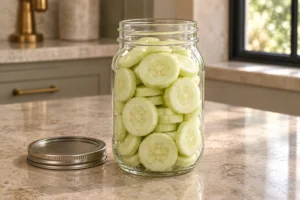
- Leave the jar or jars uncovered until both the glass and brine cool fully to room temperature.
- Cover each fully cooled jar and refrigerate until chilled. Eat the pickles once chilled, or refrigerate them for 24 to 48 hours for deeper pickle flavor and the preferred texture.
Notes
- Full GAPS: Use after cucumber, the selected additive-free vinegar, dill, and optional garlic have been introduced and tolerated.
- Quick pickle: This is a boiled-vinegar refrigerator pickle, not a ferment and not a shelf-stable canning method.
- Storage: Keep covered and refrigerated and use within 2 weeks.
- Scaling: Numeric ingredients scale in the card. For 2x, use two two-cup jars or one correctly sized four-cup glass jar; keep the same full-boil, complete-cooling and refrigeration cues.
Tried this recipe?
Let us know how it was!The Physical Cues That Matter
The slices match. Quarter-inch rounds pickle at a similar rate and keep the jar texture consistent.
The brine reaches a full boil. Active bubbles should cover the surface before the saucepan comes off the heat.
The jar is filled throughout. Hot brine should reach every cucumber layer instead of leaving a dry stack at the top.
The jar cools uncovered. Wait until both the glass and the liquid are at room temperature before adding the lid.
The chilled slices stay crisp. They may become lightly golden with apple cider vinegar, but they should remain distinct rather than limp.
Full GAPS Placement And Pickle Type
This is a Full GAPS quick pickle after cucumber, apple cider or distilled white vinegar, dill, and optional garlic are tolerated. It does not take the place of fermented vegetables in the GAPS routine because the method and result are different.
A fermented cucumber pickle uses a salt brine and controlled time at room temperature. This recipe uses a boiled vinegar brine followed by cooling and refrigeration. Keep the language exact: it is a tangy refrigerated condiment, not a cultured or probiotic food.
There is no sugar in the jar. The measured salt, vinegar, water, dill, and optional garlic provide the flavor while the cucumber itself stays the main ingredient.
Why Quick Pickles And Ferments Stay Separate
Both methods can begin with cucumber, salt, herbs, and a glass jar, but the shared ingredients do not make the processes interchangeable. Fermentation technique controls salt-brine strength, submersion, temperature, and time so microorganisms acidify the vegetables. This quick-pickle method begins with already acidic vinegar and uses heat, cooling, and refrigeration.
That distinction matters in the kitchen. Do not leave this vinegar jar on the counter hoping it will become a ferment, and do not call a properly fermented cucumber a faster version of this recipe. Make the method you intend from the beginning, label the jar for your household, and keep this one cold after it reaches room temperature.
Serve And Store The Pickles
Serve the chilled rounds beside burgers, roast meat, meatballs, egg salad, or a rich casserole when the plate needs something cool and sharp. Chop a few slices into a homemade dressing or spoon them beside a lunch rather than hiding them under an unrelated garnish.
Keep the jar covered and refrigerated. Use the pickles within two weeks. This is a refrigerator recipe, not a shelf-stable canning method, so do not store the sealed jar in the pantry or treat the lid as a canning seal.
Write the preparation date on a removable label so the two-week window is easy to track. Use a clean utensil each time you remove slices, return the lid promptly, and put the jar back in the refrigerator instead of leaving it on the table through the meal.
Frequently Asked Questions
Are These Cucumbers Fermented?
No. The method uses a boiling vinegar brine, cooling, and refrigeration. There is no room-temperature culturing period.
Which Vinegar Should I Use?
Use one-half cup additive-free apple cider vinegar or distilled white vinegar. Apple cider vinegar gives a light golden color; distilled white vinegar stays clearer.
Why Is There No Sugar?
This savory Full GAPS formula uses cucumber, vinegar, water, mineral salt, dill, and optional garlic. Sugar is not needed for its tangy quick-pickle flavor.
Is Garlic Required?
No. Add one smashed clove to the brine for a stronger savory flavor, or leave it out without changing the other amounts.
Can I Eat Them The Same Day?
Yes. Eat them once the jar is fully cooled and chilled. Refrigerating for 24 to 48 hours gives the preferred flavor and texture.
Can I Reuse The Brine?
This card measures the brine for one fresh two-cup jar. Reusing it would change the acidity, salt level, and cucumber-to-liquid ratio, so begin with a newly measured batch.
Can I Store The Jar In The Pantry?
No. Keep these quick pickles refrigerated. This recipe does not use a tested shelf-stable canning process.
Recommended Equipment
Use a small Le Creuset Signature stainless-steel saucepan, one clean two-cup glass mason jar with a plain lid, a stainless-steel spoon or small ladle, a sharp chef’s knife or a mandoline with its hand guard, a stable cutting board, and measuring cups and spoons.
Keep Homemade Condiments Ready
The upcoming Sauces, Dressings & Condiments Cookbook is the best companion for this jar. It gathers no-sugar ketchup, homemade mayo, dressings, gravies, and other table-ready components so a simple meal has the sauces and sharp sides it needs. Check the WFLI shop for the cookbook and current releases.

Leave a comment