

Full GAPS baked chicken piccata puts six bone-in, skin-on thighs in one dish with lemon, capers, dill, and homemade chicken meat stock. The stock stays underneath the chicken while GAPS-compatible cooking fat coats the exposed skin, so the pan makes a bright savory sauce without giving up the crisp top.
The recipe takes about 10 minutes to assemble and 30 minutes to bake. Watch the skin and the thickest part of the meat: the chicken is ready when the skin is deeply golden, the juices run clear, and an instant-read thermometer reaches 175°F without touching the bone.
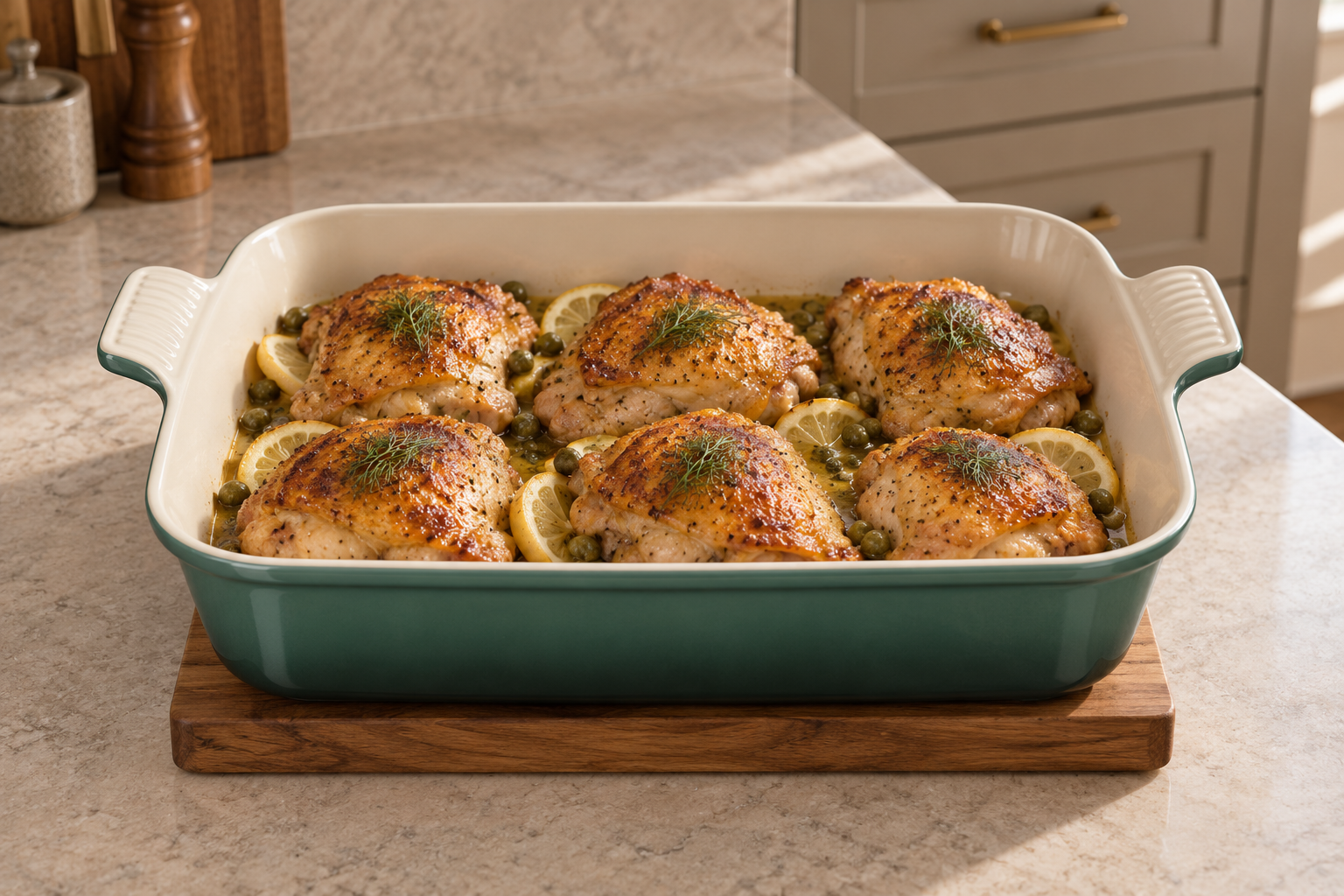
A Chicken Dinner That Keeps The Skin Crisp
Traditional piccata often begins with thin meat dredged and fried on the stove. This version uses bone-in thighs and the oven. The recognizable lemon-and-caper flavor is still there, but the cooking method is built around crisp chicken skin and pan juices.
That makes it useful on a full family day. With six children, work, and homeschool all moving through the same afternoon, I need dinner steps that can be finished before everyone is hungry. Once the dish is assembled, the oven handles the next 30 minutes while I can make a vegetable or clear the table.
The arrangement matters more than extra work. Keep the thighs skin-side up, leave room between them, and move the lemon and capers into the open spaces. Every wet ingredient belongs below or around the skin instead of on top of it.
The finished dish serves five. Six thighs give one extra piece to divide where it is needed, which is often more realistic for a family meal than pretending every serving has to look identical.
Use Homemade Chicken Meat Stock
Measure one-half cup prepared homemade chicken meat stock. This recipe uses meat stock made from raw meaty chicken pieces. It does not substitute long-cooked bone broth.
The half-cup measure is enough to collect lemon, caper, dill, and chicken juices without submerging the thighs. If the liquid rises over the skin before baking, the exposed surface will steam instead of crisp.
Use the finished stock after it has been strained, cooled, and stored correctly. Warm stock is not required. It will heat quickly in the shallow baking dish while the chicken cooks.
If chilled meat stock has gelled, measure the gelled stock and place small spoonfuls around the thighs. It will melt in the oven and form the same shallow pan liquid without needing to be heated separately.
Choose The GAPS Cooking Fat
Use three tablespoons melted ghee, coconut oil, or rendered animal fat. All three positions keep the measured amount the same. Choose one fat for the batch instead of mixing leftovers from several jars.
Ghee gives the skin a buttery aroma. Coconut oil is the dairy-free choice within the card. Rendered chicken fat or another appropriate rendered animal fat keeps the flavor firmly savory. Melt solid fat gently, then let it cool just enough that it can be brushed without cooking the raw skin on contact.
Set aside a small portion to grease the baking dish. Brush the rest over the chicken skin in a thin even layer. Puddles of fat do not make skin crisper; complete light coverage is what helps the surface brown evenly.
Assemble The Artichaut Baking Dish
Heat the oven to 400°F. Lightly grease a Le Creuset Heritage 4-quart rectangular dish in Artichaut. Arrange six bone-in, skin-on chicken thighs in one layer with the skin facing up.
Slice one-half lemon thinly and cut the rounds into half-moons. Place the lemon and two tablespoons capers around and between the thighs. Do not cover the skin with lemon slices.
Season with one teaspoon natural mineral salt and an optional one-quarter teaspoon ground black pepper. Place one fresh dill sprig on each thigh. The dill will soften and darken in the oven while its aroma moves into the fat and pan liquid.
The raw dish should look organized but not packed. Air needs to reach the top and sides of each thigh. If the six pieces cannot sit in one layer in your dish, divide the batch between two correctly sized dishes rather than stacking or overlapping them.
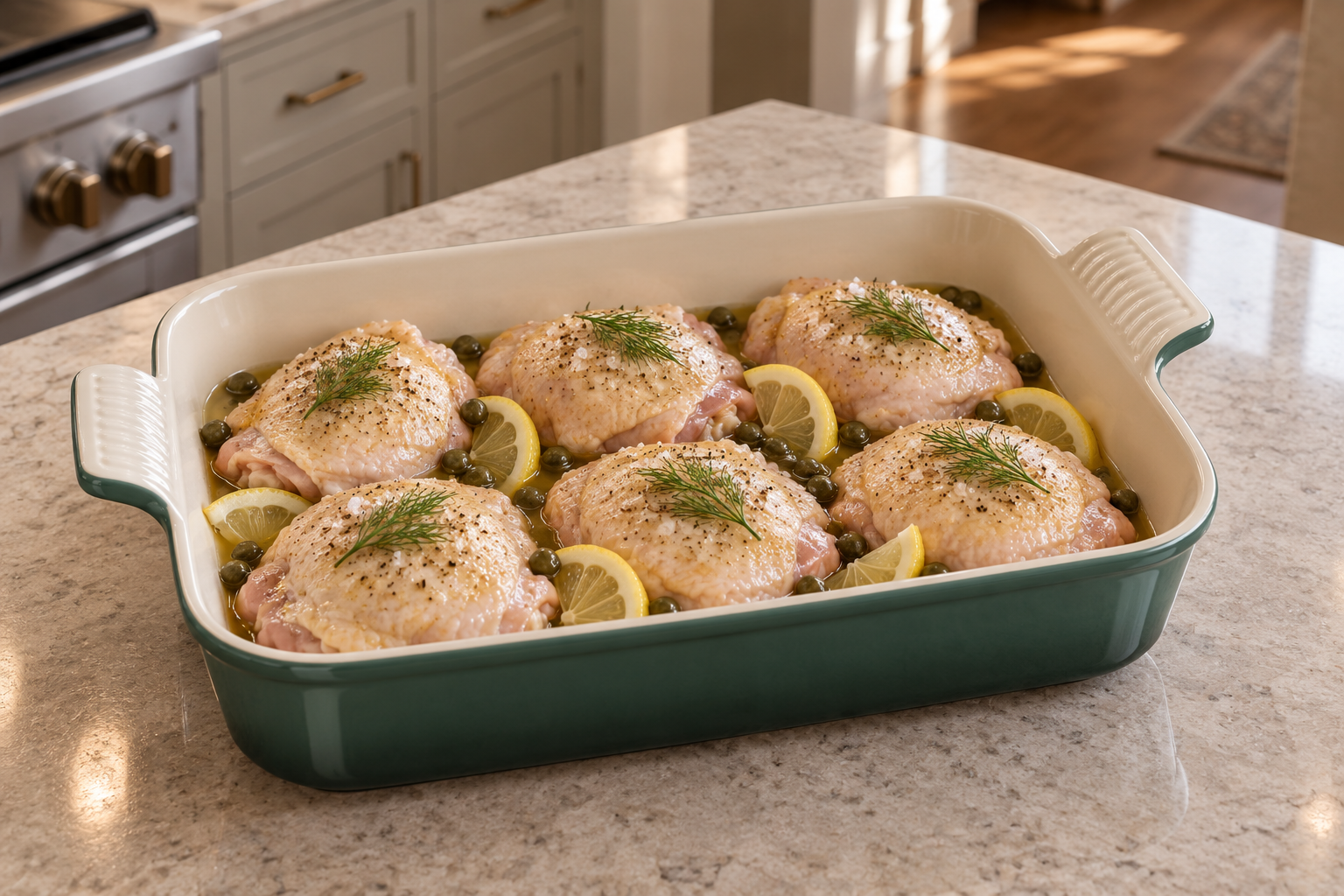
Keep The Stock Below The Skin
Pour the half cup chicken meat stock into the bottom of the dish. Aim for open space between the thighs and keep the stream off every skin surface. The stock should sit below the skin line.
If a splash lands on top, blot it gently with a clean paper towel before the dish goes into the oven. Do not remove the brushed fat. The skin should look lightly coated and free of standing liquid.
The capers and lemon can touch the lower sides of the thighs. Their flavor will move through the pan juices. Keeping the tops clear gives the heat direct access to the skin.
Bake Until Golden And Fully Cooked
Bake for about 30 minutes. Oven temperatures and thigh size vary, so begin checking the physical cues near the stated time instead of pulling the dish only because the timer rings.
The skin should be visibly golden and crisp, with darker brown patches on the highest points. Pan juices should run clear. Insert an instant-read thermometer into the thickest part of a thigh without touching the bone; the target for this recipe is 175°F.
Remove the baking dish with dry oven mitts and set its entire base on a heat-safe trivet. The pan liquid will be bubbling and the Artichaut dish will remain hot. Let the chicken stand for about five minutes while the juices settle.
Do not cover the resting dish tightly. Trapped steam softens the crisp surface. A brief uncovered rest keeps the skin exposed while the interior finishes settling.
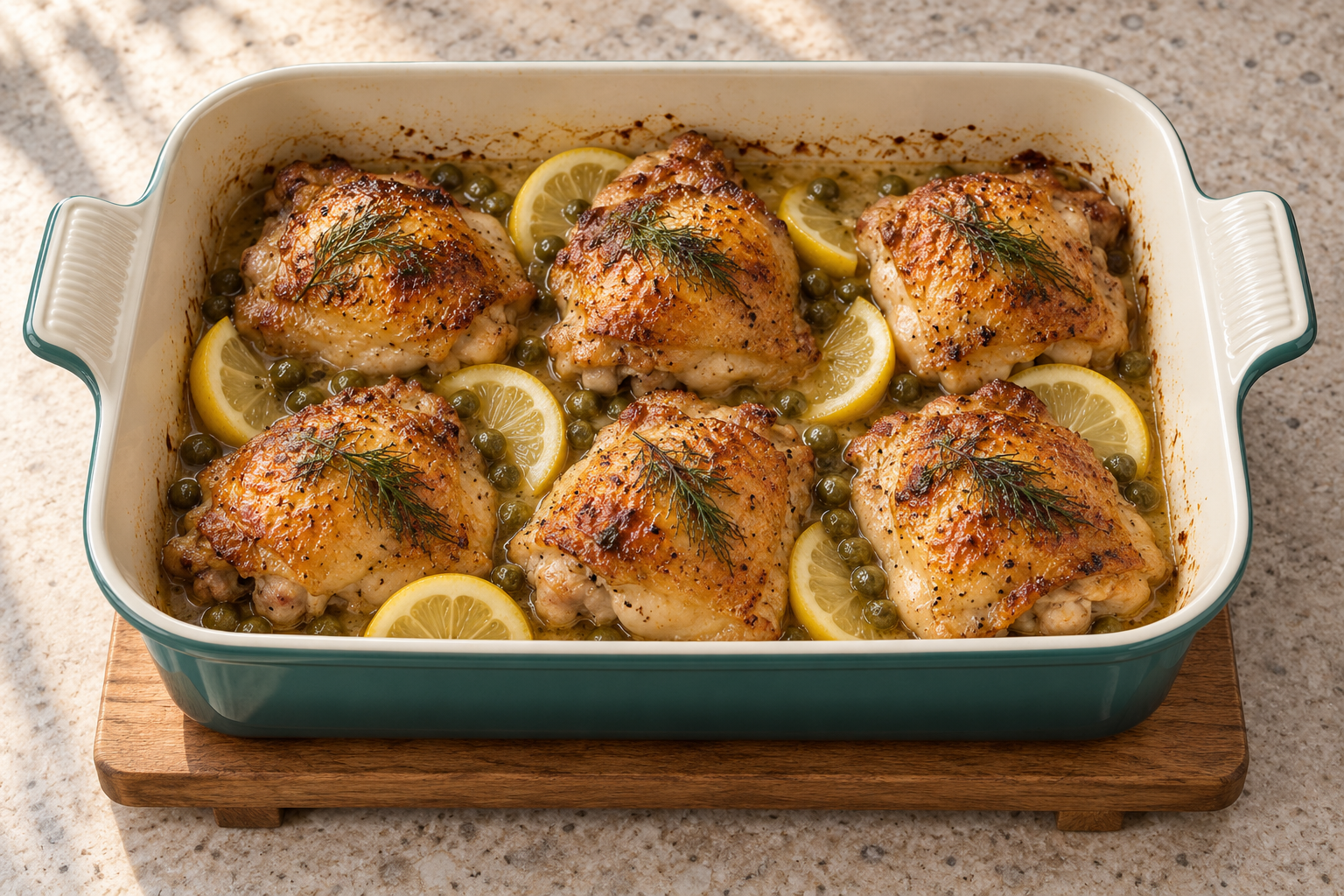
Serve The Pan Juices Under The Chicken
Move each thigh to a plate with tongs or a broad serving spoon. Spoon lemon, capers, and pan liquid around or beneath the chicken while leaving the crisp skin exposed.
Serve it with a simple cooked vegetable, cauliflower rice, or a Full GAPS salad. The pan liquid is bright and salty enough to season a plain side, so taste before adding more salt at the table.
If a child prefers fewer capers, keep the chicken portion intact and spoon more plain pan liquid underneath. The capers remain in the recipe, but the serving can be adjusted without changing the batch.
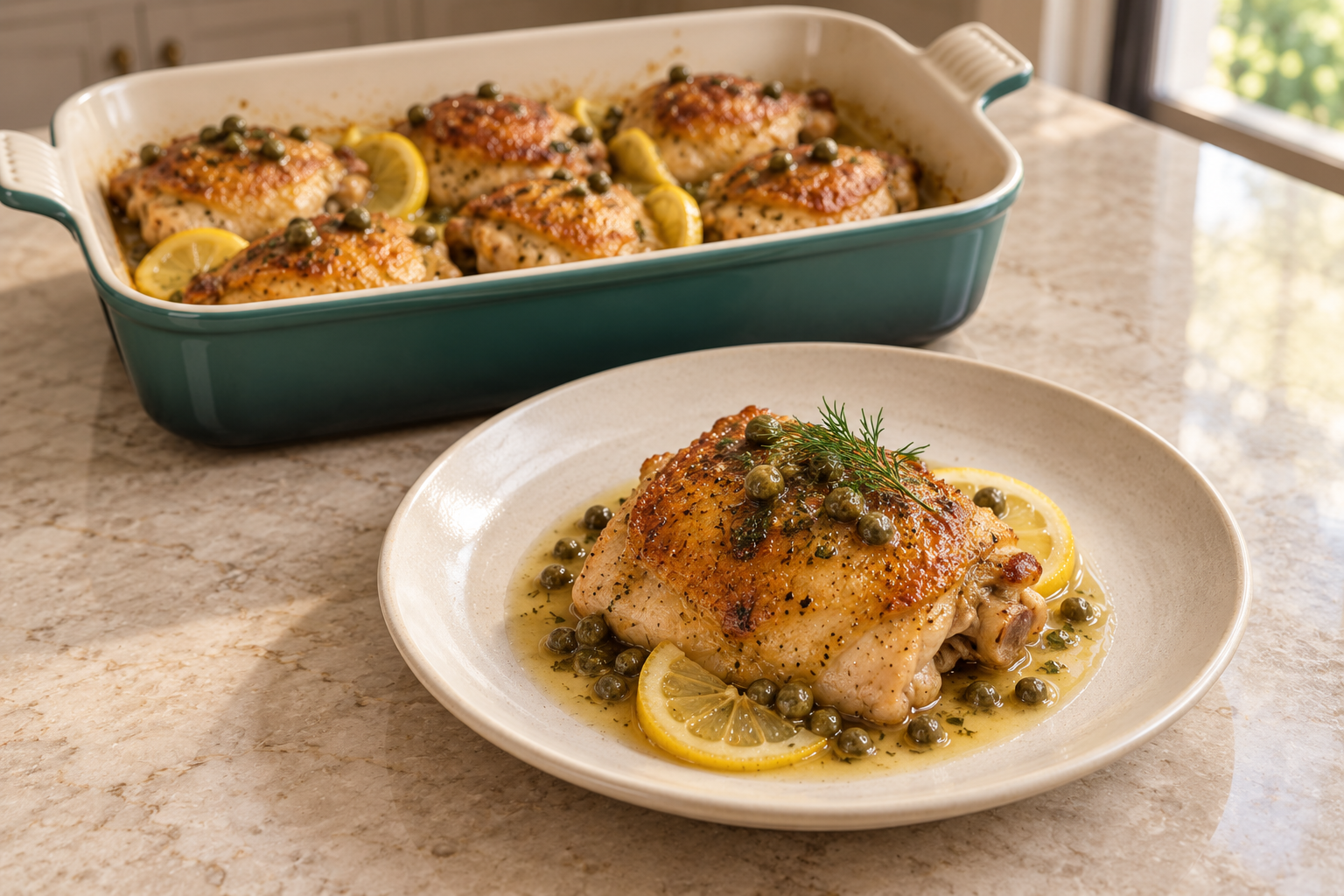
Where This Fits On Full GAPS
This is a Full GAPS main dish. It uses bone-in chicken, homemade chicken meat stock, lemon, capers, dill, natural mineral salt, optional pepper, and one of the measured GAPS cooking fats.
It is not an Introduction Diet recipe. Capers, crisp baked skin, and the complete lemon-and-herb preparation belong here as a Full GAPS meal. The card also keeps meat stock distinct from bone broth.
The ghee version contains a dairy-derived cooking fat. Choose coconut oil or rendered animal fat when you need the dairy-free branch. The recipe is egg-free and nut-free in every listed branch.
Storage And Reheating
Refrigerate cooked chicken and pan juices in a covered container within two hours. Use within three days. Keep the juices with the meat so the underside stays moist during storage.
For reheating, place the thighs skin-side up in a baking dish with the juices underneath and warm in a 350°F oven until heated through. Leave the skin uncovered. A microwave will heat the meat, but it will not preserve the same crisp surface.
Freeze cooled chicken and pan juices together for longer storage. Thaw in the refrigerator, then reheat in the oven. The skin will not be exactly as crisp as the first night, but keeping it above the liquid gives it the best chance to firm again.
Recommended Equipment
The exact oven vessel shown here is the Le Creuset Heritage 4-quart rectangular dish in Artichaut. Its broad cream interior gives six thighs room to sit in one layer while the integrated handles keep the hot dish balanced.
An instant-read thermometer makes the thickest thigh easy to check. The ThermoPro TP19H instant-read thermometer is a current option. You will also need a small bowl, a natural-bristle pastry brush or stainless spoon, dry oven mitts, and stainless tongs or a broad serving spoon.
Frequently Asked Questions
Can I Use Boneless Chicken Thighs?
This recipe is built for six bone-in, skin-on thighs. Boneless pieces cook differently and do not provide the same crisp-skin result, so keep the specified form.
Can I Use Bone Broth Instead Of Meat Stock?
No. Use one-half cup homemade raw-meaty chicken stock. GAPS keeps meat stock distinct from long-cooked bone broth and uses them at different points in the protocol.
Why Is The Stock Poured Around The Chicken?
Keeping liquid below the exposed skin lets the top brown while the lemon, capers, dill, and stock form pan juices underneath.
Can I Use Olive Oil?
Use three tablespoons melted ghee, coconut oil, or rendered animal fat for this oven method. Olive oil and avocado oil are not the heated-fat branch in this Full GAPS card.
Are Capers Part Of The Sauce?
Yes. Two tablespoons capers bake in the liquid around the thighs. Choose a plain additive-free product and drain it before measuring.
How Do I Know The Chicken Is Done?
Look for deep golden crisp skin and clear juices, then check the thickest part of a thigh for 175°F without touching bone.
Can I Double The Recipe?
Yes. Double every ingredient and use two 4-quart dishes so the 12 thighs remain in one layer. Do not crowd a single dish.
How Should I Reheat It?
Warm the thighs skin-side up and uncovered at 350°F with the juices underneath until heated through.
Full GAPS Baked Chicken Piccata Recipe
Full GAPS Baked Chicken Piccata
Ingredients
Equipment
Method
- Heat the oven to 400°F. Lightly grease the Le Creuset Artichaut rectangular dish with a small portion of the melted cooking fat.
- Brush the measured chicken thighs with the remaining melted fat. Arrange them skin-side up in one uncrowded layer.
- Place the measured lemon half-moons and drained capers around and between the thighs without covering the skin.
- Pour the measured chicken meat stock into the bottom of the dish, keeping it below and off the skin. Season with the measured mineral salt and optional pepper, then place one dill sprig on each thigh.
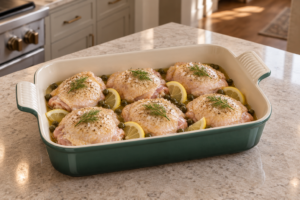
- Bake for about 30 minutes, until the skin is deeply golden and crisp, the juices run clear and the thickest part of a thigh reaches 175°F without the thermometer touching bone.
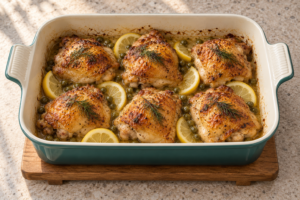
- Rest uncovered for 5 minutes. Spoon the capers, lemon and pan liquid around or beneath each thigh while leaving the crisp skin exposed.
Notes
Tried this recipe?
Let us know how it was!More Full GAPS Weeknight Dinners
The upcoming First 30 Days on Full GAPS guide will pair practical meals with a workable kitchen rhythm for busy households. Watch the WFLI shop as the complete guide is prepared.

Leave a comment