

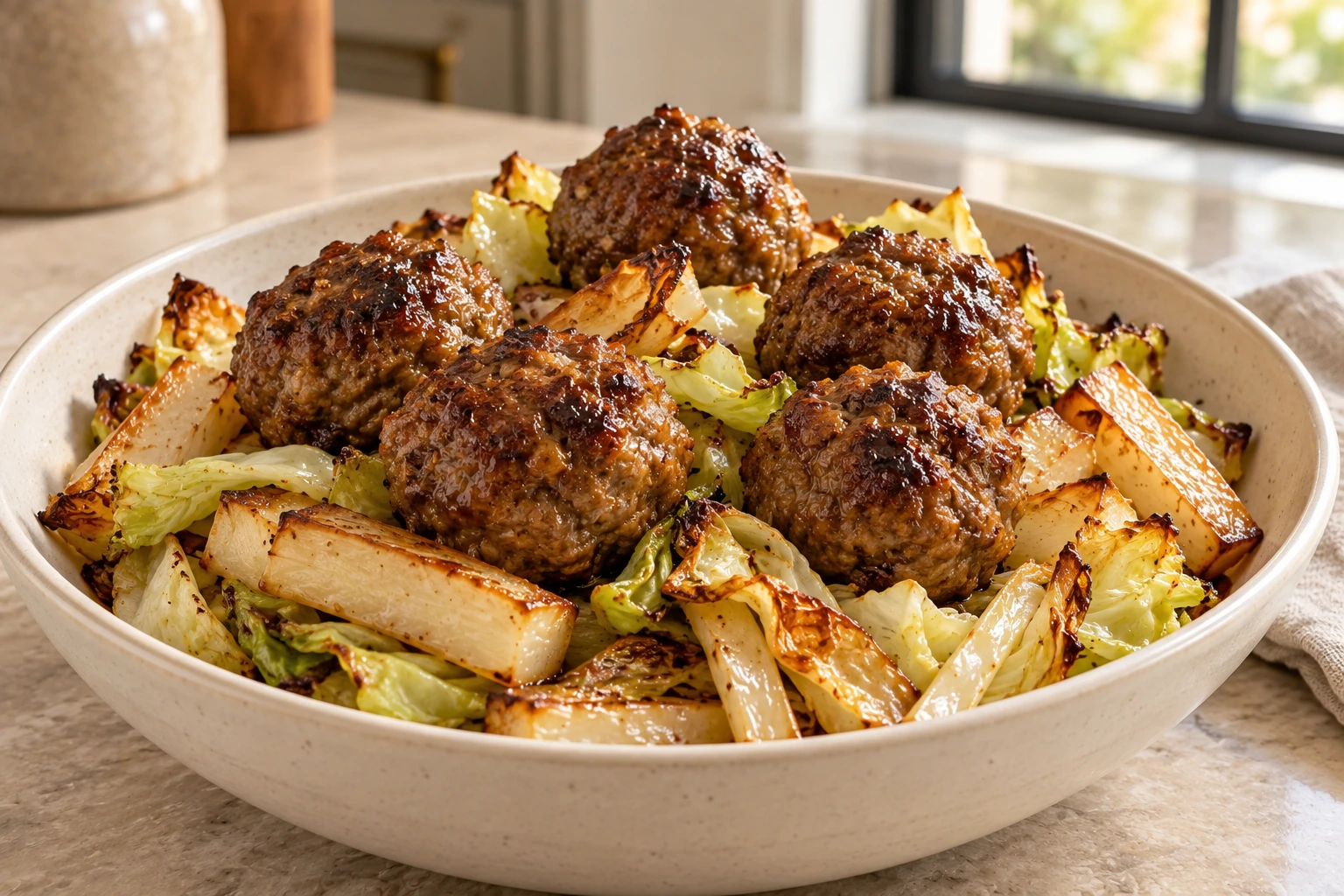
These Full GAPS Asian meatballs turn ground beef or lamb, cabbage, and daikon into a complete sheet pan dinner with very little cleanup. The meatballs are savory with coconut aminos, ginger, garlic, and lemon, while a small amount of raw honey rounds out the salt and gives the outside a light glaze. The cabbage softens and browns at the edges. The daikon loses its sharp raw bite and becomes mild, tender, and lightly caramelized.
This is the kind of dinner I need on weekdays. I homeschool before work and leave for second shift after lunch and dinner are handled, so I cannot spend all afternoon moving food through three pans. Two sheet pans let the vegetables get a head start while the meatballs cook beside them. Everything reaches the table at about the same time, and the only real hands-on work is slicing vegetables and shaping the meatballs.
GAPS Placement: Full GAPS
Prep Time: 25 minutes
Cook Time: 20 minutes
Total Time: 45 minutes
Yield: 5 servings
Why This Sheet Pan Dinner Works
The timing is built around the vegetables. Cabbage and daikon need longer than 1 1/2-inch meatballs, so they go into the oven first. Ten minutes later, the meatball pan joins them. That overlap keeps the beef or lamb juicy while giving the cabbage time to collapse and the daikon time to soften.
The meatball mixture also has a specific texture. Lemon juice reacts with the pure bicarbonate and makes the mixture look slightly lighter and more aerated as it is mixed. The coconut flour absorbs the coconut aminos, lemon juice, and honey so the meatballs hold together without grain flour. Stop mixing as soon as the wet and dry ingredients are evenly distributed. Working the mixture past that point packs it down and makes the finished meatballs firmer.
Use two rimmed, uncoated stainless steel sheet pans. One is lined with unbleached parchment for the meatballs. The other stays unlined so the cabbage and daikon can make direct contact with the hot pan and brown. The WFLI shop has the kitchen tools I use and recommend.
What The Finished Dinner Tastes Like
These are not plain meatballs with a sauce added at the end. The seasoning is mixed all the way through. Coconut aminos brings a deep salty-sweet flavor, ginger and garlic keep it savory, and lemon makes the mixture taste brighter without turning it sour. The two teaspoons of raw honey are enough to soften the sharper edges and help the surface brown. They do not make the meatballs taste like a sweet glaze.
The vegetables balance the meat. Roasted cabbage becomes soft in the middle with crisp, dark-golden tips. Daikon is dense enough to keep its shape, but a properly roasted piece should yield easily when pressed with a fork. Its flavor is much milder than raw radish. In the finished bowl, you get browned meat, tender vegetables, and a little crispness from the cabbage edges in the same bite.
Full GAPS Ingredient Notes
This recipe belongs on Full GAPS. It uses roasted cabbage and daikon, coconut aminos, coconut flour, raw honey, and pure bicarbonate. It is not written as an Introduction Diet recipe, and I would not try to force it into one by removing several structural ingredients. An Intro meatball soup is a different recipe and deserves its own post and method.
Use pure coconut aminos with a short, fully disclosed ingredient list and no soy, starch, preservatives, or sweeteners added to the product. The measured 1/4 cup is part of the meatball mixture, not a sauce poured over the finished dish.
Use exactly 3 tablespoons of pure additive-free coconut flour. The 2020 Gut and Physiology Syndrome book addresses coconut flour directly. This formula depends on the absorbency of the measured flour, so do not replace it with the separate flour made from leftover coconut-milk pulp. That homemade pulp flour contains more moisture and behaves differently.
The 1/2 teaspoon of pure bicarbonate of soda is the recipe’s measured leavener. It is not baking powder and should not be replaced with a mixed raising agent. The lemon juice activates it inside the meat mixture.
For the sheet pan, use the source-tested 2 tablespoons of melted fat rendered from properly prepared additive-free, uncured bacon. Heated avocado oil is not used here because GAPS reserves cold-pressed plant oils for finished food rather than cooking. The bacon fat should be fully melted before it is tossed with the vegetables so a thin coating reaches the cut surfaces.
Raw honey is the Full GAPS sweetener in this formula. Maple syrup and molasses are left out. Keep the exact 2-teaspoon amount because it is part of the tested balance of salt, acid, moisture, and browning.
How To Cut The Cabbage And Daikon
Slice the cabbage into thin ribbons rather than large wedges. The pieces do not need to look identical, but thick chunks will stay firm while the finer edges burn. If the outer leaves are loose, remove them before slicing. Spread the cabbage in its own loose section of the pan so you can judge its browning separately from the daikon.
Peel a 6-inch section of daikon and trim both ends. Cut it crosswise into two shorter sections, stand each section on a flat end, and slice it lengthwise into pieces no thicker than 1/2 inch. Stack those pieces and cut short, flat batons. Keeping the daikon pieces close in thickness matters more than making them perfectly shaped. Thin matchsticks can scorch before the cabbage is ready, while thick blocks may still be firm when the meatballs are done.
How To Make Asian Meatballs With Cabbage And Daikon
Heat the oven to 425°F. Line one rimmed stainless steel sheet pan with unbleached parchment for the meatballs. Leave the vegetable pan unlined.
In a small bowl, whisk the coconut flour, pure bicarbonate, and mineral salt until the fine powders are evenly mixed. This keeps one meatball from getting a concentrated pocket of bicarbonate.
Put the ground beef or lamb in a large bowl. Add the coconut aminos, lemon juice, raw honey, ground ginger, and minced garlic. Sprinkle the coconut-flour mixture evenly over the surface. Mix on low with handheld beaters or use a fork. The mixture will become slightly lighter and tackier as the lemon and bicarbonate react. Stop when no dry flour remains and the seasoning is evenly distributed.
Put the cabbage and daikon in separate loose piles on the unlined pan. Pour the melted bacon fat over them and use tongs to turn each pile until the vegetables have a thin, even sheen. Spread them into one uncrowded layer. A few overlaps are fine, but a mound will steam instead of brown.
Shape the meat mixture into balls about 1 1/2 inches across. A small cookie scoop speeds up portioning, and you can round each scoop lightly without compressing it. Arrange the meatballs in one layer on the parchment-lined pan with space between them.
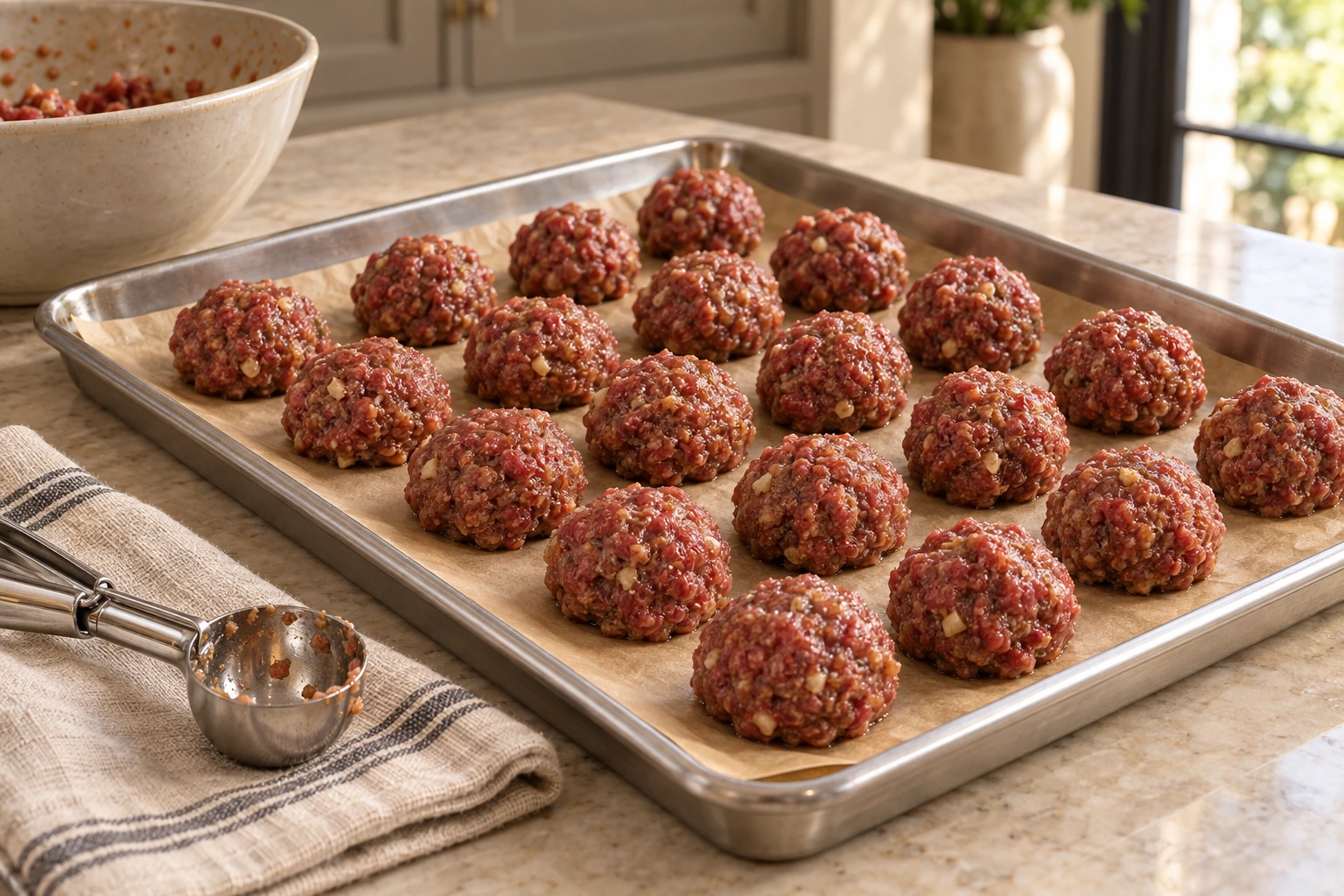
Roast the vegetable pan by itself for 10 minutes. Add the meatball pan to the oven, then roast both pans for another 10 minutes. Start checking the vegetables after 5 additional minutes. Pull the cabbage and daikon when the cabbage is wilted with browned tips and the daikon is tender with golden edges. The meatballs should be browned outside and cooked through after their 10-minute bake. Do not leave them in merely because the vegetables need another minute or two.
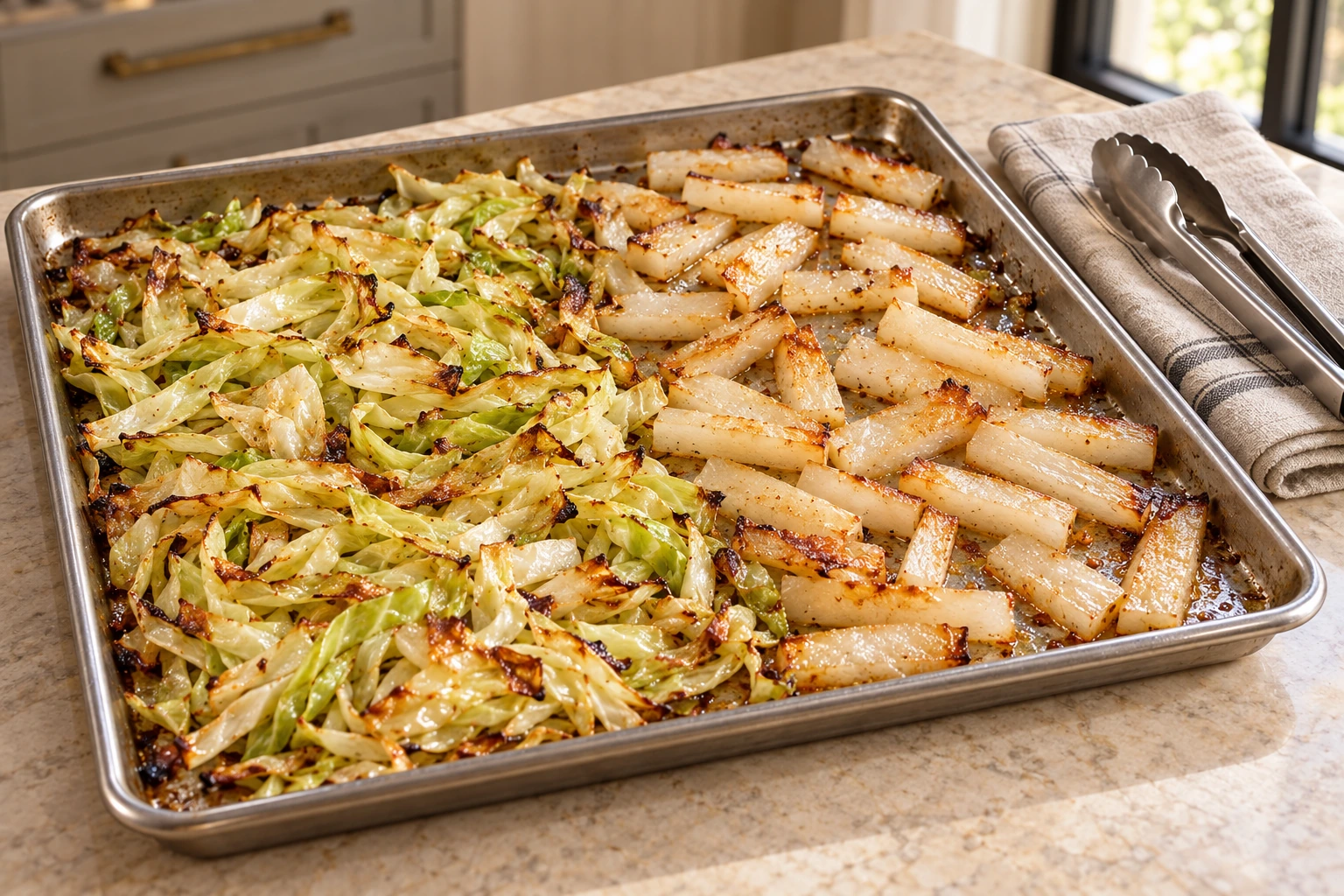
Divide the roasted vegetables among five bowls and place the meatballs on top. Spoon any flavorful pan juices from the meatball pan over the bowls before serving.
Full GAPS Asian Meatballs Sheet Pan Dinner
Ingredients
Equipment
Method
- Heat the oven to 425°F. Line one rimmed uncoated stainless steel sheet pan with unbleached parchment for the meatballs. Leave the second rimmed stainless steel sheet pan unlined.
- Whisk the coconut flour, pure bicarbonate, and mineral salt in a small bowl until evenly mixed.
- Put the ground beef or lamb in a large bowl. Add the coconut aminos, lemon juice, raw honey, ginger, and garlic. Sprinkle the coconut-flour mixture over the surface. Mix on low with handheld beaters or use a fork just until the mixture looks slightly lighter and tacky and no dry flour remains. Do not overmix.
- Put the cabbage and daikon in separate loose piles on the unlined pan. Pour the melted bacon fat over them and toss each pile until lightly coated. Spread into one uncrowded layer.
- Shape the meat mixture into 1 1/2-inch balls and arrange them in one layer on the parchment-lined pan with space between them.
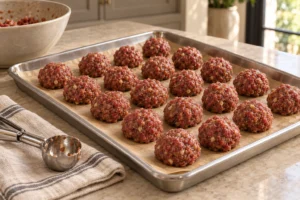
- Roast the vegetable pan by itself for 10 minutes.
- Add the meatball pan to the oven and roast both pans for another 10 minutes. Pull the vegetables when the cabbage is wilted with browned tips and the daikon is tender with golden edges. The meatballs should be browned outside and cooked through. Remove the meatballs on time even if the vegetables need another minute or two.
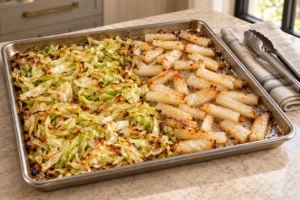
- Divide the roasted vegetables among five bowls, top with the meatballs, and spoon over any flavorful pan juices.
Nutrition
Notes
Tried this recipe?
Let us know how it was!The Physical Cues That Matter
The meat mixture looks light and tacky. After the liquid and dry ingredients are mixed in, the surface should no longer look like loose ground beef. It will look slightly aerated and hold together when scooped. Stop there. If you keep beating it until it becomes smooth and compact, the finished texture will be tighter.
The vegetables have room. Cabbage releases moisture as it heats. A single loose layer lets that moisture escape and gives the edges direct heat. If the pan looks piled high in the center, spread the vegetables toward the corners before it goes into the oven.
The cabbage is wilted with browned tips. It should not be uniformly crisp or dark. Look for soft folds through most of the pan and scattered deep-golden edges. Those browned pieces bring the roasted flavor.
The daikon yields but keeps its shape. Press one thick piece with a fork. It should give without feeling raw and rigid, while the outside still looks like a defined baton rather than mash.
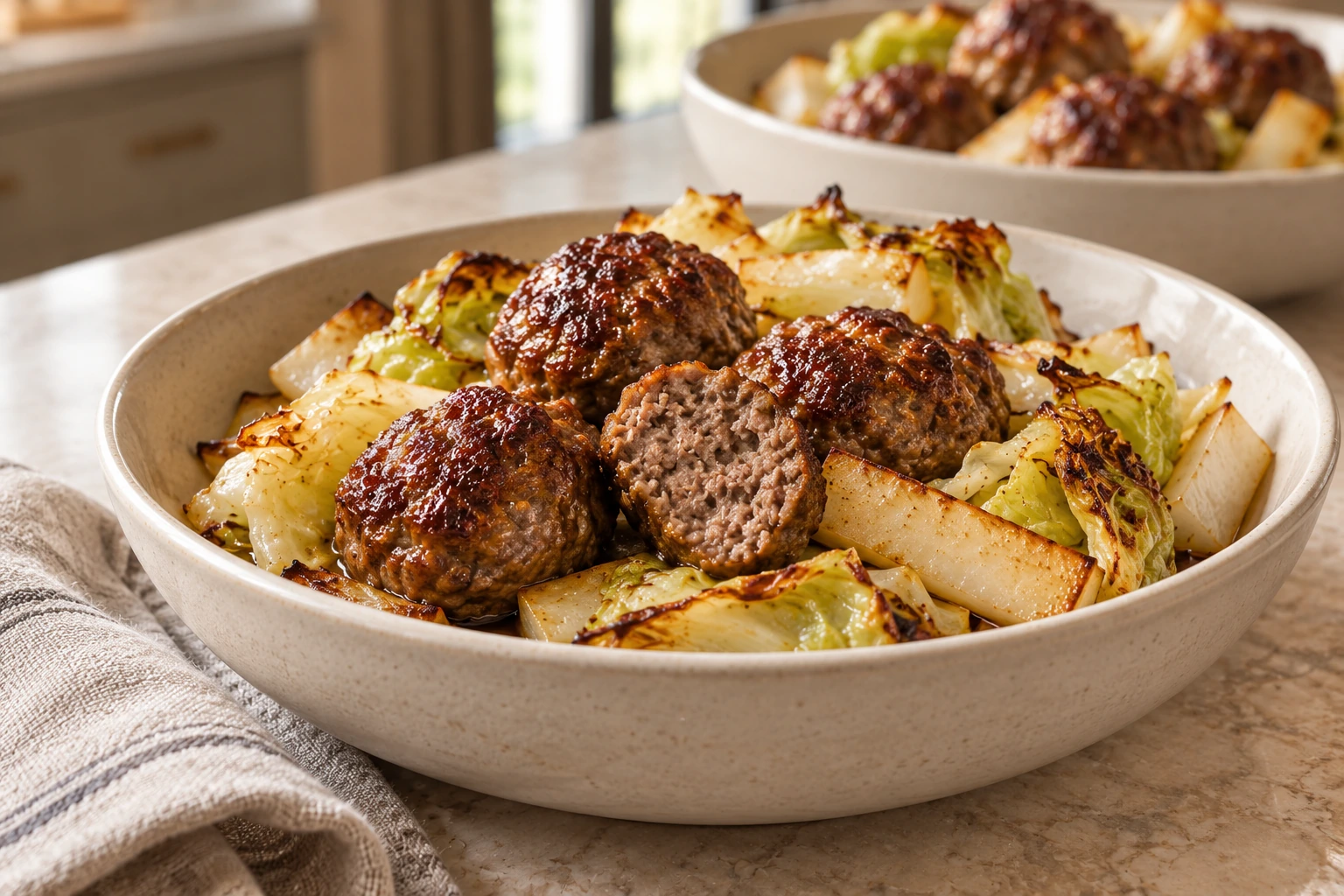
The meatballs are browned but still moist. Their surface should be set and lightly glossy, with no raw mixture at the center when one is opened. Ten minutes is enough for 1 1/2-inch meatballs in the source method. Larger meatballs change that timing, which is why the scoop size matters.
Beef Or Lamb
The source formula tests either 1 1/2 pounds of ground beef or ground lamb. Beef gives the familiar, mellow meatball flavor shown in these photos. Lamb is richer and pairs especially well with the ginger and garlic. Keep the meat weight and every other measurement the same whichever one you choose.
Do not split the batch and change the seasonings for one half. That would turn this into two untested variations. Make the complete beef or lamb version once, then use the other meat the next time.
Serving Ideas
These bowls are complete as written, with meat, cabbage, and daikon. If you want something cool beside them, sliced cucumber works well. The two-ingredient Asian lime dressing gives a cucumber or lettuce side a sharp, fresh contrast without adding another cooked component to the sheet pans.
For a chilled lunch with the same coconut-aminos and ginger direction, make the Full GAPS Asian chicken chopped salad. It is a separate recipe with almond-butter dressing, crisp vegetables, and roasted chicken, so the link gives you another meal rather than burying a second formula in this post.
Storage And Reheating
Store leftovers covered in the refrigerator. Reheat the meatballs and vegetables in a covered oven-safe dish at 325°F until hot, about 15 minutes. Gentle reheating protects the meatballs from drying out and keeps the cabbage edges from turning hard.
The meatballs can also be frozen without the vegetables. Arrange cooled meatballs in one layer on parchment in an airtight freezer container and freeze for up to 2 months. Thaw them overnight in the refrigerator, or reheat them from frozen in a covered oven-safe dish. Make fresh cabbage and daikon when you serve the frozen batch so the vegetables keep their roasted texture.
Frequently Asked Questions
Can I Use Homemade Coconut Pulp Flour?
Not in this exact formula. Flour made from coconut-milk pulp holds more moisture and does not absorb liquid like the measured pure coconut flour used here. Swapping it tablespoon for tablespoon can leave the mixture too wet to shape.
Can I Leave Out The Bicarbonate?
The pure bicarbonate and lemon juice create the lighter, aerated meatball texture in this tested formula. Removing it changes the structure. Use the exact 1/2 teaspoon and keep it separate from baking powder or blended raising agents.
Can I Use Avocado Oil On The Vegetables?
Use the measured melted bacon fat for cooking. GAPS keeps avocado and other cold-pressed plant oils unheated and uses animal fats, ghee, or coconut oil for cooking. This source already includes melted bacon fat as its tested 2-tablespoon branch, so no new ratio is needed.
What If I Cannot Find Daikon?
The source allows regular radishes in place of daikon. Slice them to a similar thickness so they roast in the same window. Their flavor will be a little sharper, but the method and measured vegetable weight stay the same.
Why Are The Vegetables And Meatballs On Separate Pans?
The vegetables need a 10-minute head start, and cabbage gives off moisture as it cooks. A separate pan keeps that moisture away from the meatballs and lets both parts brown instead of steaming together.
More Complete Dinners With Fewer Dishes
The upcoming One-Pot & Sheet Pan Cookbook is for nights when you need a complete GAPS dinner without a sink full of cookware. It will bring together practical meals built around one pot or a pair of sheet pans, with the stage notes and physical cues kept beside the recipe. Visit the WFLI shop for current guides and cookbook updates.

Leave a comment