

Steamed cauliflower rice gives saucy Full GAPS meals somewhere to land without turning the side dish into a second project. One head of cauliflower becomes four servings. Pulse it into rice-sized pieces, let it sizzle in homemade ghee or coconut oil, then add one measured tablespoon of water and cover the skillet for a short steam.
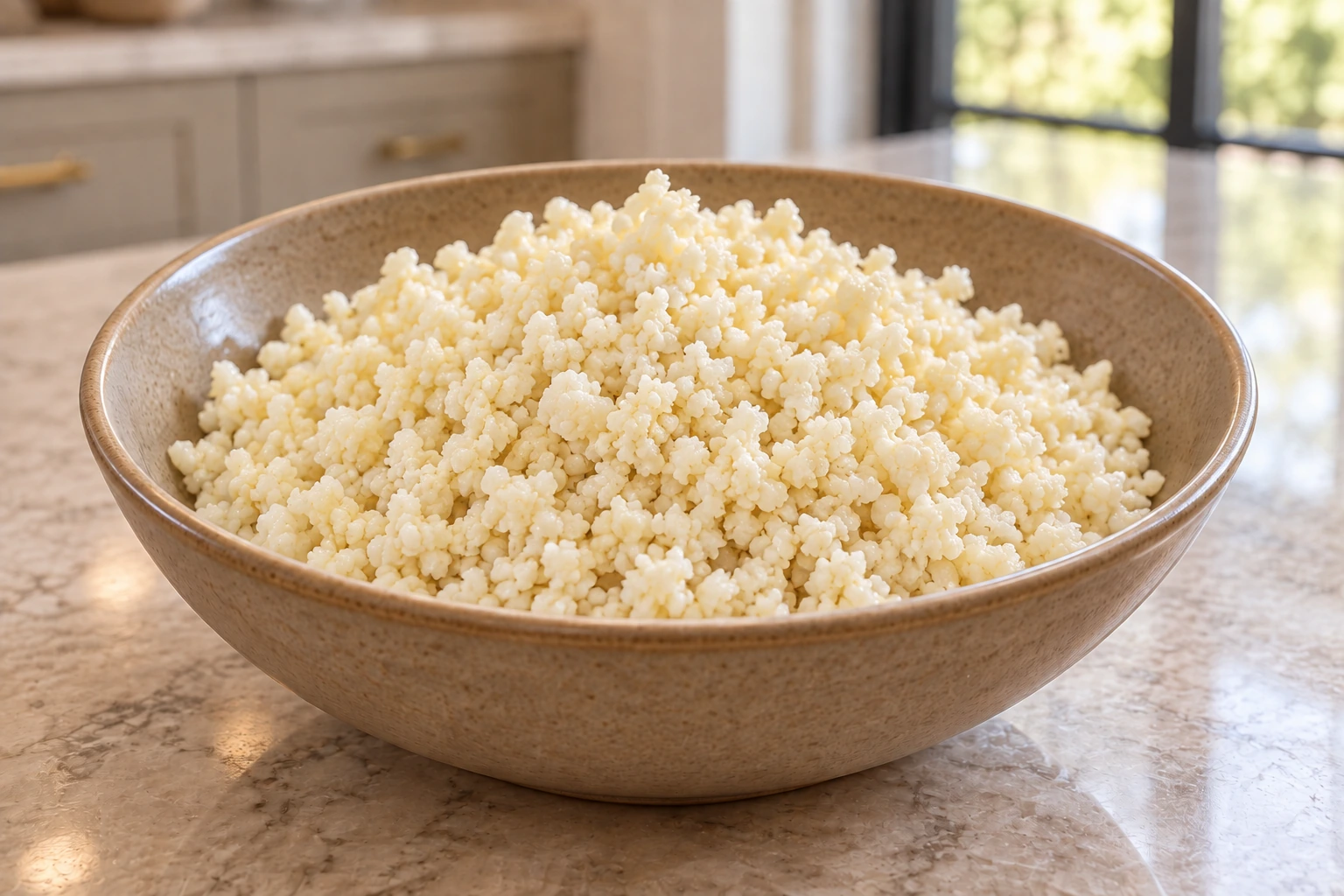
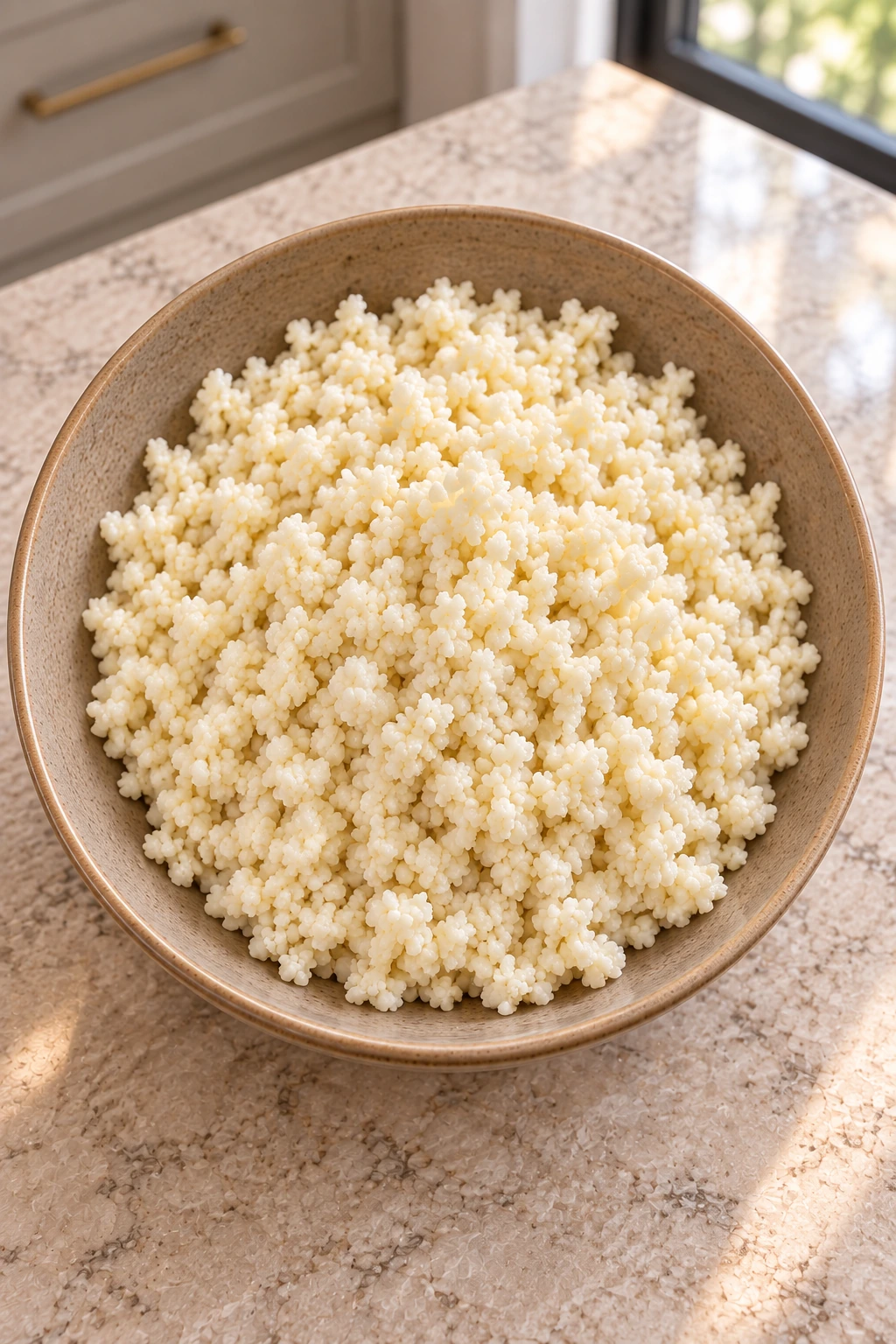
The finished cauliflower should be tender enough to chew easily while each small piece still holds its shape. It should not look like puree, and there should not be water pooled under it. Sautéing before steaming keeps the flavor from tasting flat. The lid and tablespoon of water finish the center of each piece without boiling the cauliflower.
GAPS stage: Full GAPS
Prep time: 5 minutes
Cook time: 10 minutes
Total time: 15 minutes
Yield: 4 servings
I usually make homemade ghee in a weekly batch. Having it ready is what makes simple sides like this stay simple. On a weekday, melting one spoonful from the jar is very different from realizing the cooking fat still needs to be made while the rest of dinner is already on the stove. Coconut oil gives you the same measured cooking route when you need the dairy-free version.
Why Sauté Before Steaming
Cauliflower contains plenty of its own moisture. If you add a large pour of water at the beginning, the pieces can turn wet and soft before they develop much flavor. This method starts with the fat. The tiny cauliflower pieces make direct contact with the warm skillet and begin to sizzle. Then one tablespoon of water creates just enough steam to soften them under the lid.
The order matters. Wait until you hear a steady, quiet sizzle before adding the water. After the lid goes on, reduce the heat to low. The skillet should sound gently active, not violently boiling. When you uncover it, the cauliflower should smell mild and slightly sweet, with the warm aroma of ghee or coconut oil underneath.
Ingredients
- 1 head cauliflower, cut into large chunks
- 1 tablespoon homemade ghee or natural, non-hydrogenated coconut oil
- 1 tablespoon water
- Sea salt, to taste
Use one fat for the whole recipe. Homemade ghee gives the cauliflower a buttery flavor and is my usual choice when ghee is already tolerated. Use the same tablespoon of natural coconut oil for the dairy-free version. The amount does not change.
Keep the cauliflower pieces dry after washing. Shake off visible water and pat the chunks with a clean linen towel before pulsing. Extra surface water is one of the quickest ways to make the skillet steam too early.
How to Rice the Cauliflower
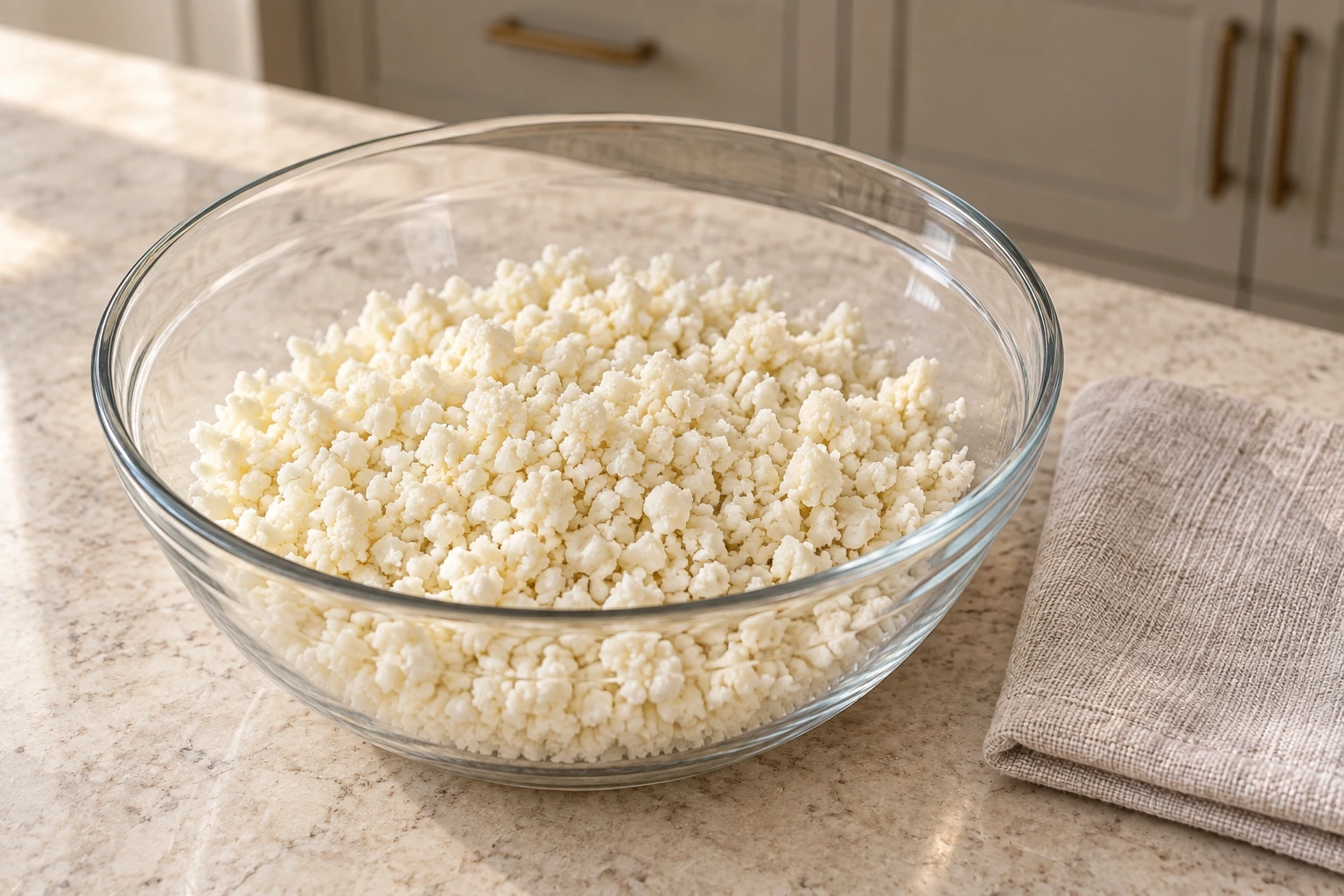
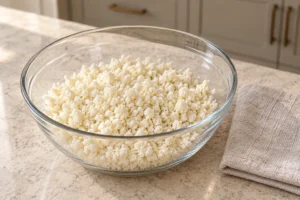
Cut the head into large chunks that fit easily into your food processor. Work in batches so the blade has room to move the pieces instead of crushing the bottom while the top stays whole. Pulse each batch about 10 to 15 times.
Stop when the pieces look like rice or coarse couscous. They will not all be perfectly identical, and they do not need to be. A few smaller crumbs are fine. Stop before the cauliflower looks damp, pasty, or packed against the side of the bowl.
A box grater also works when you do not want to pull out the food processor. Use the large holes and grate the chunks into a wide bowl. The pieces will be less even and may soften a little faster, so begin checking at the early end of the steaming time.
Method
- Rice the cauliflower. Put the cauliflower chunks in a food processor in batches. Pulse each batch 10 to 15 times, stopping when the pieces resemble rice or couscous. Transfer the riced cauliflower to a wide glass bowl as each batch is finished.
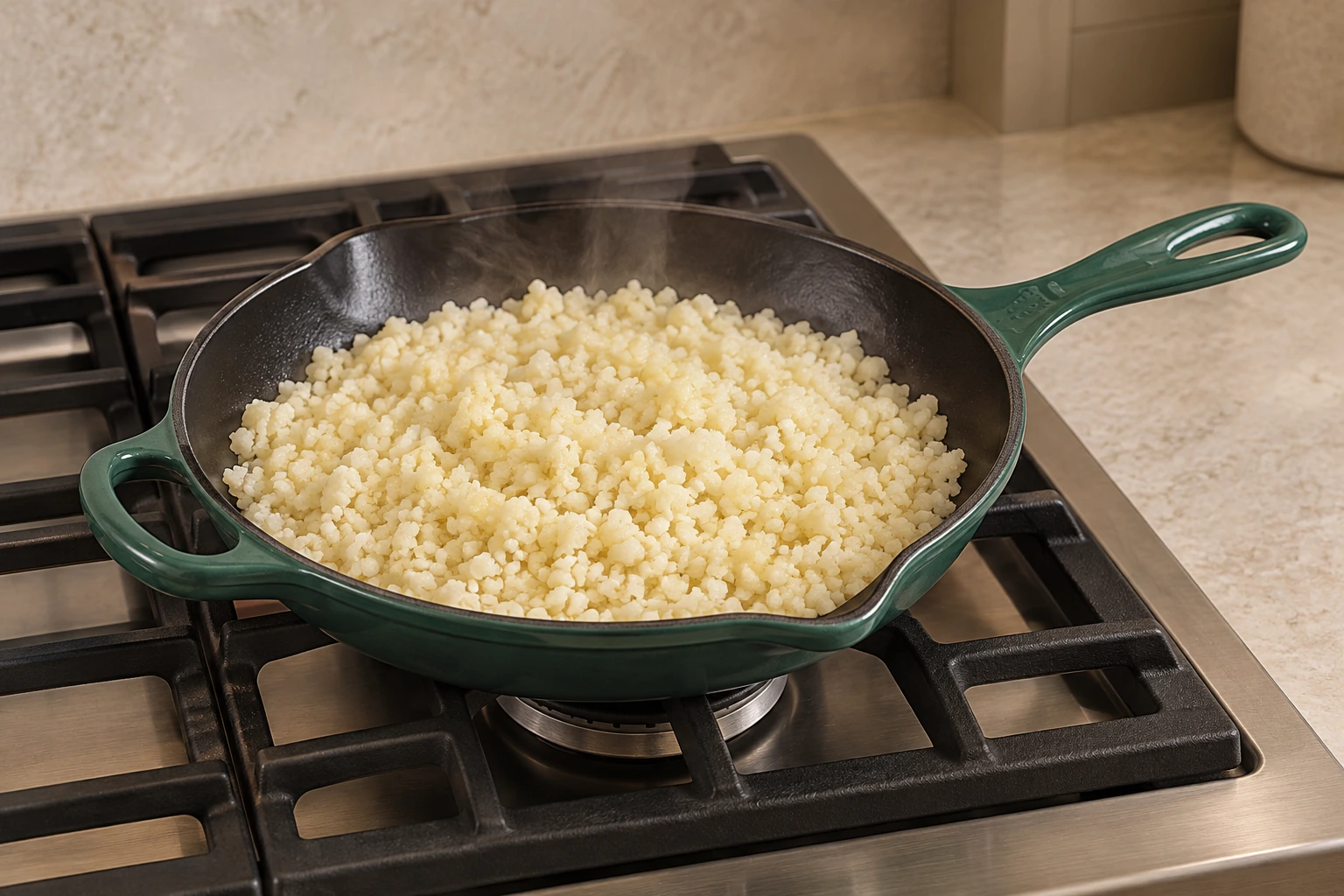
- Warm the fat. Set a large enameled cast-iron or stainless-steel skillet over medium heat. Add 1 tablespoon homemade ghee or coconut oil and warm it for 1 minute. The fat should look fluid and glossy, without smoking.
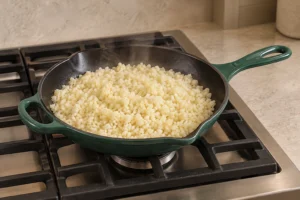
- Start the cauliflower. Add all the riced cauliflower. Stir so the small pieces are lightly coated in the fat. Sauté until you hear a steady sizzle across the skillet.
- Steam it. Add exactly 1 tablespoon water, cover the skillet, and reduce the heat to low. Steam for 4 to 6 minutes.
- Check the texture. Lift the lid away from your face. Pinch or taste a piece. It should be tender, with no raw crunch, but still separate rather than mashed. If the pieces are still firm, cover again and continue only until softened.
- Season and serve. Add sea salt to taste. Serve immediately, or spread the cauliflower rice in a shallow glass dish to cool if it will be used in another recipe.
Do not walk away during the final minutes. Cauliflower changes quickly once it is cut this small. At the right point, a spatula leaves a brief path across the bottom of the skillet and the pieces settle back loosely. When it has gone too far, the pieces smear together and release a stronger cabbage-like smell.
What to Look For
Before the lid goes on, the cauliflower should look dry on the surface with a light sheen from the fat. You should hear sizzling, not see liquid bubbling around the pieces. That tells you the skillet is hot enough for the measured tablespoon of water.
After steaming, the color will be creamy white rather than raw, bright white. The pieces should feel soft between your teeth but remain recognizable as small crumbs. If a puddle remains when the cauliflower is tender, remove the lid and stir over low heat just until the extra moisture evaporates.
If the cauliflower turns mushy, the pieces were probably processed too finely or cooked too long. The next batch should stop at the coarse-couscous stage and be checked closer to 4 minutes.
Full GAPS Notes
Cauliflower is a permitted non-starchy vegetable on Full GAPS. This rice-style preparation uses the whole head in small pieces and cooks it only until tender, so it belongs with Full GAPS meals rather than the early Introduction Diet soup method.
For the ghee version, use homemade stovetop ghee. Ghee and coconut oil are both suitable cooking fats for this formula. Cold-pressed plant oils that are meant to stay raw do not replace the cooking fat in this skillet method.
If you are still at the point where vegetables need to be very soft, keep the skillet covered until the cauliflower has no raw crunch. Do not use a shorter cook just to preserve a rice-like bite. The physical endpoint matters more than stopping at an exact minute.
Serving Ideas
Use it under the Full GAPS Asian Beef Bowl with Coconut Aminos so the ginger, garlic, honey, and coconut-aminos sauce can soak into the small cauliflower pieces. It also works beside roasted meat when you want the pan juices to soak into something without adding grain. Keep the seasoning simple when the main dish already has ginger, garlic, herbs, or a strong sauce.
The Full GAPS Greek Bowls with Beef or Lamb use the same plain cauliflower base under oregano-seasoned meat, raw vegetables, olives, lemon, and cultured mint sauce.
For a seasoned side, Mexican Cauliflower Rice adds tomato and spices for taco bowls and grilled meats. If you want the cauliflower rice built into dinner instead of served underneath it, Chicken and Cauliflower Rice Casserole turns it into a complete baked meal.
Storage and Reheating
Serve the cauliflower rice right away for the loosest texture. If you are preparing it for another dish, spread it in a shallow glass container so heat can escape instead of letting it continue steaming in a deep bowl.
Once cool, cover and refrigerate. Reheat it in a skillet over low heat with a small spoonful of ghee or coconut oil, stirring only until hot. If it feels firm, add a teaspoon of water and cover briefly. Avoid adding another full tablespoon unless you are reheating the entire four-serving batch and it truly needs that much moisture.
The texture is best when freshly made or gently reheated. Repeated heating keeps softening the small pieces, so warm only the amount you plan to serve.
Frequently Asked Questions
Can I Use a Box Grater Instead of a Food Processor?
Yes. Use the large holes and grate the cauliflower into a wide bowl. Watch the skillet early because grated pieces can be smaller and may soften faster than food-processor pieces.
Can I Use Coconut Oil Instead of Ghee?
Yes. Use 1 tablespoon natural, non-hydrogenated coconut oil in place of the 1 tablespoon ghee. This is the dairy-free route, and the water and cauliflower amounts stay the same.
Why Is My Cauliflower Rice Watery?
The cauliflower may have carried extra wash water into the skillet, the pan may not have been hot enough before the measured water was added, or the lid may have trapped moisture after the pieces were already tender. Pat the chunks dry, wait for the sizzle, and uncover as soon as the cauliflower reaches the right texture.
Can I Start With Frozen Cauliflower?
This measured method starts with one fresh head. Frozen cauliflower carries more water and would need a different amount of added water and a different timing sequence. Use fresh cauliflower here so the one-tablespoon steaming method remains accurate.
How Fine Should the Cauliflower Be?
Aim for rice or coarse-couscous size. Stop before the pieces look wet or pasty. Smaller crumbs cook faster, while large chunks stay raw in the center.
How Do I Know It Is Done?
Taste a piece. It should have no raw crunch and should press apart easily, while the skillet still shows separate crumbs rather than a mashed layer. There should be no water pooled underneath.
More Full GAPS Kitchen Help
If the individual recipes make sense but planning a full month still feels like the harder part, the First 30 Days on Full GAPS guide is the most useful next tool. It is built for turning staples like ghee, cauliflower rice, meat, and vegetables into meals without deciding everything from scratch every afternoon.
Recommended Equipment
Use a food processor or large-hole box grater, a wide glass bowl, a large enameled cast-iron or stainless-steel skillet, a properly fitted heat-safe lid, and a wooden or stainless-steel spatula. An Artichaut Le Creuset Signature skillet works for the sautéing stage when paired with a lid that fits securely. Keep the full base centered on the burner and turn the handle inward while the cauliflower steams.
Full GAPS Steamed Cauliflower Rice
Ingredients
Equipment
Method
- Rice the cauliflower. Put the cauliflower chunks in a food processor in batches. Pulse each batch 10 to 15 times, stopping when the pieces resemble rice or couscous. Transfer the riced cauliflower to a wide glass bowl as each batch is finished.
- Warm the fat. Set a large enameled cast-iron or stainless-steel skillet over medium heat. Add the homemade ghee or coconut oil and warm it for 1 minute. The fat should look fluid and glossy, without smoking.
- Start the cauliflower. Add all the riced cauliflower. Stir so the small pieces are lightly coated in the fat. Sauté until you hear a steady sizzle across the skillet.
- Steam it. Add exactly 1 tablespoon water, cover the skillet, and reduce the heat to low. Steam for 4 to 6 minutes.
- Check the texture. Lift the lid away from your face. Pinch or taste a piece. It should be tender, with no raw crunch, but still separate rather than mashed. If the pieces are still firm, cover again and continue only until softened.
- Season and serve. Add sea salt to taste. Serve immediately, or spread the cauliflower rice in a shallow glass dish to cool if it will be used in another recipe.

Leave a comment