

This green olive tapenade combines qualifying olives, shallots, garlic, parsley, lemon juice and lemon zest. Pulse those ingredients into small visible pieces, then stir in the measured olive oil by hand without heating it.
The food processor does the chopping work while the olive oil stays separate until the end. Stop before the mixture becomes smooth; small pieces give this tapenade texture instead of turning it into a puree.
I homeschool and work second shift, so preparing one part of dinner earlier can help our household. Make this condiment before grilling the separately linked chicken, cover and refrigerate it, and stir it before serving. The batch can also accompany vegetables or other grilled meats later in the week.
GAPS stage: Full GAPS
Yield: One complete batch, accompanying four chicken servings.
Ingredients
- 1 cup green olives preserved without sugar or other non-GAPS ingredients
- 2 shallots, peeled
- 1 garlic clove
- 1/2 cup flat-leaf parsley
- 1 tablespoon fresh lemon juice
- 1 lemon, finely grated zest only
- 1/2 cup extra-virgin olive oil, kept raw
- Mineral-rich sea salt, only if needed after tasting
Green olives supply the base and much of the salt, so check their complete brine and ingredient list for sugar or other non-GAPS additives. Shallots, garlic and parsley add distinct flavors and remain in small visible pieces. Lemon juice and zest add acidity and aroma; the half cup of olive oil is stirred through after chopping, with no heat applied in this recipe.
Why This Fits Full GAPS
This complete condiment is written for Full GAPS. Its chopped raw shallots, parsley and olive oil are used at the finished-food stage, and the olives must have qualifying ingredients. Processing the solids separately from the oil follows the measured method; the oil is stirred in unheated before serving.
Zest the lemon before juicing it, since a whole lemon is much easier to zest than one that has already been cut and squeezed. A microplane or fine grater takes just the bright yellow layer of peel without the bitter white pith underneath.
Method
- Put the green olives, shallots, garlic, parsley, lemon juice, and lemon zest in a food processor.
- Pulse until every ingredient is diced into small visible pieces. Stop before the mixture becomes a smooth paste.
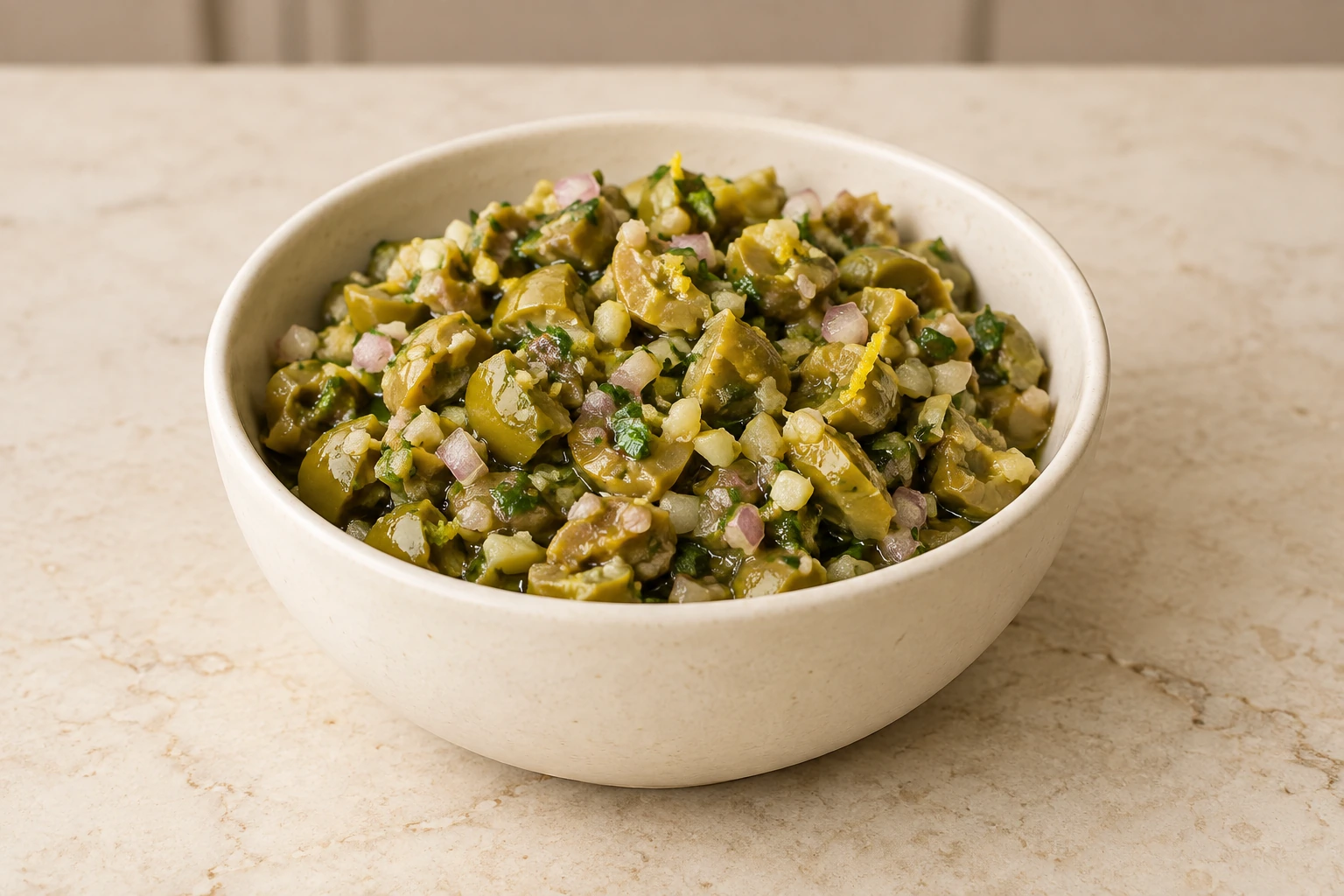
- Transfer the olive mixture to a small bowl. Stir in the extra-virgin olive oil by hand so the measured oil is not processed or heated.
- Taste the tapenade. Add sea salt only if needed because the preserved olives already contribute salt.
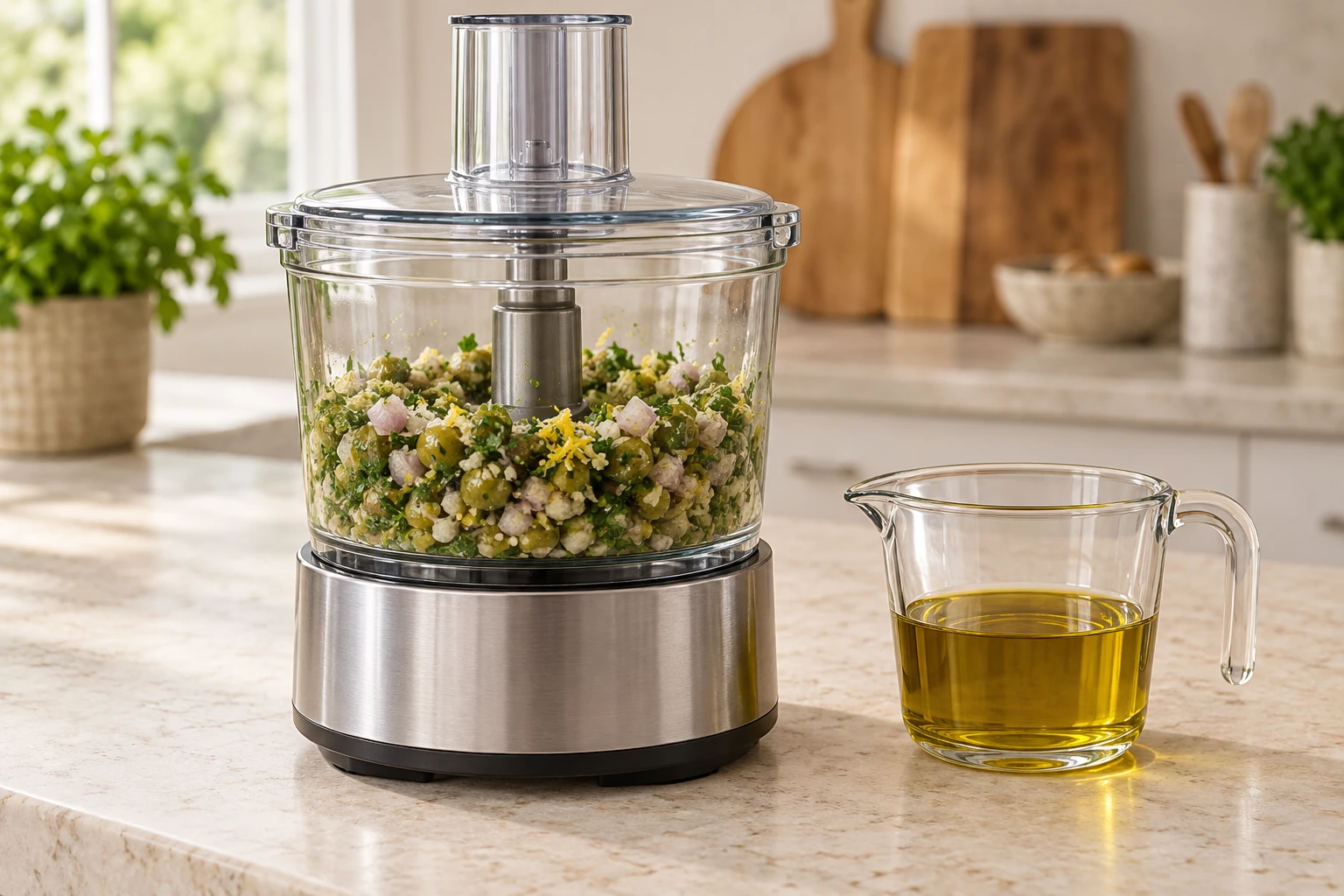
Pulse in short bursts and inspect the mixture. The olives, shallots, garlic and parsley should remain as small visible pieces, not a smooth paste. Stop when the pieces are chopped enough to spoon over the separate chicken dish.
Transfer the chopped mixture to a bowl and stir in the measured olive oil. The pieces will look coated, while a little oil may settle if the tapenade stands. Give it another stir before serving rather than promising it will form a lasting emulsion.
Storage and Serving
Refrigerate leftover tapenade and use it later in the week over vegetables or other grilled meats.
Keep it in a sealed container in the refrigerator, and give it a quick stir before serving again, since the raw olive oil can settle slightly as it sits.
Related Recipes
Serve the completed batch with the separate grilled chicken recipe.
Ingredients
Equipment
Method
- Put the green olives, shallots, garlic, parsley, lemon juice, and lemon zest in a food processor.
- Pulse until every ingredient is diced into small visible pieces. Stop before the mixture becomes a smooth paste.
- Transfer the olive mixture to a small bowl. Stir in the extra-virgin olive oil by hand so the measured oil is not processed or heated.
- Taste the tapenade. Add sea salt only if needed because the preserved olives already contribute salt.
Notes
Tried this recipe?
Let us know how it was!Frequently Asked Questions
Can I Make the Tapenade Smoother, Like a Paste?
This recipe is meant to stay chunky. Stop pulsing while the olives, shallots, garlic, and parsley are still in small visible pieces, rather than processing until smooth.
Do I Need to Cook the Olive Oil into the Mixture?
No. The measured olive oil is stirred in by hand after the food processor step, specifically so it stays raw rather than being processed or heated.
How Much Salt Should I Add?
Taste the tapenade first. The preserved olives already contribute salt, so add sea salt only if the finished tapenade actually needs it.
What Can I Serve This Tapenade with Besides Grilled Chicken?
Leftover tapenade works well over vegetables or other grilled meats later in the week, as noted above.
Can I Use a Different Olive If I Don’t Have Green Olives on Hand?
Use the green olives named in this measured recipe. Different varieties bring different flavors and levels of salt, so they are not an automatic one-for-one version here.
Do I Need a Food Processor, or Will a Blender Work?
A food processor gives you control over the short pulses. A blender can make the mixture smooth quickly, so stop at the small-piece texture required by this method.
Can I Use a Mini Food Processor Instead of a Full-size One?
Yes. A mini or standard-size food processor both work for this small batch; pulse in short bursts either way so you can watch the texture closely as it develops.
Will the Tapenade Separate If the Olive Oil Goes in Too Early?
If the oil settles while the tapenade is refrigerated, stir it through before serving. The recipe adds the measured oil after processing and does not heat it.
Recommended Equipment
- A food processor
- A small glass or ceramic mixing bowl
- A stainless-steel or wooden spoon for stirring in the olive oil
- Measuring cups and spoons
Next Steps
The Sauces, Dressings & Condiments Cookbook is coming soon. For now, use this completed batch with the separately linked grilled chicken or another Full GAPS meal you already make, and explore all recipes.

Leave a comment