

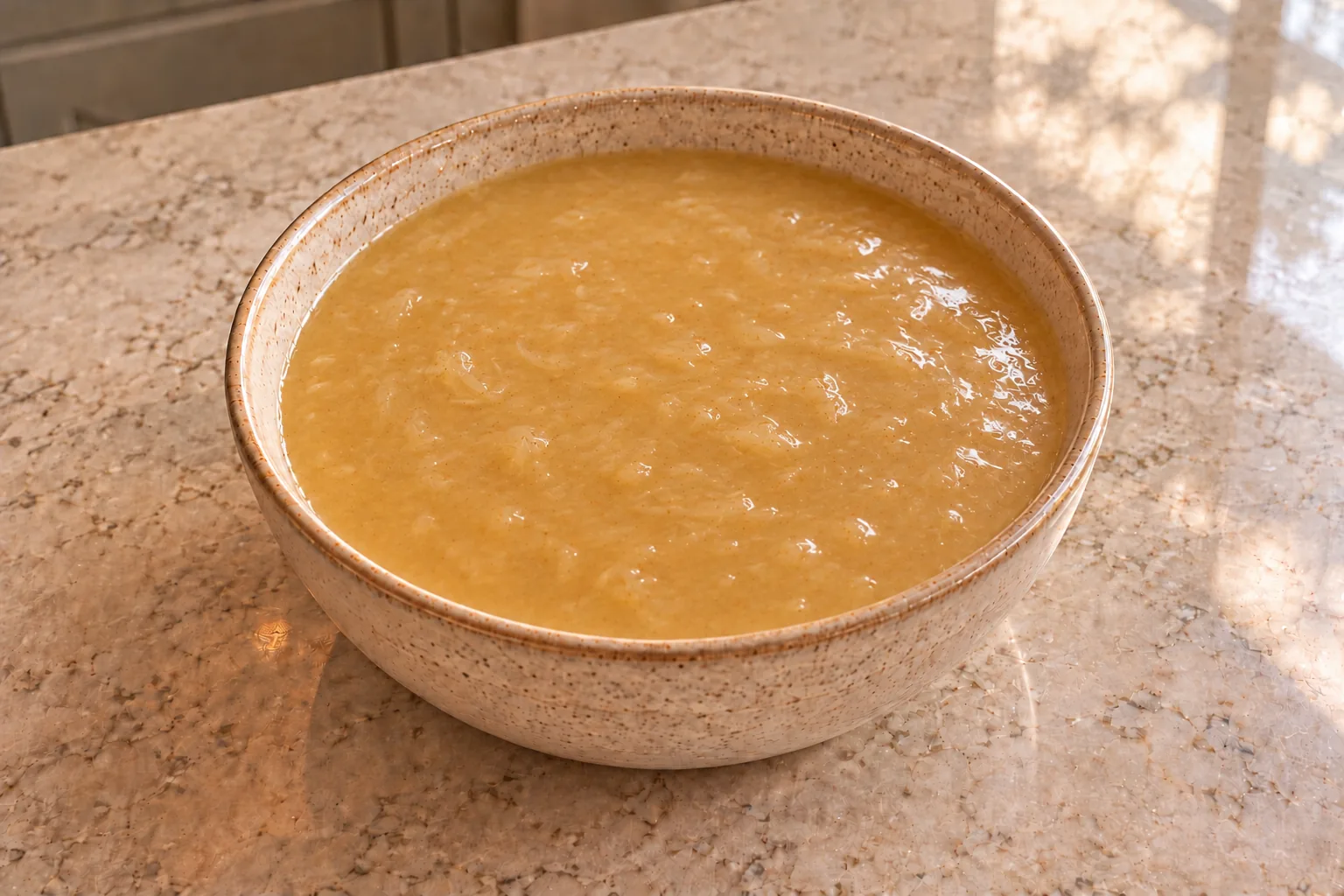
One cup of very soft cooked onion and one cup of homemade meat stock make this simple onion gravy. Blend them together, warm the mixture, and spoon it over the meat and vegetables you are already serving. The onion gives it a little body and sweetness without flour, cornstarch, or cream. Expect a pourable sauce rather than a thick roux gravy.
Our family started GAPS with the Introduction Diet in July 2024, and Intro took us about three months. A short ingredient list is useful during that stretch, when you are paying attention to how each food is prepared. This gravy starts with onion and meat stock that are already cooked. You can make it from part of a meal you have prepared, rather than starting another pot from the beginning.
Which Intro Stage Fits?
The answer depends on how the onion was cooked and which meat stock you use. Dr. Natasha’s Stage 1 soup method in Gut and Physiology Syndrome includes onion simmered in homemade meat stock until very soft, and allows the soup to be blended. When your cooked onion comes from that method, this two-ingredient base uses the same foods and preparation. Use it once well-cooked onion is part of your Intro meals.
Onion taken from a covered meat-and-vegetable stew follows the Stage 2 method. In the book, those stews cook slowly for at least two and a half hours. Onion separately cooked in homemade ghee or duck fat belongs to the Stage 3 preparation. Softness matters, but so does the cooking method; a browned, quickly fried onion is not the same as onion softened in meat-stock soup.
The plain gravy can continue through the later Intro stages and Full GAPS. The optional powdered-gelatin finish below is kept separate for Full GAPS. Naturally gelatinous homemade meat stock is still the stock used in the two-ingredient Intro base; you do not need to add a powder to make that base complete.
Ingredients
- 1 cup cooked onion, completely soft and prepared by the method appropriate to your stage
- 1 cup homemade meat stock: use the plain chicken-and-feet meat stock for early Intro. The bay-seasoned beef meat stock is a Full GAPS alternative.
Measure the onion after cooking. One raw onion is not automatically one cup of cooked onion, because size and cooking change its volume. Lift the softened onion with a slotted spoon, let loose liquid drain away, then measure the pieces. Some cooking liquid clinging to them is fine; the separate cup of stock still goes into the gravy.
The linked plain chicken-and-feet stock gives a lighter flavor and suits early Intro. The linked beef stock includes bay leaves and a handful of peppercorns; follow that complete recipe as a Full GAPS choice. Either supplies the same measured cup when its ingredients fit your meals, so the onion-to-stock ratio stays one to one.
Meat stock is made from raw, meaty animal parts with bones, joints, and connective tissue using the shorter GAPS method. Long-cooked bone broth is a separate, later food. For early Intro, follow the plain chicken-stock recipe linked above. Keep the bay-seasoned beef batch for Full GAPS; long-cooked bone broth does not replace the stock in the Intro gravy.
Start With Very Soft Onion
For the stock-soup method, the 2020 book describes simmering the vegetables in meat stock for about 25 to 35 minutes, until they are really soft. Choose onion pieces with no firm center. They should flatten easily when pressed with a fork, rather than spring back or leave a crunchy strip.
For the covered-stew method, take the onion from a stew that has completed the Stage 2 slow cook. Measure it after cooking, just as you would onion from soup. Use the onion after the stew has finished cooking, when it collapses easily under a fork.
If you are using separately fat-cooked onion at Stage 3 or later, finish its cooking first and then measure one cup. Keep the preparation appropriate to the meal you are making.
Recommended Equipment
You need a slotted spoon, measuring cups, a blender, and a small saucepan for warming. A fork or spoon is enough to stir the gravy before serving. Glass measuring cups make it easy to keep the two one-cup portions separate while you prepare the blender.
My blender is the Ninja Professional Plus Kitchen System BN801. Let the stock and cooked onion cool before blending in its pitcher, then warm the blended gravy on the stove. Secure the lid while blending and turn the machine off before opening it. The saucepan brings the gravy back to the warm serving temperature used for Intro meals.
How To Make Onion Gravy
1. Measure The Cooked Ingredients
Measure one cup of completely soft cooked onion and one cup of homemade meat stock. Allow both to cool before using the Ninja blender. If your stock has gelled in the refrigerator, gently warm it until it becomes fluid, measure the cup, and allow it to cool again before blending.
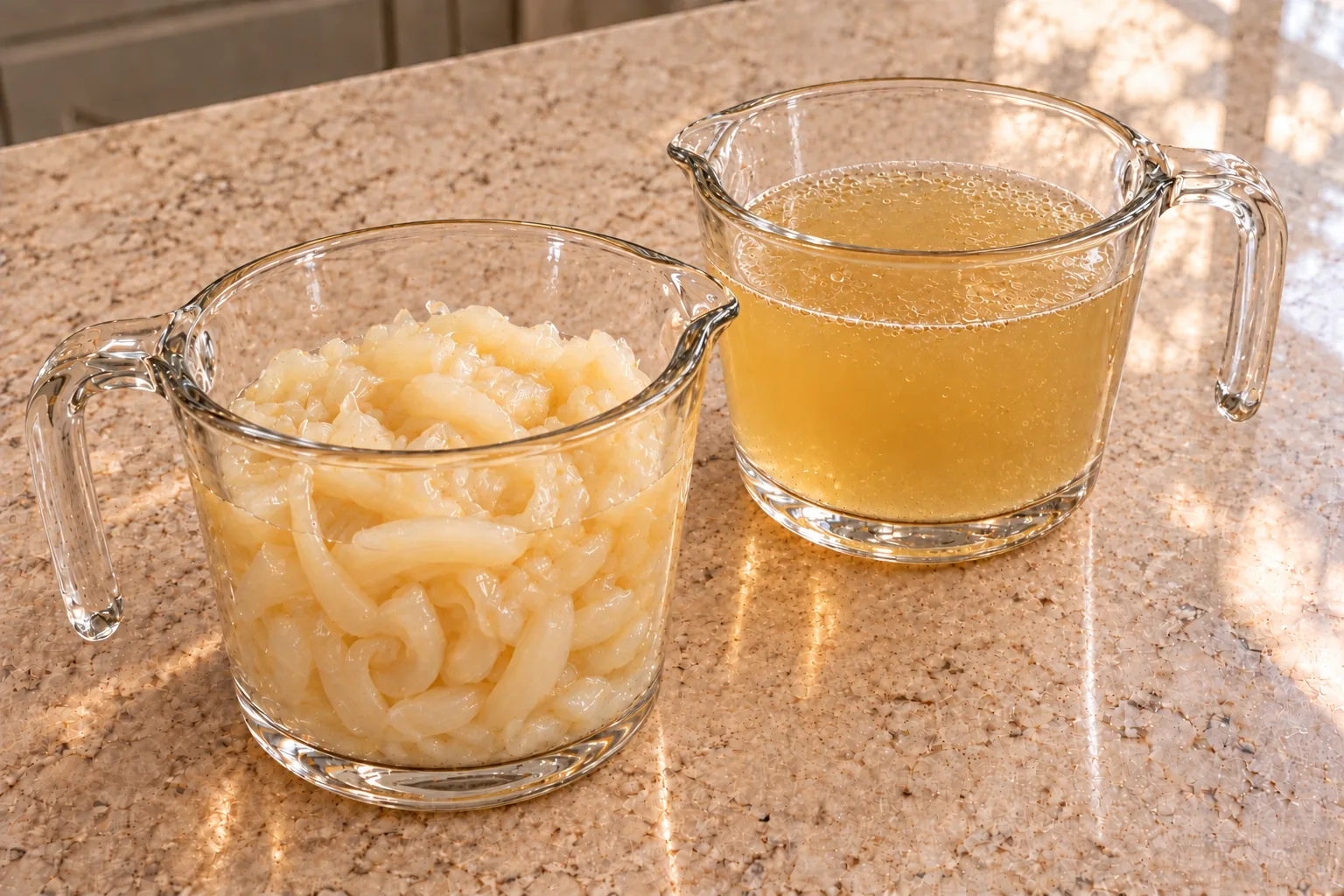
Keep the full cup of stock for the batch. A little liquid around the onion is expected, but do not replace the measured onion with a cup that is mostly cooking liquid. The soft onion pieces provide the body of the sauce.
2. Blend Until Even
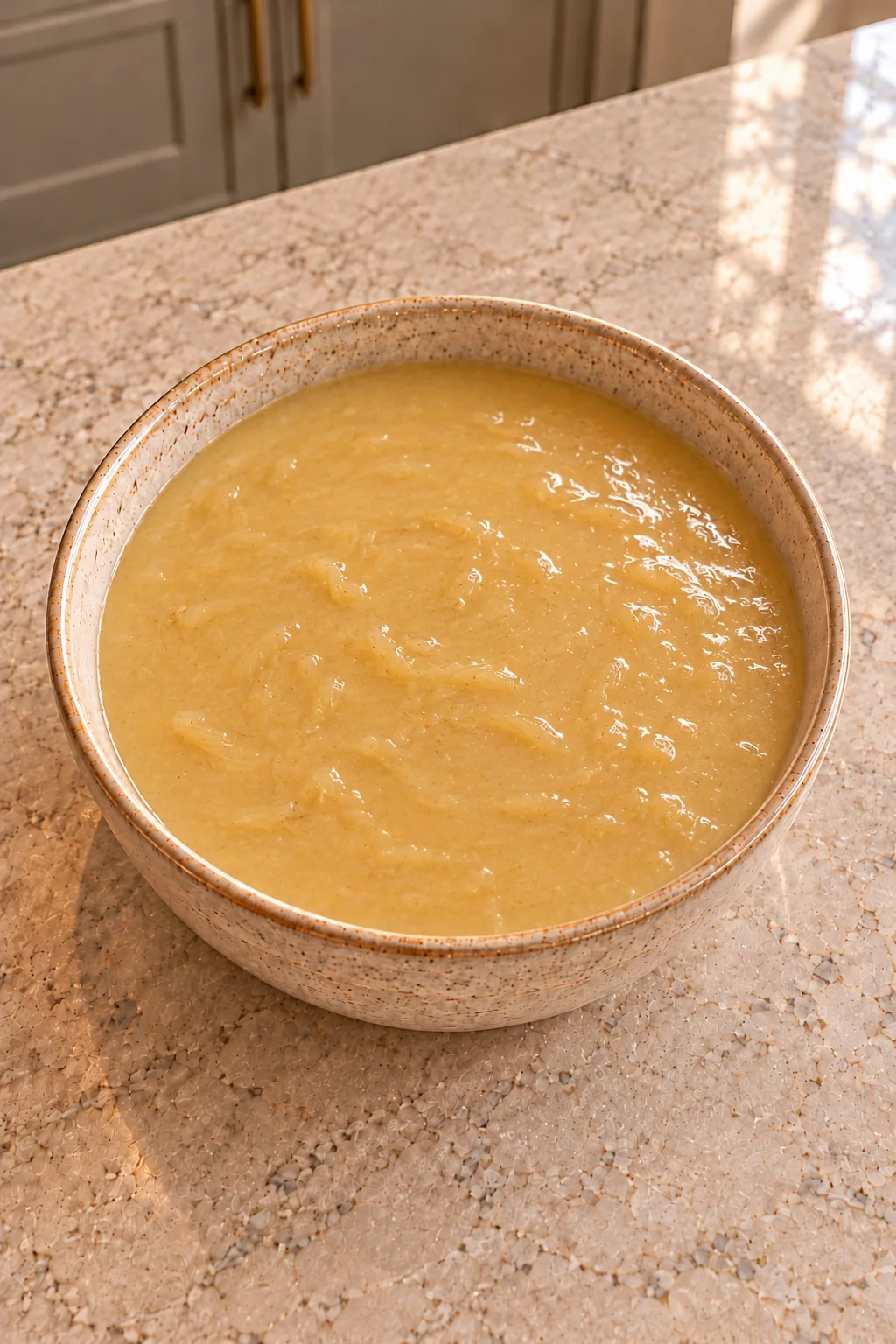
Add the onion and stock to the pitcher, secure the lid, and blend until the onion is finely puréed. The mixture should look evenly cloudy and pourable, without large onion pieces. You may still see tiny soft fibers; it does not need the perfectly smooth appearance of a starch-thickened sauce.
If you prefer a little more onion texture, pulse briefly instead of blending as thoroughly. Keep the same full cup of stock either way. A difference in blending changes the texture without changing the two measured ingredients.
3. Warm And Serve
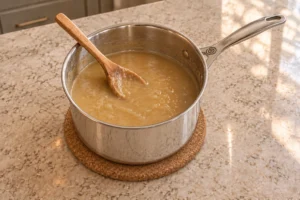
Pour the blended gravy into a small saucepan. Warm it gently on the stove, stirring along the bottom and sides. You are warming cooked ingredients, so there is no long simmer to complete at this point. Serve it warm over meat and vegetables from your current GAPS stage.
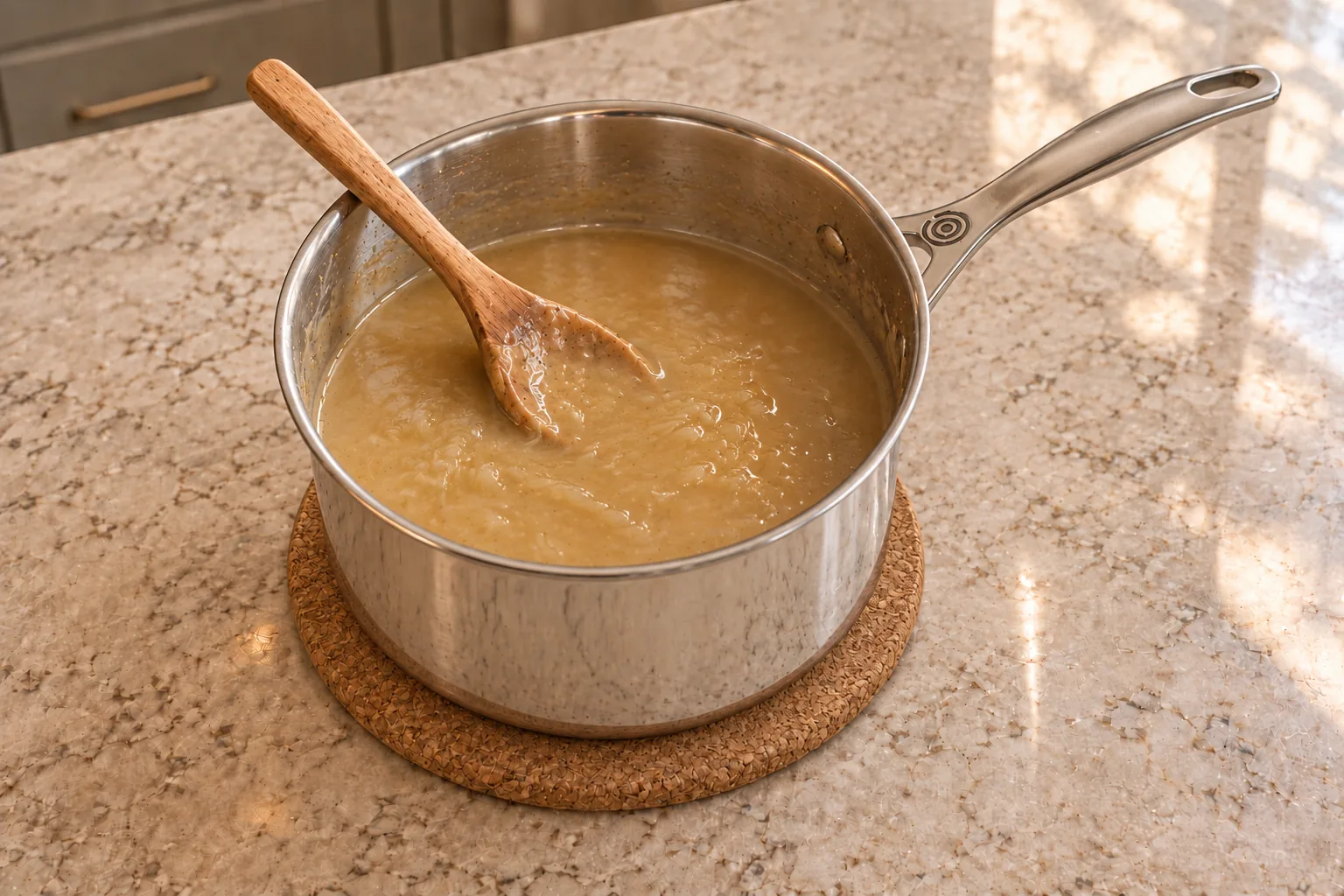
The gravy should pour easily and leave a light coating on the spoon. A little separation after a few minutes is normal for this onion-and-stock mixture. Stir it back together with a fork or spoon rather than expecting it to behave exactly like flour gravy.
Two-Ingredient Onion Gravy for the GAPS Intro Diet
Ingredients
Equipment
Method
- Measure the completely soft cooked onion and the homemade meat stock. Let them cool before using the Ninja BN801 blender.
- Blend the onion with the full measured stock until evenly cloudy and pourable. For a little texture, pulse briefly instead, keeping the same ingredient quantities.
- Transfer to a small saucepan and warm gently, stirring. Serve warm over stage-appropriate meat and cooked vegetables. Stir with a fork if the gravy separates a little on standing.
Notes
Tried this recipe?
Let us know how it was!Optional Gelatin Finish For Full GAPS
For the optional Full GAPS finish, keep the same cup of cooked onion and cup of meat stock, and add 1 tablespoon plain, unflavored bovine gelatin powder. Rachael Mamane’s Mastering Stocks and Broths supplies the measured gelatin ratio and bloom method used here.
Divide the measured cup of stock into two equal half-cup portions. Keep one cold and gently warm the other. Sprinkle the gelatin over the cold half and let it hydrate for one minute. Stir that mixture into the warm half until the gelatin dissolves. Allow the combined liquid to cool before blending it with the cooked onion in the Ninja, then warm the finished gravy in the saucepan.
Gelatin gives the gravy more body as it cools, rather than the same hot texture as a flour roux. The plain Intro gravy remains complete with just onion and meat stock.
Serving And Making Ahead
Spoon the gravy over the soft meat and cooked vegetables appropriate to your stage. It can be useful when a portion of meat needs a little more moisture on the plate. Keep the sauce warm and stir it just before spooning, especially if it has stood while you finish serving the rest of the meal.
The stock and cooked onion can be prepared ahead as parts of your other cooking. Follow their own storage directions and keep them covered in the refrigerator. When you want gravy, measure the two cups, blend the cooled ingredients, and warm the sauce. That is a smaller job than making fresh stock just for one serving of gravy.
Storage And Reheating
Refrigerate leftover gravy promptly in a shallow covered container. Reheat the portion you need gently in a saucepan, stirring until it is hot through. Some separation is expected, and stock that gels when cold will loosen again as it warms.
If you used the optional Full GAPS gelatin finish, the cold gravy may be noticeably firmer. Warm it slowly and stir rather than adding water simply because it looks set straight from the refrigerator. The original stock and onion still determine the flavor and the size of the batch.
Frequently Asked Questions
Can I Use Onion From Soup?
Yes, when the soup and onion preparation fit your current stage. For the Stage 1 method, use onion cooked in homemade meat stock until completely soft. Lift and measure one cup of onion, then add the separate measured cup of stock for the gravy.
Why Is My Gravy Quite Thin?
This is a moderately thick, pourable stock sauce. Check that you measured a full cup of soft onion pieces rather than mostly liquid, and blend them thoroughly. A little separation is normal for a sauce without a starch binder; stir it back together before serving.
Does The Stock Have To Be Chicken?
No, but the whole stock recipe needs to fit your stage. Use the linked plain chicken-and-feet stock for early Intro. The linked bay-seasoned beef stock is a Full GAPS alternative. Each uses the same one-cup measure here, so the onion-to-stock ratio stays the same.
Is The Gelatin Required?
No. The onion and meat stock make the complete base. The separately described powdered-gelatin finish is optional for Full GAPS, with its own measured addition. Leave it out of the two-ingredient Intro version.
Planning Stock-Based Meals
The upcoming Intro Stage 1–6 Batch-Cooking Guides are planned to help organize the stock, soup, and stew cooking used throughout Intro. Find current and upcoming resources in the WFLI shop. For a different roasted-vegetable sauce once you are on Full GAPS, try the Mushroom Onion Gravy With Cauliflower, which has its own ingredients and oven method.

Leave a comment