

The starchy-sweet food pattern described in the GAPS books is more specific than ordinary picky eating. During the second year, a child may narrow down to a small group of cereal, chips, bread, rice, sweetened yogurt, bananas and other sweet or starchy foods while refusing vegetables, most fruit, meat, fish and eggs. The pattern is the combination of what stays in and what drops out.[1]
Dr. Natasha Campbell-McBride describes this in the expanded Gut and Psychology Syndrome book, then explains the carbohydrate-craving mechanism in greater detail in Gut and Physiology Syndrome. Reading the two passages together gives you a practical way to recognize the pattern without confusing it with a child who simply dislikes a few foods.
The Food Pattern the Book Describes
| Foods Commonly Accepted | Food Groups Commonly Refused |
|---|---|
| Breakfast cereal | Vegetables |
| Crisps or potato chips | Fruit other than bananas |
| French fries | Meat |
| Popcorn | Fish |
| Cakes, biscuits and sweets | Eggs |
| Bananas | |
| Bread and rice | |
| Sweetened yogurt |
That is the list the book gives. What makes it useful is the shape of the diet: a narrow group of processed carbohydrates and sweet foods on one side, with several nutrient-dense food groups refused on the other.[1]
One accepted food by itself does not create this pattern. A child can love bananas, rice or yogurt without having the full list described in the book. What matters here is the broad narrowing and the repeated preference for the starchy-sweet group.
Why the Second Year Matters
The expanded book places this food narrowing in the second year, the same period in which many families remember diarrhea or constipation becoming more obvious. Looking farther back, parents may also remember colic, reflux or other digestive signs during the first year. The book connects the more visible second-year change with weaning, replacing breast milk with formula, or introducing other foods.[1]
This timing belongs to the pattern Campbell-McBride reports. It does not mean every child follows the same calendar. The value of the timeline is that it gives you a place to look: what was happening with milk feeds, solids, digestion and food acceptance when the list began to shrink?
Our GAPS digestive symptoms around weaning guide follows that timeline in detail. You can use that guide to place the changes in food choices beside the digestive changes you remember.
What the 60 to 70 Percent Figure Means
Campbell-McBride reports that about 60 to 70 percent of the autistic children she examined in her clinical practice had an extremely limited diet, sometimes made up of only two or three foods. She also says pronounced food fussiness was common in that group. For children with other GAPS conditions, she describes the same typical narrowing as generally less extreme.[1]
The percentage is specific to autistic children in the author’s clinical experience. The next sentence broadens the pattern, rather than the percentage, to other GAPS conditions. It is an observation from her practice, not a population-wide percentage or a diagnostic test for autism.
How the 2020 Book Explains the Cravings
In Gut and Physiology Syndrome, Campbell-McBride describes sugar, flour and other processed carbohydrates as addictive foods. She says abnormal gut flora feeds on those carbohydrates and produces opiates, endorphins and other chemicals that affect the brain, mood and food preference. In her account, the child becomes caught in a cycle of craving the same foods that feed the abnormal flora.[2]
The carbohydrate-digestion chapter adds another part of the explanation. Double sugars and starch require digestive work that is impaired when the gut lining and its enterocytes are unhealthy. Unabsorbed sugars and starch remain available to bacteria, Candida and other microbes. Campbell-McBride therefore removes double sugars, grains, starchy vegetables and other starches during the healing period instead of treating them as gentle foods for a damaged gut.[2]
This is how Campbell-McBride connects the food list with her gut-flora explanation. A food record can show which foods remain in a child’s diet, but it cannot establish the cause of that child’s food restriction.
How to Record the Pattern Clearly
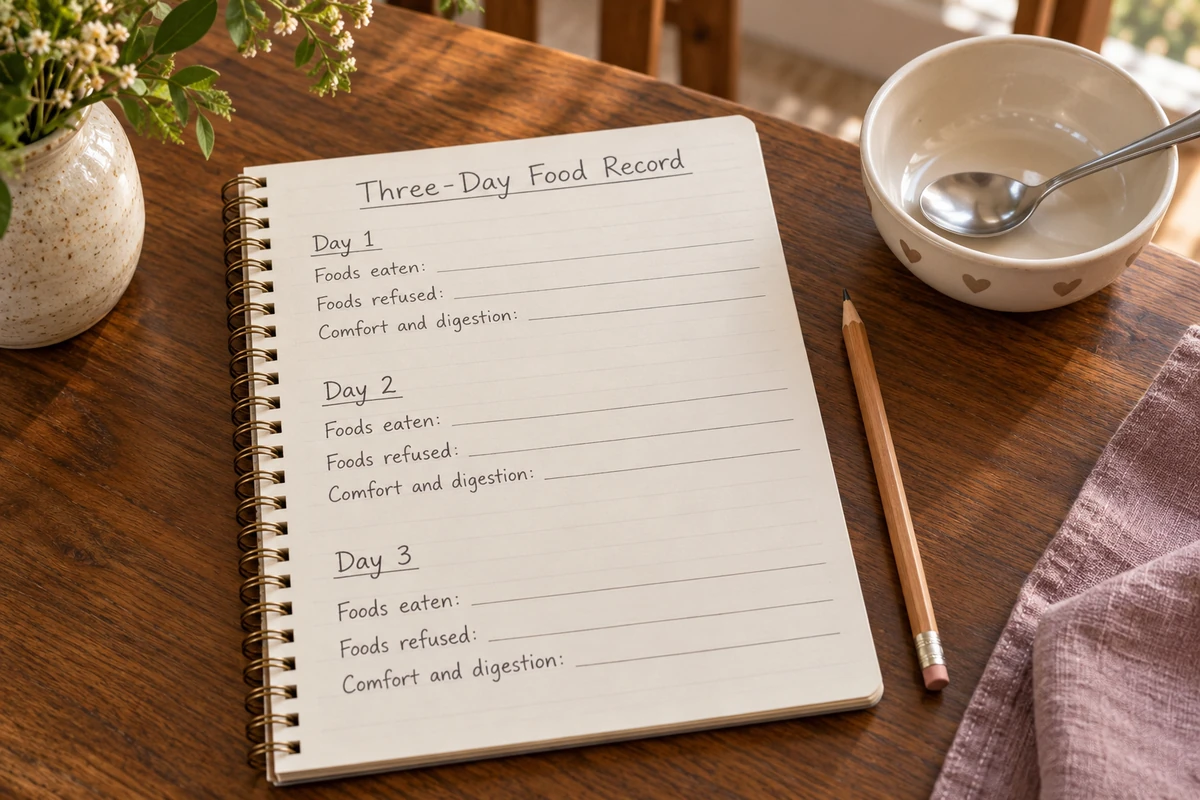
Write down what your child actually eats for three ordinary days. Use the exact food and preparation rather than a broad label. “Sweetened strawberry yogurt” is more useful than “dairy,” and “white toast” is more useful than “breakfast.” Then sort the record into four questions:
- How many foods are reliably accepted? Count prepared foods, not every brand or shape as a separate food.
- Which food groups are repeatedly refused? Compare the list with vegetables, fruit other than bananas, meat, fish and eggs.
- When did the narrowing begin? Note the child’s age and what was changing with weaning, formula, solids and digestion.
- What digestive changes were present? Record the stool pattern, bloating, pain, reflux and earlier first-year signs you actually observed.
A few ordinary days give you something concrete to look back at. You can see repeated choices and refusals without having to rely on the meal that felt hardest.
Our Family Experience With Picky Eating
Three of our children were picky and resisted food because it was not what they wanted. Textures were not an issue in our house, and we did not document the exact second-year starchy-sweet list described above. I can share how we handled those refusals, while the specific second-year food pattern above comes from the book.
What helped us was making one stage-appropriate family meal, keeping off-GAPS alternatives out of the house and waiting through the refusals instead of cooking a second menu. Everyone stayed on the same stage. That was the practical routine that worked for our family; it is different from claiming that every refusal has the same cause.
Planning Your Next Step
Once you have a three-day record, look at the range of foods and the changes over time. The record helps describe what is happening; it does not tell you by itself which feeding approach your child needs.
Questions about taste, mouth comfort, sensory responses, and chewing or swallowing deserve attention alongside the food list. If choices keep shrinking, or meals involve pain, coughing, choking, or poor growth, ask your child’s clinician or a feeding specialist for an assessment. Do not use our household approach to remove the few foods a child with a feeding disorder can currently eat.[3]
Turn the Food List Into a Plan
The Picky Eater Reset helps you record accepted foods, notice category-level gaps and build the next family meals without starting from a blank page.
Frequently Asked Questions
Does One Starchy Food Mean My Child Has This Pattern?
No. The passage describes a diet narrowed to a small starchy-sweet group while vegetables, most fruit, meat, fish and eggs are refused. One favorite food does not reproduce that whole pattern.[1]
Does the 60 to 70 Percent Figure Apply to Every Child?
No. Campbell-McBride gives that figure for autistic children she examined in her clinical practice. She describes a similar but often less extreme pattern in children with other GAPS conditions.[1]
Why Does the Book Focus on Starch and Sugar?
The 2020 book says processed carbohydrates feed abnormal gut flora, contribute to microbial chemical production and become part of a craving cycle. It also explains that starch and double sugars are difficult to handle when the enterocytes and gut lining are impaired.[2]
What Should I Write Down First?
Start with three ordinary days of food. Record the exact preparations, the food groups refused, the child’s age when the narrowing began and the digestive changes you remember from the same period.
Your Next Step
Start with three ordinary days of notes, then use the weaning timeline guide to place the food changes beside the digestive history. Bring the record to your child’s clinician or feeding specialist if the range is becoming very limited or eating is uncomfortable.
References
- Campbell-McBride, Natasha. GAPS: Gut and Psychology Syndrome, expanded edition (2013), digestive-problems and second-year picky-eating passage. Verified against the supplied second German edition (2015).
- Campbell-McBride, Natasha. Gut and Physiology Syndrome (2020), “Food Addictions,” carbohydrate-digestion and processed-carbohydrate sections.
- American Speech-Language-Hearing Association. Pediatric Feeding and Swallowing, signs, assessment, and individualized management.

Leave a comment