

The first GAPS book says digestive problems begin around weaning in the majority of the child and adult histories it describes, meaning the period when breast milk is replaced by formula and other foods are introduced. It also says many parents remember colic, vomiting, reflux or other digestive signs in the first year when they look back carefully. Weaning is therefore a major point on the timeline, but it is not the only place the source tells you to look.[1]
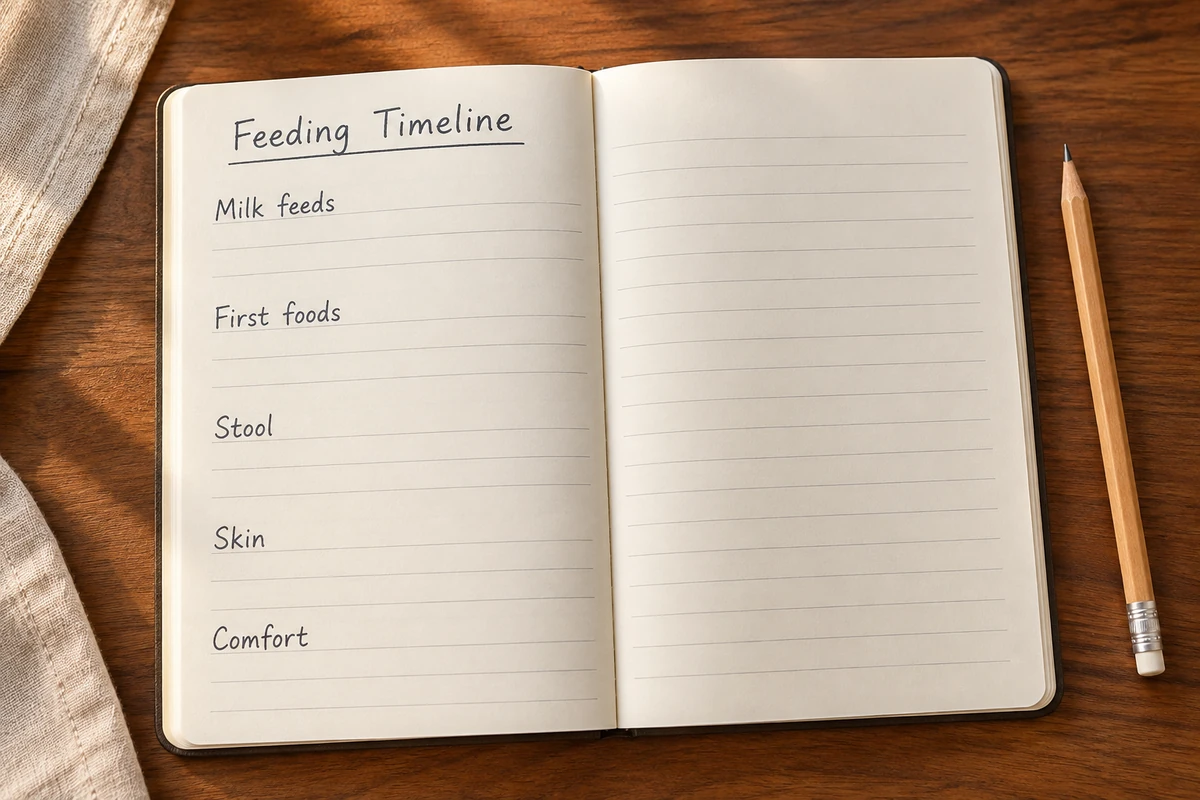
When feeding changes and symptoms arrive close together, a simple timeline can help you keep the details straight. Start with what you remember, then add dates or notes where you have them. The aim is a useful record, not a perfectly complete history.
The Current GAPS Sequence
| Point in the Timeline | What the 2020 Book Describes | Related Record to Gather |
|---|---|---|
| Before birth | The baby’s gut flora begins forming during pregnancy through uterine and placental flora | Pregnancy history and major exposures already documented |
| Birth | Natural birth adds parental flora through the birth canal; cesarean birth changes that route | Birth route and immediate feeding history |
| Breastfeeding | Breast milk supplies microbes and food for the baby’s developing gut flora | Breastfeeding duration and any formula introduction |
| Weaning and solids | Introducing solid food is another important stage in gut-flora development | Foods, formula, stool, comfort, skin and feeding changes |
In Gut and Physiology Syndrome, Dr. Natasha Campbell-McBride describes pregnancy, birth, breastfeeding and solid-food introduction as connected stages in the development of the child’s gut flora. The detailed Baby GAPS weaning method remains in the first book, while the newer book provides the wider sequence.[2]
The guide to where a baby’s gut flora comes from explains pregnancy, birth, and breastfeeding in more detail. This page stays with the digestive-symptom timeline around weaning.
The Symptoms Named in the First Book
The first GAPS book names colic, bloating, flatulence, diarrhea, constipation, feeding difficulties and malnourishment as digestive problems seen to different degrees in the conditions it covers. It says these symptoms are often explained as a result of unusual eating habits instead of being investigated as part of a larger pattern.[1]
That list is not a statement that every baby with gas, reflux or constipation has a GAPS condition. It is the group of symptoms the book asks readers to place on the timeline when they are tracing a documented GAPS history.
Why Weaning Is a Major Transition
The older book says that, in the majority of the child and adult cases it discusses, digestive problems begin at weaning or when breast milk is replaced with formula and other foods are introduced. That is the source’s pattern. It does not say every digestive problem begins at weaning, and it does not say the transition erases what happened during pregnancy, birth or breastfeeding.[1]
The 2020 book explains why solid-food introduction matters in its own framework. It calls solids another important stage in gut-flora development and says processed grains and processed milk used as common weaning foods cause further damage in the gut flora, gut wall and immune system. It directs the detailed food order back to the New Baby chapter.[2]
Use the GAPS starting-solids timeline for the breastfed and bottle-fed starting lines. Use the complete Baby GAPS first-food guide for the food sequence itself.
Earlier Signs May Precede the Weaning Memory
The first book says parents may clearly remember diarrhea or constipation beginning in the child’s second year. When they think back further, they may also remember colic, vomiting, reflux or other digestive symptoms during the first year. The clearest memory may mark when the problem became unmistakable, not necessarily the first sign on the timeline.[1]
Write the earlier signs down separately from the later stool or feeding changes. Do not move an uncertain memory into a precise month just to make the timeline look complete.
What to Record Around Weaning
| Record | Useful Detail |
|---|---|
| Milk feeding | Breast milk, formula or both, and when the balance changed |
| First solid foods | Exact food, prepared form, date or best-known period |
| Stool | Diarrhea, constipation, alternating patterns, visible undigested food, color, smell or texture when remembered |
| Comfort | Colic, bloating, gas, vomiting or reflux |
| Feeding | Refusal, narrowing food range or difficulty moving into solids |
| Skin and other signs | Rash or eczema appearing during the same period |
| Other events | Illness, medication, major diet change or another dated health event |
Use exact facts when you have them and plain estimates when you do not. “Around the second year” is more trustworthy than an invented date.
How the Adult Timeline Is Built
For an adult with a GAPS condition, the first book says to speak with the person’s parents when possible and collect a detailed history from birth. Adults usually cannot remember their own infancy, so another person’s recollection may be the only record of colic, reflux, feeding changes or the weaning period.[1]
The source also names a different adult route. When there is no childhood history of gut problems, it says digestive symptoms may begin later in life after a specific health-damaging event. That later route should not be rewritten as a weaning-origin story simply because the person now has a GAPS condition.[1]
What the Timeline Can and Cannot Show
A timeline can show sequence: what feeding looked like, which symptoms appeared, and what changed around the same time. It can help you notice that earlier colic or reflux preceded a later stool or food problem. It cannot turn a remembered sequence into proof that one single food or one single day caused everything that followed.
That distinction keeps the record useful. The GAPS sources give a pattern to investigate. Your job is to record the history honestly, including the parts that remain uncertain.
Keep the Record Useful in a Busy House
With six children, I know a detailed record only helps if it is easy to maintain. Use one page for the larger timeline and a separate daily log for current foods, stool, skin and comfort. The historical page explains how you arrived here. The daily page shows what is happening now.
Track the Current Feeding Window Clearly
My Baby Feeding Chart + Reaction Log brings together the food, prepared form, amount, timing, and response. It is listed in the WFLI shop.
Frequently Asked Questions
Does GAPS Treat Weaning as the Only Starting Point?
No. The first book says digestive problems begin around weaning in the majority of cases it discusses, then points to earlier first-year symptoms and a separate later-onset adult route. The 2020 book adds the connected pregnancy, birth, breastfeeding and solid-food sequence.[1][2]
What If Symptoms Started Before Weaning?
That is part of the pattern the book asks readers to record. It specifically says parents may remember colic, vomiting, reflux or other digestive symptoms in the first year when they look back.[1]
Does This Timeline Apply to Adults?
Yes. The book asks adults to build a history from birth with help from their parents when possible. It also distinguishes adults whose digestive problems began later after a health-damaging event.[1]
Does a Timeline Prove What Caused the Symptoms?
No. It shows the order in which feeding changes, symptoms and other events were remembered or recorded. This article uses that sequence to preserve the GAPS pattern without turning timing alone into proof of one cause.
References
- Campbell-McBride, Natasha. Gut and Psychology Syndrome (2004), Part 1, “All Diseases Begin in the Gut”, English edition.
- Campbell-McBride, Natasha. Gut and Physiology Syndrome (2020), “Gut Flora,” “Where Does the Gut Flora Come From?” and the introduction-of-solids passage.

Leave a comment