

Gut and Physiology Syndrome describes two different kidney-problem paths. The first concerns damaged kidney function in the book’s gut-wall and protein-digestion framework. The second concerns kidney stones and the way the body handles minerals. Keeping those paths separate makes the food guidance, symptom tracking, and existing-restriction questions much easier to follow.[1]
This guide gives you the map. The focused articles linked below explain the mechanisms, food details, the GAPS book’s active-stone guidance, and the symptom checklist without repeating every answer here.
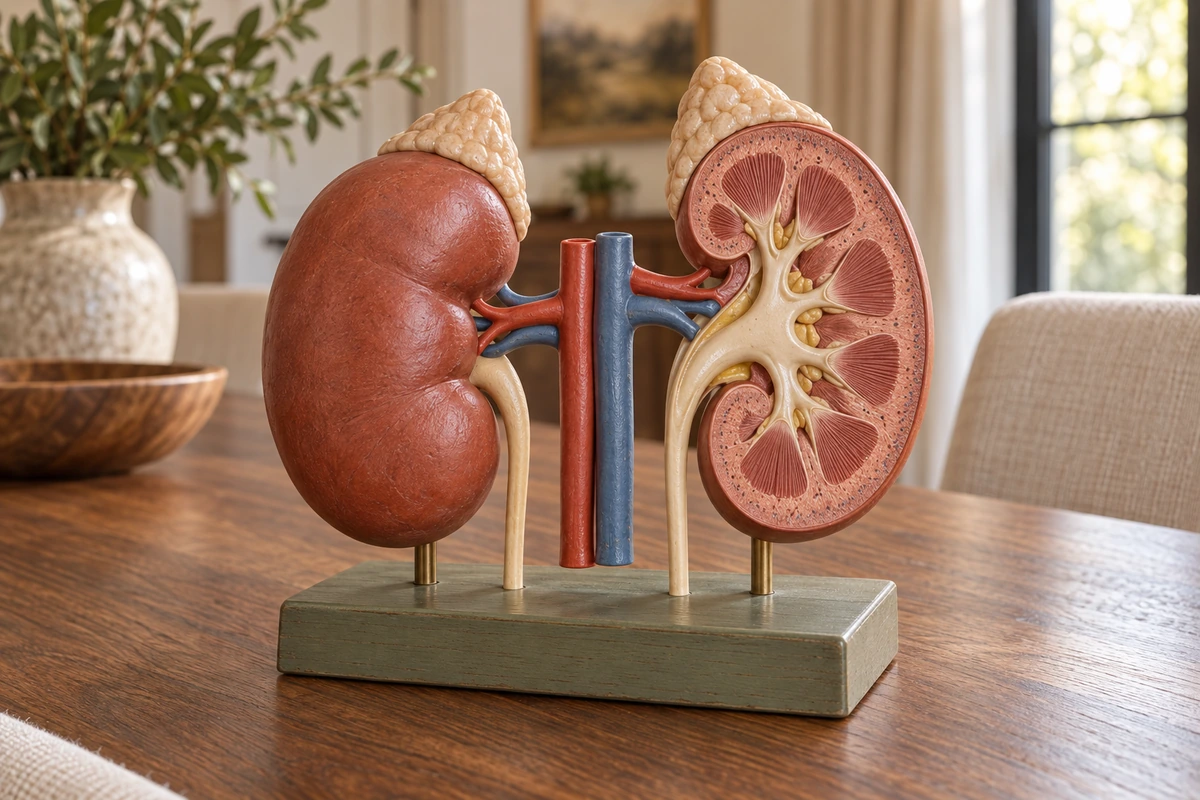
The Damaged-Kidney-Function Path
Campbell-McBride’s first path begins with a damaged, porous gut wall and proteins that are absorbed before digestion is complete. In the book’s account, the body tries to remove that material through urine, creating an obstruction and an inflammatory or autoimmune response. The book also distinguishes plant and animal proteins within this framework. Read the kidney mechanism guide for that full chain. This GAPS explanation is not permission to exceed or discard a protein limit already set for diagnosed kidney disease.[1]
The Kidney-Stone Path
The second path centers on mineral handling. The 2020 book connects kidney-stone formation with low animal-fat intake, fat-soluble vitamins K2, D, and A, abnormal gut flora, and the handling of calcium, nitrogen, and uric acid. It names calcium oxalate and calcium phosphate as the most common stones, then uric acid and other less-common materials. The kidney mechanism guide explains that chain and the related GAPS oxalate and magnesium discussion.[1][4]
A symptom list or food history cannot identify a stone type. Current NIDDK guidance separates calcium oxalate, calcium phosphate, uric acid, and cystine stones, and says the identified type affects which sodium, protein, calcium, and oxalate changes may fit.[7]
How GAPS Routes the Two Paths
For damaged kidney function, Gut and Physiology Syndrome routes readers through the Introduction Diet, with gelatinous meats emphasized ahead of muscle meats in the initial stages. After Intro, it calls for Full GAPS for several years at minimum and says some people may need it for most of their lives because the kidneys may remain vulnerable.[1]
For stones, the same section emphasizes animal fats, fat-soluble vitamins, and support for the gut flora and mineral metabolism. The official FAQ separately addresses oxalate-rich plants and says they can be introduced gradually as the gut heals and the flora changes.[4]
Read the kidney foods and support guide for the Intro, No-Plant, Full GAPS, food, organ-meat, hydration, oxalate, active-stone, and restriction details. Use the kidney symptoms and gut-signs guide to organize the signs without turning them into a diagnosis.
Where Existing Kidney Restrictions Fit
The official GAPS FAQ answers a question about protein, potassium, and salt by returning to the damaged-gut-wall mechanism. It emphasizes gelatinous meats early, says damaged kidneys lose potassium and other minerals, and recommends natural unprocessed salt instead of processed salt.[2]
That answer does not supply a new laboratory result or individualized allowance for someone with diagnosed chronic kidney disease. Current NIDDK guidance notes that protein, potassium, sodium, phosphorus, and liquid needs can change with kidney function and treatment. It also says there is no single meal plan for everyone with CKD.[5]
Keep the GAPS food and preparation guidance intact while preserving the restriction already set for your own kidney function, dialysis status, laboratory values, or medicine plan. This article does not recalculate or remove it.
The Nephrotic-Syndrome Limit
The official GAPS FAQ is unusually clear here: Campbell-McBride says she has no direct experience treating nephrotic syndrome, says it can have many causes, and calls identifying and addressing the cause essential.[3]
NIDDK likewise describes nephrotic syndrome as a group of findings that can come from several kidney-specific or whole-body causes. It says urine tests are used to diagnose nephrotic syndrome. Blood tests may also be ordered to check for low protein and related problems; after diagnosis, blood tests, imaging, and a kidney biopsy may be used to find the cause and check kidney function.[8] Do not convert a GAPS kidney article into a nephrotic-syndrome verdict.
When a Stone May Be Passing
The GAPS book describes passing-stone pain in the back or side, with nausea, feeling feverish, and anxiety possible. Read the kidney foods and support guide for the full attributed food, drink, magnesium, Epsom, bath, and doctor-prescribed-antispasmodic wording.[1]
NIDDK’s current symptom page adds sharp back, side, lower-abdominal, or groin pain; blood in the urine; painful or changed urination; inability to urinate or only a small amount; cloudy or bad-smelling urine; nausea, vomiting, fever, and chills. It tells readers to see a health professional right away for the listed stone symptoms because they may indicate a stone or a more serious condition.[6]
What Recovery Means in the Source
Campbell-McBride says kidneys can regenerate when improperly digested proteins and toxins stop reaching them. She also says that, for the majority who stay on the GAPS Diet permanently, the diet removes the basis of stone formation.[1] Those are the author’s recovery claims. They are not a promised result for one reader, one diagnosis, or one timetable.
The 90-Day Family Food Diary gives families one place to record meals and daily observations.
Continue Through the Kidney Guides
- What Causes Kidney Problems in the GAPS Framework explains the two mechanisms and their limits.
- GAPS Diet for Kidney Problems: Foods and Support gives the complete food and active-stone guidance.
- Kidney Problems Symptoms and Gut Signs organizes the kidney-function, stone, urinary, oxalate, and whole-body signs.
Frequently Asked Questions
Does GAPS Describe One Kidney Problem?
No. It separates damaged kidney function in its gut-wall and protein-digestion account from kidney stones in its mineral-handling account.[1]
Should I Remove Salt?
The GAPS source recommends natural unprocessed salt and excludes processed foods with processed salt. That does not replace an individualized sodium limit already set for diagnosed kidney disease.[2][5]
Does GAPS Claim Direct Experience With Nephrotic Syndrome?
No. Campbell-McBride says she has no direct experience treating it and emphasizes identifying its cause.[3]
Can Symptoms Identify a Stone Type?
No. The stone type affects food guidance, and a symptom checklist cannot determine whether a stone is calcium oxalate, calcium phosphate, uric acid, cystine, or another type.[7]
References
- Campbell-McBride, N. Gut and Physiology Syndrome (2020), “Kidney problems,” pp. 429–430.
- Campbell-McBride, N. GAPS FAQs, Q33, compromised kidney function and protein, potassium, and salt.
- Campbell-McBride, N. GAPS FAQs, Q67, nephrotic syndrome.
- Campbell-McBride, N. GAPS FAQs, “Oxalates,” Q1.
- National Institute of Diabetes and Digestive and Kidney Diseases. “Healthy Eating for Adults With Chronic Kidney Disease.” Accessed October 7, 2026.
- National Institute of Diabetes and Digestive and Kidney Diseases. “Symptoms and Causes of Kidney Stones.” Last reviewed May 2017.
- National Institute of Diabetes and Digestive and Kidney Diseases. “Eating, Diet, and Nutrition for Kidney Stones.” Accessed October 7, 2026.
- National Institute of Diabetes and Digestive and Kidney Diseases. “Nephrotic Syndrome in Adults.” Accessed October 7, 2026.

Leave a comment