

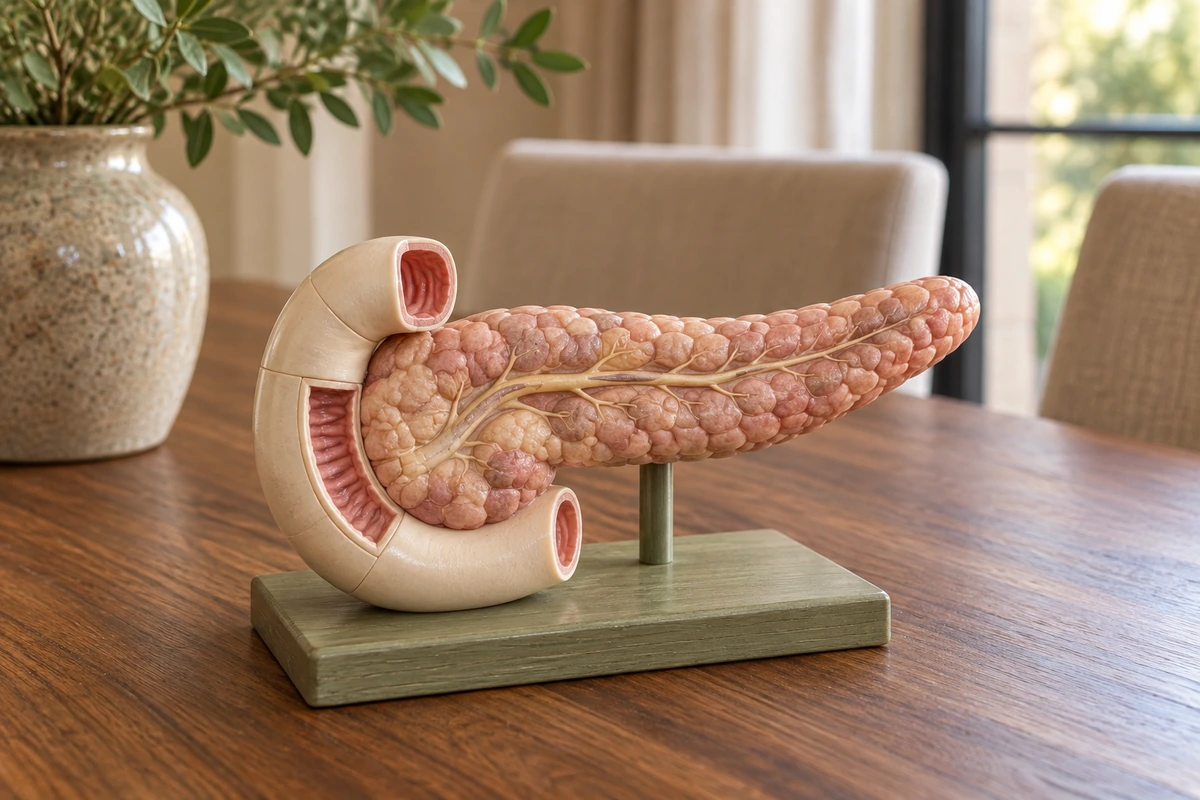
The GAPS framework explains type 2 diabetes through a chain of changes rather than one isolated blood-sugar reading. Processed carbohydrates drive repeated glucose and insulin surges.[2] Cells become less responsive to insulin.[3] Insulin stays high, fat storage and inflammation increase, and the gut environment changes alongside the metabolic picture.[1] Stress, cortisol, magnesium, and glucagon add important pieces to that mechanism.
The Starting Point: Processed Carbohydrates
Gut and Physiology Syndrome attributes type 2 diabetes to insulin resistance caused by long-term consumption of processed carbohydrates.[2] Its examples are the foods that can dominate an ordinary modern day: sugar and flour, breakfast cereal, processed bread, pasta, sweet drinks, snacks, desserts, and other fast-digesting starches.[1]
The CDC explains the insulin-resistance sequence in similar mechanical terms. Repeated high blood glucose prompts the pancreas to release more insulin. Over time, cells respond less effectively, glucose remains high, and the pancreas keeps working harder to produce enough insulin.[3]
What Chronically High Insulin Does
GAPS places type 2 diabetes under metabolic syndrome, which it describes as a state of chronically high insulin. The book calls insulin both a fat-storage hormone and a pro-inflammatory hormone. In that model, an insulin level that stays high helps explain why type 2 diabetes often appears beside weight gain, hypertension, and other metabolic problems.[1]
The CDC also notes that excess glucose is stored first in the liver and muscles, then as body fat when those stores are full. It makes an important distinction, though: a person does not have to be overweight to have insulin resistance.[3] Weight is one possible sign of the mechanism, not a visual diagnosis.
The Magnesium and Blood-Pressure Piece
The GAPS book links frequent processed-carbohydrate consumption with magnesium deficiency. It then connects low magnesium with blood vessels that do not relax normally and with the high blood pressure commonly seen beside metabolic syndrome.[4] The source also connects magnesium problems with headaches, muscle cramps, restless legs, mood changes, and difficulty concentrating.
That does not make any one symptom proof of magnesium deficiency or diabetes. It explains why GAPS treats mineral status, blood pressure, and the diet that preceded them as connected parts of the same metabolic picture.
Where Gut Flora Fits
GAPS says processed carbohydrates reduce beneficial microbes and encourage pathogenic organisms. The book connects that altered gut flora with the inflammatory, toxic, and nutritional burden surrounding metabolic syndrome.[1]
The microbiome connection is also an active research area outside GAPS. A 2025 systematic review of 58 observational studies reported recurring differences in gut-microbiome composition and diversity between people with type 2 diabetes and healthy controls.[5] That supports taking the gut environment seriously without reducing type 2 diabetes to a single microbe or probiotic.
Stress, Cortisol, and Blood Glucose
Gut and Physiology Syndrome describes cortisol as one of the main hormones involved in chronic stress. It says dysregulated cortisol can keep blood glucose elevated and help create the conditions for metabolic syndrome.[6]
A review of stress and type 2 diabetes describes the same broad connection through glucocorticoids, hyperglycemia, insulin resistance, and pancreatic beta-cell strain.[7] Diet remains central to the GAPS route, but the source does not pretend that ongoing stress has no effect on blood-sugar regulation.
Insulin, Glucagon, and the Source Emphasis on Fat
The GAPS FAQ uses the opposition between insulin and glucagon to explain why it emphasizes natural fat and animal protein while removing processed carbohydrates.[10] Glucagon helps protect against low blood glucose and stimulates the liver to release or make glucose when needed.[8]
The FAQ incorrectly places glucagon production in the liver.[10] Current physiology places its secretion in the alpha cells of the pancreas, while the liver is a major site of glucagon’s action.[8] Correcting that anatomical detail does not change the practical GAPS instruction to remove the processed-carbohydrate pattern and build meals around nutrient-dense foods, protein, and natural fat.
How the Mechanism Shapes the GAPS Route
GAPS removes the processed carbohydrates it identifies as the main dietary driver, uses Full GAPS as the common starting route when severe digestive symptoms are absent, and brings in Intro when significant digestive problems also need attention.[9]
Use the type 2 diabetes food and starting-route guide for the exact fat, honey, craving, juice, magnesium-supplement, blood-glucose, ketone, and medication boundaries. The complete type 2 diabetes and GAPS guide explains the source’s reversal and long-term progress language.
If you want a guided introduction to the wider GAPS approach, my Understanding & Preparing for the GAPS Diet course is in the WFLI shop catalog.
Frequently Asked Questions
Is Insulin Resistance the Same as Type 2 Diabetes?
Insulin resistance is the underlying process. Type 2 diabetes develops when that process has advanced far enough that blood glucose remains too high and the pancreas can no longer compensate adequately.[3]
Does the Gut-Flora Connection Mean Probiotics Are Enough?
No. GAPS treats abnormal gut flora as one part of the metabolic picture. Its central dietary step is removing processed carbohydrates while rebuilding meals around the foods in the protocol. Fermented foods and other gut support belong inside that larger route.
How Does Stress Fit If Diet Is the Main GAPS Focus?
The book identifies processed carbohydrates as the main dietary driver of type 2 diabetes and also describes chronically elevated cortisol as another way blood glucose can stay high. Both can be true in the same person, which is why the broader GAPS protocol includes daily habits and stress load alongside food.[6]
References
- Campbell-McBride, N. Gut and Physiology Syndrome (2020), “Metabolic syndrome,” pp. 428–430.
- Campbell-McBride, N. Gut and Physiology Syndrome (2020), “Diabetes, type two,” pp. 414–415.
- Centers for Disease Control and Prevention. “About Insulin Resistance and Type 2 Diabetes.” Accessed October 6, 2026.
- Campbell-McBride, N. Gut and Physiology Syndrome (2020), p. 430.
- Chong, S., M. Lin, D. Chong, S. Jensen, and N. S. Lau. “A systematic review on gut microbiota in type 2 diabetes mellitus.” Frontiers in Endocrinology, 2025.
- Campbell-McBride, N. Gut and Physiology Syndrome (2020), “Stress,” p. 386.
- Sunena and Dina Nath Mishra. “Stress Etiology of Type 2 Diabetes.” 2022.
- Quesada, I., E. Tudurí, C. Ripoll, and A. Nadal. “Physiology of the pancreatic alpha-cell and glucagon secretion.” Journal of Endocrinology, 2008.
- Campbell-McBride, N. Gut and Physiology Syndrome (2020), p. 430.
- Campbell-McBride, N. “Weight loss and weight gain,” Q4, GAPS FAQs.

Leave a comment