

The apples and onion soften together while the pork chops brown in a second pan. A small amount of pure coconut flour gives the meat-stock pan sauce body; cider vinegar keeps the butter and apple from tasting too sweet. Serve the chops as soon as the sauce comes together so the browned edges stay noticeable.
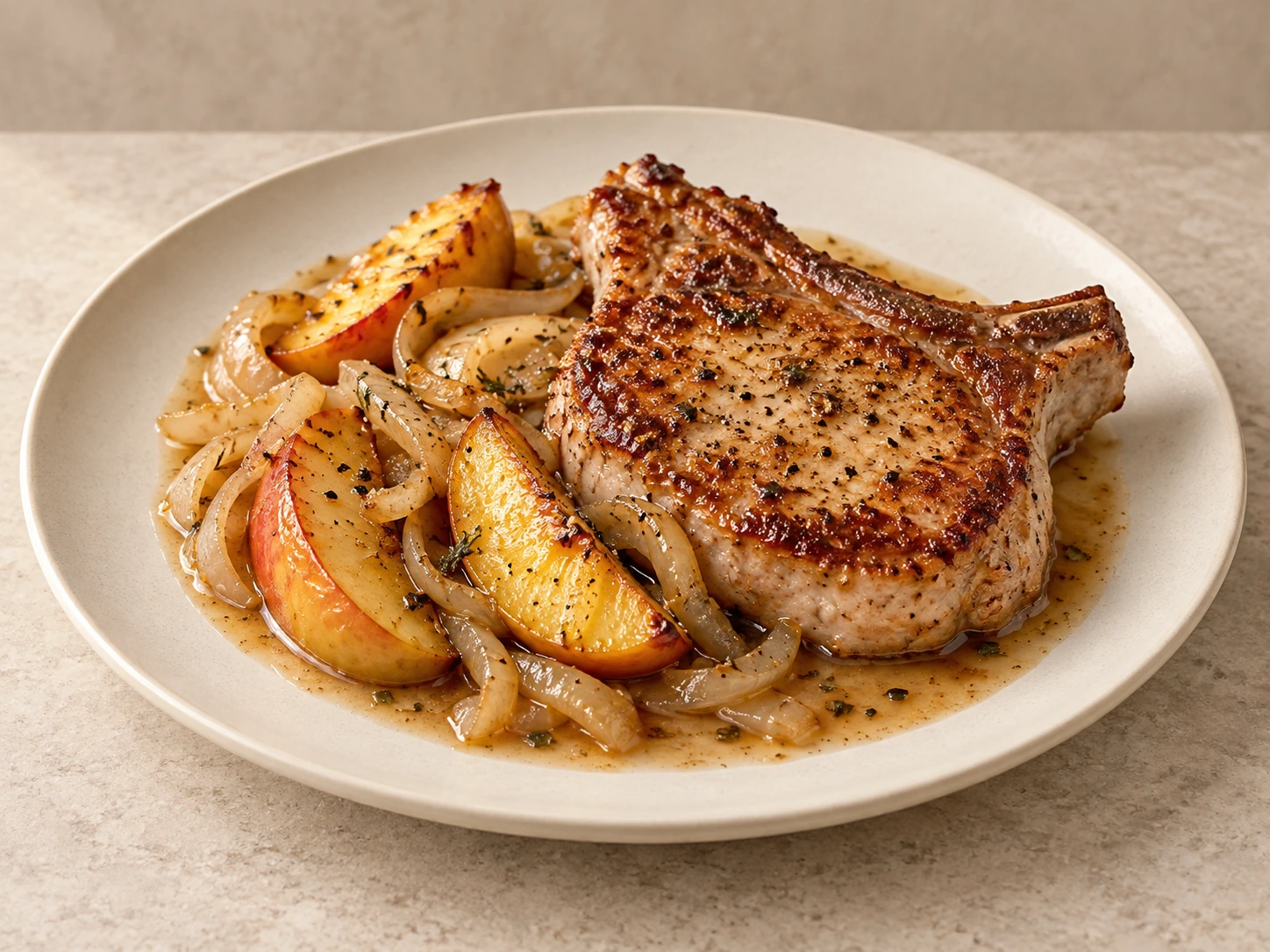
This is a two-pan dinner that comes together in about 45 minutes and tastes like it took longer. The apples and onion do their slow cooking on one burner while the chops sear on the other, and the pan sauce is built in the same skillet the pork came out of, so nothing is wasted and nothing extra needs washing.
The half cup of meat stock in the sauce is the reason this recipe fits so easily into our week. We keep a pot of meat stock going from first thing in the morning, so there is always some to ladle out for a sauce like this one. The ghee comes from our weekly batch too. If you already make those two things, this recipe asks nothing new of you except the apples.
Ingredients
Apples and Onions
- 2 tablespoons unsalted butter
- 1 yellow onion, thinly sliced
- 2 cups chopped firm apple, such as Honeycrisp
- 1 tablespoon fresh thyme leaves
- 1 teaspoon sea salt
Pork Chops and Sauce
- 2 tablespoons ghee
- 4 pork chops
- 1 teaspoon sea salt, divided
- 1/2 cup homemade chicken meat stock
- 1/2 teaspoon pure, additive-free coconut flour, homemade if available
- 1 teaspoon cider vinegar
- 1 tablespoon unsalted butter
Yield: 4 servings
Prep time: 15 minutes
Cook time: 30 minutes
A firm apple is the key to the first pan. Honeycrisp is named because it holds its shape through 15 to 20 minutes of cooking; a soft apple would collapse into sauce. Two cups chopped is about two medium apples, peeled or not as you prefer. The onion is sliced thin so it softens at the same pace as the apple. Fresh thyme leaves go in at the very end of that pan’s cooking, so they stay fragrant instead of turning dusty.
For the second pan, ghee is the searing fat because it takes the medium-high heat without burning. The chops can be bone-in or boneless; bone-in take a little longer to reach 145°F, so trust the thermometer rather than the clock. The salt for the pork is divided: some goes on the raw chops before searing and the rest is added at the end to taste. The stock is homemade chicken meat stock made from raw meaty pieces, which is the everyday GAPS stock. Half a teaspoon of coconut flour is a small amount on purpose; it gives the sauce just enough body to cling. Cider vinegar is the acid, and the final tablespoon of butter rounds the sauce off.
How to Make It
- Warm a wide stainless-steel or enameled cast-iron skillet over medium-low heat. Melt the 2 tablespoons butter; add the onion and apples. Cook for 15 to 20 minutes, stirring occasionally, until the apples soften and their edges start to turn golden. Stir in the thyme for about 1 minute, then take the pan off the heat.
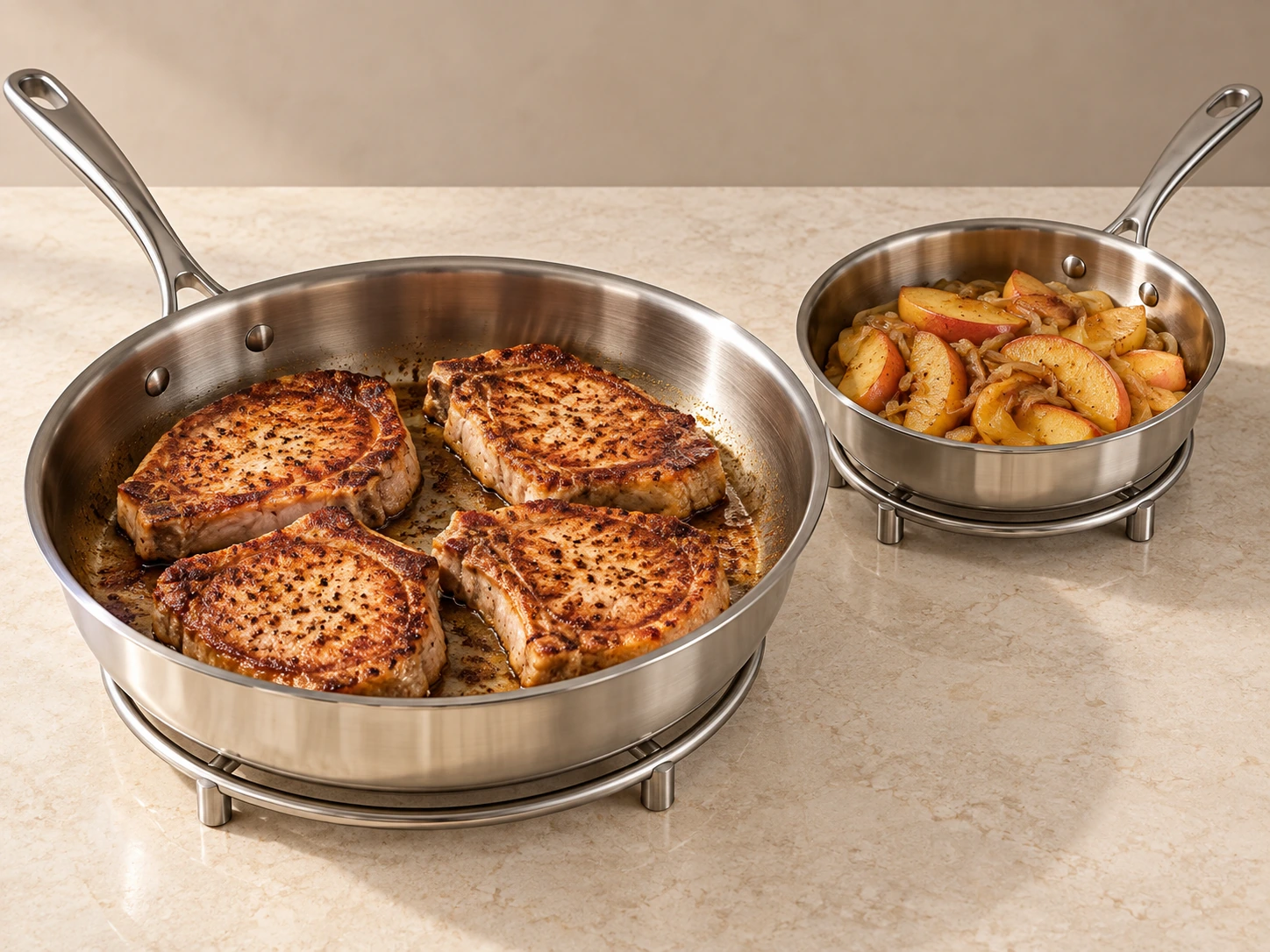
- Heat a second large skillet over medium-high heat for about 2 minutes. Add the ghee. Salt both sides of the pork chops and lay them in the hot fat without crowding the pan.
- Sear the first side for about 3 to 4 minutes without moving the chops, until golden. Turn with tongs and cook the other side for another 3 to 4 minutes, then check the thickest part with a thermometer. Continue cooking as needed until it reaches 145°F. Transfer the chops to a plate and let them rest for at least 3 minutes while you make the sauce.
- Pour the meat stock into the pork pan and scrape up the browned bits with a wooden spoon. Bring it to a simmer. Whisk in the coconut flour and cider vinegar, breaking up any flour clumps; stir in the remaining tablespoon of butter until melted.
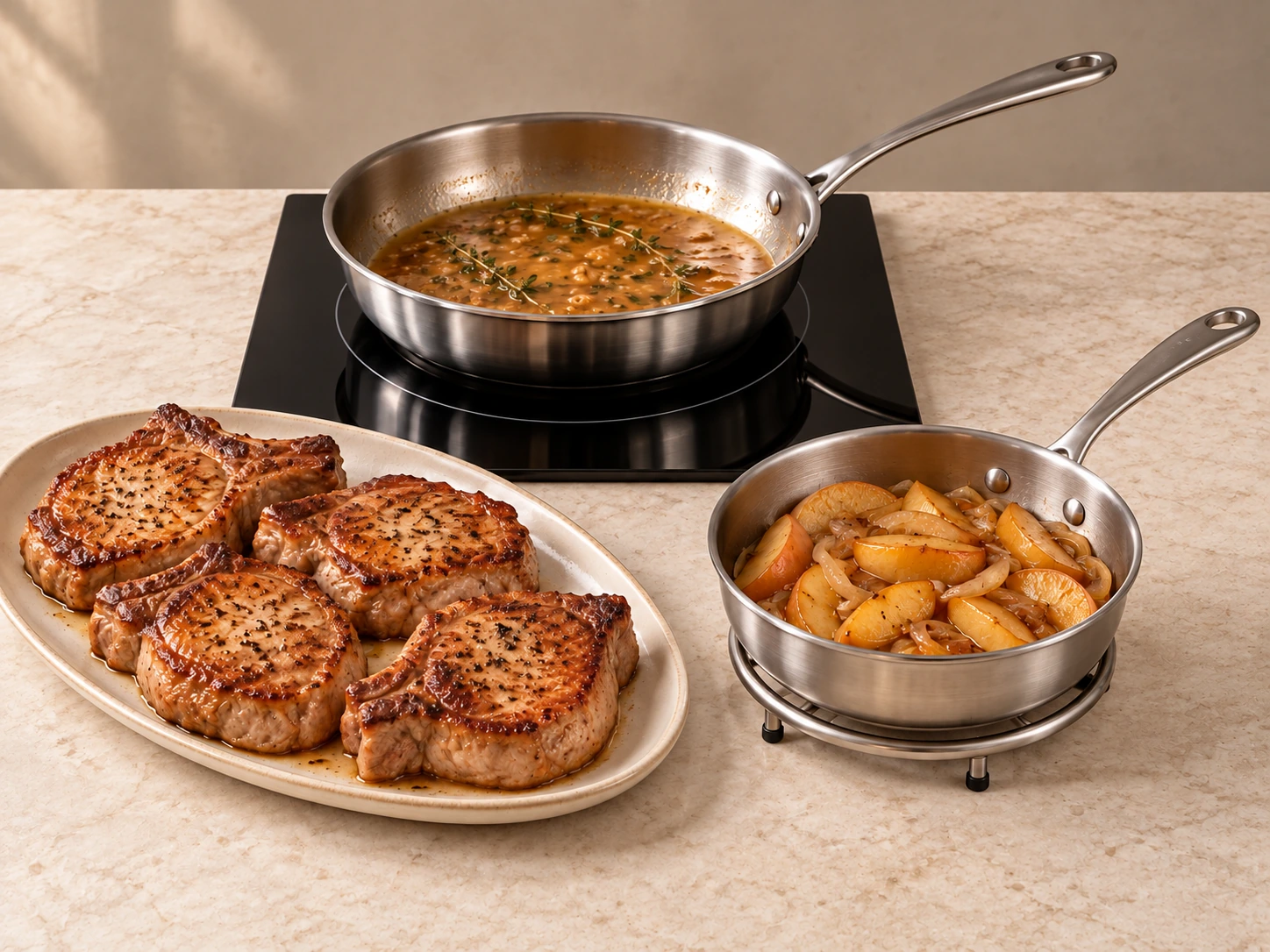
- Spoon the apples and onions around the chops, then pour the pan sauce over them. Taste and add the remaining measured salt as needed. Serve immediately.
Here is how each pan tells you where it is. In step 1, medium-low is low enough that the butter melts and bubbles gently without browning. The onion goes translucent first, then the apple pieces soften and their cut edges turn golden where they touch the pan. The kitchen starts to smell sweet around the ten-minute mark. If the butter is browning or the apples are catching before 15 minutes, the heat is too high; lower it and keep stirring occasionally. Done means the apples yield to a spoon but still hold their shape. Stir the thyme in for the last minute, then move the pan off the heat so the apples do not keep cooking.
In step 2, two minutes of preheating is what makes the sear work. The ghee should melt instantly and flow easily across the pan when it goes in. Pat the chops dry before salting so they brown instead of steam, and lay them in with space between them. You should hear a steady sizzle the moment each chop touches the pan; a weak sizzle means the pan needs another minute.
In step 3, resist moving the chops for the first 3 to 4 minutes. The crust forms during that undisturbed contact, and a chop that is ready to turn releases from the pan when you lift an edge with tongs; one that sticks needs another minute. After turning, check the thickest part with a thermometer, away from any bone. 145°F is the target. Thick chops may need a few extra minutes; thin ones may be done before the second side has its full 4 minutes. The rest on the plate lets the juices settle and finishes carrying the temperature through.
Step 4 moves fast. Pour the stock into the hot pork pan and it will hiss and bubble immediately. Scrape the bottom with a wooden spoon while it bubbles; the browned bits lift off and darken the liquid. Bring it to a simmer where small bubbles break the surface but the liquid is not boiling hard, then whisk in the coconut flour and vinegar. The flour disappears into the liquid within a few seconds of whisking; if you see specks, keep whisking. The sauce is right when it lightly coats the back of a spoon. It should still pour freely. Stir in the last tablespoon of butter off the heat or over the lowest heat until it melts and the sauce turns glossy.
In step 5, taste before you add the rest of the salt. The stock carries its own seasoning, and the vinegar sharpens things, so you may want less than the full remaining measure. Plate right away while the crust on the chops is still crisp.
Why These Ingredients Matter
The stock in this sauce is homemade meat stock from raw meaty chicken pieces, not a long-simmered bare-bone broth. The Full GAPS food list permits cider or white vinegar but lists most store-bought balsamic vinegars among foods to avoid because of added sugar. Cider vinegar fills the same measured one-teaspoon position in this sauce.
Homemade coconut flour from dried coconut-milk pulp is a useful option if you already have it. Pure additive-free coconut flour is also permitted on Full GAPS, so homemade is a preference here, not a universal rule. This is only half a teaspoon: whisk it into simmering liquid so it disperses instead of leaving dry specks. The apples and onions are cooked, not raw.
This is a Full GAPS main dish. Butter appears in both pans and sits in the GAPS dairy progression, so the recipe assumes butter is already introduced. Ghee is the searing fat. Seared pork with a browned crust, butter in both pans, and a thickened pan sauce place this dish on Full GAPS rather than in the Introduction Diet. There is no accepted Introduction Diet version of this exact formula, so this post does not describe one.
Storage and Serving
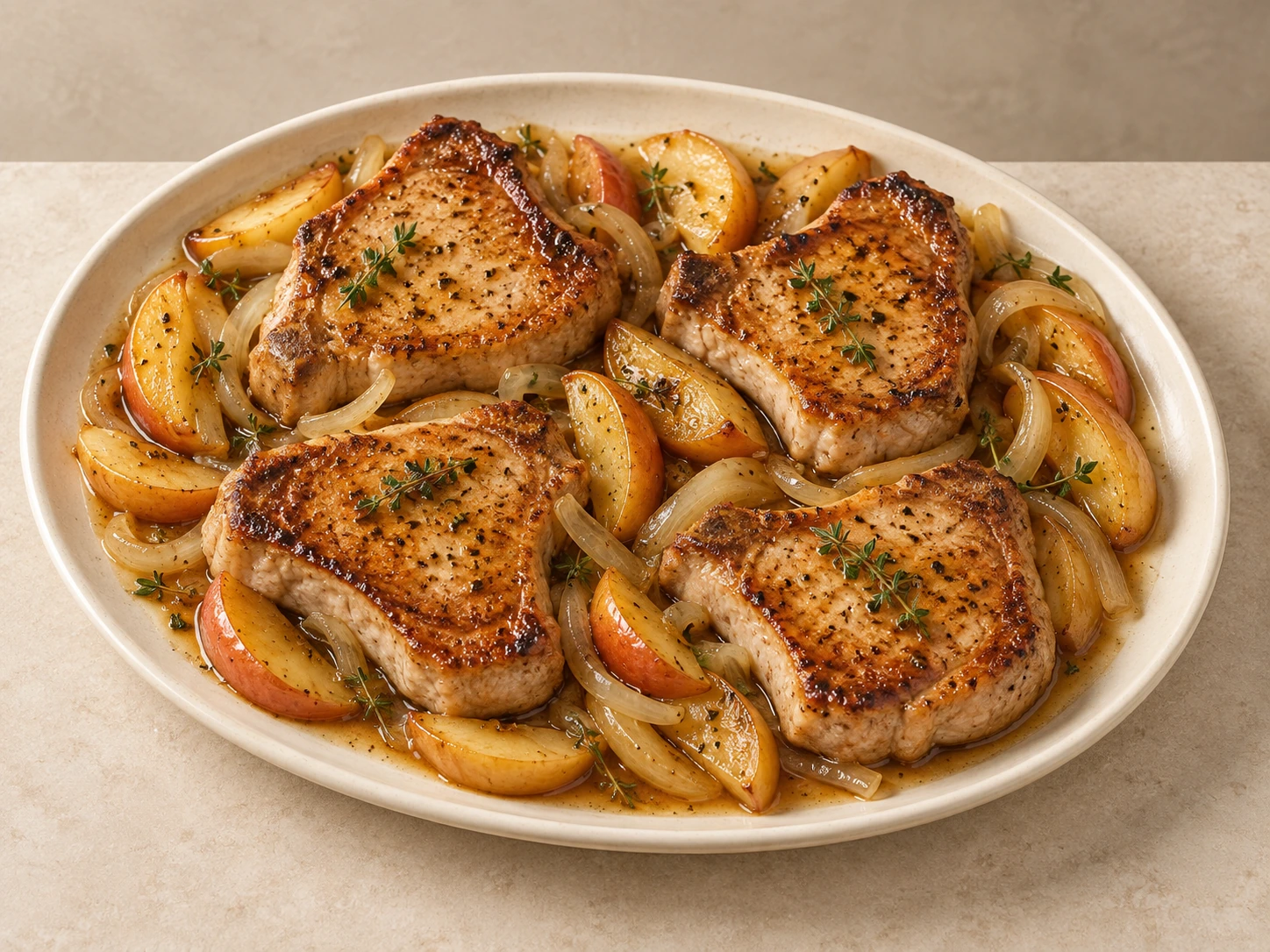
Serve one chop per person with a quarter of the apples and onions spooned alongside and the sauce over the top. A plain green side, such as slow-cooked kale, balances the sweetness of the apples. This is a dinner to eat right away; the crust softens as the chops sit in the sauce.
Leftovers keep covered in the refrigerator at 40°F or below for 3 to 4 days. Store the chops, the apple mixture, and any sauce together in one container. Reheat gently in a covered skillet over low heat with a splash of meat stock so the pork does not dry out. The sauce will have thickened in the fridge and loosens again as it warms.
The apples and onions can be cooked a day ahead and rewarmed while the chops sear, which shortens the work at dinner time.
Frequently Asked Questions
Can I substitute bone broth for the meat stock? The recipe is routed with meat stock. Tier 1 GAPS guidance keeps bone broth out for at least the first year and sometimes longer, so the half cup in this sauce should be meat stock.
What if the sauce looks thin? Let it simmer briefly after you whisk in the half teaspoon of coconut flour. The recipe uses only a little flour; it should coat the chop lightly rather than turn into a thick gravy.
Do I need to make the coconut flour? No. Use pure coconut flour without additives. Homemade flour from dried coconut-milk pulp is an option when you want to use that component.
Is this an early Intro recipe? No. This is a Full GAPS dish with browned pork and a cooked apple-and-onion side. For Intro, choose a recipe built for your current stage.
What if the sauce turns out lumpy? The coconut flour went in too fast or the liquid was not simmering. Whisk steadily as you sprinkle it in. Small lumps usually dissolve with another 30 seconds of whisking over the heat.
Can I use a different apple? The recipe names a firm apple such as Honeycrisp. Any firm, crisp eating apple that holds its shape when cooked will behave the same way. A soft baking apple will break down into sauce during the 15 to 20 minute cook.
My chops were done before the apples. What should I do? Start the apples and onions first, as the method does, and give them a head start of about ten minutes before you preheat the pork pan. The apple pan is forgiving and can sit off the heat, while the chops should be served soon after resting.
Related Recipes
Three homemade components go into this dish, and each has its own recipe: GAPS chicken meat stock for the sauce, stovetop ghee for the sear, and homemade coconut flour if you want to use your own. For sides, Slow-Cooked Kale with Garlic and Sautéed Beets and Greens both go well with the sweetness of the apples.
Recommended Equipment
Two skillets: a wide one in stainless steel or enameled cast iron for the apples and onions, and a second large skillet in the same materials for the pork and sauce. Tongs for turning the chops without piercing them. A wooden spoon for scraping up the browned bits. A whisk for the coconut flour. An instant-read thermometer for the 145°F check.
Next Steps
Pork chops are one of the cuts that make buying a whole or half animal worth it, because they show up in the box alongside the roasts and the bones for stock. The Whole-Animal Buying & Cut Sheet Guide is coming soon, with what to expect on a cut sheet and how each part gets used.
Pork Chops with Apples and Onions for Full GAPS
Ingredients
Equipment
Method
- Warm a wide stainless-steel or enameled cast-iron skillet over medium-low heat. Melt the measured butter listed for the apples and onions; add the onion and apples. Cook for 15 to 20 minutes, stirring occasionally, until the apples soften and their edges start to turn golden. Stir in the thyme for about 1 minute, then take the pan off the heat.
- Heat a second large skillet over medium-high heat for about 2 minutes. Add the ghee. Salt both sides of the pork chops and lay them in the hot fat without crowding the pan.
- Sear the first side for about 3 to 4 minutes without moving the chops, until golden. Turn with tongs and cook the other side for another 3 to 4 minutes, then check the thickest part with a thermometer. Continue cooking as needed until it reaches 145°F. Transfer the chops to a plate and let them rest for at least 3 minutes while you make the sauce.
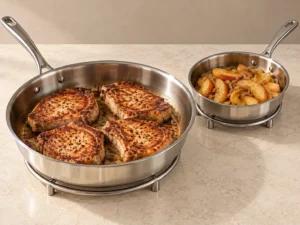
- Pour the meat stock into the pork pan and scrape up the browned bits with a wooden spoon. Bring it to a simmer. Whisk in the coconut flour and cider vinegar, breaking up any flour clumps; stir in the separate measured sauce butter until melted.
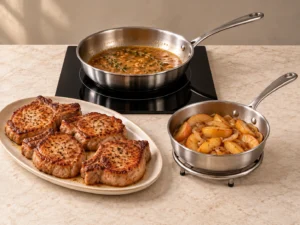
- Spoon the apples and onions around the chops, then pour the pan sauce over them. Taste and add the remaining measured salt as needed. Serve immediately.

Leave a comment