

This pineapple date sweet and sour chicken gives you the bright, tangy flavor of sweet and sour sauce without refined sugar, bottled sauce, or tapioca starch. Fresh pineapple and softened dates provide the sweetness. Apple cider vinegar, ginger, garlic, and a measured amount of coconut aminos keep the pan savory enough for dinner.
The chicken, bok choy, onions, pineapple, and sauce all finish in one wide pan. The result is juicy chicken with tender-crisp vegetables and a thin, glossy sauce that settles around every piece instead of turning into a heavy coating.
GAPS placement: Full GAPS with a coconut aminos product whose complete ingredient list fits GAPS
Time: 15 minutes prep and about 18 minutes cooking, plus at least 10 minutes to soak the dates
Yield: 5 servings
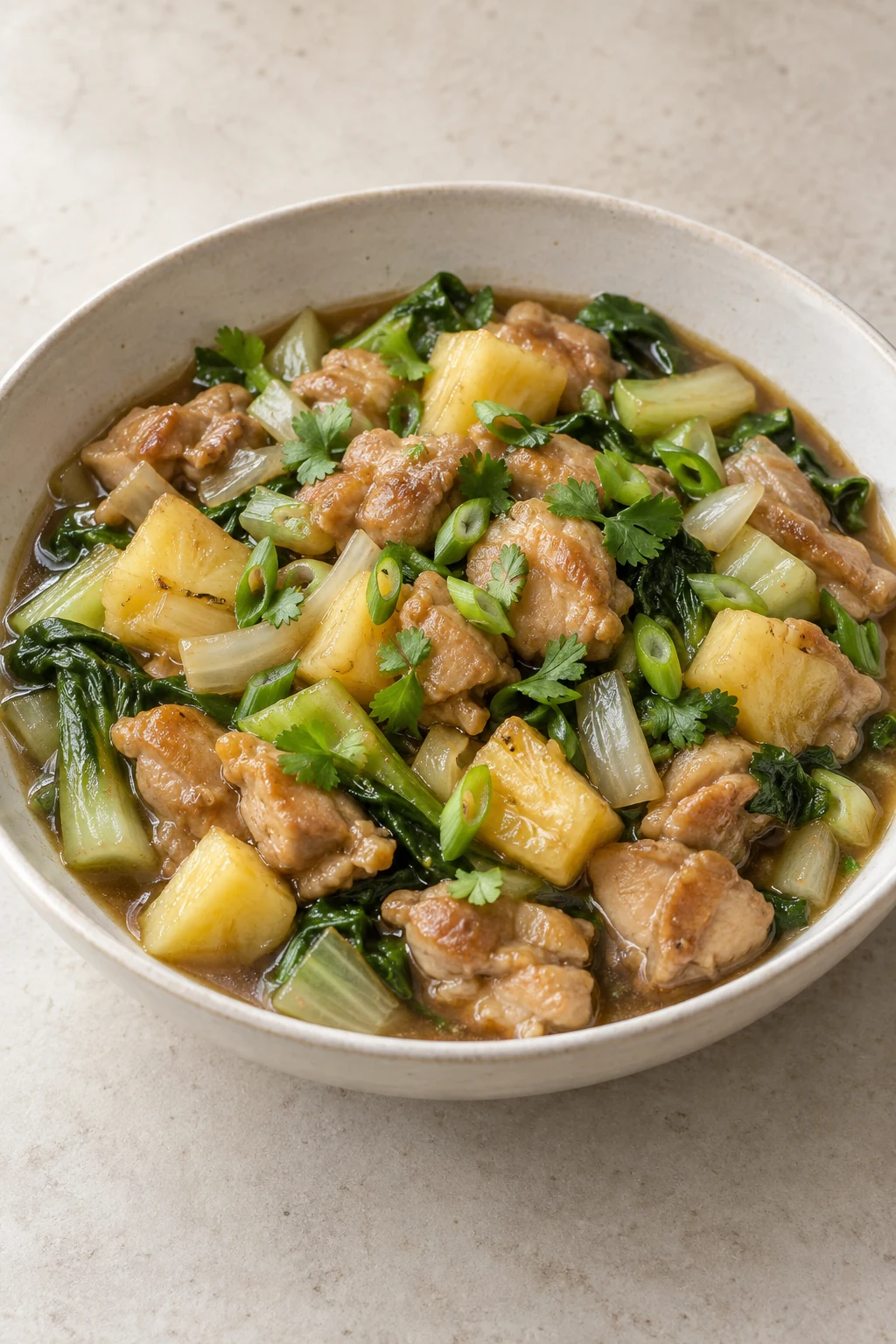
I do most of our weekday cooking in the morning, before homeschool and second shift. With six children, the small steps that can happen ahead of time matter. Here, that means chopping and soaking two dates while I am already in the kitchen. Later, the softened fruit and its soaking water go straight into the sauce, and dinner stays a one-pan job.
Why This Sweet and Sour Sauce Works
The sauce uses two different forms of fresh pineapple for a reason. The juice spreads the fruit flavor through the whole pan, while the chunks stay visible and give you a sweet bite here and there. Keep both measured amounts. Extra juice can make the sauce watery, and a pan crowded with pineapple starts tasting more like fruit than dinner.
The dates soften in exactly 1/3 cup boiling water. Do not drain them. The fruit and retained water supply sweetness and enough liquid for the covered simmer. Chop the dates before soaking so they soften quickly and disperse through the sauce instead of remaining in large sticky pieces.
There is no tapioca flour and no replacement starch in this version. The finished sauce is meant to be thin and glossy. It clings lightly to the chicken and vegetables, then collects at the bottom of the serving bowl. That is the correct texture for this formula.
Ingredients
Chicken and Vegetables
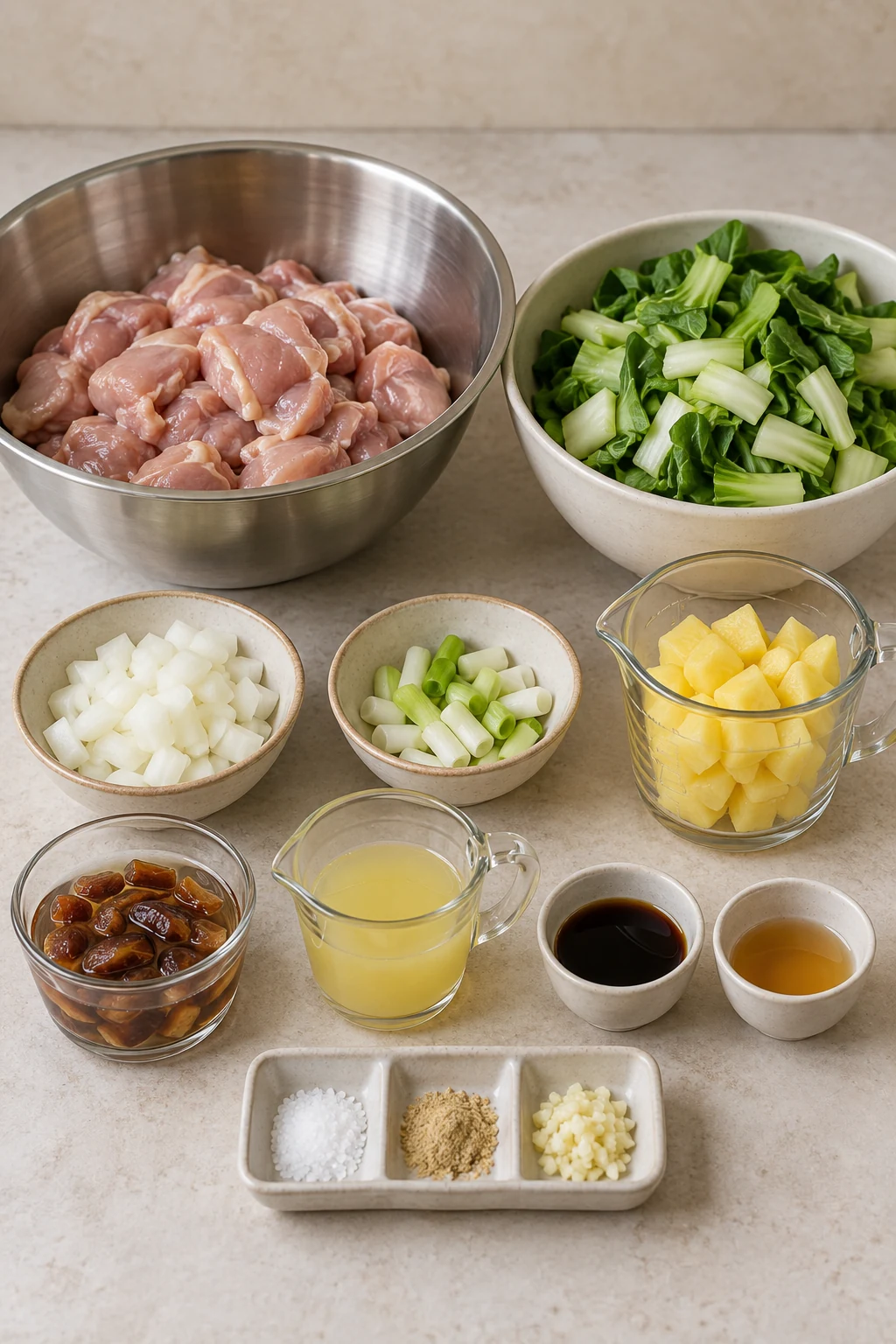
- 2 to 2 1/2 pounds boneless, skinless chicken thighs, cut into 1- to 2-inch pieces
- 2 large heads baby bok choy, or 1 small regular head, chopped into 1- to 2-inch pieces
- 1 onion, chopped into 1- to 2-inch pieces
- 1 bunch green onions, with the white parts cut into 2-inch lengths and the green tops sliced for garnish
- 3/4 cup fresh pineapple chunks
- 2 tablespoons natural non-hydrogenated coconut oil, ghee, or rendered animal fat
- 1/2 teaspoon natural sea salt
Pineapple Date Sauce
- 1/3 cup freshly pressed pineapple juice
- 1/4 cup chopped, pitted dates, about 2 large Medjool dates
- 1/3 cup boiling water for soaking the dates, kept for the sauce
- 2 tablespoons coconut aminos whose complete current ingredient list fits GAPS
- 1 1/2 tablespoons apple cider vinegar
- 3/4 teaspoon natural sea salt
- 1 teaspoon dried ginger powder
- 1 to 2 garlic cloves, crushed or minced
- Fresh cilantro and sliced green-onion tops for serving, optional
Use fresh pineapple chunks and freshly pressed juice. Canned fruit does not belong in this Full GAPS version. Choose plain dates without syrup, oil, or other additives. Read the complete coconut aminos label rather than relying on the front of the bottle.
Recommended Equipment
- Le Creuset Artichaut enameled cast-iron braiser with a cream interior, or another wide heavy skillet with a lid
- Small heat-safe glass bowl for soaking the dates
- Glass measuring cup or bowl for mixing the sauce
- Stainless-steel or wooden spoon
- Instant-read thermometer
- Knife and stable cutting board
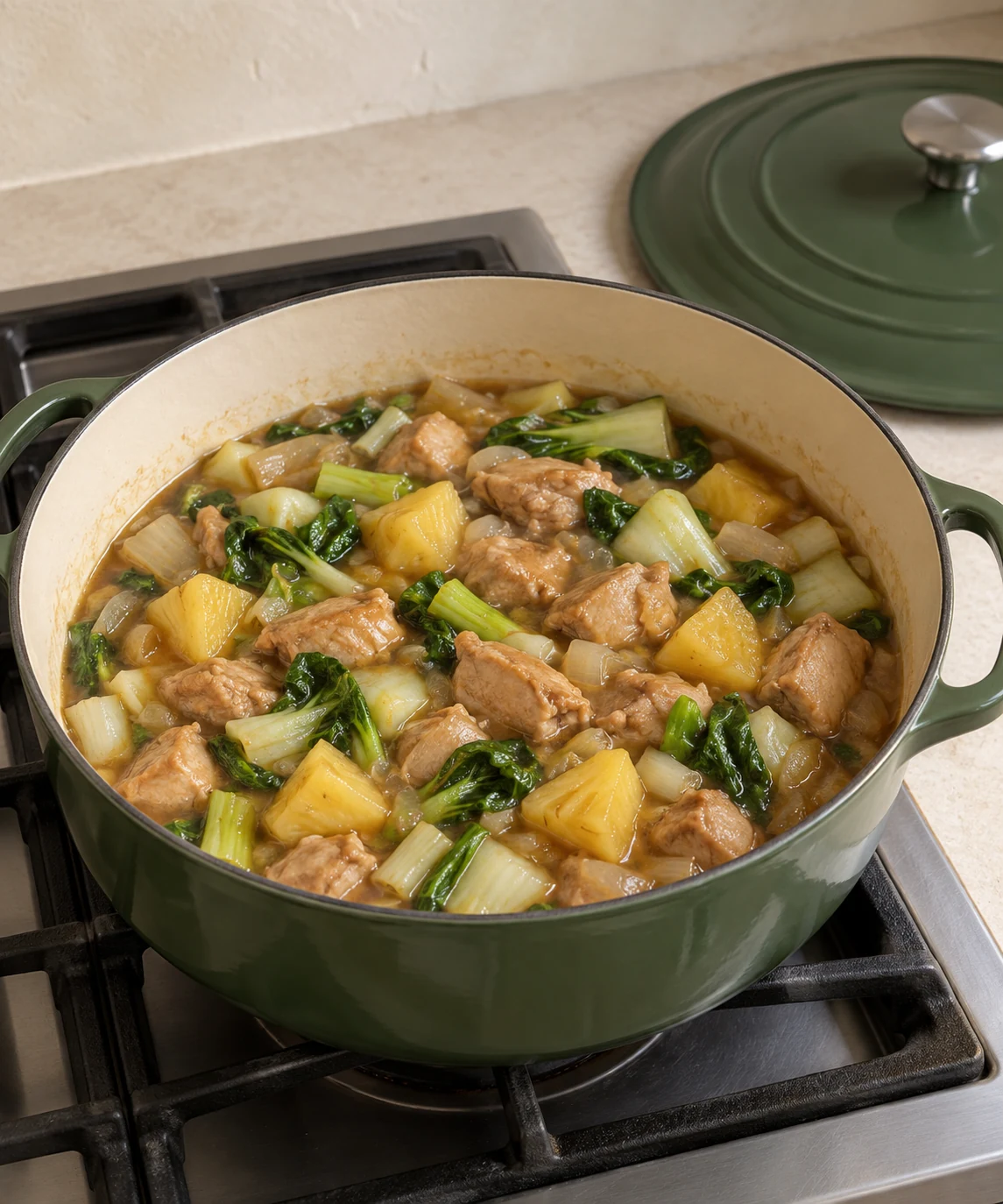
A wide braiser gives the chicken room to cook in one layer before the vegetables go in. The pale enamel helps you see whether the sauce is gently simmering or boiling too hard. Use a lid that fits closely during the final 10 minutes so the bok choy softens without the pan drying out.
Make the Pineapple Date Sweet and Sour Chicken
- Soften the dates. Put the chopped dates in a small heat-safe bowl and pour in 1/3 cup boiling water. Let them stand for at least 10 minutes, or refrigerate them in the water overnight. Keep every bit of the soaking water for the sauce.
- Start the chicken and onion. Heat the coconut oil, ghee, or rendered animal fat in the braiser over medium heat. Add the chicken, chopped onion, and 1/2 teaspoon sea salt. Sauté for about 8 minutes, stirring occasionally. The chicken should turn opaque on the outside, but it does not need to be cooked through yet.
- Mix the sauce. While the chicken cooks, combine the fresh pineapple juice, softened dates, all the date-soaking water, coconut aminos, apple cider vinegar, 3/4 teaspoon salt, ginger, and garlic. Stir well so the dates are distributed through the liquid.
- Add the vegetables and simmer. Add the sauce, bok choy, green-onion whites, and pineapple chunks to the pan. Stir once, cover, and lower the heat enough to keep a slow simmer. Cook for about 10 minutes. Lift the lid once to stir, then cover the pan again. The chicken is done when its thickest pieces reach 165°F.
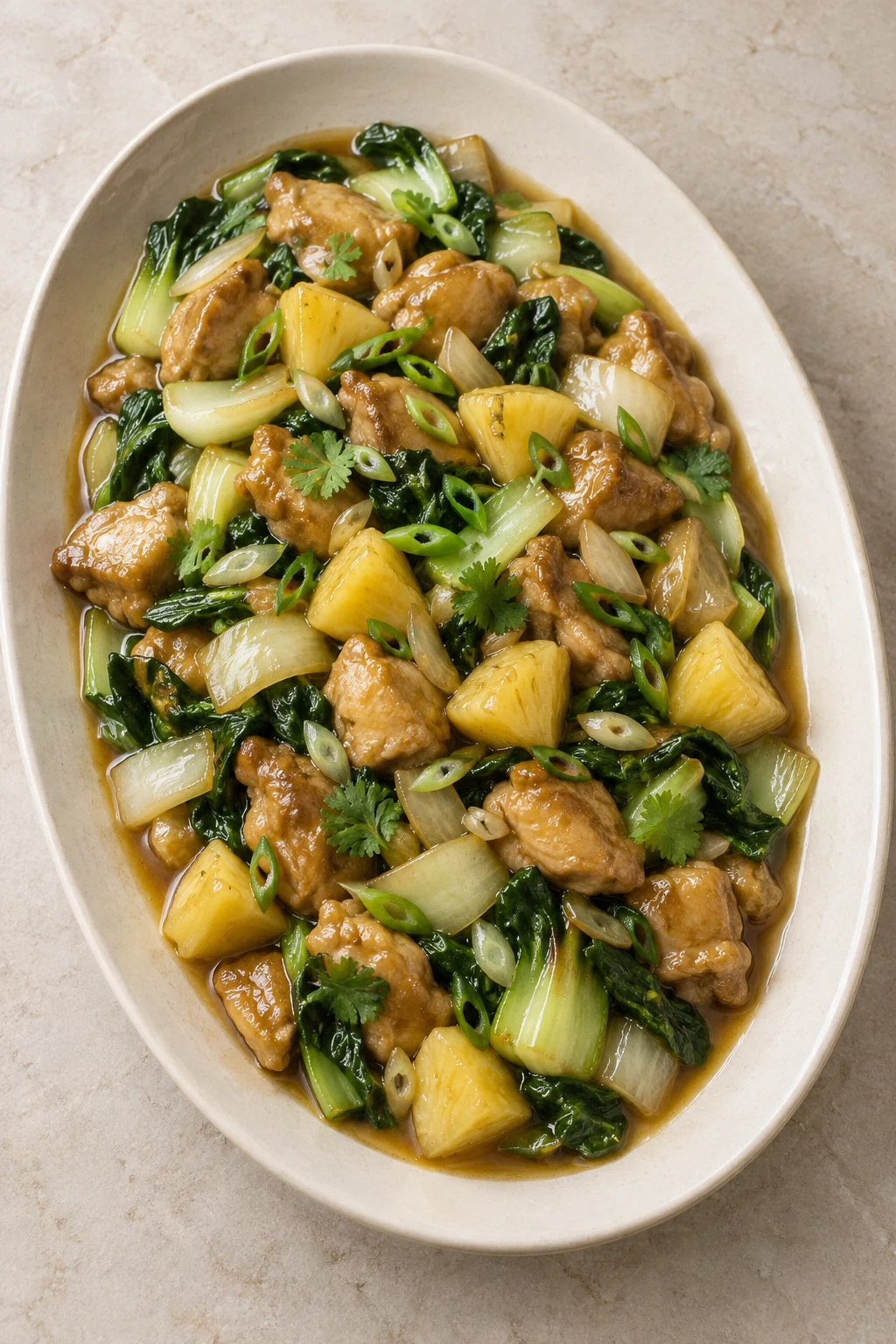
- Finish and serve. Turn off the heat. The bok choy stems should be tender with a little firmness, the leaves should be wilted, and the sauce should look glossy and loose. Add sliced green-onion tops and cilantro if you want them. Serve hot.
Texture, Smell, and Doneness Cues
During the first sauté, the chicken changes from glossy pink to opaque beige on the outside. Some pink may remain in the center because it finishes under the lid. If liquid collects around the chicken before it turns opaque, keep the pan uncovered and let that moisture cook down rather than raising the heat sharply.
Once the sauce goes in, you should smell pineapple and vinegar first, then ginger and garlic. The vinegar aroma softens during the covered simmer. A hard boil can tighten the chicken and collapse the bok choy leaves, so look for small, steady bubbles around the edge of the pan.
The bok choy leaves wilt before the pale stems become tender. Test a stem near the end. It should bend when pressed with the spoon but still hold its shape. Check one of the largest chicken pieces with an instant-read thermometer. The center must reach 165°F.
The final sauce will not resemble a starch-thickened restaurant glaze. It remains pourable, with softened bits of date suspended in it. Spoon that liquid over each portion because it carries the sweet, sour, salty, garlic, and ginger flavors together.
Pineapple Date Sweet and Sour Chicken for Full GAPS
Ingredients
Equipment
Method
- Put the chopped dates in a small heat-safe bowl and pour in 1/3 cup boiling water. Let them stand for at least 10 minutes, or refrigerate them in the water overnight. Keep every bit of the soaking water for the sauce.
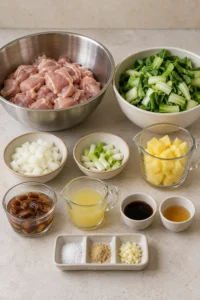
- Heat the natural non-hydrogenated coconut oil, ghee, or rendered animal fat in a wide braiser or large rimmed skillet over medium heat. Add the chicken, chopped onion, and 1/2 teaspoon sea salt. Sauté for about 8 minutes, stirring occasionally, until the chicken turns opaque on the outside.
- While the chicken cooks, stir together the freshly pressed pineapple juice, softened dates, all the date-soaking water, coconut aminos, apple cider vinegar, 3/4 teaspoon sea salt, ginger, and garlic.
- Add the sauce, bok choy, green-onion whites, and fresh pineapple chunks to the pan. Stir once, cover, and lower the heat to keep a slow simmer. Cook for about 10 minutes, lifting the lid once to stir. The chicken is done when its thickest pieces reach 165°F.

- Turn off the heat. The bok choy stems should be tender with a little firmness and the sauce should be glossy and loose. Add sliced green-onion tops and fresh cilantro if using. Serve hot.
Notes
Tried this recipe?
Let us know how it was!Full GAPS Placement and Adaptations
This is a Full GAPS recipe. It is not an Introduction Diet recipe because the complete pan includes fresh pineapple, dates, coconut aminos, vinegar, and sautéed ingredients together. Use a coconut aminos product only when its full current ingredient list fits GAPS.
For the measured cooking fat, use 2 tablespoons natural non-hydrogenated coconut oil, homemade ghee, or rendered animal fat. Choose the one you already tolerate and keep the quantity the same. The recipe does not need heated olive oil.
If you want a different Full GAPS meal with coconut aminos, the Full GAPS Asian Beef Bowl uses it with beef and vegetables. That recipe has its own measured formula and should stay a separate meal rather than becoming a substitution list inside this chicken recipe.
Serving and Make-Ahead Options
Serve the chicken in shallow bowls so each portion catches some sauce. Full GAPS Steamed Cauliflower Rice works underneath because its mild flavor absorbs the pineapple-date liquid without changing this recipe’s formula.
You can chop the dates and soak them the night before. Refrigerate them in their measured 1/3 cup water, covered, and bring the whole bowl to the stove when you mix the sauce. You can also cut the chicken and vegetables earlier in the day and refrigerate them separately until cooking time.
This is the kind of dinner where a little advance work saves the whole evening. If the dates are soft and the ingredients are cut, the pan needs about 18 minutes. That matters on a weekday when dinner has to happen before I leave for work and the rest of the day has already been full.
Storage and Reheating
Cool leftovers promptly and store them in a covered glass container in the refrigerator. Keep the sauce with the chicken and vegetables so the meat stays moist. Reheat gently in a covered skillet over low to medium-low heat, stirring once or twice.
If the sauce has tightened in the refrigerator, add a small spoonful of filtered water to the pan. Use only enough to loosen it. Stop reheating as soon as the chicken is hot so the bok choy does not turn mushy.
Frequently Asked Questions
Do I Drain the Soaked Dates?
No. The dates and all 1/3 cup of their soaking water go into the sauce. That water is part of the measured liquid.
Can I Use Canned Pineapple?
No. Use 3/4 cup fresh pineapple chunks and 1/3 cup freshly pressed pineapple juice for this Full GAPS version.
Why Is There No Tapioca Flour?
Tapioca is omitted for GAPS, and this formula does not replace it with another starch. Expect a thin, glossy sauce rather than a thick coating.
Can I Blend the Sauce?
The measured method only requires stirring the softened dates into the other sauce ingredients. Chop the dates before soaking and stir thoroughly. Do not add extra liquid to make blending easier.
Can I Use Chicken Breast?
This formula uses 2 to 2 1/2 pounds boneless, skinless chicken thighs. Thighs stay tender through the initial sauté and covered simmer. Keep that tested cut for this recipe.
How Do I Know the Chicken Is Done?
Test one of the largest pieces after the covered simmer. It must reach 165°F in the center. The outside should be opaque with no raw pink surface.
Can I Double It?
Use the 2× control in the recipe card for exact amounts. Cook in two wide pans if one pan would crowd the chicken. Crowding traps steam and makes the first cooking step slower and less even.
More Full GAPS Dinners
For another fruit-forward chicken dinner without nightshades, try Nightshade-Free BBQ Chicken with Carrot-Beet Sauce. When you want a plain roast that can become several meals, use the Slow-Roasted Garlic and Lemon Chicken.
The coming-soon Weekly Kitchen Rhythm Planner is made for dinners like this, where one 10-minute prep task can move out of the busiest part of the day. Find it with the other WFLI guides in the shop.

Leave a comment