

These pomegranate and lemon jello cups start with fresh fruit, not a bottle of juice. Pomegranate arils simmer in water until the liquid turns red, then the mixture is strained and sweetened with raw honey. Lemon gives it a bright, tart edge. Plain beef gelatin turns that fruit infusion into a smooth, spoonable Full GAPS treat.
The finished cups have the color and flavor of pomegranate without whole seeds getting in the way of each spoonful. There is no dairy, egg, nut flour, or artificial coloring in the recipe. The main jobs are removing the arils, pressing their juice through a mesh strainer, and dissolving the gelatin completely before the cups go into the refrigerator.
In our family, the everyday GAPS routine starts with a pot of meat stock in the morning. That is the part that made the kitchen manageable, and a fruit treat has its own place alongside that routine. I like to keep the preparation easy to follow: the fruit work happens first, the cups are ready before the gelatin goes in, and the refrigerator does the setting. A small dessert should not turn into another complicated kitchen project.
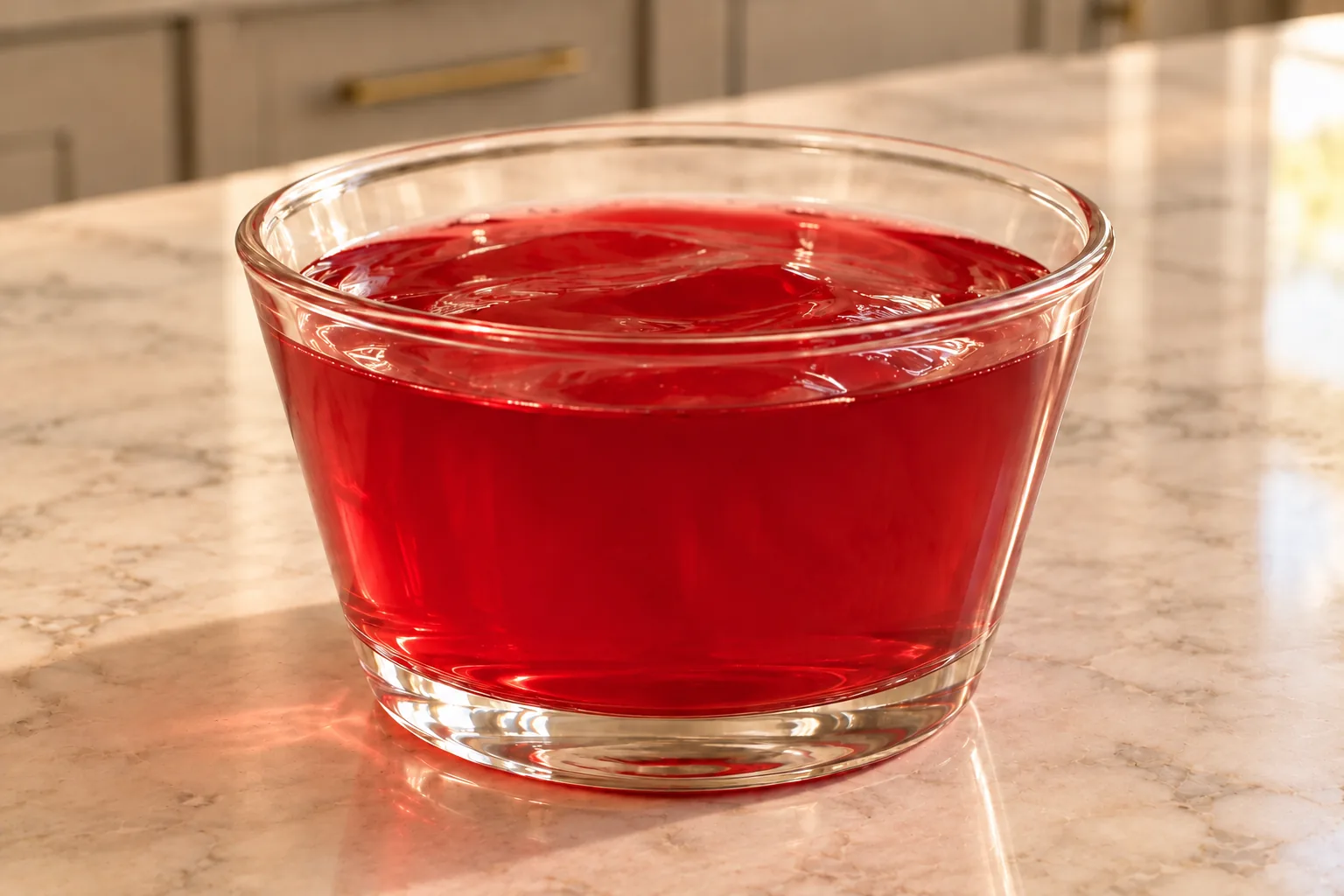
Start With Fresh Pomegranates
You need two pomegranates, two cups of filtered water, two tablespoons of fresh lemon juice, two tablespoons of raw honey, and two tablespoons of plain grass-fed beef gelatin. Keep those amounts together. The fruit is infused into the measured water, so this is a different preparation from pouring a fixed amount of ready-made juice into a bowl.
The red, juicy pieces inside a pomegranate are called arils. Each one surrounds a little inner seed. Remove them from the peel and white membrane before cooking. Break the fruit into sections and loosen the arils over a bowl, picking out pieces of white pith as you go. You want the red fruit in the saucepan, not chunks of peel or membrane.
The size and juiciness of the pomegranates affect how much strained liquid you finish with. That is why this recipe is written as one batch rather than promising an exact number of dessert cups. Divide the mixture among small pudding cups according to their size, and use the same filling level if you want them to chill at a similar pace.
As convenient as bottled juice might be, GAPS calls for fresh juice rather than commercial pasteurized juice. Here, the recipe takes another homemade route: fresh pomegranate fruit simmered in water and pressed through a strainer. Bottled juice would change both the preparation and the strength of the fruit liquid. Start with the two fresh fruits for this version.
Where These Cups Fit On GAPS
These are Full GAPS fruit-gelatin cups. Use raw honey, fresh lemon, filtered water, and plain gelatin without sugar, flavoring, or other additives. A flavored commercial jello packet is not the same ingredient as unflavored beef gelatin.
Keep the cups as a small fruit treat between meals. GAPS places fruit and sweet baking in the snack part of the day rather than allowing them to replace the main meals. Making a dessert at home does not change that role, even when its ingredients are straightforward.
This recipe has no milk, cream, butter, or eggs, so it does not need a dairy or egg replacement. It can also sit within the snack choices of More-Plant GAPS. Its fruit base puts it outside No-Plant GAPS. A ketogenic version would need its own portion and carbohydrate calculations; simply changing the sweetener would not remove the sugars naturally present in the fruit.
The Intro Diet introduces different fruit preparations in stages, so these cups are a Full GAPS treat rather than a shortcut to bringing fruit in earlier. If you are working through Intro, the GAPS food list explains the progression of cooked fruit, raw fruit, and sweet foods. The gelatin in a treat also has a different kitchen job from making meat stock from meaty bones and joints.
The Tools You Need
Use a small saucepan, a wire-mesh strainer or colander, a large glass mixing bowl, and a spoon for pressing the fruit. A whisk helps disperse the gelatin through the strained liquid. Have your pudding cups ready on a steady surface before you add the gelatin, along with the tablespoon and cup measures.
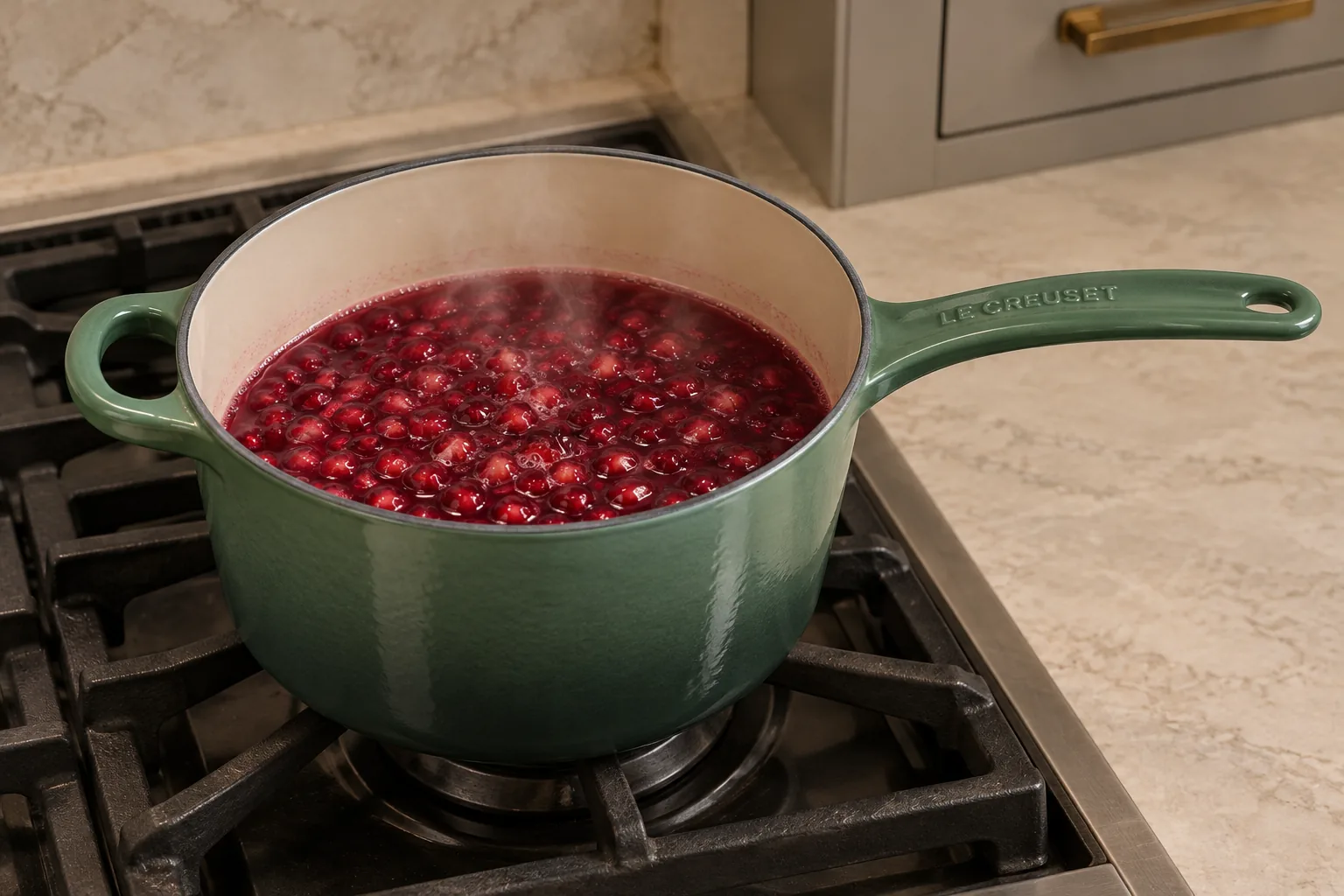
The method photograph shows the Le Creuset Signature 1.75-quart saucepan in Artichaut. It has room for the two cups of water and the arils from the two fruits. When you double the recipe, choose enough saucepan and bowl space for the larger amount rather than filling a small pot to the rim.
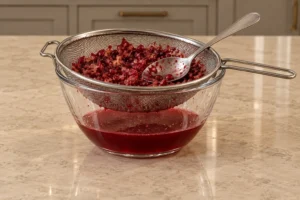
The strainer should rest securely over the mixing bowl. That lets you press the cooked fruit with a spoon while the bowl catches the red liquid underneath. Do not balance a narrow strainer on a bowl where it can slide inside as soon as you press down.
Simmer Until The Water Turns Red
Put the pomegranate arils and two cups of filtered water into the saucepan. Bring it to a gentle simmer and cook for about ten minutes, until the liquid is very red. The arils soften as their color and juice move into the water. You do not need to make a thick syrup or boil the pan dry.
Keep an eye on the simmer. You should see small, steady bubbles rather than a rolling boil that throws fruit against the sides. The liquid remains loose enough to pour through the strainer afterward. Take the saucepan off the heat once the ten-minute infusion is ready.
Press And Strain The Fruit
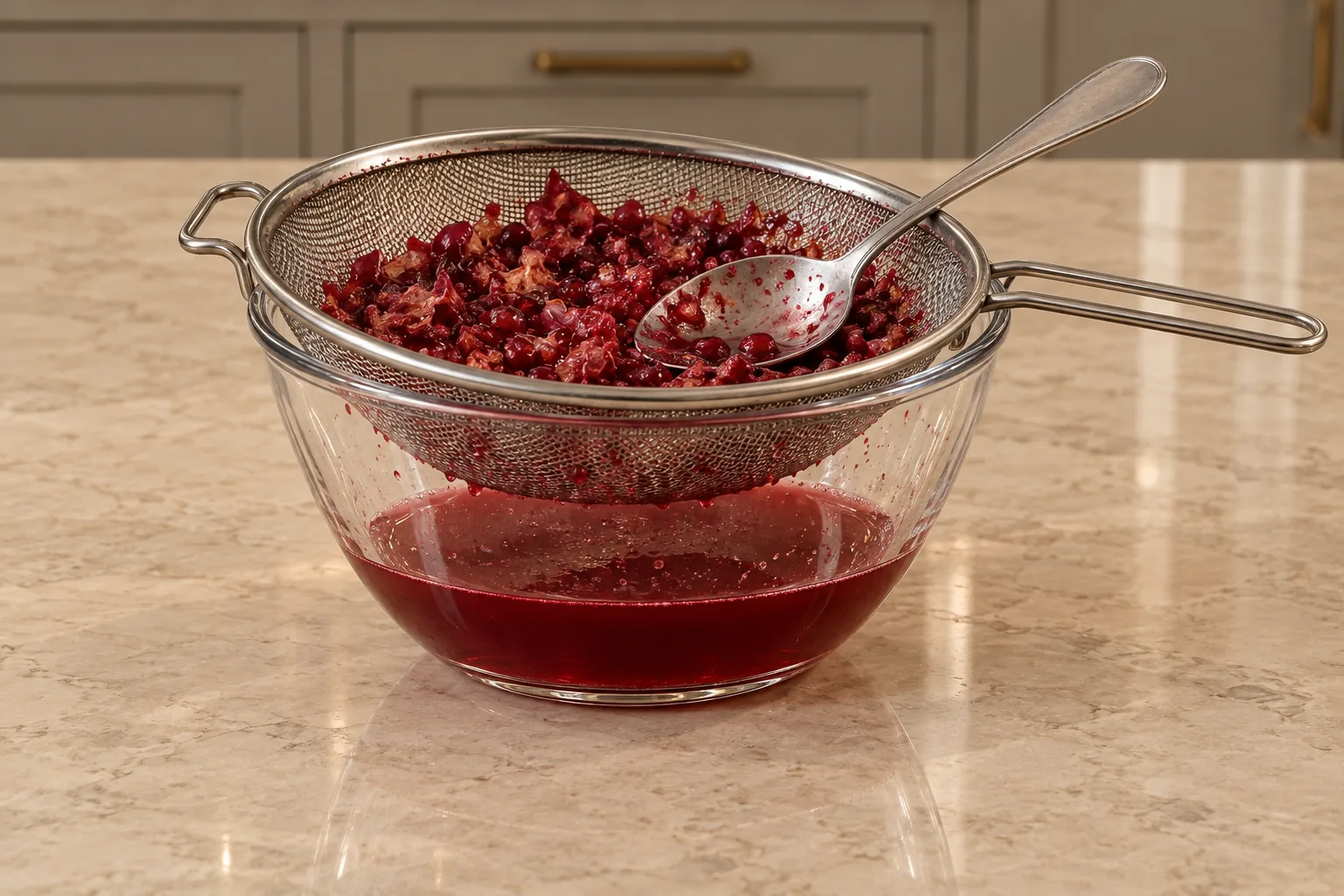
Set the wire-mesh strainer over the large glass bowl and pass the cooked mixture through it. Press the arils with the back of a spoon to release the remaining juice. The little inner seeds and pressed skins stay in the mesh while the red liquid collects below.
Move the spoon across the fruit rather than pressing only the middle of the pile. As you work, the pulp becomes flatter and less juicy. The spoon and mesh will be stained red, and the bowl should hold the strained infusion without a layer of whole arils floating in it.
Lift away the strainer when you have finished pressing. Do not tip those seed solids back into the bowl. This version is meant to make a smooth cup of jello, and the straining step is what separates it from a whole-fruit gummy or a dessert with seeds suspended inside.
Dissolve The Gelatin Completely
Add the two tablespoons of fresh lemon juice to the warm strained infusion. Whisk in the two tablespoons of gelatin until dissolved. Add the two tablespoons of raw honey and keep stirring until the mixture is evenly combined.
Add the powder gradually while you whisk rather than dropping the whole measure into one dry mound. Watch for pale granules or small rubbery clumps on the whisk and along the sides of the bowl. The mixture should look like one smooth red liquid before you portion it into cups.
Use gelatin powder that sets liquid into a gel. Collagen peptides are not the ingredient for this recipe. Whisk until the gelatin is dissolved and the liquid looks smooth throughout.
If you see an undissolved patch, keep working it into the warm mixture before pouring. Scrape around the bowl so the honey is not sitting as a separate thick layer at the bottom. A smooth mixture now gives you a much more pleasant spoonful later.
Chill And Check The Set
Pour into the pudding cups and refrigerate for twenty minutes before checking. The surface should hold together when you gently move the cup, with a soft wobble rather than liquid sloshing from side to side. Chill longer if the center is still liquid.
Small, shallow cups cool differently from one deep bowl. Keep that in mind if you use a different container. The twenty-minute mark is the first check, not a reason to serve a cup that has not set. The finished texture should be smooth and spoonable, with no gritty seeds or dry gelatin pieces.
Allow about forty minutes as a planning estimate: ten minutes to prepare the fruit and tools, ten minutes of simmering, and at least twenty minutes of refrigeration. Preparing the fruit may take longer, and extra setting time adds to the total. The card keeps those parts separate so the chilled time is not mistaken for active cooking.
Serving And Keeping The Cups
Serve the jello straight from its pudding cup. There is no need to unmold it or add a second recipe on top. The pomegranate, lemon, and honey provide the flavor, while the clear cup makes the set easy to see.
Once set, cover the cups and keep them refrigerated. Use within three to four days. Keep them cold until serving rather than treating a chilled gelatin cup like a shelf-stable packed snack. If you are making them ahead, it is easier to store individual covered cups than to keep moving one large bowl in and out of the refrigerator.
For another fruit preparation, Cranberry Gummies keep the cooked fruit purée and make a denser, opaque bite. Fresh-Pressed Apple Juice Jello starts from measured fresh juice instead of simmering and pressing whole pomegranates. Follow each recipe’s own gelatin amount and setting instructions; their liquid bases are different.
If you want more of these homemade fruit treats, look for the Gummies & Fruit Snacks Cookbook among the current and upcoming resources in the WFLI shop. It is the fruit-snack collection for planning a wider set of measured recipes, rather than guessing a new gelatin ratio every time you change the fruit.
Questions About Pomegranate Jello
Can I Leave The Seeds In?
Strain them out for this recipe. Leaving the arils and inner seeds in would change the smooth, seed-free texture. Press their juice through the mesh, then discard the solids.
Can I Use Bottled Pomegranate Juice?
Use fresh pomegranates for this version. The recipe measures the whole fruits and the water for an infusion, and GAPS avoids commercial pasteurized juices. The apple-juice jello linked above is the separate option when you want a recipe that begins with measured freshly pressed juice.
Why Did My Cups Stay Liquid?
First give them more refrigerator time, especially if you used deep cups or poured the mixture while it was very warm. Check that you used gelatin rather than collagen peptides, measured the full two tablespoons, and dissolved it before pouring. Do not immediately add more powder without checking those basics.
Can I Make A Bigger Batch?
Yes. Double every measured ingredient, including the number of pomegranates, and use a saucepan and mixing bowl with enough space. Portion into small cups as before. More cups still need refrigerator space, and a larger hot batch may take longer to cool and set.
Pomegranate Lemon Jello Cups Recipe
Pomegranate Lemon Jello Cups for Full GAPS
Ingredients
Equipment
Method
- Remove the arils from the pomegranates. Discard the peel and white membrane. Have a large glass bowl, mesh strainer and pudding cups ready.
- Put the arils and measured filtered water in the saucepan. Simmer gently for about 10 minutes, until the liquid is very red. Take the pan off the heat.
- Strain the cooked mixture through a wire-mesh strainer or colander set over the glass bowl. Press the arils with a spoon to release the juice. Remove the strainer and discard the seed solids and pressed skins.
- Add the measured fresh lemon juice to the warm strained infusion.
- Whisk in the measured gelatin gradually until completely dissolved. Stir in the measured raw honey until the mixture is smooth and evenly combined.
- Pour into small pudding cups and refrigerate for 20 minutes before checking. Chill longer if needed, until the surface holds together with a gentle wobble rather than liquid sloshing. Serve chilled from the cups.
Notes
Tried this recipe?
Let us know how it was!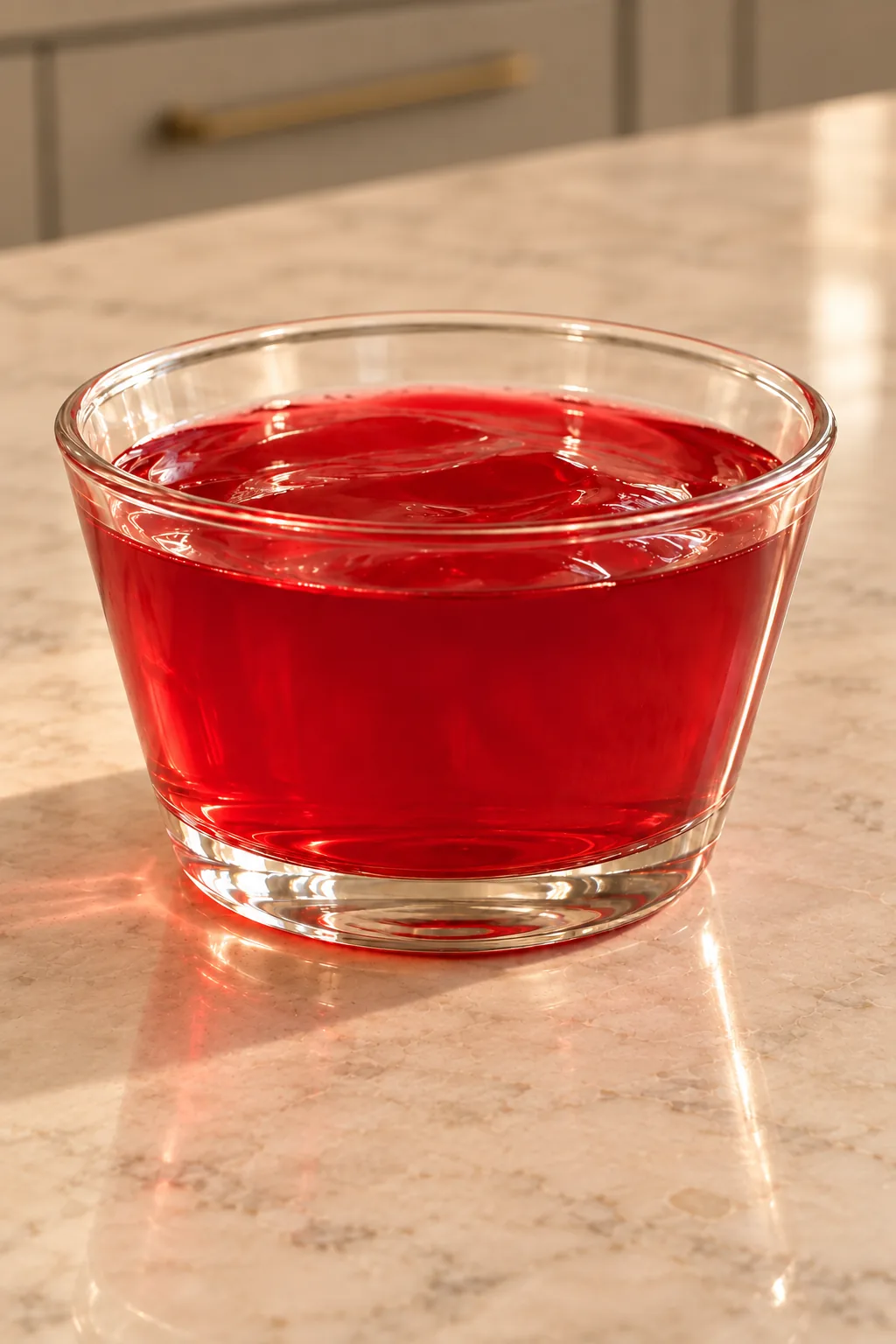

Leave a comment