

The turkey may be carved and the holiday table cleared, but the picked carcass still has one useful job left. This turkey carcass bone broth turns those roasted bones into an amber, savory broth with celery, onion, carrots, garlic, parsley, sage, peppercorns, and bay. It is the kind of practical second meal that makes a large family holiday feel less wasteful without asking you to invent another complicated recipe the next morning.
In our house, I would rather deal with the carcass while I still remember where the extra containers are than discover it taking up half a refrigerator shelf two days later. I pick off the usable meat first, set that aside for an easy meal, and either start the broth or freeze the carcass for another day. The process is mostly quiet simmering, but the details matter: a gentle bubble, early skimming, intact bones, careful straining, and fast cooling.
Where Turkey Bone Broth Fits on GAPS
This is a Later Full GAPS recipe. Because it starts with a roasted, picked turkey carcass, it makes bone broth rather than GAPS meat stock. GAPS uses raw-meaty meat stock first and delays bone broth for at least the first year; some people need to remain with meat stock for several years before bringing bone broth in.
That distinction is part of the recipe, not a minor naming preference. If you are on the Introduction Diet or in your first year of Full GAPS, use GAPS Chicken Meat Stock or another stock made from raw meaty joints, skin, cartilage, fat, and connective tissue. Save this cooked-carcass method for the later point when bone broth belongs in your own progression.
Start With a Picked Roasted Turkey Carcass
Remove as much cooked meat as you reasonably can before the carcass goes into the pot. A little meat clinging around joints is normal, but the useful slices and shreds belong in leftovers, hash, or soup. The picked structure should look unmistakably cooked and roasted, with browned skin or edges in places and exposed joints where the meat has been removed.
Keep the turkey neck, gizzard, and heart for the pot. They add turkey flavor and belong in this measured formula. The source does not include the liver, so leave it out. If you are not making broth immediately, refrigerate the carcass promptly or freeze it once it has cooled. Thaw a frozen carcass in the refrigerator before loading the stockpot.
Use a large, heavy-bottomed stainless stockpot. A ten-quart pot gives the carcass and vegetables enough room without forcing you to pack everything down or add more water than necessary. The bones may be separated at a natural joint so they fit, but do not pulverize or saw them into tiny pieces.
Load the Pot With Large Pieces
Put the picked carcass, neck, gizzard, and heart in the stockpot. Add four celery ribs with their leaves when available, one large quartered onion, and four peeled carrots. Keep the celery and carrots in roughly three-inch pieces. Large cuts are easier to lift out later and do not disappear into the strained broth.
Add one-quarter cup dried parsley, one teaspoon dried sage, eight black peppercorns, eight peeled garlic cloves, and one bay leaf. Use plain herbs and spices without flavoring blends or additives. Pour in filtered water only until the carcass and vegetables are covered. The exact volume varies with the shape of the turkey and the pot, so the visible water line controls this step.
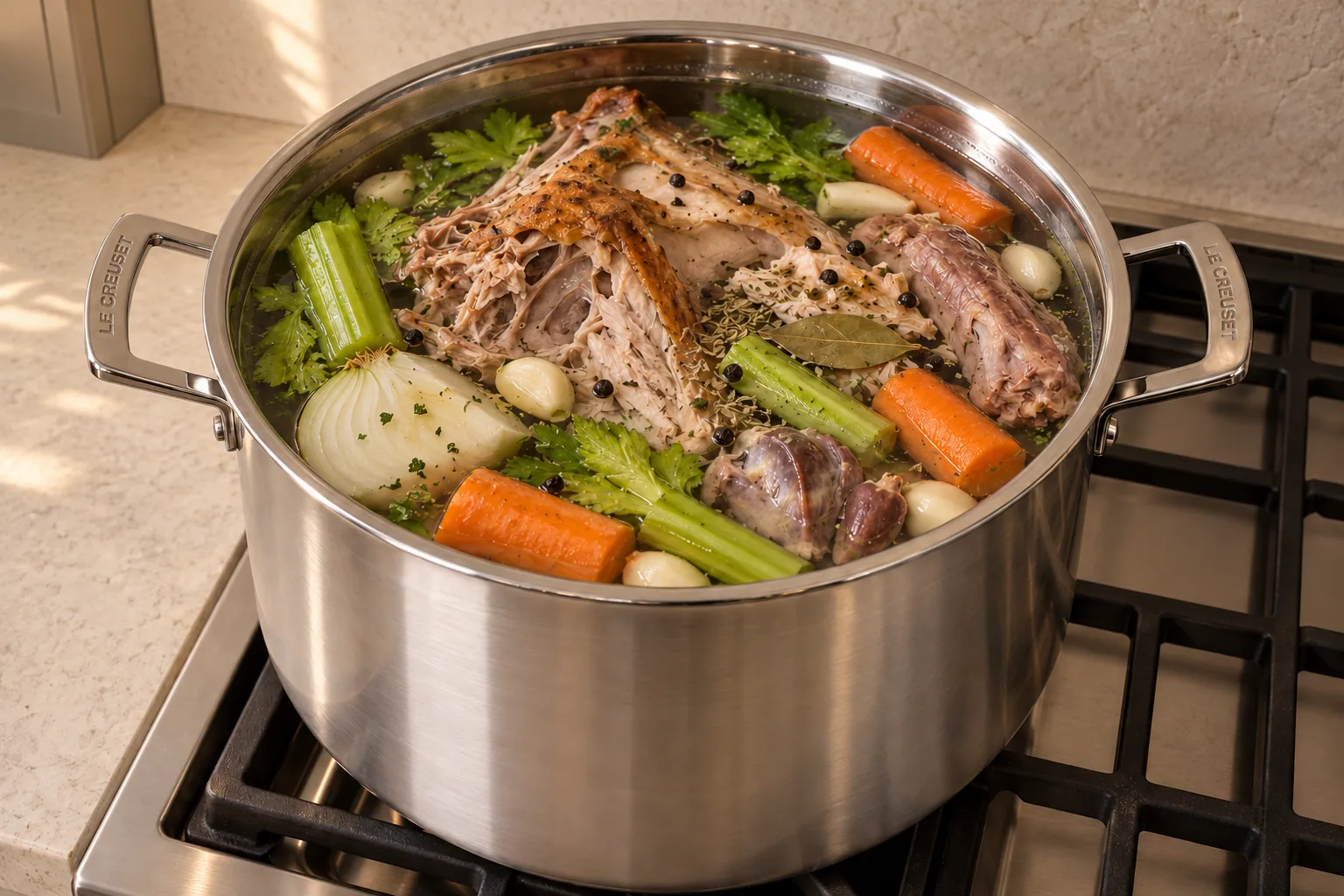
The loaded pot should look full but workable. The water should move around the carcass rather than reaching the rim. If the pot is dangerously crowded, use a larger pot instead of balancing ingredients above the water or cutting the bones into fragments.
Bring It Up Slowly and Skim Early
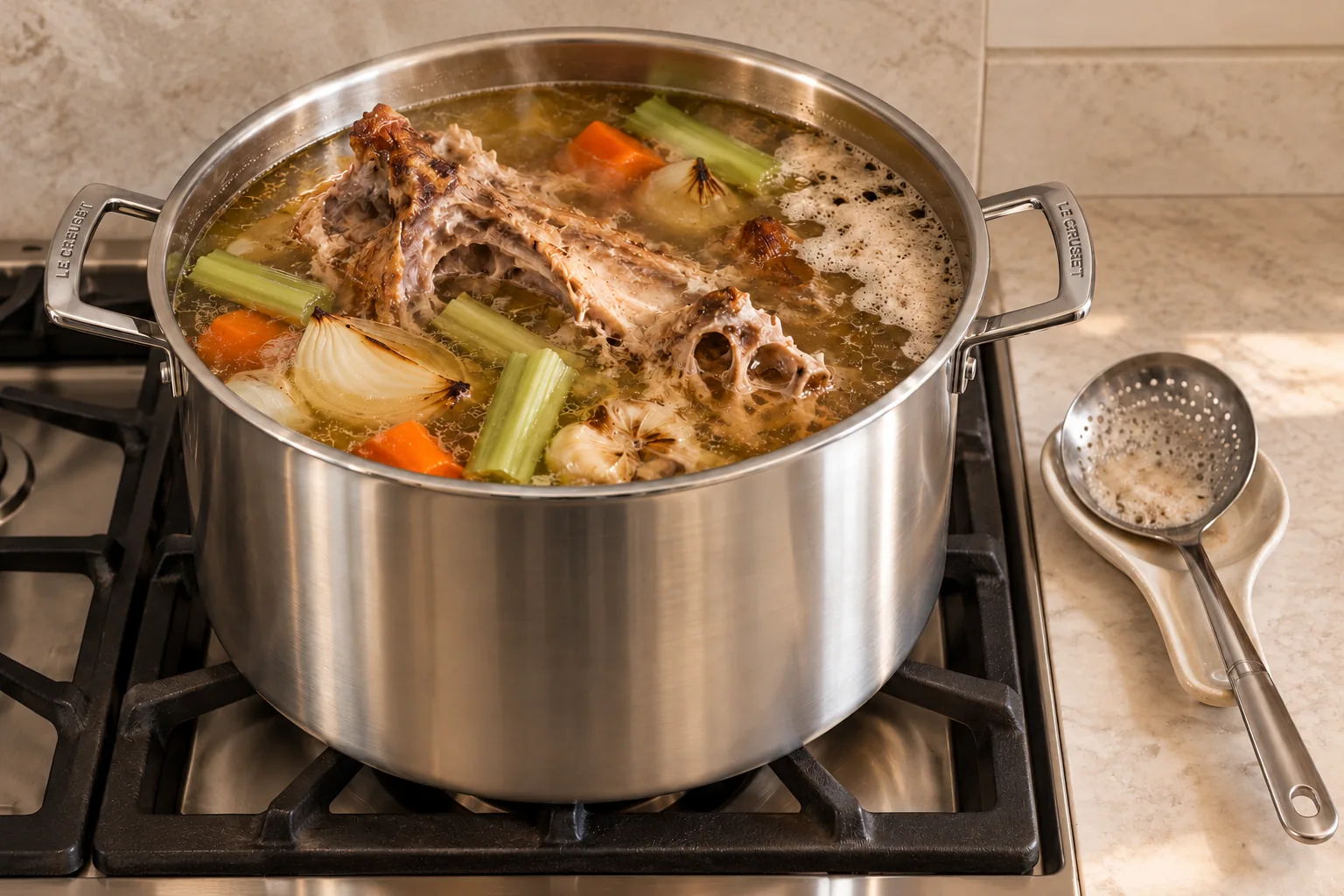
Set the stockpot over medium heat and bring it toward a boil gradually. As the liquid warms, gray-beige foam and small impurities may collect on the surface. Skim them away with a stainless skimmer, especially during the first hour. The skimmer should carry away the foam while leaving the clear liquid and fat in the pot.
Once the liquid reaches a boil, lower the heat until the surface holds a gentle simmer. Look for small intermittent bubbles and a slow movement through the pot. A hard rolling boil tosses the carcass and vegetables around, breaks ingredients apart, and makes the finished broth cloudy. Quiet heat gives you a clearer broth and more control over the endpoint.
Let the Physical Cues Set the Endpoint
Simmer for several hours. The source does not give one exact clock time, so do not force this turkey into an invented schedule. Check the pot by looking at the joints and tasting a spoonful of broth. The joints should loosen, the vegetables should be very soft, and the liquid should taste distinctly of roasted turkey, onion, sage, and garlic.
The bones should remain intact. Do not keep boiling until they become fragile or crumble into the liquid. If the level drops enough to expose a large portion of the carcass before the broth tastes ready, add only enough hot filtered water to restore the working level and return the pot to a gentle simmer.
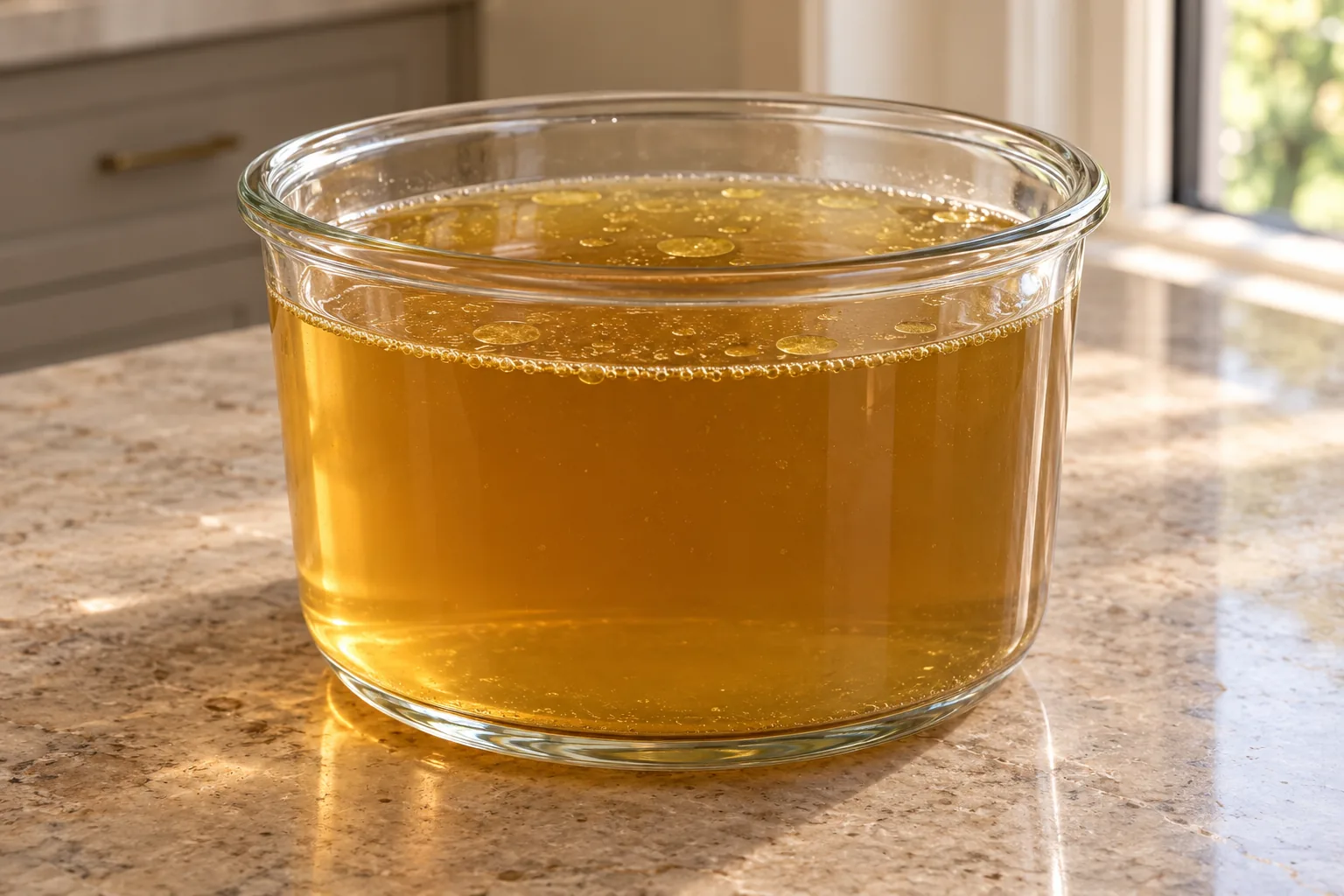
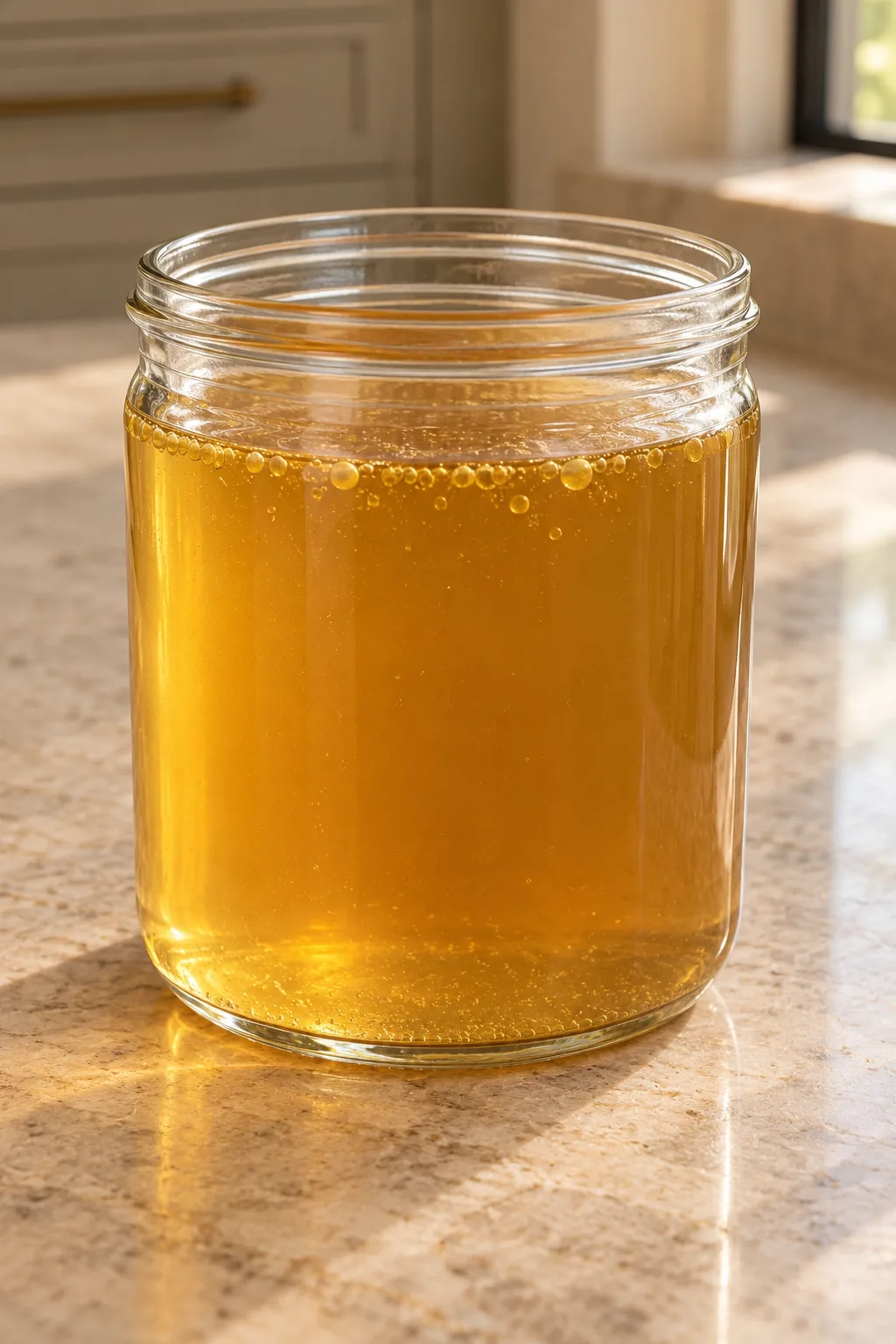
The finished liquid will be amber-gold rather than pale water. Turkey fat may make small golden beads on the surface. Clarity varies with the roasted carcass and how quietly the pot simmered, but the broth should not look like a vegetable puree or a pot that has been churned by a rolling boil.
Strain Without Pressing the Solids
Lift out the largest bones and vegetables with tongs. The cooked vegetables may be saved for a same-day soup if you like their very soft texture. Set a fine-mesh strainer, lined with cheesecloth when you want a clearer result, over a heat-safe bowl or second pot. Ladle or pour the broth through without pressing or mashing the solids.
Let the final cloudy sediment remain in the bottom of the stockpot rather than forcing it through the strainer. Discard the spent bones, bay leaf, peppercorns, and other solids you are not keeping. The strained broth should be smooth and free of sharp bone fragments.
Cool It Quickly for Storage
Use the broth immediately for soup, or cool it promptly. Set the container of strained broth into an ice bath and stir the broth with a clean stainless spoon until it stops steaming. Divide a large batch among smaller shallow containers when needed so the center cools along with the edges. Refrigerate as soon as it is no longer giving off heat.
Keep refrigerated broth for up to two days. Freeze the remainder in smaller freezer-safe, straight-sided glass jars, leaving generous headspace for expansion. Label the jars as turkey bone broth so nobody mistakes them for Intro meat stock. Thaw in the refrigerator, or set a closed jar in warm water only long enough to loosen the frozen broth for reheating.
Ways to Use This Broth
Once bone broth fits your current GAPS stage, use it as the liquid in a simple turkey-and-vegetable soup, to loosen leftover turkey while reheating, or as the base for a later-GAPS gravy. The vegetables from the pot can return to soup if their very soft texture works for your family. Add the reserved turkey meat near the end so it warms without cooking into dry strings.
For another practical leftover-turkey meal, try Turkey, Apple, and Onion Hash. If you need the raw-meaty stock route instead, keep the carcass for a later family member or freezer batch and make the linked chicken meat stock now.
Recommended Equipment
- Le Creuset Classic Stainless Steel 10-quart stockpot
- Cutting board and chef’s knife
- Stainless skimmer
- Long stainless tongs
- Fine-mesh strainer
- Cheesecloth, optional for clearer broth
- Large heat-safe bowl or second pot
- Large bowl or clean sink setup for an ice bath
- Freezer-safe straight-sided glass jars with lids
Frequently Asked Questions
Is Turkey Carcass Broth the Same as GAPS Meat Stock?
No. This recipe starts with a roasted, picked carcass, so it is bone broth. GAPS meat stock begins with raw meaty joints and bones with skin, cartilage, connective tissue, fat, and a useful amount of meat.
Can I Use This During the GAPS Introduction Diet?
No. Use raw-meaty meat stock during the Introduction Diet. This cooked-carcass bone broth belongs later, after at least one year on meat stock and longer when your own progression requires it.
How Long Should Turkey Bone Broth Simmer?
Several hours at a gentle simmer. The exact source does not supply a single measured duration. Use the endpoint cues: loosened joints, deeply flavored broth, very soft vegetables, and bones that remain intact.
Why Is My Broth Cloudy?
A rolling boil, frequent stirring, or pressing the solids through the strainer can cloud the broth. Keep the simmer gentle, skim early foam, move the pot as little as practical, and leave the final sediment behind.
Can I Leave the Vegetables Out?
The accepted formula includes celery, onion, carrots, garlic, parsley, sage, peppercorns, and bay. Keeping those ingredients preserves the recipe’s measured flavor rather than turning it into a different turkey-bone formula.
Can I Add Vinegar?
Vinegar is not part of this exact recipe, so it is not added to the card. Follow the measured turkey formula as written.
Does Chilled Turkey Bone Broth Have to Gel?
No. A chilled gel depends on the particular carcass, joints, water volume, and cooking conditions. Flavor, intact-bone technique, safe cooling, and the correct later-GAPS placement matter more than forcing every batch to set into the same texture.
Turkey Carcass Bone Broth Recipe
Turkey Carcass Bone Broth for Later GAPS
Ingredients
Equipment
Method
- Pick as much usable meat as possible from the roasted turkey carcass. Refrigerate or freeze the reserved meat for another meal. Keep the carcass chilled until you are ready to begin.
- Put the picked carcass, turkey neck, gizzard, and heart in the 10-quart stainless stockpot. Add the celery, onion, carrots, parsley, sage, peppercorns, garlic, and bay leaf.
- Pour in only enough filtered water to cover the carcass and vegetables. The pot should look full but workable, with room for the liquid to move below the rim.
- Bring the pot gradually to a boil over medium heat. Skim off gray-beige foam and scum as it rises, especially during the first hour. Lower the heat to a gentle simmer with small intermittent bubbles rather than a rolling boil.
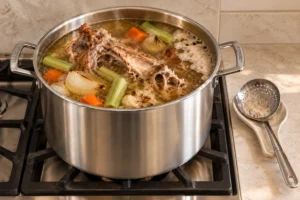
- Simmer gently for several hours, until the joints loosen, the vegetables are very soft, and the liquid tastes deeply of turkey and aromatics. Keep the bones intact; do not cook until they crumble into the broth.
- Lift out the largest bones and vegetables. Strain the broth through a fine-mesh strainer, lined with cheesecloth if desired. Do not press the solids, and leave the final cloudy sediment in the stockpot.
- Use immediately, or set the strained broth in an ice bath and stir until it stops steaming. Refrigerate promptly for up to 2 days, or freeze in straight-sided freezer-safe glass jars with generous headspace.
Notes
Tried this recipe?
Let us know how it was!Build a Better Stock and Broth Routine
The planned Meat Stock vs. Bone Broth Chart and Stock Pot Course will keep the timing, ingredient differences, cooling routine, and freezer planning in one practical place. Find current resources and upcoming releases in the WFLI shop.

Leave a comment