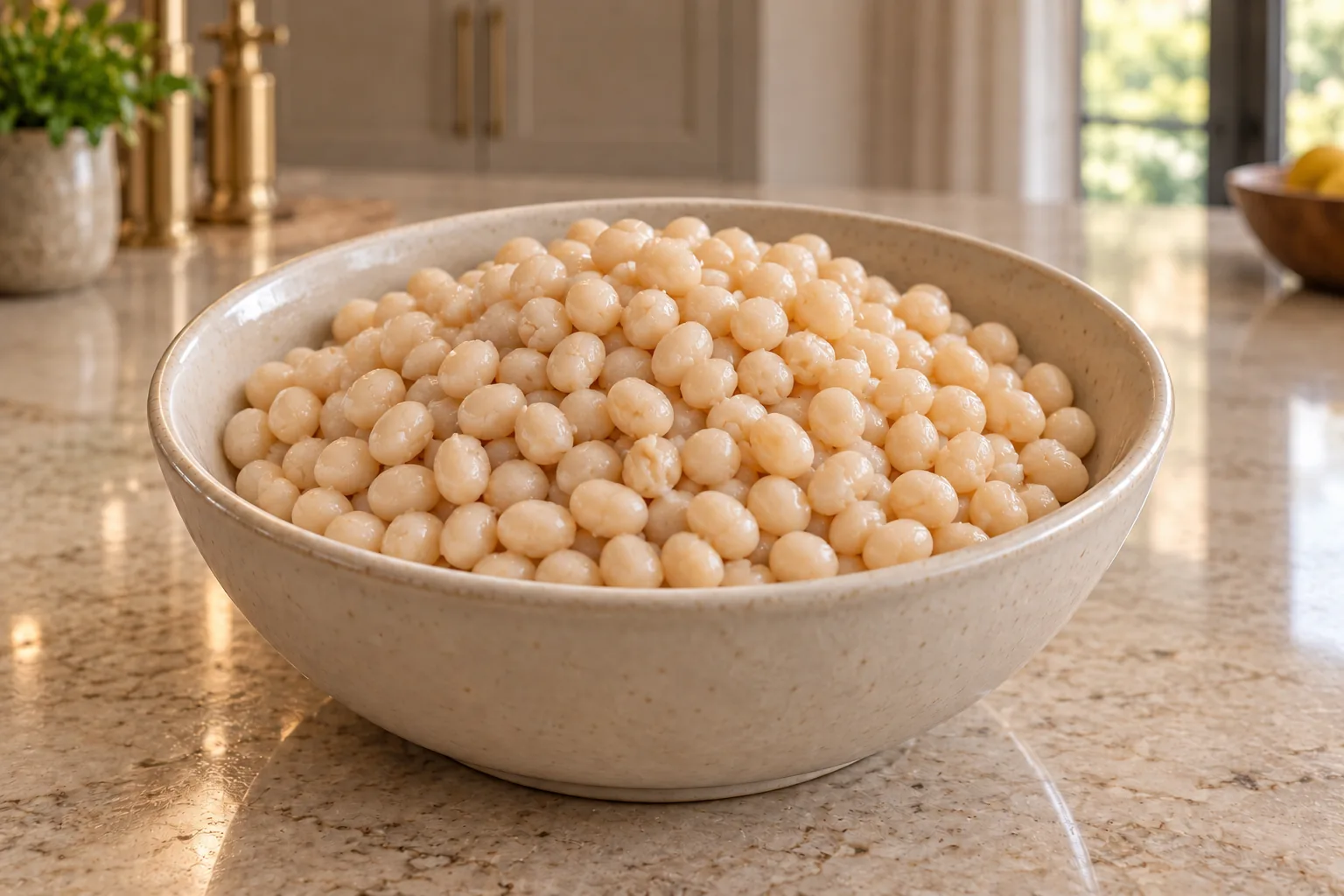
Ingredients
Equipment
Method
- Sort the dry beans, removing stones, debris, and damaged beans. Rinse thoroughly in cool filtered water.
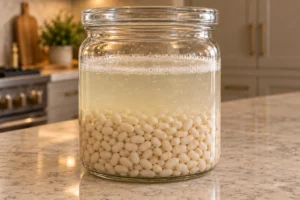
- Place the beans in a large glass or glazed ceramic vessel. Cover generously with warm filtered water and add 1 small pinch pure bicarbonate of soda. Soak for 12 to 24 hours. Each time the water cools, drain it and replace it with just-simmered filtered water plus another pinch bicarbonate, keeping the expanding beans well covered.
- Drain the soaked beans and rinse them thoroughly. Return them to a clean glass or glazed ceramic vessel. Add the scaled 2 quarts filtered water and scaled 1 cup homemade whey or kefir. If the beans are not fully submerged, add water and starter together at the same 1/2 cup starter per quart ratio.
- Cover loosely and ferment in a warm place out of direct sunlight for 4 to 6 days, keeping every bean below the liquid. Check daily. Light cloudiness, tiny bubbles, thin clean froth, and a mild sour aroma are expected; discard a batch with fuzzy growth, colored spots, or a rotten smell.
- Pour the fermented beans into a stainless-steel colander. Discard the fermentation liquid and rinse the beans thoroughly with cool water.
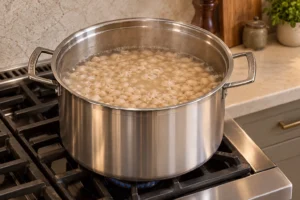
- Transfer the rinsed beans to the stockpot. Add plenty of fresh filtered water and the scaled sea salt. Bring to a boil, lower to a gentle simmer, and skim away foam that rises.
- Simmer for 2 to 6 hours, checking the water level and adding hot filtered water whenever the beans are no longer well covered. Continue until the centers are completely creamy and a bean crushes without resistance or a chalky middle.
- Drain the completely soft beans. Reserve a little clean cooking liquid for any portions you plan to freeze. Cool promptly in shallow glass containers, then refrigerate or freeze in measured recipe-size portions.
Notes
Later Full GAPS: Use after diarrhoea and other digestive symptoms have cleared completely and properly prepared white navy beans are ready for your menu. Many people wait a year or longer before adding legumes.
Bean identity: Use small white navy or haricot beans. Do not substitute cannellini, white kidney, black, pinto, or chickpeas.
Starter ratio: Use 1/2 cup homemade whey or kefir per quart of fermentation water. If more water is needed, add the starter proportionally.
Texture: A finished bean crushes into a smooth creamy paste with no firm or chalky center.
Storage: Refrigerate cooled beans in covered glass for the portion you will use soon; freeze the rest in measured portions with a little reserved cooking liquid.
2x: Use 32 ounces beans, 4 quarts fermentation water, 2 cups homemade whey or kefir, and 1 tablespoon sea salt. Use vessels large enough to keep the doubled beans submerged and to simmer without crowding.