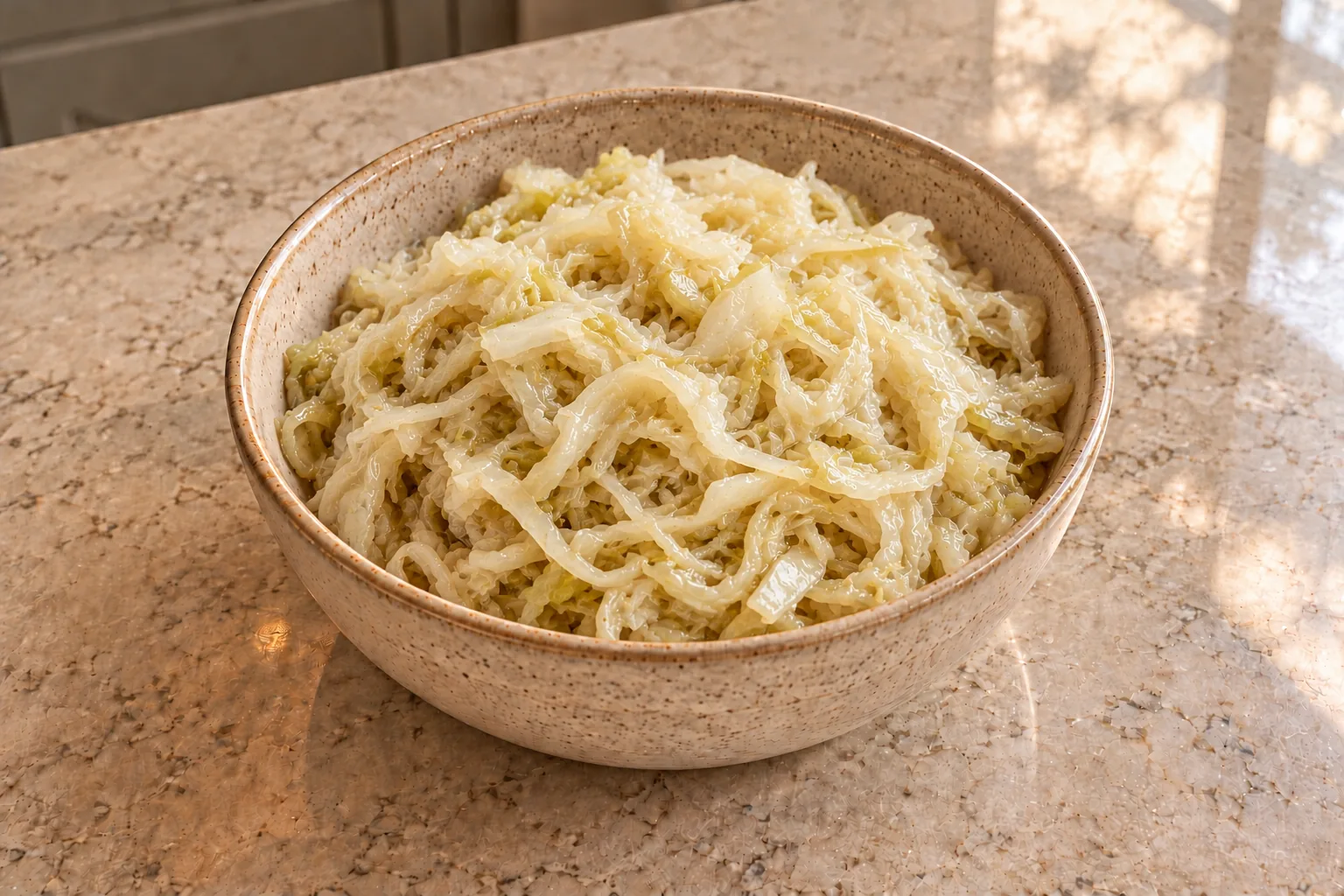
Ingredients
Equipment
Method
- Wash the cabbage. Remove damaged outer leaves and reserve clean whole leaves for covering the jars. Cut away the hard cores and finely slice or shred the remaining cabbage.
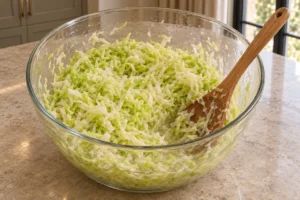
- Mix the shredded cabbage with the salt for the cabbage in a large glass bowl. Leave for 10–15 minutes so it begins to soften and release moisture.
- Pound or press the cabbage with a smooth wooden tool until the shreds are wet and juice pools in the bowl. Work through the whole bowl rather than only pressing the surface.
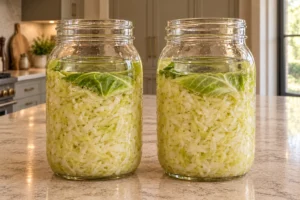
- Pack the cabbage into clean wide-mouth glass jars in layers, pressing out large air pockets. Add the juice from the bowl. Cover with a folded cabbage leaf and a fermentation weight, keeping everything submerged and leaving about two inches of headspace.
- If the natural juice is insufficient, dissolve the additional salt in the filtered water listed for the optional covering brine. Add only enough to cover the cabbage and cover leaf; keep the headspace clear.
- Fit pressure-releasing fermentation lids, or use ordinary screw lids and briefly loosen them to release gas daily during the first few days, then continue checking as activity slows. Close after releasing pressure. Stand the jars in a tray at room temperature out of direct sunlight and keep the cabbage submerged.
- For GAPS, allow roughly one week to a month, depending on temperature. Finish when the kraut tastes sharply acidic and is no longer producing gas. A longer ferment can be left to develop a sourer flavor. Refrigerate the completed kraut covered with its brine; use a clean utensil to serve.
Notes
Time: The time displayed is the shortest approximate fermentation estimate, not hands-on preparation time. Allow additional time for slicing and packing, including a 10–15-minute salted rest. Fermentation generally takes one week to one month, depending on temperature. Sharp acidity and stopped gas determine GAPS readiness.
Yield: This recipe makes about three quarts. The amount varies with cabbage size and packing. Use enough jars to leave about two inches of headspace.
Optional brine: The extra teaspoon of salt is separate from the two tablespoons mixed into the cabbage. Dissolve it in one pint filtered water and add only enough to maintain submersion. At 2× the card doubles both brine ingredients, preserving the concentration; you may not need all of it.
GAPS: Earlier Intro uses only juice from the completed ferment. Cabbage solids begin gradually at Stage 3 and continue through later Intro and Full GAPS.
Storage: Refrigerate finished sauerkraut covered with its brine. Serve with a clean utensil and keep remaining cabbage submerged.