Ingredients
Equipment
Method
- Combine the nuts, 1 teaspoon mineral salt, and enough filtered water to cover by 2 inches in a clean glass or ceramic bowl. Stir to dissolve and soak overnight.
- Drain and rinse thoroughly in a stainless-steel colander. Measure the full 2 cups soaked, wet nuts into the formula.
- Blend the soaked nuts, fermented vegetables, coconut oil, prepared tahini, lemon juice, garlic, and remaining 1/2 teaspoon salt for about 50 seconds, until smooth and thick. If the blender cannot turn, add only a small source-permitted amount of filtered water, fermented vegetables, or oil.
- Set a clean stainless-steel colander above a glass or ceramic receiving bowl so its bottom stays above collected liquid. Line it with clean cheesecloth and spoon in the fresh puree without packing it tightly.
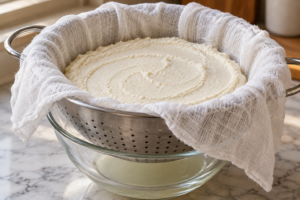
- Drape the cheesecloth loosely over the puree and hold the setup at warm room temperature away from direct sunlight.
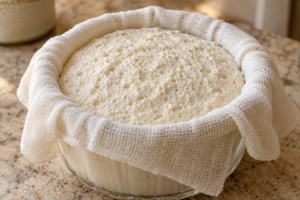
- Begin checking at about 1 1/2 days and allow longer in a cooler room. Continue until the whole puree has risen and developed many fine sponge-like bubbles.
- Line a clean glass or ceramic mold with fresh cheesecloth. Transfer the risen puree, press gently to fill the shape without large empty pockets, level the top, and fold the cloth over it.
- Refrigerate the filled mold for at least 6 hours, until the coconut oil is cold and the cheese is firm enough to hold the mold shape.
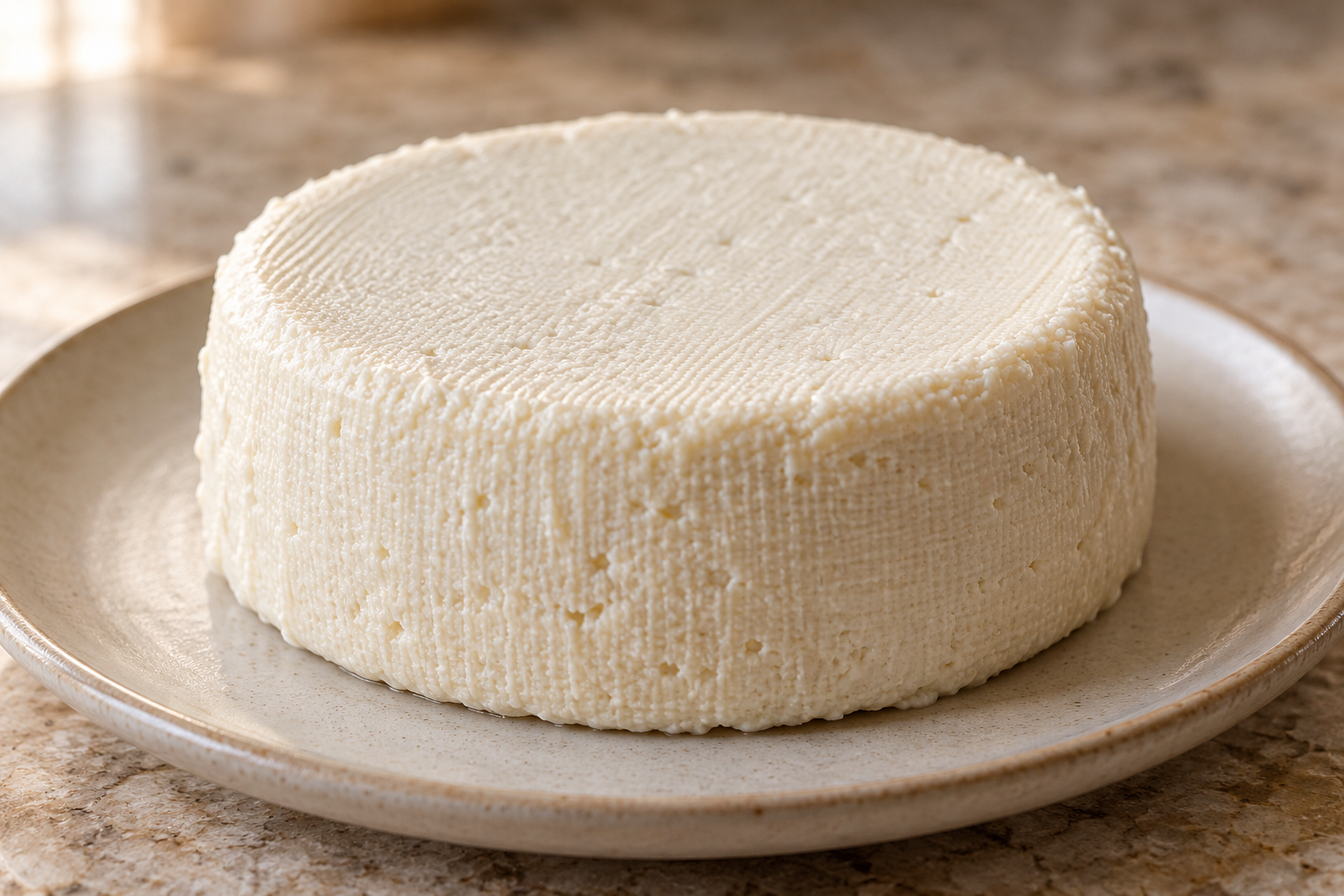
- Unfold the cloth, invert the cheese onto a clean ceramic plate, and peel away the cheesecloth carefully. Return it to the refrigerator before slicing if it still feels soft.
Notes
Full GAPS: Use after the chosen nut, prepared hulled-sesame tahini, completed fermented vegetables, coconut oil, lemon, garlic, and salt are appropriate and tolerated.
Timing: Prep is 35 minutes after the overnight soak. Begin checking the warm ferment at about 1 1/2 days and allow longer in a cooler room. Chill in the mold for at least 6 hours.
Endpoint: The whole puree must rise and develop many fine sponge-like bubbles before molding. The chilled wheel should hold its shape while remaining smoother and moister than dehydrated cheese.
Storage: Refrigerate covered and use a clean knife. The source gives no exact refrigerated duration; discard unexpected foul odor, colored or fuzzy growth, or another change inconsistent with the clean tangy cheese.