Ingredients
Equipment
Method
- Line the uncoated stainless-steel baking sheet with parchment paper.
- Break up the damp pressed pulp and spread it in a thin, even layer. Separate thick clumps so the pulp can dry at the same rate.
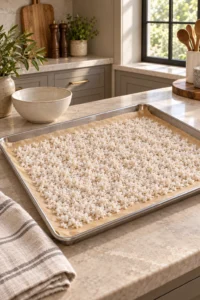
- Place the sheet in the oven at its lowest setting for about 1 hour, or use the food dehydrator. Continue until every part of the pulp is fully dry rather than damp or soft.
- Let the dried pulp cool if it is warm from the oven or dehydrator.
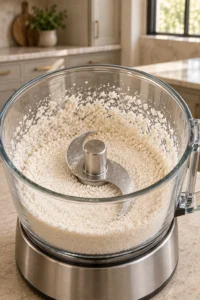
- Transfer the dry pulp to the glass blender vessel or food processor.
- Pulse for only a few seconds at a time. Stop when the coconut reaches a fine flour texture and before extended processing turns it into coconut butter.
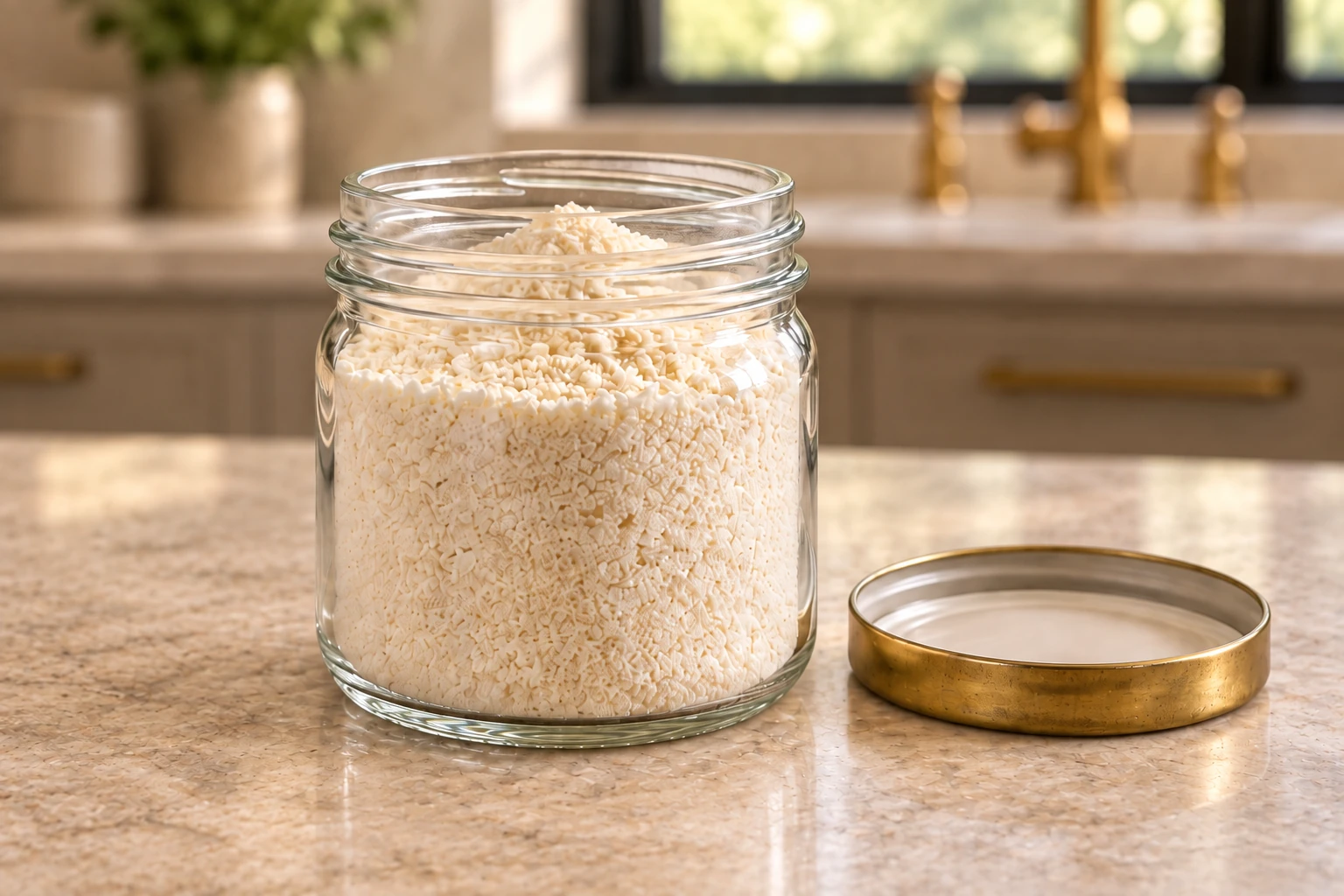
- Transfer the finished flour to the glass jar.
Notes
Drying time: about 1 hour. Yield is omitted because it is only the flour produced by the pressed pulp from the matching milk batch and the source supplies no fixed final amount.
Begin with all damp pressed pulp from the exact hot-water milk batch. Dry every part completely, cool it, then pulse briefly to a fine texture before the coconut releases enough fat to turn toward butter.
For downstream baking, ferment the coconut flour as directed by the specific GAPS recipe, using that recipe’s measured method and amounts.