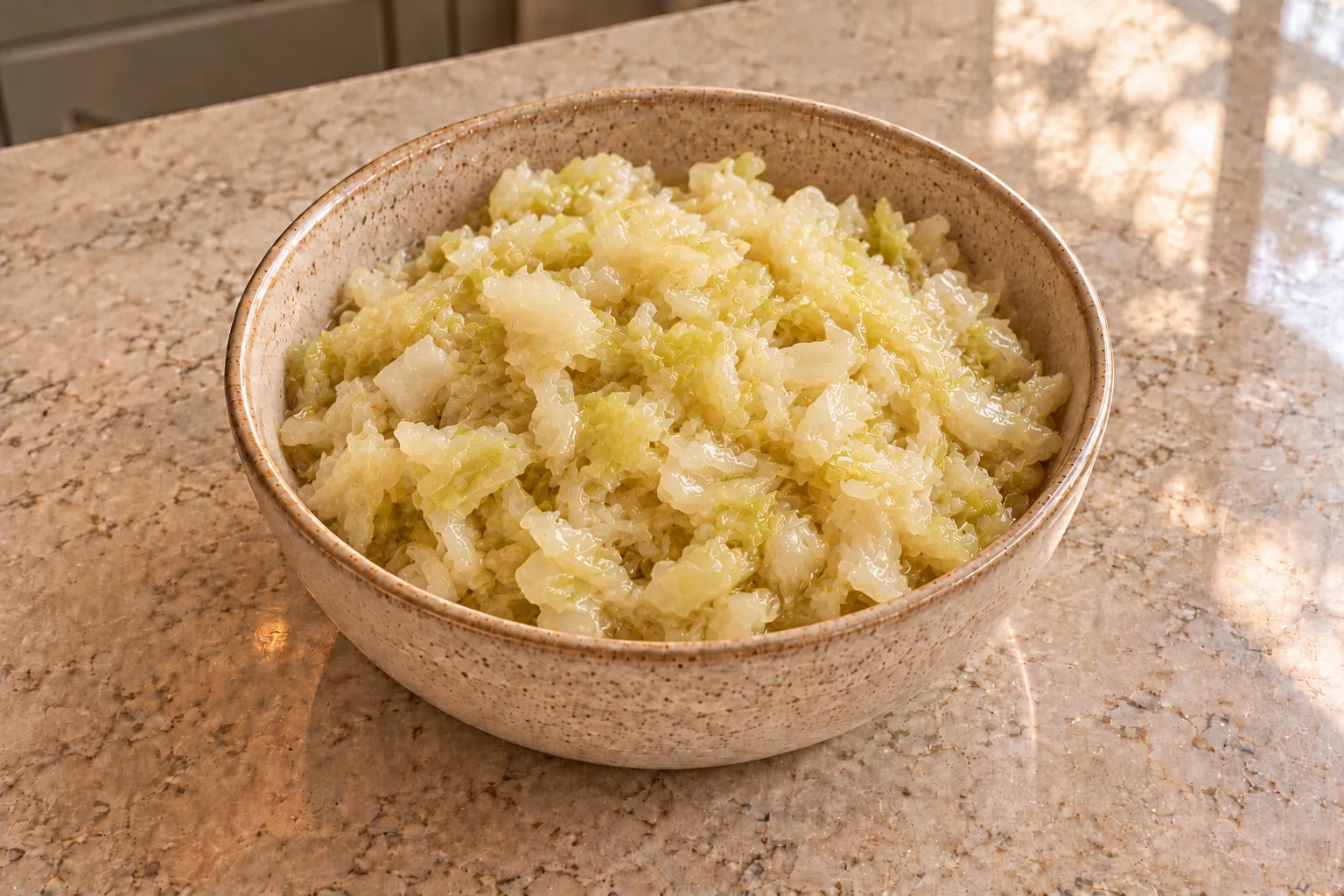
Ingredients
Equipment
Method
- Remove damaged outer cabbage leaves and reserve clean whole leaves for covering the jars. Cut away the hard core and chop the cabbage into small leafy pieces rather than long ribbons.
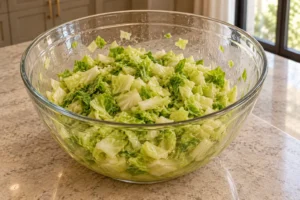
- Mix the chopped cabbage and Himalayan salt in a large glass bowl with a wooden spoon or clean hands. Leave for about 30 minutes so the salt begins drawing out juice.
- Knead and squeeze with clean hands for about five minutes until the cabbage is wet and juice collects in the bowl. Work through the entire batch; a squeezed handful should release juice.
- Pack firmly into clean wide-mouth glass jars in layers, pressing out large air pockets. Divide the juice from the bowl between the jars. Fold a reserved whole leaf over each jar and add a suitable fermentation weight. Keep the cabbage and cover leaf submerged. Add only enough filtered water if natural juice is insufficient, leaving about two inches of empty headspace.
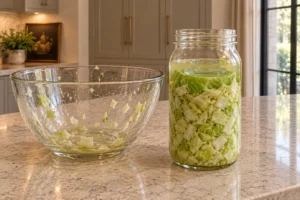
- Fit pressure-releasing fermentation lids or ordinary screw lids. With standard lids, briefly loosen daily during the first few days to release gas, then close again; continue checking as activity slows. Follow the airlock instructions if using one. Keep at room temperature out of direct sunlight and maintain submersion.
- For GAPS, allow roughly one week to one month, depending on temperature, until the kraut tastes sharply acidic and no more gas is coming from it. Refrigerate the completed cabbage with its brine and use a clean utensil to serve.
Notes
Time: Rest the salted cabbage about 30 minutes, then knead about five minutes. Allow additional chopping and packing time. Fermentation generally takes one week to one month; sharp acidity and stopped gas determine GAPS readiness. Displayed time is the shortest approximate rest-and-fermentation estimate.
Yield: One batch. The recipe estimates about 2½ quarts depending on head size, but actual yield varies. Use enough jars to keep about two inches of headspace.
Cut: This preparation uses small chopped leafy pieces, not a puree. Keep the cabbage pieces recognizable.
GAPS: Earlier Intro uses only juice from the completed ferment. Cabbage solids begin gradually at Stage 3 and continue through later Intro and Full GAPS.
Scaling: At 2× use two heads and two tablespoons Himalayan salt. Use more jars without reducing headspace. Rest and fermentation times do not simply double.
Storage: Refrigerate completed cabbage covered with its brine. Use clean utensils and keep the remaining cabbage submerged.